
For urban professionals, students, and frequent travelers, the daily commute often demands a reliable companion—your handbag. But with so many styles available, choosing between an oversized tote and a structured handbag can be surprisingly complex. Each has strengths and trade-offs in terms of capacity, comfort, organization, durability, and professional appearance. The decision isn’t just about fashion; it’s about function, ergonomics, and long-term usability. Understanding the real-world performance of both options helps you select the one that aligns best with your lifestyle.
Capacity and Practicality: What Fits Matters Most
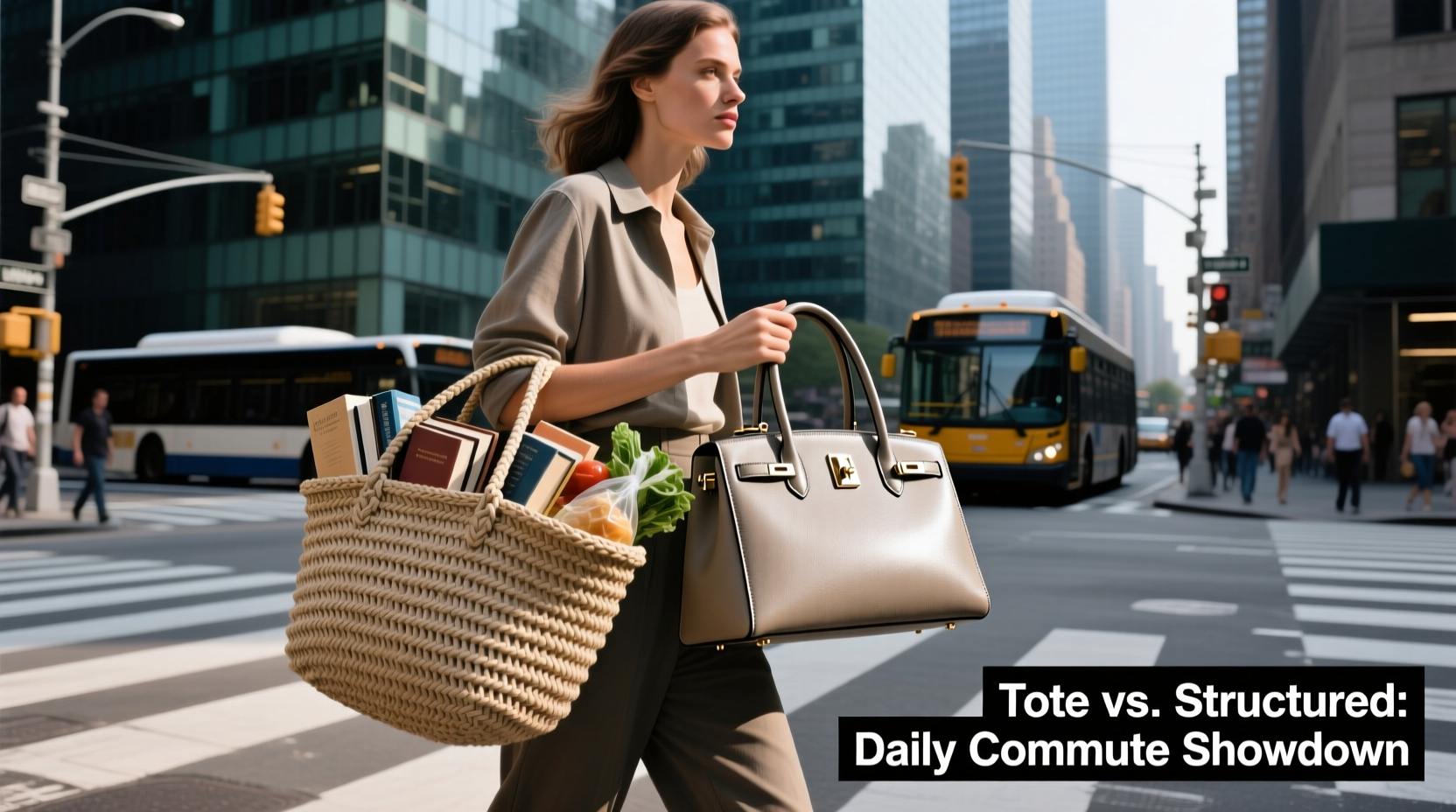
When evaluating bags for daily use, the first consideration is what you need to carry. Oversized tote bags are renowned for their expansive interiors. Designed to swallow laptops, notebooks, water bottles, gym clothes, and even a light jacket, they offer unmatched volume. This makes them ideal for people who juggle multiple roles—working professionals transitioning from office to errands, parents managing kids’ items, or students hauling textbooks.
In contrast, structured handbags prioritize form over maximum space. While some models accommodate a tablet or small laptop, most focus on essentials: wallet, phone, keys, makeup pouch, and perhaps a compact umbrella. Their rigid construction limits expansion, but enhances shape retention and polish.
The downside of large capacity? Overpacking. Without internal compartments, totes can become chaotic, making it difficult to locate small items quickly. Structured bags, by comparison, often feature dedicated pockets for phones, cards, and pens, promoting efficiency during transit.
Ergonomics and Comfort During Transit
Daily commuting involves walking, standing, climbing stairs, and sometimes squeezing into crowded public transport. How a bag feels after two hours matters significantly.
Oversized totes typically come with long shoulder straps, allowing for cross-body wear or single-shoulder carry. However, as weight increases, so does strain—especially if the bag lacks padding or ergonomic design. Carrying 10–15 pounds of gear on one shoulder can lead to posture imbalances, neck tension, and fatigue over time.
Structured handbags, while generally lighter due to smaller size, are often carried by top handles or short straps. This forces users to grip them manually, which may seem elegant but becomes tiring during extended commutes. Some modern structured bags now include detachable shoulder straps, blending elegance with functionality.
“From an orthopedic perspective, evenly distributed weight and padded straps reduce musculoskeletal strain. A well-designed tote with adjustable straps can be healthier than a chic but heavy clutch-style bag.” — Dr. Lena Torres, Physical Therapist & Ergonomics Consultant
If your commute includes significant walking or subway transfers, consider how the bag interacts with your body throughout the day. A tote with wide, cushioned straps and optional cross-body support may win on endurance, even if it sacrifices a bit of refinement.
Style and Professional Perception
Appearance plays a crucial role, especially in corporate environments or client-facing roles. Here, the structured handbag excels. Its clean lines, tailored silhouette, and polished finishes project professionalism and attention to detail. Designers like Celine, Prada, and Coach have built reputations on structured silhouettes that elevate any outfit.
An oversized tote, while functional, risks appearing disheveled—particularly when overstuffed or made from casual materials like canvas or nylon. That said, luxury leather totes from brands like Longchamp, Tumi, or Loewe have redefined the category, offering spaciousness without sacrificing sophistication.
| Feature | Oversized Tote | Structured Handbag |
|---|---|---|
| Professional Appearance | Varies (depends on material/design) | Consistently polished |
| Fashion Versatility | High (works with casual to business-casual) | Moderate (best with formal attire) |
| Shape Retention | Poor (sags when loaded) | Excellent (holds form) |
| Weather Resistance | Good (if made from treated leather or synthetic) | Fair (delicate finishes may stain) |
The key is alignment with your environment. In creative industries or flexible workplaces, a stylish oversized tote signals confidence and preparedness. In conservative offices or legal/financial sectors, a structured bag communicates precision and decorum.
Durability and Maintenance Over Time
Daily use subjects bags to friction, moisture, drops, and constant loading/unloading. Durability becomes a critical factor in long-term value.
Oversized totes, particularly those made from ballistic nylon, waxed canvas, or full-grain leather, are built to endure. Their simple construction—few zippers, minimal hardware—means fewer points of failure. However, repeated stuffing and dragging on floors can cause fabric wear or bottom deformation.
Structured handbags rely on internal frames, stiff linings, and precise stitching. These elements maintain shape but are vulnerable to impact damage. Dropping a structured bag on tile or concrete can warp its frame or crack delicate finishes. Cleaning also requires more care; scratches on glossy patent leather are far more noticeable than on textured tote surfaces.
Regular maintenance—conditioning leather, wiping down exteriors, and emptying contents nightly—benefits both types. But overall, oversized totes tend to age more gracefully under heavy use, developing a lived-in charm rather than showing signs of distress.
Real-World Scenario: Two Commuters, Two Choices
Case Study 1: Maya, Marketing Manager
Maya commutes 90 minutes each way via train and walk. She carries a laptop, charger, notebook, lunch container, reusable water bottle, and occasionally changes into flats. She started with a sleek structured satchel but found herself lugging a second eco-bag within weeks. Switching to a leather oversized tote with padded straps reduced physical strain and consolidated her load. Though she initially worried about looking “too busy,” she received compliments on her organized, capable vibe.
Case Study 2: James, Financial Advisor
James meets clients daily in high-rise offices. His wardrobe is tailored, and his accessories reflect that. He uses a compact structured handbag in dark brown leather. It holds only his tablet, portfolio, wallet, and pen set. Clients remark on his neat presentation. While he doesn’t carry much, the bag’s presence reinforces trust and credibility. For weekend errands, he switches to a backpack—but professionally, structure wins.
These examples illustrate that the “better” bag depends not on objective superiority, but on context, priorities, and routine demands.
Choosing the Right Bag: A Step-by-Step Decision Guide
Follow this process to determine which style suits your daily commute:
- Inventory Your Daily Load: List every item you carry regularly. Weigh the total if possible.
- Map Your Commute Route: Note walking distance, public transport usage, stairs, and weather exposure.
- Assess Dress Code Requirements: Are you in a formal, business-casual, or relaxed environment?
- Evaluate Physical Comfort Needs: Do you experience shoulder, back, or hand discomfort with current bags?
- Test Carry Styles: Try both shoulder-carry (tote) and handle-grip (structured) for 10 minutes with typical load.
- Consider Longevity: Will this bag last six months of daily use? Is repair or replacement feasible?
- Make a Balanced Choice: Prioritize either function (tote) or form (structured), or seek hybrid models.
Some brands now offer “semi-structured” totes—spacious yet with reinforced bases and interior organization. These serve as excellent middle-ground solutions for commuters who refuse to compromise entirely on either side.
Frequently Asked Questions
Can I use an oversized tote in a formal workplace?
Yes, provided it’s made from premium materials like pebbled leather, has clean lines, and isn’t overstuffed. Pair it with tailored clothing to balance the look. Avoid canvas or brightly colored versions in conservative settings.
Are structured handbags worth the higher price?
They can be, if appearance and brand prestige matter in your profession. However, assess actual utility. A $1,200 structured bag used only because it “looks important” may offer less value than a $300 durable tote that simplifies your day.
How do I prevent my tote from becoming a black hole?
Use interior organizers: a zippered pouch for small items, a dedicated sleeve for your phone, and a magnetic closure to keep contents secure. Regularly purge unnecessary clutter at the end of each week.
Final Verdict: Function vs. Form, Personalized
There is no universal winner between the oversized tote and the structured handbag. The answer lies in your daily reality.
Choose an **oversized tote** if you:
- Carry multiple items daily
- Commute long distances on foot or transit
- Value practicality and adaptability
- Work in dynamic or creative environments
Opt for a **structured handbag** if you:
- Need to project authority and polish
- Carry only essentials
- Prefer minimalist, organized storage
- Work in traditional corporate or client-facing roles
The most effective choice balances aesthetics with ergonomics, durability with design. Many savvy commuters maintain both in rotation—one for heavy-duty days, another for meetings and presentations. Ultimately, your bag should serve you, not the other way around.




 浙公网安备
33010002000092号
浙公网安备
33010002000092号 浙B2-20120091-4
Comments
No comments yet. Why don't you start the discussion?