
For urban professionals navigating crowded sidewalks, public transit, and back-to-back meetings, the right bag can make or break a day. Two of the most popular choices—oversized tote bags and structured satchels—each offer distinct advantages and trade-offs. One prioritizes capacity and casual ease; the other emphasizes organization and polished aesthetics. But when it comes to daily commuting, which truly performs better?
This comparison goes beyond looks. It’s about how each bag supports your routine, protects your belongings, and holds up over time. Whether you're hauling a laptop, gym clothes, or a packed lunch, the decision between an oversized tote and a structured satchel should be rooted in practicality, not just trendiness.
Capacity and Practicality: How Much Can You Carry?
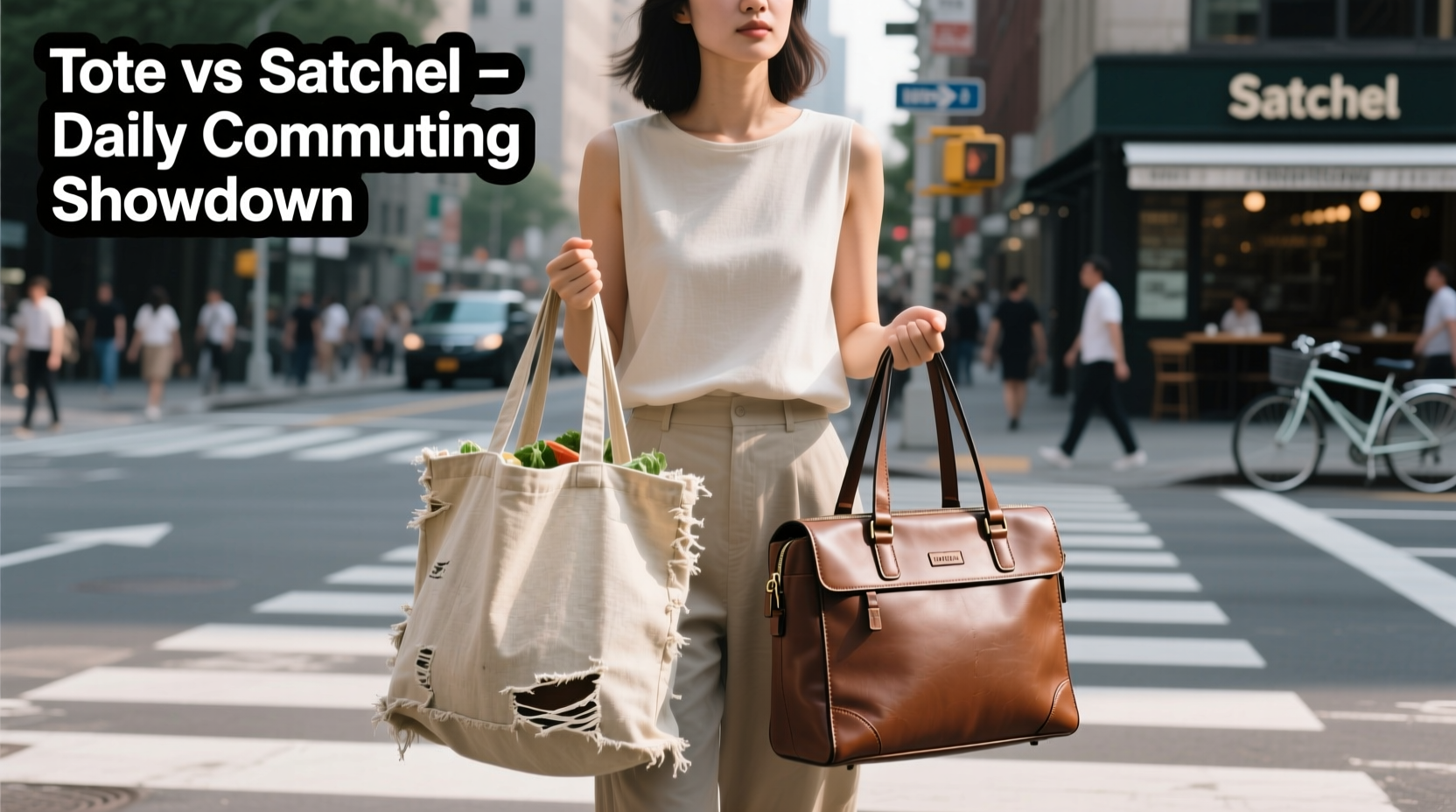
The oversized tote bag is built for volume. With deep, open interiors and minimal internal structure, these bags are ideal for those who need space above all else. Think laptops, notebooks, water bottles, gym shoes, and even a light jacket—all without worrying about fit.
However, this spaciousness often comes at the cost of organization. Most oversized totes lack interior pockets, dividers, or secure closures. This means items jumble together, making it difficult to find a phone or wallet quickly. If you value efficiency during your commute, digging through an overstuffed tote on a packed subway isn’t ideal.
In contrast, structured satchels are designed with purposeful compartments. They typically feature padded laptop sleeves, zippered pockets, card slots, and pen holders. The rigid shape maintains form even when full, ensuring contents stay separated and protected. For someone carrying tech-heavy gear or sensitive documents, this level of organization reduces stress and risk.
Durability and Build Quality: Which Bag Lasts Longer?
Durability hinges on materials, construction, and usage patterns. Oversized totes are commonly made from canvas, nylon, or soft leather—fabrics chosen for drape and flexibility. While lightweight and easy to carry when empty, they tend to sag under heavy loads, straining seams and handles over time. Canvas, though breathable and washable, can wear thin with daily use, especially at stress points like strap attachments.
Structured satchels, by design, use sturdier materials—thick-grain leather, reinforced synthetics, or ballistic nylon. Their frames are often supported by internal stiffeners or molded bases that prevent collapse. Metal zippers, riveted straps, and double-stitched seams contribute to longevity. These features make satchels more resilient against daily wear, rain exposure, and rough handling on trains or buses.
A study conducted by the Urban Mobility Lifestyle Institute found that users of structured bags reported 37% fewer repairs over a two-year period compared to tote users, primarily due to structural integrity and hardware quality.
“Durability isn’t just about material thickness—it’s about engineering. A well-structured bag distributes weight evenly and resists deformation.” — Marcus Lin, Product Designer at CommuteForm Bags
Comfort and Ergonomics: What Feels Better on Your Shoulder?
Carrying comfort is critical for commuters, especially those walking long distances or standing during transit. Oversized totes typically have long, flat straps meant to hang from the shoulder. When heavily loaded, the weight pulls down unevenly, concentrating pressure on one shoulder. Over time, this can lead to neck strain or posture issues.
Some modern totes now include padded straps or crossbody options, but their flexible bodies still shift unpredictably with movement. On a crowded train, this instability increases the risk of dropping or bumping into others.
Structured satchels, on the other hand, are engineered for balance. Many come with adjustable, padded shoulder straps or dual handles for hand-carrying. Their firm base ensures the bag sits flush against the body, minimizing sway. Some models even offer ergonomic back panels or chest straps for added support—features borrowed from backpack design.
If your commute involves stairs, cycling, or extended walking, a satchel’s stability provides noticeable relief. However, if you drive or take short rides and only carry light essentials, a tote’s relaxed drape may feel perfectly adequate.
Style and Professionalism: What Sends the Right Message?
Your bag often speaks before you do. In client-facing roles, academic environments, or formal workplaces, appearance matters. Structured satchels project polish and preparedness. Their clean lines, symmetrical shape, and refined finishes align with professional dress codes. Available in classic neutrals like black, navy, or tan, they pair seamlessly with business attire.
Oversized totes lean toward a creative or casual aesthetic. They’re favored in artistic fields, startups, or remote work settings where personal expression is encouraged. While some high-end designer totes maintain elegance, many mass-market versions look utilitarian or frayed after months of use—especially when overstuffed.
That said, personal branding plays a role. A journalist carrying a roomy tote filled with notebooks and recording gear signals accessibility and mobility. A lawyer arriving with a tailored satchel conveys precision and authority. The “better” choice depends on your industry norms and how you want to be perceived.
| Feature | Oversized Tote | Structured Satchel |
|---|---|---|
| Storage Capacity | High – excellent for bulk items | Moderate – optimized for essentials |
| Organization | Low – limited pockets | High – multiple compartments |
| Durability | Medium – prone to sagging and wear | High – reinforced construction |
| Comfort (Long Commutes) | Low to Medium – uneven weight distribution | High – balanced, stable carry |
| Professional Appearance | Variable – depends on brand and condition | Consistently polished |
| Security | Low – open tops, easy access by others | High – zippers, locks, snug fit |
Real-World Scenario: A Week in the Life of Two Commuters
Case Study: Sarah, Graphic Designer (Uses Oversized Tote)
Sarah works at a creative agency and commutes 35 minutes by bus and foot. Her oversized canvas tote holds her 15-inch laptop, sketchpad, tablet, headphones, lunchbox, and reusable water bottle. She loves the freedom of tossing everything in without arrangement. However, she frequently fumbles when searching for her transit pass and has had her bag tip over on crowded rides. After six months, the bottom fabric began fraying. She’s considering switching to a hybrid tote-satchel with partial structure.
Case Study: David, Financial Analyst (Uses Structured Satchel)
David takes the subway daily, often standing during rush hour. His leather satchel contains his laptop, charger, notebook, wallet, and umbrella. He appreciates the dedicated pockets and secure zipper. The bag stays upright on the floor and doesn’t swing while he reads. Even after 14 months of daily use, it shows minimal wear. He admits it doesn’t hold as much, so he leaves non-essentials at the office—but that simplicity suits his routine.
These examples highlight a key insight: the best bag aligns with both lifestyle and priorities. Sarah values flexibility and volume; David prioritizes order and protection. Neither is wrong—just different.
Choosing Based on Your Needs: A Step-by-Step Decision Guide
Follow this five-step process to determine which bag serves you best:
- Assess Your Daily Load
List everything you carry regularly. If it exceeds a laptop, phone, wallet, and keys, a tote may be necessary. - Evaluate Your Commute Type
Do you walk over 20 minutes? Stand on transit? Climb stairs? High-mobility commutes favor structured, balanced bags. - Consider Your Work Environment
Is your workplace formal or relaxed? Do you meet clients? Structure often enhances professionalism. - Test for Security Needs
If you travel through busy areas or ride packed trains, a zip-closed satchel reduces theft risk. - Think Long-Term Value
Calculate cost per use. A $250 satchel used 5 days a week for 3 years costs less per day than a $120 tote replaced every 8 months.
Hybrid Solutions and Emerging Trends
The line between tote and satchel is blurring. Many brands now offer \"structured totes\"—bags with rigid bases, zip-top closures, and interior organization, yet maintaining the spacious silhouette of a tote. Others integrate magnetic flaps, padded laptop sleeves, or removable pouches into traditionally soft designs.
Materials are also evolving. Water-resistant coated canvas, recycled polyester with memory lining, and vegan leathers with internal frames allow totes to perform more like satchels. Meanwhile, lightweight satchels with minimalist hardware appeal to those seeking elegance without bulk.
If you can’t decide, consider a convertible bag: one that functions as a satchel during the week and opens into a tote for weekend errands. These hybrids offer versatility without compromise.
Frequently Asked Questions
Can I use an oversized tote for a professional setting?
Yes, but choose carefully. Opt for high-quality materials like pebbled leather or waxed canvas, neutral colors, and clean lines. Avoid overstuffing, and use internal organizers to keep contents tidy. A sleek tote can work in business-casual environments, but may seem out of place in conservative offices.
Are structured satchels worth the higher price?
Often, yes. Their construction uses more durable materials and labor-intensive techniques. A well-made satchel can last 5–7 years with proper care, whereas totes may need replacing every 1–2 years. Over time, the investment pays off in both performance and reduced replacement costs.
How do I prevent shoulder strain with either bag?
Distribute weight evenly. Use crossbody straps when possible, and avoid carrying more than 10–15% of your body weight. Alternate shoulders regularly. For satchels, ensure straps are padded and adjustable. For totes, consider adding a detachable strap with cushioned padding.
Final Recommendation: Match Function to Lifestyle
There is no universal “better” option between an oversized tote and a structured satchel. The answer lies in alignment with your daily reality. If you need maximum capacity and operate in a relaxed environment, a tote—especially a reinforced or hybrid version—can serve you well. But if your days demand reliability, security, and a sharp appearance, the structured satchel is the superior companion.
Ultimately, the best commuting bag disappears into your routine—protecting your items, supporting your body, and reflecting your identity without demanding attention. Choose not based on trend, but on truth: what makes your journey easier, safer, and more confident.




 浙公网安备
33010002000092号
浙公网安备
33010002000092号 浙B2-20120091-4
Comments
No comments yet. Why don't you start the discussion?