
For professionals, students, and city dwellers alike, the daily commute often demands a reliable companion — one that carries essentials safely, comfortably, and with a touch of personal style. The debate between oversized totes and structured handbags has long divided practicality-focused users from those who prioritize polish and posture. While both styles have loyal followings, choosing the right bag hinges on how you use it, what you carry, and the rhythm of your day. This isn’t just about fashion; it’s about function, fatigue, and long-term usability.
An oversized tote offers vast space and effortless access, while a structured handbag delivers shape, security, and sophistication. But when you're navigating subways, walking blocks between meetings, or balancing coffee in one hand and keys in the other, which truly serves you better? Let’s break down the strengths and trade-offs of each based on real-life demands.
Daily Commuting Needs: What Matters Most
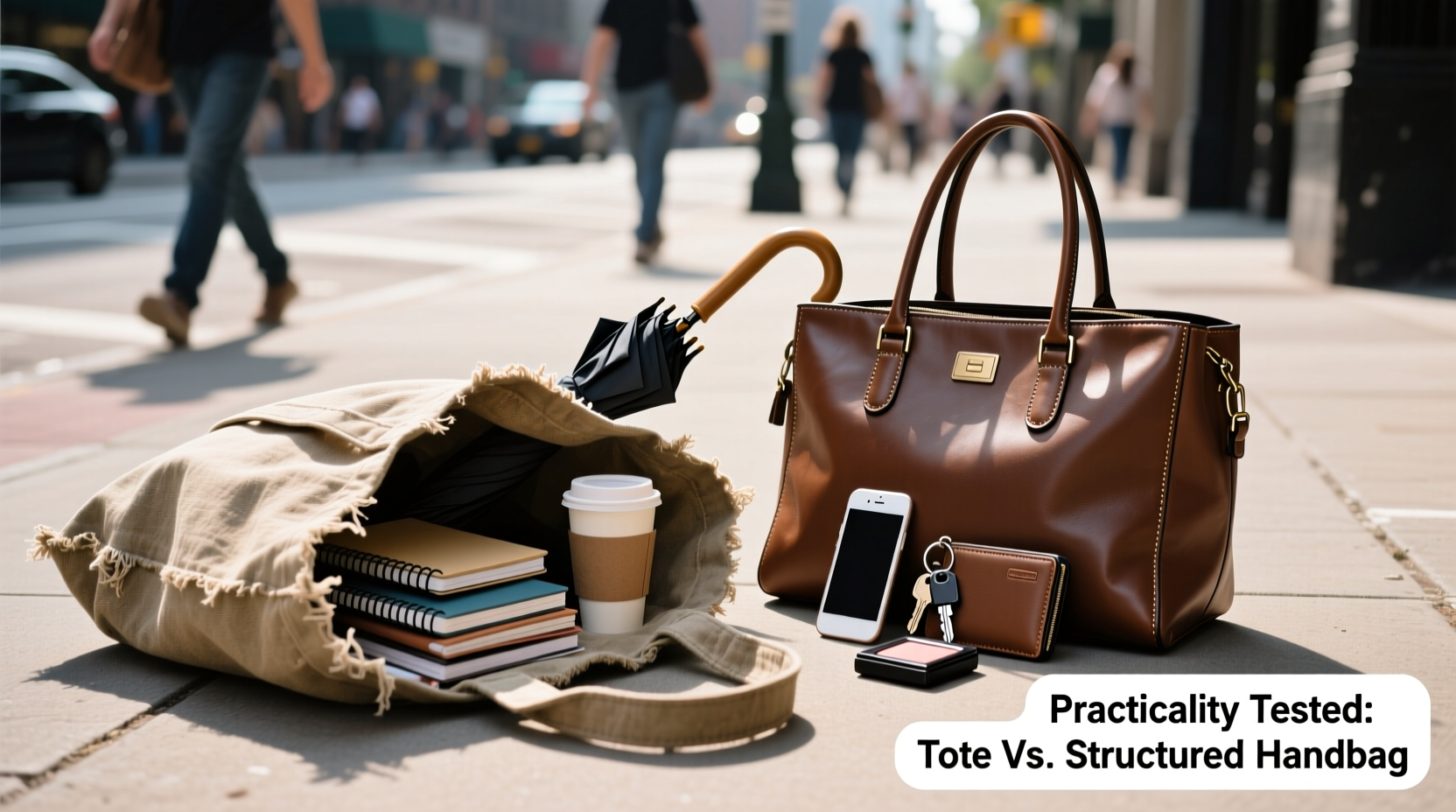
The ideal commuter bag must meet several non-negotiable criteria: weight distribution, organizational efficiency, durability, weather resistance, and ease of access. A bag that fails in any of these areas can turn a manageable routine into a daily struggle.
- Weight and Comfort: Carrying 5–10 pounds of laptop, books, lunch, and personal items over time strains shoulders and back if the bag isn’t ergonomically designed.
- Organization: Without compartments, digging for your phone or transit card becomes a public spectacle.
- Security: Open tops invite pickpockets; flimsy zippers compromise privacy.
- Durability: Daily wear and tear — rain, pavement contact, seat friction — demand resilient materials.
- Style Consistency: The bag should transition seamlessly from train to office to errands without looking out of place.
These factors are where the oversized tote and structured handbag diverge most significantly. One excels in volume and flexibility, the other in order and protection. Understanding your priorities is key.
Oversized Totes: The Pros and Practical Pitfalls
Oversized totes have become synonymous with urban utility. Their cavernous interiors accommodate laptops, notebooks, gym clothes, and even small umbrellas. They’re favored by creatives, freelancers, and anyone whose day spans multiple roles.
Advantages:
- Maximum capacity: Ideal for those who carry a lot — especially if switching between work, fitness, and social stops.
- Easy access: Wide openings allow quick retrieval of items without unzipping or unclasping.
- Versatile styling: Canvas, leather, or nylon versions suit casual, professional, or hybrid wardrobes.
- Affordable options: Many high-quality canvas totes cost less than designer structured bags.
Drawbacks:
- Poor organization: Lack of internal pockets leads to chaos. Keys vanish, pens leak, and chargers tangle.
- Overstuffing temptation: The more space available, the more you’ll fill it — often with unnecessary items.
- Shoulder strain: When fully loaded, weight concentrates on one shoulder, leading to imbalance and discomfort.
- Lack of security: Open tops expose contents and make theft easier in crowded spaces.
- Shape collapse: Once filled, many totes lose structure, appearing sloppy and unprofessional.
Structured Handbags: Form Meets Function
Structured handbags maintain their shape thanks to rigid frames, stiff linings, or architectural stitching. Often made from leather or high-grade synthetics, they project professionalism and precision. Think of classic satchels, boxy crossbodies, or top-handle designs with defined silhouettes.
Advantages:
- Built-in organization: Multiple compartments, zip pockets, and padded sleeves keep items separated and secure.
- Even weight distribution: Handles and straps are often reinforced, and some models include removable shoulder straps for balance.
- Security: Zippered or flap-closed tops prevent accidental spills and deter theft.
- Professional appearance: Maintains a polished look regardless of contents — crucial for client-facing roles.
- Durability: Higher-end materials resist scuffing, moisture, and wear over years of use.
Drawbacks:
- Limited capacity: Designed for essentials only; may not fit larger laptops (15”+) or bulky items.
- Rigidity as a flaw: Can be awkward to store under seats or squeeze into tight lockers.
- Cost: High-quality structured bags often come with premium price tags.
- Less casual versatility: May feel too formal for weekend errands or creative environments.
“Structure in a handbag isn’t just about aesthetics — it’s about control. It forces intentionality in what you carry and protects valuable items from crushing.” — Lena Torres, Product Designer at Urban Carry Co.
Head-to-Head Comparison: Key Decision Factors
| Factor | Oversized Tote | Structured Handbag |
|---|---|---|
| Capacity | High – fits laptops, folders, gym gear | Moderate – optimized for essentials |
| Organization | Poor – minimal internal pockets | Excellent – dedicated sections and closures |
| Comfort (loaded) | Fair – single-strap pressure on shoulder | Good – balanced handles and padding |
| Security | Low – open top, easy access for others | High – zippers, magnetic snaps, lockable flaps |
| Durability | Variable – canvas wears faster than leather | High – reinforced corners and quality lining |
| Style Flexibility | High – works across casual to smart-casual | Moderate – leans formal/professional |
| Price Range | $30–$300 | $150–$1,000+ |
This comparison reveals a fundamental truth: the oversized tote wins on volume and adaptability, but the structured handbag triumphs in control and longevity. Your lifestyle determines which set of trade-offs you can live with.
Real-World Scenario: Two Commuters, Two Choices
Case Study 1: Maya, Graphic Designer & Freelancer
Maya commutes 45 minutes each way via subway, often working from cafes after dropping off her child at daycare. Her current bag is a large canvas tote with a single interior pocket. She carries her 13” laptop, sketchbook, tablet, water bottle, snacks, and a light sweater. While she appreciates the roominess, she frequently loses her stylus and spends mornings searching for her transit card. On rainy days, her tote soaks through, damaging her notebook. After six months, the strap began fraying from uneven weight.
Case Study 2: David, Financial Analyst
David walks 20 minutes to the office and values punctuality and presentation. He uses a structured leather satchel with a padded laptop sleeve, two zip compartments, and a front slip pocket for his badge. He carries only his laptop, wallet, phone, and a compact umbrella. His bag stays neat, survives light rain, and looks appropriate in boardrooms. However, when he attends off-site training with extra files, the bag won’t close properly, forcing him to carry documents by hand.
Maya needs more organization and weather resistance — a structured tote hybrid might serve her better. David benefits from discipline in packing but hits capacity limits occasionally. For him, upgrading to a slightly larger structured design with expandable sides could resolve the issue.
Choosing Based on Your Lifestyle: A Checklist
Use this checklist to determine which bag aligns with your daily reality:
- ✅ Do you regularly carry more than five essential items? → Favors oversized tote (with internal organizers)
- ✅ Is your commute over 30 minutes on foot or public transit? → Favors structured bag with ergonomic straps
- ✅ Do you enter professional or client-facing environments? → Favors structured handbag
- ✅ Do you often forget where you placed small items? → Favors structured bag with dedicated pockets
- ✅ Do you experience shoulder or neck pain? → Favors structured bag with crossbody option or tote with dual straps
- ✅ Do you travel in unpredictable weather? → Favors structured bag with water-resistant material or tote with protective liner
- ✅ Do you value long-term investment over short-term savings? → Favors high-quality structured handbag
Hybrid Solutions and Smart Upgrades
The best choice doesn’t have to be binary. Many modern bags blend the best of both worlds:
- Structured totes: Maintain shape with stiffened bases and side panels while offering wide access and spacious interiors.
- Convertible designs: Feature removable straps for shoulder, crossbody, or handle carry — adapting to load and setting.
- Smart organization: Include RFID-blocking pockets, padded tech sleeves, and magnetic closures within a roomy frame.
- Weather-ready materials: Water-resistant exteriors with wipe-clean linings protect contents in downpours.
Brands like Bellroy, Dagne Dover, and Tumi have pioneered this hybrid category, offering sleek, functional bags that bridge the gap. These may cost more upfront but reduce the need to own multiple bags for different purposes.
FAQ: Common Questions Answered
Can an oversized tote be professional enough for the office?
Yes — if it’s made from refined materials like pebbled leather or waxed canvas, has clean lines, and is kept organized. Avoid overly casual fabrics like canvas with visible branding. Pair it with tailored clothing to maintain a polished image.
Are structured handbags worth the higher price?
For frequent commuters, yes. A well-made structured bag lasts 5–10 years with care, whereas lower-quality totes may need replacing every 1–2 years. The long-term value often justifies the initial cost.
How can I make my tote more secure?
Add a locking zipper clip, use a crossbody strap for stability, and avoid placing valuables near the top. Consider inserting a lightweight purse organizer with a zip closure to create a secured core within the tote.
Final Verdict: Which Is More Practical?
If your priority is carrying capacity and versatility across varied tasks, the oversized tote is more practical — provided you implement organizational systems and choose durable, weather-appropriate materials. However, for most daily commuters seeking reliability, comfort, and professionalism, the structured handbag proves more practical in the long run.
Its superior organization reduces daily friction, its secure closures protect your belongings, and its consistent form supports better posture and presentation. While it may require stricter editing of what you carry, that constraint often leads to greater efficiency. You’re not just transporting items — you’re managing your time, energy, and image.
Ultimately, the most practical bag is the one that aligns with your actual habits, not aspirational ones. If you consistently overpack, a structured bag will force necessary discipline. If your role demands constant mobility with diverse tools, a high-quality tote with smart inserts may be your optimal partner.
“The right bag doesn’t just hold your things — it holds your routine together.” — Marcus Lin, Urban Lifestyle Consultant
Take Action Today
Don’t settle for discomfort or disorganization. Audit your current bag: weigh it fully loaded, test access during a simulated commute, and assess how often you misplace items. Then, use the insights above to choose a bag that supports your life — not complicates it. Whether you invest in a structured handbag or upgrade your tote with smarter features, the goal is sustainable ease. Your daily journey deserves that respect.




 浙公网安备
33010002000092号
浙公网安备
33010002000092号 浙B2-20120091-4
Comments
No comments yet. Why don't you start the discussion?