
Everyday accessories often go unnoticed—until one of them brings a smile to your face every time you reach for your keys. Enter the panda keychain: a whimsical twist on a utilitarian object. While a standard metal or plastic keyring quietly does its job, a panda-shaped keychain adds personality, charm, and a dash of playfulness. But beyond aesthetics, is there any real value in choosing a panda keychain over a regular one? Does the extra cuteness justify potential trade-offs in durability, function, or price?
This comparison dives deep into the practical and emotional differences between panda and regular keychains, helping you decide whether that adorable bear earns a permanent spot on your keyring.
Design and Aesthetic Appeal
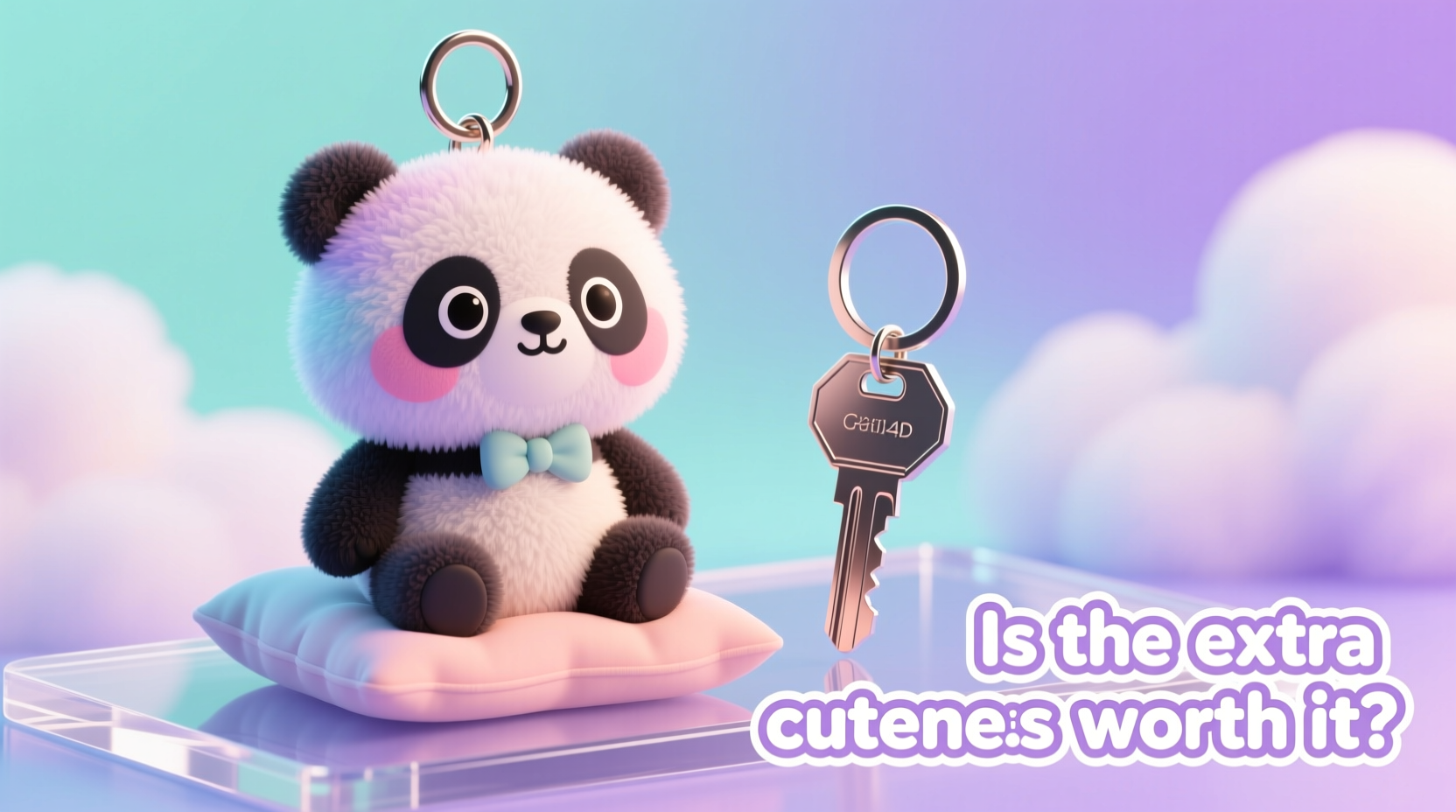
The most obvious distinction lies in appearance. Regular keychains are typically minimalist—simple loops, split rings, or basic carabiners made from stainless steel, aluminum, or rubber-coated metals. Their purpose is purely functional: to hold keys securely and resist wear.
Panda keychains, by contrast, prioritize design. They often feature soft enamel detailing, two-tone color schemes (black and white), and expressive eyes that give them character. Some are plush fabric toys; others are molded resin or silicone with textured fur-like finishes. The appeal is emotional as much as visual—these aren’t just tools, they’re companions.
Aesthetics matter more than we admit. According to Dr. Sarah Lin, behavioral designer and author of *Emotional Objects*, “When an everyday item sparks joy, people are more likely to care for it and use it consistently.” That emotional connection can translate into better organization and fewer lost items.
Material and Durability Comparison
Functionality shouldn't be sacrificed for charm. Let’s examine how these two types stack up in terms of longevity and resilience.
| Feature | Regular Keychain | Panda Keychain |
|---|---|---|
| Primary Material | Stainless steel, aluminum, durable plastic | Silicone, resin, plush fabric, PVC |
| Weather Resistance | High – resists rust, moisture, UV exposure | Varies – silicone good, fabric degrades in rain |
| Durability Under Stress | Excellent – handles heavy key loads | Fair to poor – decorative parts may crack or detach |
| Lifespan (Average) | 3–5+ years | 6 months – 2 years (depending on material) |
| Maintenance Needs | Minimal – occasional wipe-down | Moderate – clean stains, avoid extreme temps |
While high-end panda keychains made from reinforced silicone or metal alloys can last several years, cheaper versions—especially plush models—tend to show wear quickly. Fading colors, loose stitching, or chipped paint diminish their appeal over time.
“Cuteness has utility—but only if the product still performs its core function.” — Marcus Reed, Industrial Designer at Urban Gadget Co.
Practicality and Everyday Use
Keychains must withstand daily abuse: jostling in pockets, drops on pavement, exposure to water, and constant friction. A regular keychain excels here due to its robust construction and compact form.
Panda keychains, while charming, introduce bulk. Their shape makes them harder to fit into tight pockets or small bags. The protruding ears or limbs can snag on fabric, and larger models may interfere with key alignment on a ring, making it difficult to insert keys into locks smoothly.
Still, there are scenarios where the panda version shines. Parents often choose animal-themed keychains to help children identify their belongings. Teachers use them as classroom incentives. Travelers attach them to luggage for quick spotting on baggage carousels. In these cases, visibility and emotional resonance outweigh compactness.
Mini Case Study: Office Worker vs. College Student
Consider two users:
- Jamie, 38, office manager: Uses a sleek titanium keychain with a magnetic closure. Values discretion, reliability, and minimalism. Finds panda designs “too childish” and worries about professionalism.
- Riley, 21, college student: Carries a bright red backpack with a fuzzy panda keychain dangling from the side. Says it “makes mornings better” and helps friends spot them in crowded lecture halls.
Both choices are valid. Jamie prioritizes efficiency and subtlety; Riley values identity and mood enhancement. The panda keychain isn’t objectively better—it’s better suited to certain lifestyles.
Cost and Value Analysis
Standard keychains range from $1–$15, depending on material and mechanism (e.g., rotating rings, locking clips). Panda keychains, especially branded or artisanal ones, often cost $8–$25. Limited editions or collectible series (like Sanrio or Disney collaborations) can exceed $30.
Is the premium justified?
- For collectors: Yes. Limited-run panda keychains become keepsakes or resale items.
- For daily drivers: Maybe not. You’re paying for artistry, not performance.
- For gifting: Absolutely. A cute panda keychain feels personal and thoughtful.
If you replace your keychain annually anyway, spending $12 on one that brings daily joy could be a worthwhile micro-investment in well-being.
Step-by-Step Guide: Choosing the Right Keychain for You
Follow this decision framework to determine which type fits your needs best:
- Assess your usage: Do you carry heavy keys? Work outdoors? Lose items often?
- Evaluate your priorities: Rank importance: durability, size, aesthetics, emotional value.
- Test ergonomics: Try holding both styles. Does the panda model feel cumbersome?
- Check material quality: For panda versions, verify if paint is sealed, seams are reinforced, and the ring is metal.
- Decide on context: Will it be used daily, kept as a memento, or given as a gift?
- Budget accordingly: Spend more only if the design enhances your experience meaningfully.
Frequently Asked Questions
Can a panda keychain be as durable as a regular one?
Yes—but only if made from high-quality materials like hardened silicone, epoxy resin, or metal alloy. Avoid cheap plastic or stitched fabric if longevity is a priority.
Are panda keychains suitable for professional settings?
It depends on workplace culture. In creative industries (design, education, startups), they’re often welcomed. In conservative fields (law, finance), a subtler design may be preferable. Consider a miniature or enamel-only version for balance.
Do panda keychains increase the chance of losing keys?
Actually, the opposite. Their distinctive look makes them easier to find in cluttered spaces. However, their size may cause them to get caught and accidentally left behind (e.g., on café counters).
Final Verdict: Is the Extra Cuteness Worth It?
The answer hinges on what you value in a simple object. If your goal is pure utility—a no-fail way to keep keys together—then a regular keychain wins hands down. It’s reliable, compact, and built to last.
But if you appreciate small joys, want a conversation starter, or seek a personal touch in your daily routine, a panda keychain offers something intangible yet powerful: delight. It turns a mundane action—unlocking a door—into a moment of recognition, a flash of familiarity, even comfort.
As modern life grows increasingly digital and impersonal, these tiny expressions of self matter. A panda keychain isn’t just an accessory; it’s a statement that fun and function don’t have to be mutually exclusive.




 浙公网安备
33010002000092号
浙公网安备
33010002000092号 浙B2-20120091-4
Comments
No comments yet. Why don't you start the discussion?