
In the anime and manga series Black Clover, created by Yūki Tabata, the world of magic is rich with traditions, rituals, and hidden lore. Among its most intriguing fictional elements is the ancient game of Patolli—a mystical board game deeply interwoven with magical contracts, divine judgment, and high-stakes duels. Unlike typical games of chance or strategy seen in fantasy settings, Patolli serves a narrative and thematic purpose: it determines fate, tests worthiness, and binds souls through magical pacts. While not a real-world culinary or edible subject, the term “Patolli” has historical roots in Mesoamerican culture as an actual dice-and-board game played by the Aztecs. However, in Black Clover, the name and concept are reimagined into a supernatural mechanism central to key plot developments involving devils, reincarnations, and forbidden magic.
This article explores the fictional version of Patolli as presented in Black Clover, detailing its rules, significance, participants, and symbolic meaning within the story’s cosmology. For fans seeking clarity on one of the series’ more esoteric systems, this guide provides a comprehensive breakdown of how Patolli functions, who plays it, and why it matters in the struggle for power between humans, devils, and the elusive Wizard King legacy.
Definition & Overview
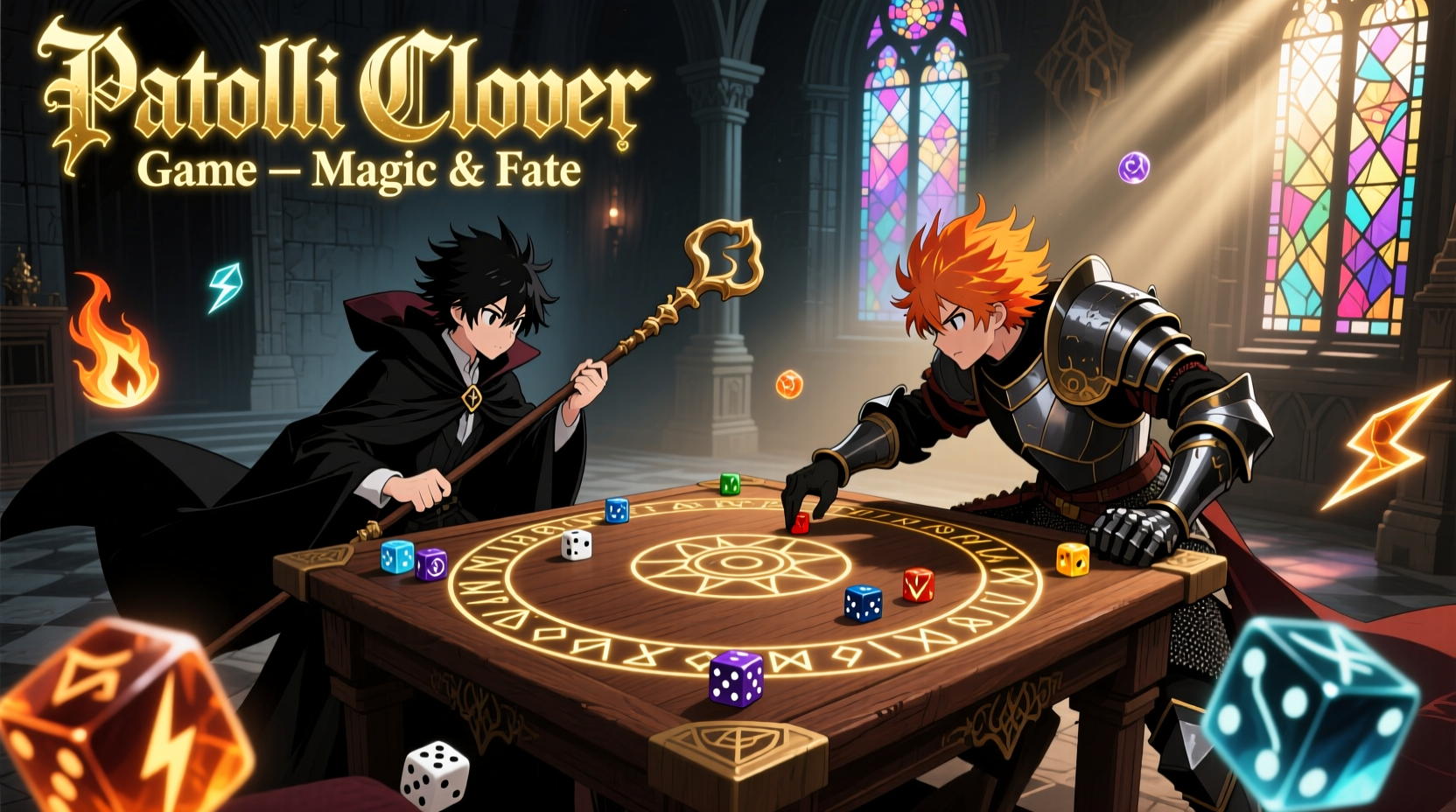
In the context of Black Clover, Patolli is a metaphysical gambling game conducted between two parties—typically a human and a devil—where the stakes involve magical power, memories, souls, or even the right to inhabit a body. It is not a physical board game in the conventional sense but rather a ritualistic confrontation that unfolds in a spiritual or dreamlike dimension governed by strict magical laws. The outcome of the game directly influences reality, making it a pivotal device for character development and plot progression.
The game draws its name from the real-life patolli, an ancient Aztec game of strategy and luck played with black beans used as dice and marked stones as pieces. Historical patolli was often associated with gambling, social status, and sometimes religious ceremonies. In Black Clover, the creators borrow the name and the idea of risk-based gameplay but transform it into a supernatural trial rooted in契约 (contractual magic) and cosmic balance.
Within the series, Patolli emerges during the **Spade Kingdom Raid arc**, particularly when characters like Asta, Liebe, and Lucifero confront the deeper truths behind devil summoning, reincarnation, and the origins of anti-magic. It becomes clear that certain powerful devils cannot be defeated through brute force alone; instead, they must be challenged and bested in Patolli—a game only those with strong willpower, unique magical traits, or special bonds can participate in.
Key Characteristics
- Type: Supernatural, magical contract-based game
- Realm: Conducted in a spiritual/dream plane outside normal space-time
- Participants: Typically a human (or vessel) vs. a devil (or spirit)
- Stakes: Memories, soul ownership, magical inheritance, freedom, or life
- Gameplay Mechanism: Turn-based, using enchanted dice and symbolic movement across a mystical board
- Magic System Tie-In: Governed by ancient laws tied to devil contracts and reincarnation cycles
- Outcome Effect: Results manifest instantly in the real world (e.g., memory loss, possession reversal, power transfer)
- Visual Design: Features glowing runes, floating platforms, celestial motifs, and shifting terrain based on player intent
What sets Patolli apart from other fictional games in anime is its integration into the core magic system. Victory isn't determined solely by luck or intellect—it also hinges on emotional resolve, past experiences, and the strength of one's convictions. This makes it both a tactical and psychological battle, where inner turmoil and personal growth directly influence the odds of success.
Practical Usage in the Story
While Patolli does not have literal \"usage\" in cooking or daily life, understanding how it operates within the narrative framework of Black Clover helps viewers interpret major turning points in the series. Here’s how Patolli functions practically in key arcs:
1. Determining Devil-Human Contracts
When a devil attempts to take full control of a host body (such as when Lucifero seeks to reclaim his original form through Liebe), the rightful occupant may challenge the intruder to a game of Patolli. The winner gains dominion over the body and associated powers. This establishes Patolli as a safeguard against total demonic domination—provided the human has sufficient willpower to initiate the game.
2. Memory and Identity Exchange
One of the most dramatic uses occurs when characters wager their memories. In Asta’s case, he risks forgetting everything about his friends and journey if he loses. Winning allows him to retain his identity and relationships. This mechanic underscores the theme that memory shapes selfhood, and losing it equates to spiritual death—even if physically alive.
3. Power Transfer and Inheritance
Victory in Patolli can result in the transfer of immense magical energy or relics. For example, defeating a high-ranking devil in the game might grant access to lost spells, enhanced abilities, or ancestral knowledge encoded in cursed grimoires. It acts as a gatekeeping mechanism—only those who prove themselves worthy through courage and sacrifice earn such boons.
4. Narrative Pacing and Character Development
From a storytelling perspective, Patolli slows down climactic moments, allowing introspection, flashbacks, and philosophical debates about free will versus destiny. These sequences deepen audience connection to characters while advancing complex themes like redemption, trust, and what it means to fight for others.
TIP FOR VIEWERS: When Patolli begins, pay close attention to dialogue, symbolism, and visual metaphors. The board often reflects the mental state of players—cracks represent doubt, light signifies hope, and obstacles mirror unresolved trauma. Understanding these cues enhances appreciation of the scene’s emotional weight.
Variants & Types of Patolli Encounters
Though the fundamental structure remains consistent, variations of Patolli appear depending on the participants and circumstances. These differences affect rules, appearance, and consequences.
| Variant Type | Participants | Setting | Unique Rules | Notable Example |
|---|---|---|---|---|
| Standard Possession Duel | Human vs. Devil (in shared body) | Spiritual plane resembling void with circular board | Roll enchanted dice; move toward center; first to reach wins control | Liebe vs. Unknown Devil (early manifestation) |
| Memory Wager Match | Summoner vs. Reincarnated Devil | Dreamscape with fragmented memories as tiles | Each turn reveals a memory; losing erases chosen recollections | Asta vs. Lucifero (Spade Kingdom arc) |
| Soul Ownership Trial | Original Spirit vs. Invading Entity | Celestial arena with dual paths converging at apex | Must answer existential questions correctly to advance | Liebe reclaiming autonomy from corrupted essence |
| Alliance Formation Game | Two Devils or Human-Devil Pair | Cooperative board with branching routes | Success requires mutual trust and synchronized rolls | Asta and Liebe combining forces against common enemy |
These variants demonstrate that Patolli is not rigidly codified but adapts to the nature of the conflict. Its flexibility allows writers to explore different aspects of morality, loyalty, and personal evolution under pressure.
Comparison with Similar Fictional Games
Patolli shares conceptual similarities with other legendary games in anime and literature, yet maintains distinct mechanics and thematic roles.
| Game | Series | Similarity to Patolli | Key Difference |
|---|---|---|---|
| Shiritori Battle | Spirited Away | Uses language and wit in supernatural setting | Focused on wordplay, not soul-binding stakes |
| Duel Monsters | Yu-Gi-Oh! | Turn-based card game affecting reality | Relies on pre-built decks; less emphasis on inner truth |
| Death Game (Saw-style) | Horror franchises | High personal stakes, survival-based | Lacks magical contract element; purely physical danger |
| The Game (Liar Game) | Liar Game | Psychological manipulation, moral dilemmas | No supernatural enforcement; outcomes legal/financial |
| Patolli (Black Clover) | Black Clover | N/A | Binds souls via cosmic law; victory depends on emotional integrity |
Unlike games driven purely by intellect or chance, Patolli uniquely blends fate, emotion, and metaphysics. A player may roll poorly but still win if their heart is true—making it closer to mythic trials found in folklore than modern competitive gaming.
Practical Tips & FAQs
Q1: Can anyone play Patolli?
No. Participation requires either a direct link to a devil (through summoning or reincarnation) or possession of anti-magic that disrupts natural order. Ordinary mages without such connections cannot initiate or enter the game.
Q2: Are the dice rigged? Is it pure luck?
The enchanted dice used in Patolli respond partially to the player’s determination. While randomness exists, strong belief and clarity of purpose can subtly influence outcomes. Characters who hesitate or doubt themselves tend to roll lower numbers.
Q3: What happens if someone refuses to play?
Refusal results in automatic forfeiture. The opposing party claims victory without contest. This often leads to permanent loss of body, magic, or consciousness—making refusal a de facto surrender.
Q4: Has Patolli appeared outside the Spade Kingdom arc?
Only in brief references. Earlier hints occur when characters discuss devil contracts or failed exorcisms, implying past Patolli losses. However, full depiction begins in earnest during the final saga involving the devils’ return.
Q5: Could Patolli be used offensively?
Theoretically, yes—but only if a human possesses enough dark magic or devilish affinity to issue a formal challenge. No character in the series has been shown forcing another into Patolli without mutual magical entanglement.
Q6: Is there a way to cheat in Patolli?
There is no known method of cheating due to the game being governed by ancient magical laws. Attempts to manipulate the board or dice result in immediate disqualification—or worse, annihilation of the cheater’s soul. Honesty and courage are enforced by design.
EXPERT INSIGHT: “Patolli works because it mirrors the central theme of Black Clover: that effort, empathy, and unwavering resolve triumph over innate power. It’s not about being the strongest—it’s about refusing to give up, even when the dice say you should.” — Anime analyst, Kaito Ren
Symbolism and Thematic Role
Patolli transcends its function as a plot device by embodying several core messages of the series:
- Fate vs. Free Will: Though the game involves dice (symbols of chance), characters shape their destiny through choices, emphasizing that effort defines outcome more than luck.
- Inner Conflict Made External: The board becomes a projection of internal struggles—fear, guilt, love, duty—allowing abstract battles to become tangible.
- Equality in Adversity: Even the weakest-seeming character can win if their heart is stronger. This reinforces the protagonist Asta’s philosophy: strength comes from protecting others, not dominating them.
- Legacy and Responsibility: Winning often means accepting a burden—greater power, painful memories, or leadership. True victory lies not in gaining power, but in choosing to bear its cost.
This symbolic depth elevates Patolli beyond mere spectacle. It becomes a rite of passage—a moment where characters must confront who they are and decide who they want to become.
Summary & Key Takeaways
The Patolli game in Black Clover is far more than a magical minigame—it is a narrative engine that drives transformation, resolves conflicts, and deepens thematic resonance. By challenging characters to risk everything they hold dear, it reveals their truest selves and determines the course of the world’s future.
To recap:
- Patolli is a supernatural, contract-based game between humans and devils, determining control over bodies, memories, and powers.
- It takes place in a spiritual realm and uses enchanted dice and a symbolic board influenced by the players’ emotions and intentions.
- Only those bound by devil contracts or possessing anti-magic can participate.
- Variants exist based on stakes: possession, memory, soul rights, or alliance formation.
- Victory depends not just on luck, but on willpower, honesty, and emotional strength.
- Compared to other fictional games, Patolli uniquely ties gameplay outcomes to metaphysical consequences enforced by cosmic law.
- Its inclusion underscores central themes: perseverance, identity, sacrifice, and the triumph of heart over inherent advantage.
Final Thought: As Black Clover concludes its run, Patolli stands as one of its most inventive contributions to fantasy storytelling—a reminder that some battles aren’t won with swords or spells, but with the courage to keep moving forward, one roll at a time.




 浙公网安备
33010002000092号
浙公网安备
33010002000092号 浙B2-20120091-4
Comments
No comments yet. Why don't you start the discussion?