
Choosing the right diamond setting can dramatically influence how large and brilliant a ring appears on the hand. While carat weight matters, the way diamonds are set plays an equally important role in visual impact. Among popular choices, pave and channel settings stand out for their ability to amplify sparkle and create the illusion of size. Understanding the subtle yet significant differences between them helps buyers make informed decisions—especially when aiming to maximize presence without increasing cost.
What Is a Pave Setting?
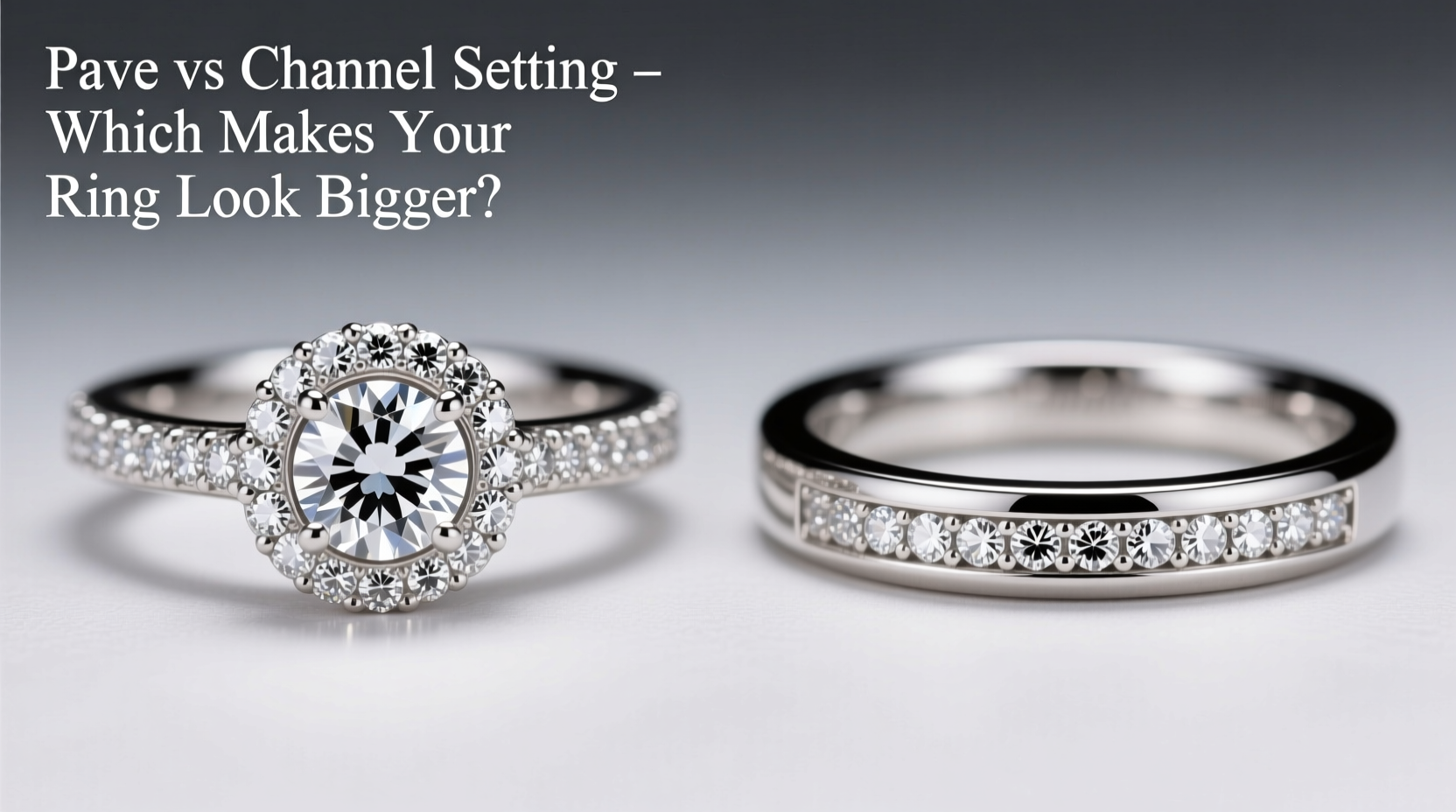
A pave setting (from the French word “pavé,” meaning “paved”) features small diamonds set closely together along the band or around the center stone. Tiny metal beads or prongs hold each diamond in place, minimizing visible metal and creating a continuous field of sparkle. This technique gives the impression that the ring is literally paved with diamonds.
Pave settings are often used to accentuate a center gemstone, wrapping it in brilliance or extending shimmer down the shank. Because the side stones are so close together, light reflects off multiple surfaces simultaneously, enhancing both fire and perceived size.
What Is a Channel Setting?
In a channel setting, diamonds are secured between two walls of metal that run parallel along the band. The stones sit flush within the groove, with no individual prongs visible. This creates a smooth, protected surface ideal for active lifestyles.
Channel settings are commonly used in wedding bands or eternity rings but also appear in engagement rings as side accents. The uniform alignment of stones produces a sleek, modern aesthetic while offering excellent durability. Unlike pave, where tiny prongs may wear down over time, channel settings shield diamonds from daily impacts.
“Channel settings offer security and elegance—ideal for those who want lasting beauty without constant maintenance.” — Laura Bennett, GIA-Certified Jewelry Designer
Visual Impact: Which Setting Makes Your Ring Look Bigger?
The ultimate goal for many shoppers is to enhance the apparent size of the center diamond. Both pave and channel settings contribute to this effect, but in different ways.
Pave settings tend to create a more dramatic enlargement effect due to their high sparkle concentration near the center stone. The scattered reflection pattern draws the eye outward, making the entire ring—including the center diamond—appear larger. When pave extends down the band, it elongates the finger visually, adding to the overall impression of size.
Channel settings provide a cleaner, more structured expansion of brilliance. Because the diamonds are aligned uniformly, they reflect light in a consistent direction, producing a luminous ribbon effect. While slightly less flashy than pave, this orderly sparkle adds width and substance to the ring’s profile, subtly boosting its presence.
Key Visual Differences
| Feature | Pave Setting | Channel Setting |
|---|---|---|
| Sparkle Distribution | Scattered, multidirectional | Uniform, linear |
| Perceived Size Boost | High (especially near center) | Moderate to high (adds width) |
| Metal Visibility | Minimal (beads only) | Moderate (side rails visible) |
| Diamond Protection | Low to moderate (prone to snagging) | High (fully enclosed) |
| Best For | Maximizing sparkle and visual size | Durability and sleek design |
Real-Life Example: Choosing Between Settings for a 1-Carat Solitaire
Sophia was shopping for an engagement ring with a 1-carat round brilliant center stone. Her budget allowed for either a classic solitaire with a micro-pave halo and band or a similar design with a channel-set double row on each side.
She tried both. The pave version immediately caught her eye—the tiny surrounding diamonds made the center stone seem fuller and more radiant. In natural light, the ring sparkled intensely from every angle. However, she noticed the prongs could catch on fabric, and the jeweler advised careful handling.
The channel-set option looked more refined and felt smoother on her finger. Though slightly less dazzling up close, it had a bolder profile due to the wider band. Over time, she realized it required less cleaning and showed fewer signs of wear.
In the end, Sophia chose the pave design for its romantic glow and perceived size boost—but committed to annual inspections to maintain prong integrity.
How to Maximize Ring Size Perception: A Step-by-Step Guide
Whether you choose pave, channel, or a combination, follow these steps to get the most visual impact from your ring:
- Select a halo design with pave accents—a circle of small diamonds around the center stone instantly enlarges its appearance by up to 15%.
- Extend sparkle down the band using either pave or channel settings to draw the eye along the finger, creating length and prominence.
- Choose white gold or platinum over yellow gold to reduce contrast between metal and diamonds, enhancing the seamless look of pave work.
- Opt for higher-cut-quality diamonds in accent positions—even small stones with excellent polish and symmetry will reflect more light.
- Keep the center stone well-proportioned—a shallow or overly deep cut diminishes brilliance, making surrounding settings less effective.
Expert Tips for Long-Term Wearability
While aesthetics matter, durability should not be overlooked. Here’s what experienced jewelers recommend:
- Pave settings require professional cleaning every 6 months to remove debris trapped under prongs.
- Channel settings resist loosening better than pave but still need inspection annually for rail wear.
- Avoid ultrasonic cleaners for pave rings unless confirmed safe by a jeweler—vibrations can loosen micro-prongs.
- If you have an active job or hobbies, consider combining both styles: channel-set sides for protection, pave near the center for maximum flash.
Frequently Asked Questions
Does a pave setting make a small diamond look bigger?
Yes. By surrounding a smaller center diamond with dozens of tiny accent stones, a pave setting creates a halo effect that expands the visual footprint. The increased sparkle also distracts from carat size, focusing attention on brilliance instead.
Is a channel setting more durable than pave?
Generally, yes. Channel settings encase diamonds between metal walls, protecting them from knocks and snags. Pave relies on tiny prongs that can bend or break over time, especially with frequent wear. For longevity, channel wins—but both require regular maintenance.
Can I combine pave and channel settings in one ring?
Absolutely. Many designers blend both techniques: a pave halo around the center stone, transitioning into channel-set side rows. This hybrid approach balances maximum sparkle with structural resilience, offering the best of both worlds.
Final Recommendations: Matching Setting to Lifestyle and Style
If your priority is visual drama and the illusion of a larger diamond, a pave setting—especially with a halo and pave band—is your strongest choice. Its密集 sparkle radiates outward, framing the center stone and catching light from all angles.
If you value low maintenance and long-term durability, a channel setting provides a polished, secure alternative. It won’t dazzle quite as much up close, but it holds up beautifully over years of wear and adds noticeable width to the ring’s silhouette.
For many, the ideal solution lies in thoughtful combination: use pave where visibility is highest (near the center), and channel where protection matters most (on the lower band). This strategic layering ensures both beauty and endurance.
“The right setting doesn’t just showcase the diamond—it transforms how people see it. Sometimes, half a carat with great setting design looks bigger than one full carat in a plain mount.” — Marcus Reed, Master Bench Jeweler
Take Action: Design Your Dream Ring Today
Don’t underestimate the power of craftsmanship in shaping perception. Whether you lean toward the delicate glamour of pave or the streamlined strength of channel, your choice should reflect both aesthetic goals and real-life needs. Visit a trusted jeweler, try on examples of both settings, and observe how they perform in different lighting. With the right setting, even a modestly sized diamond can command attention—proving that brilliance isn’t just about carats, but how they’re presented.




 浙公网安备
33010002000092号
浙公网安备
33010002000092号 浙B2-20120091-4
Comments
No comments yet. Why don't you start the discussion?