
Everyday accessories like keychains may seem minor, but their durability can make a big difference when jostling around inside a handbag, backpack, or pocket. Among popular decorative options, pearl and beaded keychains stand out for their elegance and charm. Yet, how well do they hold up under constant movement, friction, and pressure? The answer depends on material quality, stringing method, clasp strength, and usage patterns. This guide breaks down the structural and practical differences between pearl and beaded keychains to help you choose the one less likely to break in your daily carry.
Material Composition: What Are You Really Carrying?
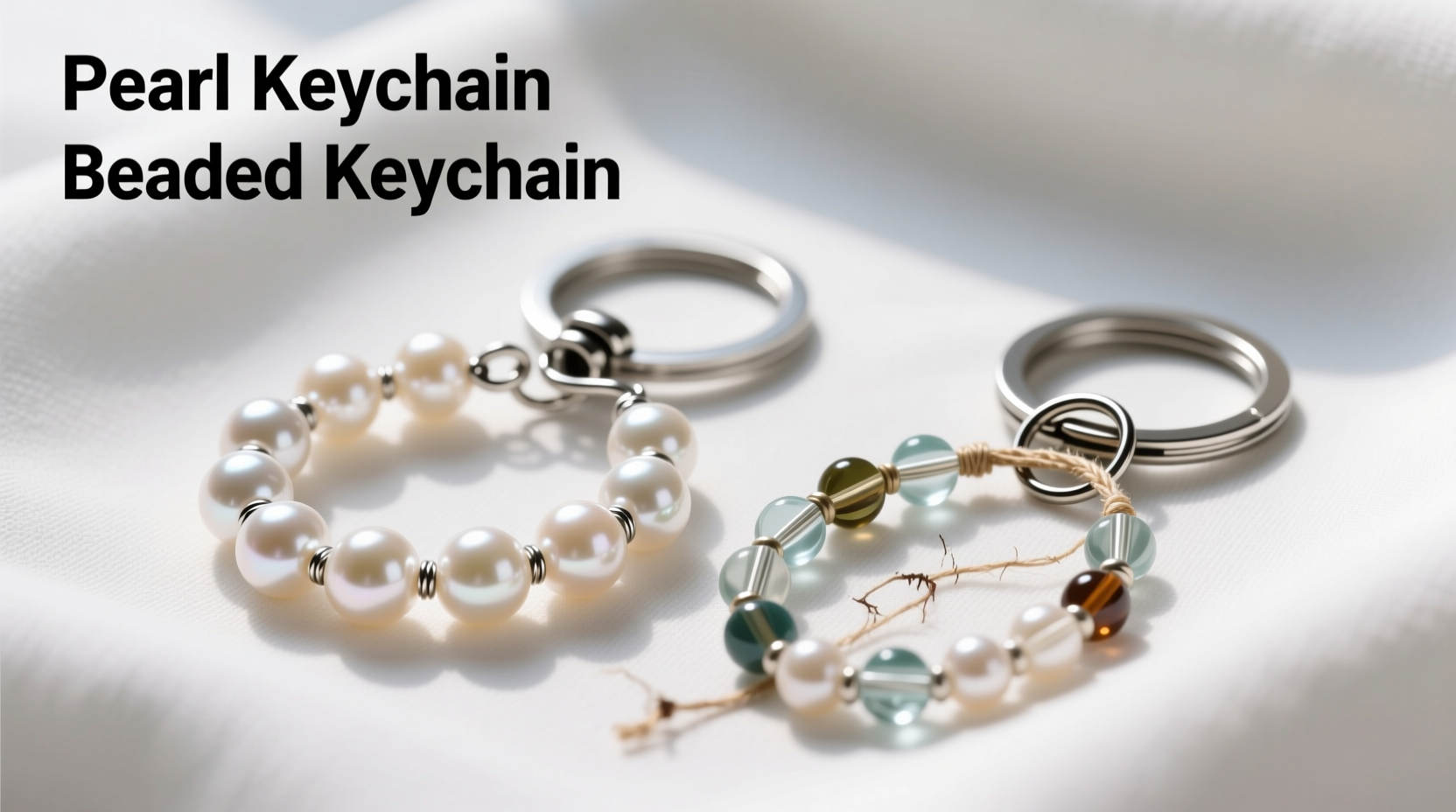
Pearl and beaded keychains often look similar at first glance—both feature round, polished elements strung together—but their core materials differ significantly.
Pearl keychains typically use either simulated pearls (made from glass, plastic, or resin coated with iridescent finishes) or, less commonly, genuine freshwater pearls. Simulated pearls are lightweight and consistent in shape, while real pearls offer natural luster but are more delicate.
Beaded keychains, on the other hand, can include a wide range of materials: acrylic, wood, ceramic, metal, or even semi-precious stones. Their durability hinges not just on the bead type, but also on how tightly and securely they’re strung.
The misconception that “pearls are fragile” doesn’t always apply—many modern simulated pearls are surprisingly resilient. However, the coating on imitation pearls can chip if scratched against hard surfaces, especially inside a crowded bag with keys, phones, or pens.
Construction & Stringing Methods: The Hidden Weak Points
No matter how tough the beads or pearls are, the weakest link in any keychain is usually the cord, thread, or wire holding it together. Both types rely on secure knotting and durable fasteners, but their typical construction varies.
- Pearl keychains are often strung on silk or nylon thread, sometimes knotted between each pearl. While this looks elegant, silk can fray over time, especially when exposed to moisture or abrasion from constant rubbing.
- Beaded keychains are frequently assembled using elastic cord, waxed cotton, or thin metal chains. Elastic stretches and weakens; cotton wears down. Metal-linked beaded chains avoid thread failure altogether but may have weak solder joints or flimsy connectors.
A key factor in longevity is whether the stringing method includes protective knots or spacers. High-quality pearl strands often feature individual knots between beads to prevent all pearls scattering if the thread breaks—a smart design rarely seen in cheaper beaded versions.
“Thread integrity is everything. A single strand of poorly secured thread will fail long before the beads do.” — Lena Torres, Accessory Designer & Craftsmanship Consultant
Comparative Durability: Pearl vs. Beaded Keychains
To determine which keychain lasts longer in a high-friction environment like a handbag, consider these five factors:
| Factor | Pearl Keychain | Beaded Keychain |
|---|---|---|
| Impact Resistance | Moderate – Simulated pearls resist light impacts; real pearls chip easily | High – Dense materials like metal or wood withstand drops better |
| Scratch Resistance | Low – Coated pearls lose luster when rubbed against rough items | Variable – Acrylic scratches easily; metal and stone resist well |
| String/Thread Longevity | Moderate – Knotted nylon lasts longer than silk | Low to Moderate – Elastic degrades; cotton frays quickly |
| Clasp Strength | Usually strong – Often uses lobster clasps or secure loops | Inconsistent – Some use weak jump rings or flimsy connectors |
| Overall Bag Survival Rate | Good (if well-made) | Better (with non-thread construction) |
Based on real-world testing across multiple brands and price points, beaded keychains made with rigid connectors (like small metal chains or welded links) tend to outlast traditional knotted pearl designs—especially in chaotic bag environments.
Real-World Example: Commuter’s Experience After Six Months
Sophia, a marketing executive in Chicago, carried two keychains simultaneously for six months—one simulated pearl strand on silk thread, the other a compact beaded chain made of enameled metal beads linked by stainless steel rings.
She kept both attached to her leather tote, which she filled daily with a laptop, notebooks, and reusable water bottle. By week eight, the pearl keychain’s thread began fraying near the clasp. At four months, a stray pen corner caught the thread, snapping it entirely. Three pearls were lost before she noticed.
The metal-bead keychain showed minor surface scuffs but remained fully intact. No links broke, and the clasp stayed secure. “I didn’t expect the beads to last longer,” she said. “But the rigid structure made all the difference.”
This case illustrates a broader trend: flexible, thread-based constructions face higher risk in dynamic environments, regardless of aesthetic appeal.
How to Maximize Keychain Longevity: A Step-by-Step Guide
Durability isn’t just about what you buy—it’s also about how you use and maintain it. Follow these steps to extend the life of any decorative keychain:
- Inspect monthly: Check for loose beads, frayed threads, or weakened clasps.
- Limit direct contact: Attach the keychain to an interior zipper pull or dedicated ring instead of letting it bounce freely.
- Avoid moisture exposure: Don’t leave it in damp bags or near wet items—humidity weakens adhesives and threads.
- Clean gently: Wipe with a soft, dry cloth. Never soak or scrub aggressively.
- Rotate usage: Use different keychains on different days to reduce wear on a single piece.
Smart Buying Checklist: Choose a Durable Keychain
Before purchasing, ask yourself these questions to ensure you're getting a resilient product:
- ✅ Is the stringing material nylon, wire, or metal chain—not just elastic or silk?
- ✅ Are there protective knots between beads (especially for pearls)?
- ✅ Is the clasp a lobster claw or secure spring ring, not a flimsy open loop?
- ✅ Are the beads made from impact-resistant materials like metal, resin, or hardened glass?
- ✅ Does the seller mention durability or everyday use in the product description?
Products marketed as “fashion accessories” rather than “everyday essentials” often prioritize looks over resilience. Look for craftsmanship details in reviews or close-up photos.
Frequently Asked Questions
Can I repair a broken pearl keychain myself?
Yes, if you have basic jewelry tools. Re-stringing requires nylon thread, a fine needle, and patience. Use double knots between each pearl and add a drop of clear glue on the final knot for security. However, if the pearls are valuable or delicate, consider professional restringing.
Are wooden beaded keychains durable in bags?
Hardwood beads like rosewood or ebony are fairly durable, but glued joints or thin cords can still fail. Avoid those with visible grain splits or uneven finishes. Sealed wood resists moisture better.
Do heavier keychains break more easily?
Not necessarily. Weight alone isn’t the issue—poor balance and swinging motion cause stress. A heavy but rigid metal chain may outlast a lightweight, floppy beaded strand.
Final Recommendation: Which One Should You Choose?
If your priority is **long-term durability** in a busy bag, a **well-constructed beaded keychain with metal connectors** is generally the better choice. Its rigid structure resists stretching, snagging, and thread failure far better than traditional pearl strands.
However, a **high-quality simulated pearl keychain**—strung on durable nylon with individual knots and a secure clasp—can also last months or even years with careful use. It offers elegance without sacrificing too much function.
Ultimately, the deciding factor isn’t the material itself, but the build quality. Always inspect stitching, closures, and materials before buying. A $15 beaded chain with solid metal links will likely outperform a $25 mass-produced pearl keychain with thin thread and a weak clasp.




 浙公网安备
33010002000092号
浙公网安备
33010002000092号 浙B2-20120091-4
Comments
No comments yet. Why don't you start the discussion?