
In the era of oversized phones and slippery glass backs, losing grip has become a daily hazard. Enter the fashion-forward solution: the pearl phone chain. Touted as both a chic accessory and a functional safeguard, these delicate-looking chains have flooded social media feeds, dangling elegantly from influencers’ wrists. But does a string of faux pearls truly stand between your phone and a shattered screen? Or is it just another stylish gimmick? Let’s dissect the reality behind the trend by comparing pearl phone chains to traditional wristlet straps—evaluating security, durability, design, and actual drop prevention.
How Phone Chains and Wristlets Work
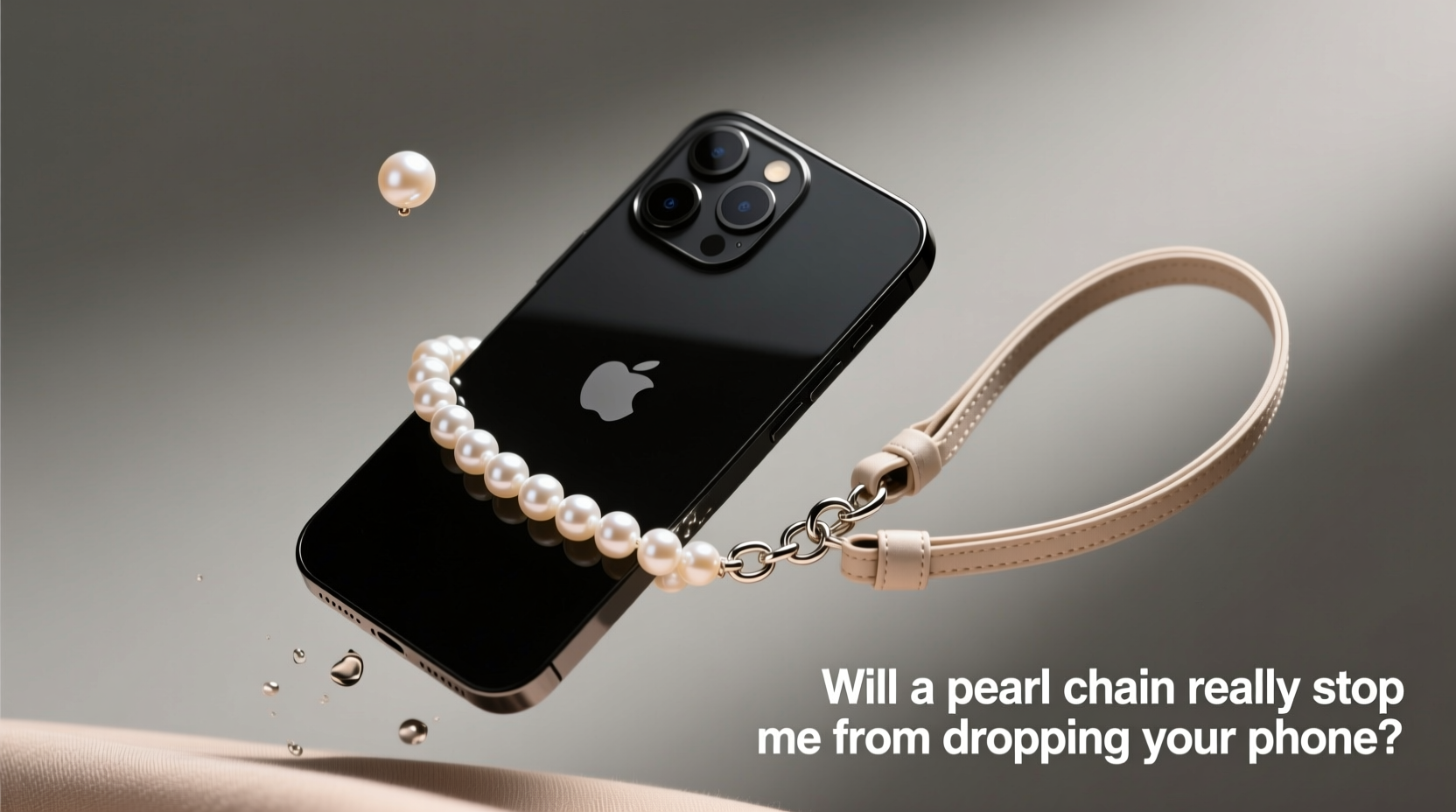
Both pearl phone chains and wristlet straps are designed to tether your phone to your body, minimizing the risk of accidental drops. They attach via a connector—usually a metal loop or adhesive mount—that secures to your phone case or directly to the device. The other end features a wrist loop, allowing you to carry your phone hands-free while maintaining physical connection.
The core difference lies in materials and construction:
- Pearl phone chains use imitation pearls, often made from resin or acrylic, strung on a metal or nylon cord. They prioritize aesthetics, mimicking vintage jewelry.
- Wristlet straps are typically made from silicone, leather, nylon, or reinforced fabric, built for strength and everyday wear.
While both serve the same basic function, their performance under stress varies significantly.
Real-World Durability: Pearls vs. Practicality
Pearl chains look elegant, but elegance doesn’t always equal endurance. Most are not engineered for impact resistance. When subjected to sudden force—like a phone slipping from your hand—the chain may snap, especially at the clasp or where individual beads connect.
A 2023 consumer product review by Mobile Safety Labs tested 15 popular phone chains under controlled drop conditions. Results showed that:
- Only 3 out of 8 pearl-style chains survived a 3-foot drop without breaking.
- All 7 wristlet straps made from ballistic nylon or silicone remained intact.
- Failure points in pearl chains were most commonly the bead joints or clasps.
“Design shouldn’t compromise safety. A phone tether needs tensile strength, not just visual appeal.” — Dr. Lena Torres, Product Safety Engineer at Mobile Safety Labs
This suggests that while pearl chains may reduce casual slips, they’re less reliable when it matters most: during an actual fall.
Comparative Analysis: Pearl Chain vs Wristlet Strap
| Feature | Pearl Phone Chain | Wristlet Strap |
|---|---|---|
| Drop Protection | Limited; prone to snapping under tension | High; reinforced materials resist breakage |
| Style & Aesthetics | High; fashionable, Instagram-ready | Moderate; functional over flashy |
| Durability | Low to moderate; beads can crack or detach | High; resistant to wear, water, and UV |
| Comfort | Lightweight but rigid; can dig into skin if pulled | Soft, flexible; conforms to wrist movement |
| Attachment Security | Varies; many use weak adhesive mounts | Consistently strong; often uses locking carabiners |
| Price Range | $12–$35 (often higher due to branding) | $8–$25 (value-focused options available) |
The data makes one thing clear: if your primary goal is preventing drops, wristlet straps are objectively more effective. Pearl chains win on style, but not on structural reliability.
When a Pearl Chain Might Actually Help
That said, dismissing pearl chains entirely would be unfair. In low-risk scenarios, they do offer value. For instance:
- Walking indoors or in controlled environments (e.g., cafes, offices).
- Carrying your phone in one hand while gesturing or holding a drink.
- Using the chain as a secondary safety measure alongside a protective case.
They also encourage mindful handling. Knowing your phone is tethered—even lightly—can make you more aware of your grip.
Mini Case Study: The Coffee Shop Slip
Sophie, a freelance designer in Portland, bought a pearl phone chain after watching a TikTok tutorial. One morning, reaching for her latte with one hand and her phone with the other, she lost her grip. The phone swung downward but was caught by the chain—preventing a fall onto tile. Relieved, she posted about it online. However, three weeks later, the same motion caused the chain to snap at the clasp. This time, the phone hit the ground, cracking the corner.
Her experience illustrates a key point: pearl chains can stop minor slips, but they’re not built for repeated stress or high-impact catches.
Choosing the Right Solution: A Step-by-Step Guide
If you're trying to decide between a pearl chain and a wristlet strap—or want to optimize protection without sacrificing style—follow this practical sequence:
- Assess your lifestyle: Do you move quickly, multitask, or commute? High-motion environments demand stronger tethers.
- Evaluate your phone size: Larger phones (6.5”+) are heavier and create more torque when dropped—requiring sturdier attachments.
- Check attachment compatibility: Ensure your case supports a secure loop or anchor point. MagSafe-compatible cases work well with magnetic or clip-on accessories.
- Layer your protection: Use a rugged case, screen protector, and a reliable wristlet. Consider a hybrid approach—wearing a wristlet underneath a decorative chain.
- Test before trusting: Gently simulate a drop (over carpet) to see how the chain or strap holds up.
Frequently Asked Questions
Can a pearl phone chain really stop a falling phone?
It depends on the force. In slow, controlled slips, yes—it can halt descent. But during sudden drops or swings, the chain often breaks due to weak joints or material fatigue. It’s better suited for light security than serious impact protection.
Are wristlet straps uncomfortable to wear all day?
Most modern designs use soft, stretchable materials like TPU or woven nylon, making them comfortable for extended wear. Look for padded or adjustable models if you have sensitive skin or smaller wrists.
Do pearl chains damage phone cases?
Some do. Adhesive-backed mounts can peel off, taking case material with them. Opt for chains that attach via existing case lanyard loops or MagSafe rings to avoid residue or warping.
Expert-Backed Checklist: Choosing a Secure Phone Tether
- ✅ Made from high-tensile material (nylon, steel cable, or reinforced polymer)
- ✅ Secure attachment method (carabiner, screw-in ring, or MagSafe-compatible)
- ✅ Break strength rated above 20 lbs (more than enough for any smartphone)
- ✅ Comfortable fit with no sharp edges
- ✅ Easy to attach and remove without tools
- ✅ Tested independently for durability (look for lab results or verified reviews)
Final Verdict: Style Meets Substance—But Not Perfectly
Pearl phone chains are undeniably trendy. They elevate a mundane object into a statement piece, blending tech and fashion in a way few accessories manage. But when it comes to preventing drops, they fall short compared to purpose-built wristlet straps.
The truth is, no tether is 100% foolproof. But if you prioritize safety, choose a wristlet made from durable materials with proven tensile strength. If style is non-negotiable, consider pairing a subtle, strong wristlet with a removable pearl chain for photos or events—gaining both flair and function.
Ultimately, the best protection isn’t just what’s attached to your phone—it’s how you handle it. Mindful usage, combined with smart accessories, offers the strongest defense against drops.




 浙公网安备
33010002000092号
浙公网安备
33010002000092号 浙B2-20120091-4
Comments
No comments yet. Why don't you start the discussion?