
Keys are essential—but how you carry them can make a surprising difference in convenience, comfort, and even safety. Two of the most common methods—pendant keychains and lanyards—are often treated as interchangeable, but they serve different lifestyles and priorities. One hangs discreetly from your pocket or belt loop; the other drapes across your neck or shoulder, keeping essentials visible and accessible. The choice between them isn’t just about fashion—it’s about function, environment, and personal habits.
This comparison dives deep into real-world usage, examining factors like security, ease of access, physical strain, and adaptability to different settings. Whether you're a busy professional, a student on campus, or someone who values minimalist design, understanding the strengths and trade-offs of each option will help you choose the right tool for daily life.
Design and Usability Differences
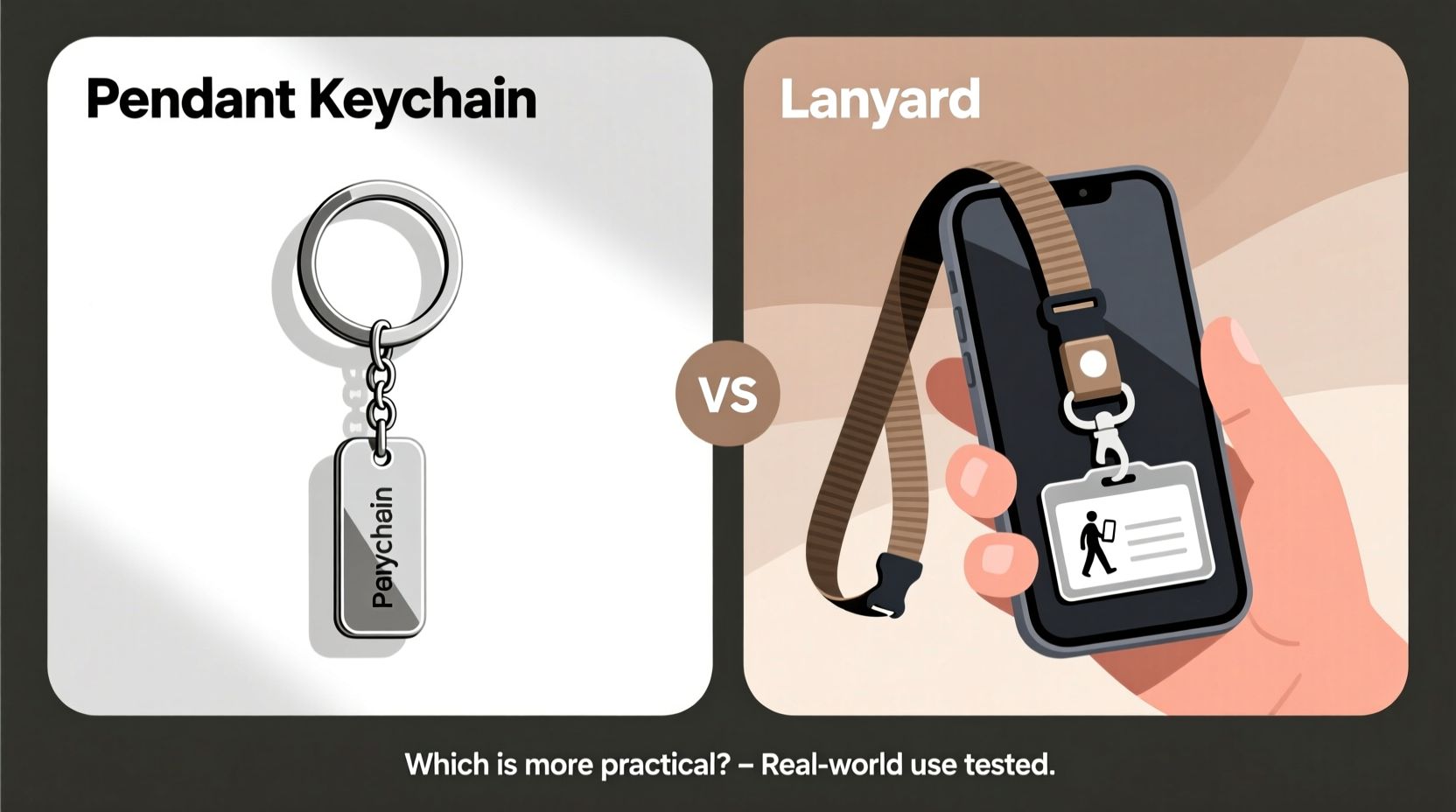
A pendant keychain is typically a compact, lightweight attachment that connects directly to your keys and clips onto a belt loop, pocket, or bag strap. It’s designed for minimalism and subtlety, keeping keys close without drawing attention. Materials range from leather and metal to silicone and fabric, with styles varying from rugged to refined.
In contrast, a lanyard is a longer cord, strap, or woven band worn around the neck or over the shoulder. Originally used in military and industrial settings, lanyards have become popular in offices, schools, and events for holding ID badges, access cards, and keys. They allow instant access and reduce the risk of misplacing small items, especially in high-movement environments.
The fundamental distinction lies in visibility and reach. A pendant keeps keys out of sight and within a limited radius—ideal if you prefer discretion. A lanyard brings keys forward, dangling at chest level, making them easy to grab without reaching into pockets or bags.
Practicality in Daily Scenarios
To determine which option is more practical, consider how you move through your day.
- Office workers often benefit from lanyards, especially in secured buildings where badge access is required multiple times per day. Having keys attached means fewer separate items to manage.
- Students navigating crowded hallways may find lanyards faster for quick locker access, though some schools restrict their use due to safety concerns.
- Outdoor enthusiasts or travelers might prefer pendant keychains to avoid snagging risks and maintain a low profile.
- Healthcare professionals commonly use lanyards for both IDs and keys, but many hospitals now discourage neck-worn accessories due to infection control protocols.
In fast-paced environments where time and efficiency matter, lanyards offer a clear advantage: everything is within immediate reach. However, in situations where appearance or mobility is prioritized—such as formal meetings or physical activity—a pendant keychain provides a cleaner, less intrusive solution.
“Accessibility should never come at the cost of ergonomics. A poorly designed carrying method can lead to repetitive strain or accidental loss.” — Dr. Lena Torres, Occupational Therapist
Security and Safety Considerations
Safety is a critical factor when choosing how to carry keys. Lanyards, while convenient, pose certain risks:
- Snag hazards: In machinery-heavy workplaces, public transit doors, or crowded spaces, a lanyard can catch on moving parts or fixtures.
- Neck strain: Wearing a heavy lanyard for extended periods may contribute to posture issues or muscle fatigue.
- Robbery risk: Visible lanyards can signal valuables, making wearers targets in high-theft areas.
Pendant keychains mitigate these concerns by staying tucked away. They’re harder to snatch and don’t interfere with movement. However, they aren’t foolproof. A loose clip or weak ring can result in dropped keys, especially when bending or cycling. Additionally, retrieving keys from tight jeans or deep pockets can be awkward, particularly in cold weather or when wearing gloves.
For enhanced security, many users opt for retractable reels or magnetic pendants that keep keys secure yet instantly deployable. These hybrid solutions combine the best of both worlds—concealment with rapid access.
Comparison Table: Key Features at a Glance
| Feature | Pendant Keychain | Lanyard |
|---|---|---|
| Visibility | Low (discreet) | High (visible) |
| Access Speed | Moderate (requires hand-in-pocket) | Fast (instant grab) |
| Mobility Impact | Minimal | Moderate to High (can swing or snag) |
| Suitability for Formal Wear | High | Low |
| Durability | High (fewer stress points) | Variable (depends on material) |
| Risk of Loss | Moderate (if clip fails) | Low (attached to body) |
| Ideal For | Everyday carry, minimalist users, outdoor activities | Workplaces, schools, events, multitaskers |
Real-World Example: Hospital Shift Worker
Jamal, a nurse working 12-hour shifts, initially used a standard pendant keychain for his house and car keys. But he found himself constantly fishing for them after handing off patient charts or removing gloves. He switched to a breakaway lanyard clipped to his scrubs, attaching both his ID badge and keys. The change reduced retrieval time and minimized contamination risk since he no longer had to touch his pockets after patient contact.
However, after several months, he began experiencing mild shoulder tension from the weight. His solution? A retractable badge reel with a secondary key charm. This kept keys accessible but allowed him to stow them when not needed, balancing ergonomics and efficiency.
Choosing Based on Lifestyle: A Checklist
Ask yourself the following questions to determine the best fit:
- Do I need instant access to my keys throughout the day?
- Am I in an environment where neck-worn accessories are restricted?
- Do I frequently wear formal clothing or tight-fitting garments?
- Is my workspace physically demanding or involve machinery?
- Do I also carry an ID badge or access card regularly?
- Have I experienced back or neck discomfort from carrying items?
- Do I value discretion over convenience?
If you answered “yes” to questions 1 and 5, a lanyard likely suits you better. If questions 2, 3, 4, or 7 resonate more, a pendant keychain is probably the smarter choice.
Frequently Asked Questions
Can I use both a pendant and a lanyard?
Yes—many people use a lanyard during work hours and switch to a pendant for personal time. Some even attach a small key pouch to a lanyard for dual functionality.
Are lanyards unprofessional?
It depends on context. In corporate offices or client-facing roles, visible lanyards may appear informal. However, in tech, healthcare, or educational environments, they’re widely accepted and often required.
How do I prevent my pendant from detaching accidentally?
Choose a keychain with a locking carabiner or double-loop design. Regularly inspect the split ring and clasp for signs of wear, and replace it before failure occurs.
Final Verdict: Which Is More Practical?
There is no universal answer—but for most people in mixed-use scenarios, **a well-designed pendant keychain offers greater overall practicality**. It’s safer, more versatile across environments, and aligns with minimalist trends focused on reducing clutter and distraction.
That said, lanyards win in specialized contexts—particularly those requiring frequent access to credentials or tools. Their main drawback isn’t functionality, but adaptability. You wouldn’t wear a lanyard to dinner, but you could easily keep a sleek pendant clipped to your waistband without compromising style.
The smart approach is to own both and rotate based on need. Keep a durable pendant for daily errands and social outings, and reserve a lanyard for work, travel hubs, or events where speed and visibility matter.




 浙公网安备
33010002000092号
浙公网安备
33010002000092号 浙B2-20120091-4
Comments
No comments yet. Why don't you start the discussion?