
In recent years, permanent jewelry—delicate chains fused directly onto the wrist with a micro-welding technique—has surged in popularity. Marketed as a symbol of connection, commitment, or personal style, these seamless bracelets are designed to be worn 24/7 without removal. But as their presence grows, so do concerns about long-term practicality, especially when it comes to medical procedures like MRI scans. How does a permanently welded chain hold up under powerful magnetic fields? And how does this compare to traditional, removable bracelets? This article dives into the science, safety, and real-world implications of choosing permanent over conventional jewelry—particularly when facing diagnostic imaging.
What Is Permanent Jewelry?
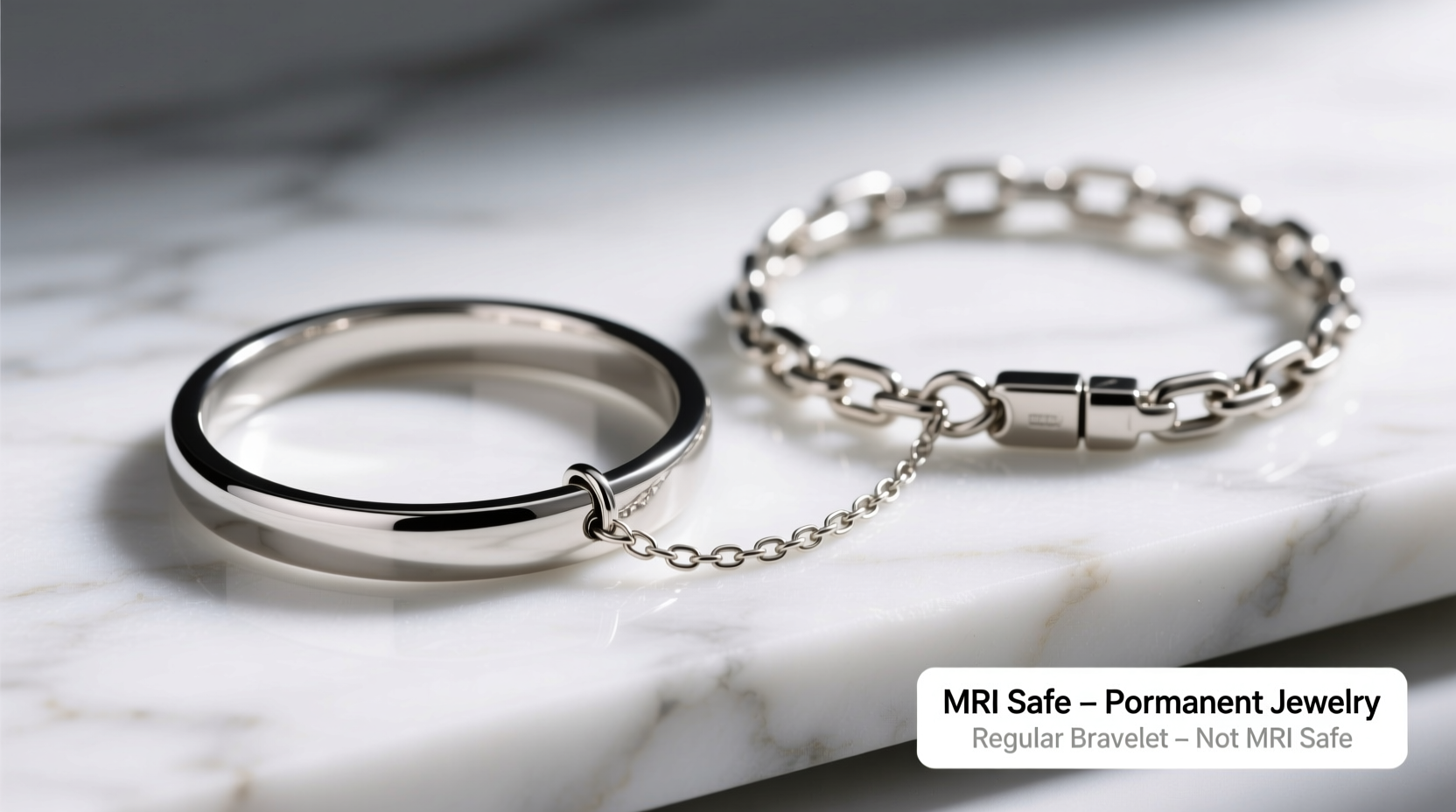
Permanent jewelry involves a thin gold or gold-filled chain that is measured, fitted, and then fused at the ends using a small handheld welding device. The process takes minutes and is typically painless, leaving no gap or clasp. Unlike traditional bracelets, which can be taken off, these are meant to stay on indefinitely—only removable by cutting. They’ve become popular for romantic gestures, friendship bonds, or as minimalist fashion statements.
The appeal lies in the symbolism: an unbroken loop representing enduring connection. However, the permanence introduces complications not present with standard accessories. One of the most pressing concerns arises in healthcare settings—specifically during magnetic resonance imaging (MRI) procedures.
How MRI Machines Work and Why Metal Matters
MRI scanners use powerful magnetic fields—often 1.5 to 3 Tesla in strength, thousands of times stronger than Earth’s natural magnetic field—to align hydrogen atoms in the body. Radio waves are then pulsed through the tissue, causing the atoms to emit signals used to create detailed internal images.
The issue with metal comes from two main factors: ferromagnetism and electrical conductivity. Ferromagnetic metals (like iron, nickel, and cobalt) are strongly attracted to magnets and can move or heat up inside the scanner, posing serious injury risks. Even non-ferromagnetic metals like gold can conduct electricity and potentially heat up due to induced currents from the rapidly changing magnetic fields.
While pure gold is generally considered non-magnetic and safe in small quantities, the context matters. A tiny stud earring may pose little risk, but a continuous metal loop around the wrist creates a closed circuit—a condition that increases the chance of localized heating during an MRI scan.
“Any conductive material in a closed loop configuration has the potential to act as an antenna during MRI, leading to tissue heating. Even non-ferromagnetic metals aren’t automatically ‘safe’.” — Dr. Alan Freedman, Radiological Safety Officer, Massachusetts General Hospital
Permanent Jewelry vs Regular Bracelets: A Practical Comparison
The key difference between permanent and regular bracelets isn’t just aesthetics—it’s control. Removable jewelry allows users to comply with medical safety protocols. Permanent pieces eliminate that option unless physically cut.
| Feature | Permanent Jewelry | Regular Bracelets |
|---|---|---|
| Removability | No—requires cutting to remove | Yes—designed for easy on/off |
| MRI Compatibility | Risky—closed loop + metal = potential heating hazard | Safer—can be removed before scanning |
| Material Composition | Typically 14k gold, gold-filled, or sterling silver | Wide range including hypoallergenic options |
| Daily Wear Practicality | High—no risk of loss | Depends on clasp security |
| Medical Emergency Access | Problematic—first responders may not know it’s there | Not an issue—easily visible and removable |
The data shows a clear advantage for traditional bracelets when medical safety is a priority. While permanent jewelry offers emotional and aesthetic benefits, it introduces inflexibility in high-stakes situations.
Real-World Scenario: An Unexpected MRI
Consider Sarah, a 34-year-old teacher who received a permanent bracelet from her partner during a weekend getaway. Three months later, she began experiencing persistent headaches. Her neurologist ordered an urgent brain MRI. During the pre-scan screening, Sarah mentioned the bracelet—but insisted it was “just gold” and “very thin.” The technician hesitated. Hospital policy required removal of all metallic objects, but Sarah didn’t have access to the jeweler who installed it, and she wasn’t willing to cut it off.
After consultation with the radiologist, the scan proceeded with extra precautions: thermal monitoring pads were placed near the wrist, and the scan parameters were adjusted to minimize radiofrequency exposure. The procedure was completed safely, but it delayed the schedule and raised concerns about protocol compliance.
Sarah later admitted she hadn’t considered medical implications when choosing permanent jewelry. “I thought it was just a sweet gesture,” she said. “No one told me it could be a problem down the line.”
Step-by-Step: What to Do If You Have Permanent Jewelry and Need an MRI
If you wear a welded chain and face an upcoming MRI, follow this sequence to ensure safety and efficiency:
- Disclose It Early: Mention the permanent jewelry during initial intake or scheduling. Don’t wait until you’re in the scanning room.
- Provide Details: Share what the piece is made of (e.g., 14k gold, gold-filled). If possible, bring documentation from the jeweler.
- Consult the Radiology Team: Let them assess whether the item poses a risk based on location, material, and loop size.
- Consider Removal: Be prepared to have the chain cut. Most jewelers offer re-welding services afterward for a small fee.
- Follow Safety Adjustments: If the scan proceeds with the jewelry, expect modified protocols, such as lower energy settings or additional monitoring.
- Plan for Reattachment: Save the chain and contact your original jeweler or a local professional to re-fuse it post-scan.
Are All Metals Equal? Understanding Material Risks
Not all metals behave the same in magnetic fields. Here’s a breakdown of common materials used in permanent jewelry:
- Pure Gold (24k): Non-ferromagnetic, low magnetic susceptibility. Still conductive, so heating remains a concern in loop form.
- 14k or 18k Gold: Alloyed with metals like copper or silver. Generally safe magnetically, but conductivity persists.
- Gold-Filled: A thick layer of gold over brass core. Similar behavior to solid gold, though base metal may slightly increase risk.
- Sterling Silver: Contains 7.5% copper. Non-magnetic but highly conductive—potentially more prone to heating than gold.
- Titanium or Surgical Steel: Rare in permanent jewelry, but sometimes used. Some stainless steels are ferromagnetic—avoid entirely.
The critical factor isn’t just the metal type, but the geometry. A closed loop acts like an antenna, amplifying electromagnetic induction. Even “safe” metals can become hazardous in this configuration.
Checklist: Evaluating Whether Permanent Jewelry Is Right for You
Before committing to a welded chain, ask yourself the following:
- ✅ Do I have a history of health issues that might require frequent MRIs?
- ✅ Am I comfortable with the idea of cutting the bracelet in an emergency?
- ✅ Can I afford to replace or repair it if damaged?
- ✅ Will I remember to disclose it during medical screenings?
- ✅ Am I okay with limited flexibility in future medical or occupational settings?
If multiple answers are “no,” a traditional bracelet with a secure clasp may offer the same sentiment without the risk.
Frequently Asked Questions
Can I wear permanent jewelry through an MRI if it’s gold?
Technically, some facilities may allow it under strict monitoring, but it’s not recommended. The risk of localized burns due to induced current in a closed loop makes removal the safest choice. Always follow your imaging center’s guidelines.
Will the MRI machine pull or rip the chain off?
Unlikely. Pure gold isn’t ferromagnetic, so it won’t be pulled by the magnet. However, the greater danger is heating, not movement. Thermal injury to the skin beneath the chain is the primary concern.
Can the chain be reattached after an MRI?
Yes. Most permanent jewelry providers offer re-welding services for a small fee (typically $10–$25). Bring the cut ends together to preserve length and alignment.
Conclusion: Beauty Meets Responsibility
Permanent jewelry captures emotion in a tangible, lasting form—but it also demands responsibility. The elegance of a seamless gold band shouldn’t overshadow its implications in medical contexts. While regular bracelets offer flexibility and safety, permanent pieces require foresight, disclosure, and preparedness.
Choosing between them isn’t just about style; it’s about understanding long-term consequences. If you opt for a welded chain, treat it not just as an accessory, but as part of your medical profile—one that needs to be managed with care.




 浙公网安备
33010002000092号
浙公网安备
33010002000092号 浙B2-20120091-4
Comments
No comments yet. Why don't you start the discussion?