
When it comes to celebrating a beloved feline companion, many pet owners face a subtle but meaningful decision: should they opt for a personalized cat keychain or an engraved pet ID tag? Both items carry sentimental value, but their purposes diverge significantly. One serves as a stylish accessory, often kept close by the owner; the other plays a critical role in pet safety and recovery. Understanding the functional differences, durability, cost, and real-world utility helps clarify which option delivers greater practicality—especially when your cat’s well-being is at stake.
The Emotional Appeal of Personalized Cat Keychains
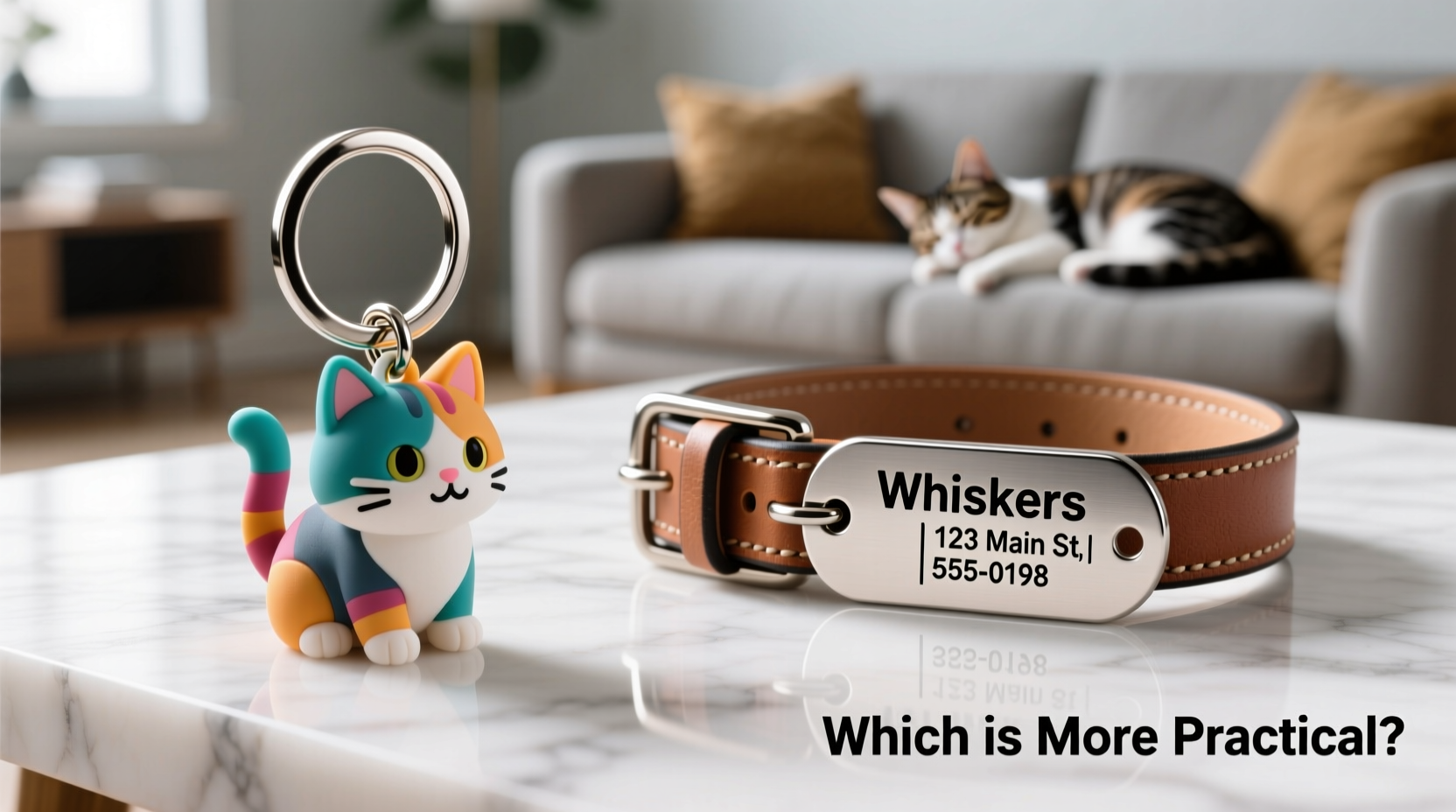
Personalized cat keychains are typically designed with aesthetics in mind. These small accessories often feature miniature figurines, custom illustrations, or even 3D-printed likenesses of a specific cat. They may include the pet’s name, birth year, or a short phrase like “Best Kitty Ever.” For owners, these keychains serve as daily reminders of their pets—something tactile and portable that evokes warmth and connection.
While emotionally rewarding, most keychains are not built for outdoor exposure. They’re commonly made from resin, soft metals, or plastic, materials that can crack, fade, or corrode when exposed to moisture, heat, or impact. Because they're carried by the owner rather than worn by the pet, they offer no direct benefit in locating a lost animal.
The Functional Role of Engraved Pet Tags
In contrast, engraved pet tags are engineered for utility. Attached directly to a cat’s collar, these durable metal or aluminum discs are laser- or machine-engraved with essential contact information: the cat’s name, the owner’s phone number, and sometimes an address or medical note (e.g., “Microchipped”). Their primary function is clear—to increase the chances of a safe return if the cat wanders off.
Veterinarians and animal shelters consistently recommend visible ID tags as a first line of defense. Unlike microchips, which require scanning equipment, engraved tags provide instant access to contact details. A passerby who finds a lost cat doesn’t need special tools—just a quick glance at the tag.
“Even indoor cats can slip out unexpectedly. An engraved tag takes seconds to read and can reunite families within hours.” — Dr. Lena Patel, Feline Veterinarian & Animal Welfare Advocate
Comparing Practicality: A Side-by-Side Analysis
To assess which product offers greater practical value, consider the following criteria:
| Feature | Personalized Cat Keychain | Engraved Pet Tag |
|---|---|---|
| Primary Purpose | Emotional keepsake, fashion accessory | Pet identification and recovery |
| Durability | Moderate (prone to chipping, fading) | High (weather-resistant metals like stainless steel) |
| Location | Owner’s keys or bag | On the cat’s collar |
| Use in Lost Pet Scenarios | None | Critical—immediate contact info |
| Lifespan | 1–3 years (depending on use) | 3–7+ years (with proper care) |
| Average Cost | $8–$25 | $10–$20 |
| Customization Options | High (artistic designs, shapes) | Moderate (text-based, limited space) |
The data shows a clear distinction: while both items allow personalization, only the engraved pet tag fulfills a vital safety function. Its placement, material resilience, and immediate accessibility in emergencies make it objectively more practical.
Real-Life Scenario: When a Tag Made the Difference
Sarah, a resident of Portland, OR, shared her experience after her 3-year-old tabby, Milo, escaped during a house renovation. The cat slipped out through an open window and was missing for two days. A neighbor spotted him near a garage and noticed the engraved tag on his collar. Within minutes, Sarah received a call and was reunited with Milo.
“I had a cute keychain of him on my keys,” she said, “but that didn’t help Milo get home. It was the simple metal tag with my number that brought him back.”
This case underscores a recurring theme in pet recovery stories: visibility and immediacy matter. Emotional mementos stay with the owner; identification tools must stay with the pet.
Step-by-Step Guide to Choosing the Right Option
Follow this decision-making process to determine which product suits your needs:
- Assess your goal: Are you looking for a sentimental item or a safety tool?
- Evaluate your cat’s lifestyle: Does your cat go outdoors or could it escape indoors?
- Check collar compatibility: Ensure the engraved tag is lightweight and securely attached.
- Select durable materials: Opt for stainless steel or anodized aluminum for tags; avoid thin charms.
- Double up if desired: Use an engraved tag for safety and a keychain as a keepsake—both have value in different contexts.
Expert Recommendations and Best Practices
Animal rescue organizations emphasize that identification should be redundant. A microchip is important, but not all finders know to take a cat to a vet or shelter for scanning. An engraved tag bridges that gap.
- Include at least one phone number on the tag.
- Update information immediately if you move or change numbers.
- Choose rounded edges to prevent snagging on bushes or fences.
- Pair the tag with a breakaway collar to reduce injury risk.
Frequently Asked Questions
Can I use a personalized keychain as a pet tag?
Technically, yes—if it fits on the collar. However, most keychains aren’t designed for outdoor wear. They may lack legible text, be too bulky, or degrade quickly. For safety, use purpose-built engraved tags instead.
Do indoor cats really need ID tags?
Yes. Studies show that nearly 15% of lost cats were formerly indoor-only. Accidental escapes happen during moves, guest visits, or construction work. An ID tag ensures a faster return, reducing stress for both pet and owner.
How do I maintain an engraved pet tag?
Wipe it monthly with a damp cloth to remove dirt and oils. Inspect the attachment ring for rust or wear. Replace the tag if text becomes unreadable due to scratching or corrosion.
Final Verdict: Practicality Wins
While personalized cat keychains hold emotional significance and make thoughtful gifts, they cannot match the real-world functionality of an engraved pet tag. When measured by durability, accessibility, and life-saving potential, the engraved tag emerges as the more practical choice—particularly for any cat that spends time outdoors or lives in a high-traffic household.
That said, there’s no need to choose exclusively. Many owners keep a keychain as a daily reminder of their pet’s charm while equipping their feline with a sturdy, updated ID tag. Combining sentiment with safety allows you to honor your cat in two meaningful ways.
“Identification isn’t just about technology—it’s about visibility. A simple engraved tag remains one of the fastest ways to bring a lost pet home.” — National Council on Pet Safety
Take Action Today
If your cat doesn’t already wear an engraved ID tag, order one this week. Include your current phone number and consider adding “Microchipped” for added assurance. Keep your personalized keychain as a cherished token, but never let it substitute for reliable identification. Your cat’s safe return could depend on it.




 浙公网安备
33010002000092号
浙公网安备
33010002000092号 浙B2-20120091-4
Comments
No comments yet. Why don't you start the discussion?