
Every object we choose to keep carries a story. Whether tucked into a memory box or displayed on a mantel, the items we preserve reflect what we cherish most. In family traditions, holiday rituals, and milestone celebrations, two categories of meaningful objects often stand out: personalized ornaments and handmade keepsakes. Both serve as tangible links to moments past, yet they differ in origin, creation, and emotional resonance. Understanding the distinction—and the emotional weight each carries—can help us make more intentional choices about what we save, display, and pass down.
The Nature of Sentimental Value
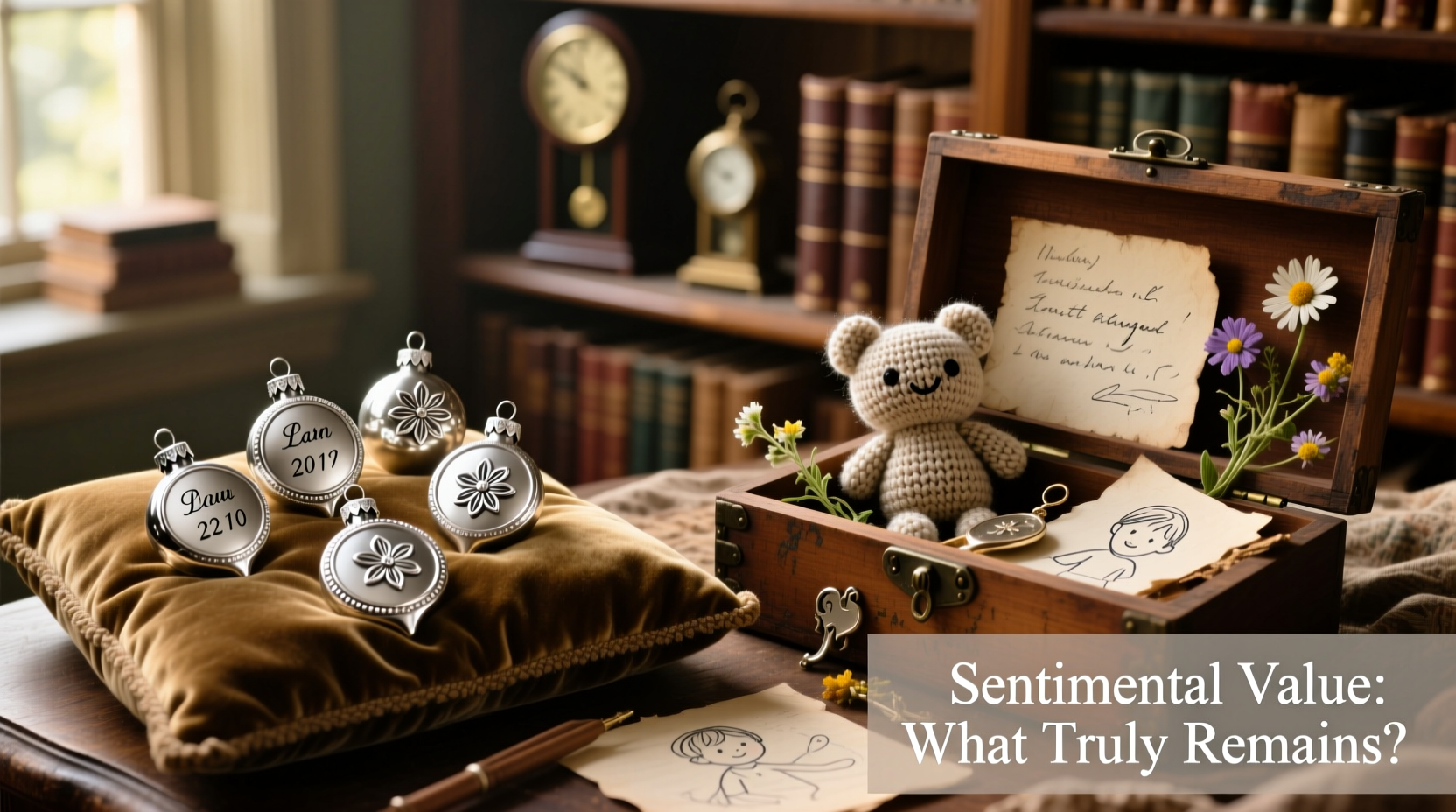
Sentimental value is not measured in price tags or materials but in the memories attached to an object. It arises from shared experiences, personal significance, and emotional investment. A chipped teacup may mean nothing to one person and everything to another because it belonged to a grandmother who stirred sugar with quiet grace every Sunday morning. The same principle applies to keepsakes: their worth is determined not by craftsmanship alone, but by the narrative woven around them.
When comparing personalized ornaments and handmade keepsakes, it's essential to recognize that both can be deeply meaningful—but for different reasons. Personalized ornaments are often commercially produced items customized with names, dates, or messages. Handmade keepsakes, on the other hand, are typically crafted by hand, sometimes imperfectly, always uniquely, and almost always with deliberate care.
The debate isn't about which is better objectively, but which tends to evoke deeper emotional connections over time. To explore this, we must examine intention, effort, longevity, and how future generations perceive these objects.
Personalized Ornaments: Convenience Meets Customization
Personalized ornaments have become staples of modern gift-giving, especially during holidays. From engraved glass baubles to 3D-printed figurines labeled with birth years, these items offer instant customization. They’re widely available, affordable, and easy to order online—often arriving within days, adorned with photos, quotes, or family names.
Their appeal lies in specificity. A Christmas ornament reading “Baby’s First Christmas – 2024” immediately anchors itself to a moment. It marks time clearly and proudly. For many families, collecting such ornaments annually creates a visual timeline on the tree—a tradition where each new addition represents another chapter.
Yet, despite their relevance, some question whether mass-produced personalization fosters deep emotional bonds. Because many are factory-made with only minor custom touches, they may lack the tactile intimacy of something made by hand. The emotional labor behind them is minimal—no hours spent shaping, stitching, or sanding. This doesn’t negate their value, but it does shift the source of sentimentality from process to occasion.
“Personalization gives memory a label, but craftsmanship gives it a heartbeat.” — Dr. Lena Torres, Cultural Anthropologist
In essence, personalized ornaments act as markers—they commemorate. But they don’t always narrate.
Handmade Keepsakes: The Weight of Human Touch
A child’s first drawing, a knitted scarf from a grandparent, a wooden toy whittled by a parent—these are archetypal handmade keepsakes. Their power comes not just from what they represent, but from the visible evidence of effort and love embedded in their making. Uneven stitches, slight asymmetries, smudged paint—all become proof of presence, of someone choosing to give time rather than money.
Psychological studies suggest that people assign greater emotional value to objects associated with personal effort. A 2019 study published in *Emotion & Consumer Behavior* found that recipients rated handmade gifts as significantly more meaningful than store-bought ones—even when the latter were more expensive or functionally superior.
This phenomenon, known as the \"labor illusion,\" means that perceived effort amplifies emotional connection. When you hold a handmade item, you're not just holding an object—you're holding time spent, attention given, and intention realized.
Why Handmade Resonates Across Generations
Future generations often respond more viscerally to handmade keepsakes because they feel closer to the creator. A crocheted doily might spark questions: Who made this? How long did it take? What was she thinking as she looped each thread? These artifacts invite storytelling. They prompt inquiry and imagination, bridging gaps between eras.
In contrast, a laser-engraved acrylic ornament may tell you exactly when someone was born, but it rarely inspires curiosity about how it came to be. Its origin feels distant, industrial, impersonal—even if the sentiment behind the purchase was warm.
| Aspect | Personalized Ornaments | Handmade Keepsakes |
|---|---|---|
| Creation Process | Machine-assisted, minimal human input | Manual crafting, high personal involvement |
| Uniqueness | Moderate (custom text/photo) | High (one-of-a-kind imperfections) |
| Emotional Labor | Low to moderate | High |
| Lifespan Potential | Varies (depends on material quality) | Often long, especially if cherished |
| Storytelling Capacity | Limited to event/date | Rich with context and legacy |
A Real-Life Comparison: Two Mementos, One Memory
Consider Sarah, who lost her mother in early spring. That December, she faced her first holiday without her. Her sister gave her a personalized ornament: a silver heart engraved with “Always Loved, Always Missed – Mom, 1958–2023.” It was thoughtful, elegant, and brought immediate comfort.
At the same time, Sarah rediscovered a small fabric bookmark her mother had sewn years earlier—one of many she’d made for book club friends. It was unevenly stitched, slightly frayed at the edges, and patterned with mismatched floral scraps. There was no date, no inscription, just her mother’s familiar handiwork.
Over the years, Sarah found herself returning to the bookmark far more often. While the ornament remained on the tree each season, the bookmark lived in her journal, touched daily. She said, “The ornament reminds me I’m grieving. The bookmark reminds me she was here.”
This subtle difference illustrates a broader truth: personalized ornaments memorialize loss; handmade keepsakes affirm presence. One says, “This happened.” The other whispers, “I was loved.”
How to Choose Meaningfully: A Step-by-Step Guide
Whether creating or receiving a keepsake, intentionality enhances its lasting value. Follow this timeline when deciding between a personalized ornament and a handmade keepsake:
- Identify the purpose: Is this meant to mark a milestone (e.g., graduation, birth) or express ongoing affection (e.g., friendship, love)? Milestones lean toward personalization; enduring bonds favor handmade.
- Assess your resources: Do you have time, skill, and materials to create something by hand? If not, consider combining personalization with a handwritten note to add warmth.
- Think long-term: Will this item likely be kept for decades? Prioritize durability and timeless design. Avoid trendy fonts or fragile components.
- Add a narrative layer: Attach a short letter, recipe card, or audio QR code explaining the item’s significance. This bridges the gap between commercial and intimate.
- Involve the recipient: Invite them to co-create—bake cookies together and save the recipe in a painted jar, or stitch patches onto a quilt over time. Shared creation deepens attachment.
Checklist: Building Lasting Emotional Value
- ✅ Choose materials that age well (wood, cotton, glass)
- ✅ Include a personal touch beyond engraving (handwriting, photo, voice memo)
- ✅ Create space for stories—label with context, not just names/dates
- ✅ Store keepsakes properly: acid-free boxes, climate-controlled spaces
- ✅ Revisit and share them regularly—sentiment fades without reinforcement
FAQ
Can a personalized ornament ever hold the same value as a handmade keepsake?
Yes—especially if it’s part of a meaningful tradition or paired with a heartfelt gesture. An ornament becomes more than its form when it’s tied to annual rituals, family reunions, or acts of remembrance. Over time, repetition builds emotional depth, even if the object began as mass-produced.
Are handmade keepsakes impractical for large families or group gifts?
Not necessarily. While individual crafting takes time, collaborative projects—like a memory quilt, scrapbook, or hand-painted banner—allow multiple contributors to participate. Each contribution adds personal texture, turning the final piece into a collective heirloom.
What should I do if I don’t consider myself crafty?
You don’t need artistic talent to make something meaningful. A simple handwritten letter, a pressed flower from a significant place, or a recorded voice message saved on a USB drive enclosed in a basic frame can be profoundly moving. Effort and sincerity matter more than precision.
The Enduring Power of Intention
In the end, sentimental value isn’t inherent in the object—it’s cultivated through use, memory, and retelling. A machine-made ornament can become sacred if it’s the only thing left after a fire. A handmade doll can fade into obscurity if never acknowledged or shared.
But statistically and emotionally, handmade keepsakes tend to endure longer in both physical and psychological terms. Their irregularities make them memorable; their origins inspire conversation; their creation embodies sacrifice—time given freely, skill offered humbly.
That said, dismissing personalized ornaments would be shortsighted. In our fast-moving world, they offer accessible ways to honor moments that might otherwise go unmarked. They democratize commemoration, allowing anyone to say, “This mattered,” regardless of budget or ability.
The wisest approach may be integration: use personalization to initiate memory, then deepen it with handmade elements. Engrave a wooden ornament with a name, then carve tiny symbols around the edge by hand. Order a photo ornament, but pair it with a hand-stitched pouch to store it in.
“We keep objects not because they’re perfect, but because they remind us we’re connected—to people, to time, to who we once were.” — Miriam Cho, Museum Curator of Everyday Memory
Ultimately, the most valuable keepsakes are those that survive not just storage bins and relocations, but generations of hearts. They are passed down not out of obligation, but desire. Whether personalized or handmade, their true measure lies in whether someone, someday, chooses to hold them close—and say, “This was made for me.”




 浙公网安备
33010002000092号
浙公网安备
33010002000092号 浙B2-20120091-4
Comments
No comments yet. Why don't you start the discussion?