
For pet owners whose dogs love splashing through streams, rolling in the mud, or diving into lakes, a GPS tracking collar isn’t just a convenience—it’s essential. But when your dog goes full amphibian mode, can their high-tech collar keep up? The short answer is: it depends. Not all GPS pet trackers are created equal when it comes to surviving water, dirt, and rough outdoor play. Understanding the technology, build quality, and care practices makes all the difference between a tracker that lasts years and one that fails after its first swim.
How Waterproofing Works in GPS Pet Collars
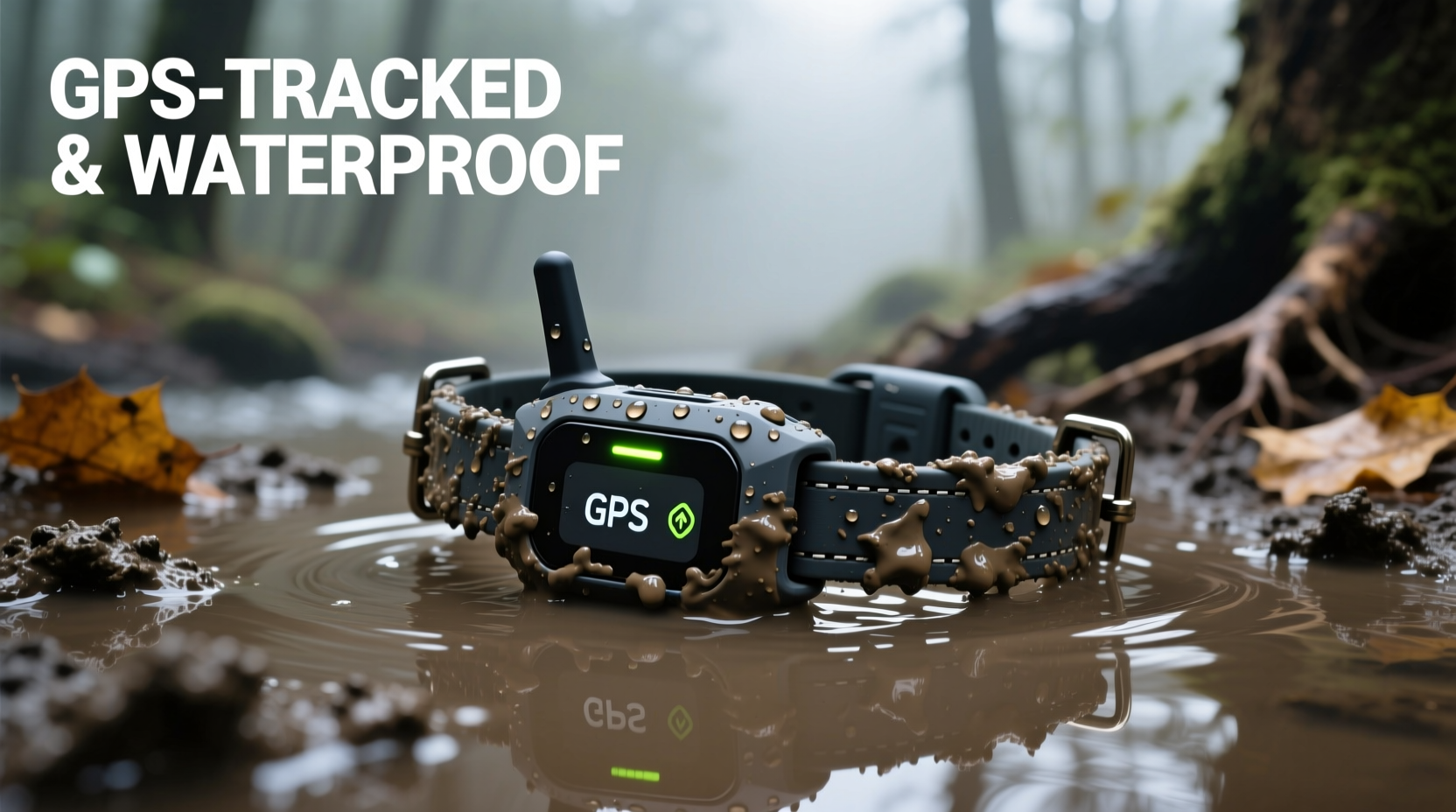
Water resistance in electronic devices—including pet GPS trackers—is measured using the IP (Ingress Protection) rating system. This two-digit code indicates protection against solids (like dust) and liquids (like water). For example, an IP67 rating means the device is completely dust-tight and can withstand immersion in 1 meter of water for up to 30 minutes. An IP68 rating typically allows deeper and longer submersion, though exact limits vary by manufacturer.
Many modern GPS pet collars boast at least an IP67 rating, making them suitable for rain, puddles, and brief swims. However, \"water-resistant\" does not mean \"indestructible.\" Prolonged exposure to chlorinated pools, saltwater, or muddy environments can degrade seals over time, especially if the device isn’t properly maintained.
It's also important to note that while the tracker unit may be waterproof, the collar strap might not be. Some straps absorb water, trap bacteria, or weaken when saturated—leading to discomfort or even failure of the entire system.
Durability Beyond Water: Mud, Dirt, and Rough Play
Mud presents a unique challenge. Unlike clean water, mud contains abrasive particles—sand, grit, plant matter—that can scratch casings, clog ports, or wear down seals. When dried, mud can harden around the device, making removal difficult and potentially damaging connectors during cleaning.
Dogs that frequently roll in mud need trackers with smooth, non-porous housings that resist buildup. Rounded edges help prevent material from catching, and sealed charging ports eliminate entry points for debris. Some premium models feature magnetic docks or wireless charging, eliminating physical ports altogether—a major advantage in dirty environments.
Beyond environmental hazards, impact resistance matters. A dog leaping off a dock or crashing through underbrush subjects the collar to shocks. While no tracker is fully shockproof, ruggedized models use reinforced polycarbonate shells or rubberized coatings to absorb impacts.
“Owners of outdoor breeds like Labradors or Australian Shepherds should prioritize ruggedness alongside GPS accuracy. These dogs don’t just get wet—they go to war with nature.” — Dr. Lena Torres, Veterinary Behaviorist & Pet Tech Advisor
Top GPS Collars Built for Swimming and Muddy Adventures
Not all pet trackers are suited for extreme conditions. Below is a comparison of leading models known for durability in wet and dirty environments.
| Model | Water Resistance | Mud/Dirt Resilience | Swimming Safe? | Notes |
|---|---|---|---|---|
| Fi Series 3 | IP68 | High – smooth casing, no exposed ports | Yes, up to 30 min submersion | Long battery life; integrates with cellular network |
| Whistle GO Explore | IP68 | Moderate – textured surface traps debris | Yes, but rinse after saltwater | Includes activity monitoring and health insights |
| Tractive GPS DOG LTE | IPX7 | Low-Moderate – requires careful drying | Limited – avoid deep/long submersion | Real-time tracking with geofencing; frequent charging needed |
| LinkSmart+ P3 Pro | IP69K | Very High – industrial-grade sealing | Yes, including high-pressure washes | Designed for working dogs; bulkier form factor |
The LinkSmart+ P3 Pro stands out for extreme durability, rated IP69K—the highest level of protection, which includes resistance to high-pressure, high-temperature water jets. This makes it ideal for search-and-rescue dogs or farm animals regularly exposed to harsh elements.
Maintaining Your GPS Collar After Water and Mud Exposure
Even the most rugged tracker won’t last without proper care. Regular maintenance extends lifespan and ensures consistent performance. Here’s a step-by-step guide to post-adventure care:
- Remove the collar promptly after swimming or heavy mud exposure. Leaving it on accelerates grime buildup and skin irritation.
- Rinse thoroughly with fresh water. Use a gentle stream to flush out dirt from seams and around buttons.
- Inspect for residue. Check the underside, mounting clips, and charging area. Use a soft cloth or toothbrush (non-metallic) to remove dried mud.
- Air dry completely before recharging. Never use heat sources like hairdryers, which can warp plastic or damage internal components.
- Test functionality. Once dry, power on the device and verify GPS signal strength and connectivity via the app.
- Clean the strap separately. If removable, hand-wash with mild soap. Allow both parts to dry independently.
For dogs that swim frequently—especially in saltwater—rinse within 15 minutes to prevent corrosion. Salt crystals accelerate wear on metal contacts and degrade rubber seals over time.
Mini Case Study: Max the Labrador and the Lake Incident
Max, a three-year-old chocolate Labrador, lives near a wooded lake in Vermont. His owner, Sarah, installed a Whistle GO Explore collar after he once disappeared for six hours during a hiking trip. Within weeks, Max became a regular swimmer, retrieving sticks from deep water and lounging in muddy banks.
After two months, Sarah noticed the tracker’s battery draining faster than expected. Upon inspection, she found fine silt packed around the charging port. Despite the IP68 rating, repeated exposure without rinsing had worn the seal slightly. She followed the cleaning steps above, cleared the debris, and resumed use—but now rinses Max’s collar every time he exits the water.
Six months later, the device still functions perfectly. “I learned that ‘waterproof’ doesn’t mean ‘maintenance-free,’” Sarah says. “Five minutes of cleaning saves me from buying a new tracker every season.”
Checklist: Choosing and Caring for a Swim-Ready GPS Collar
- ✅ Choose a model with IP68 or higher water resistance
- ✅ Confirm both tracker and strap are water-safe
- ✅ Prefer sealed or wireless charging to avoid port corrosion
- ✅ Select a smooth, easy-to-clean housing design
- ✅ Rinse with fresh water after every swim or mud session
- ✅ Dry completely before charging or reattaching
- ✅ Inspect monthly for cracks, swelling, or connection issues
- ✅ Replace straps proactively if they show signs of fraying or odor retention
Frequently Asked Questions
Can my dog wear a GPS collar in the pool or ocean?
Most IP67/IP68-rated collars can handle brief dips in freshwater pools or oceans. However, saltwater is more corrosive. Always rinse the device with fresh water afterward. Avoid prolonged submersion unless the model explicitly supports it.
Will mud ruin my pet’s GPS tracker?
Mud itself won’t instantly destroy a well-built tracker, but dried mud can stress seals, block sensors, and trap moisture. Regular cleaning prevents long-term damage. Models with fewer crevices are easier to maintain.
How long do GPS collars last with frequent water exposure?
With proper care, a high-quality GPS collar lasts 2–4 years. Units exposed to water daily without rinsing may fail within 6–12 months due to internal corrosion or seal degradation.
Conclusion: Trust, But Verify—and Maintain
A GPS pet tracking collar can absolutely survive mud baths and swimming—if it’s built for it and cared for properly. Technology has advanced to the point where real-time location tracking is reliable even for the muddiest, splash-happiest dogs. But no device is invincible. The key lies in choosing wisely, understanding the limits of “waterproof,” and committing to simple upkeep.
Your dog’s safety depends on a functioning tracker when they’re off-leash or exploring unfamiliar terrain. Don’t assume durability—verify specs, read user experiences, and treat the collar like any other critical gear. With the right model and routine, you can let your dog dive into every adventure, knowing you’ll always know where they are.




 浙公网安备
33010002000092号
浙公网安备
33010002000092号 浙B2-20120091-4
Comments
No comments yet. Why don't you start the discussion?