
Finding the perfect blazer isn’t just about picking a size off the rack—it’s about understanding how cut, proportion, and structure interact with your body. For many shoppers, the choice between a petite blazer and a regular blazer raises a critical question: Is this distinction purely about height, or does it go deeper? While height plays a role, the real difference lies in how garments are tailored to suit different body proportions. A petite blazer isn’t simply a “shorter” version of a regular one; it’s engineered for smaller frames, with adjustments across multiple dimensions.
Understanding the Key Differences
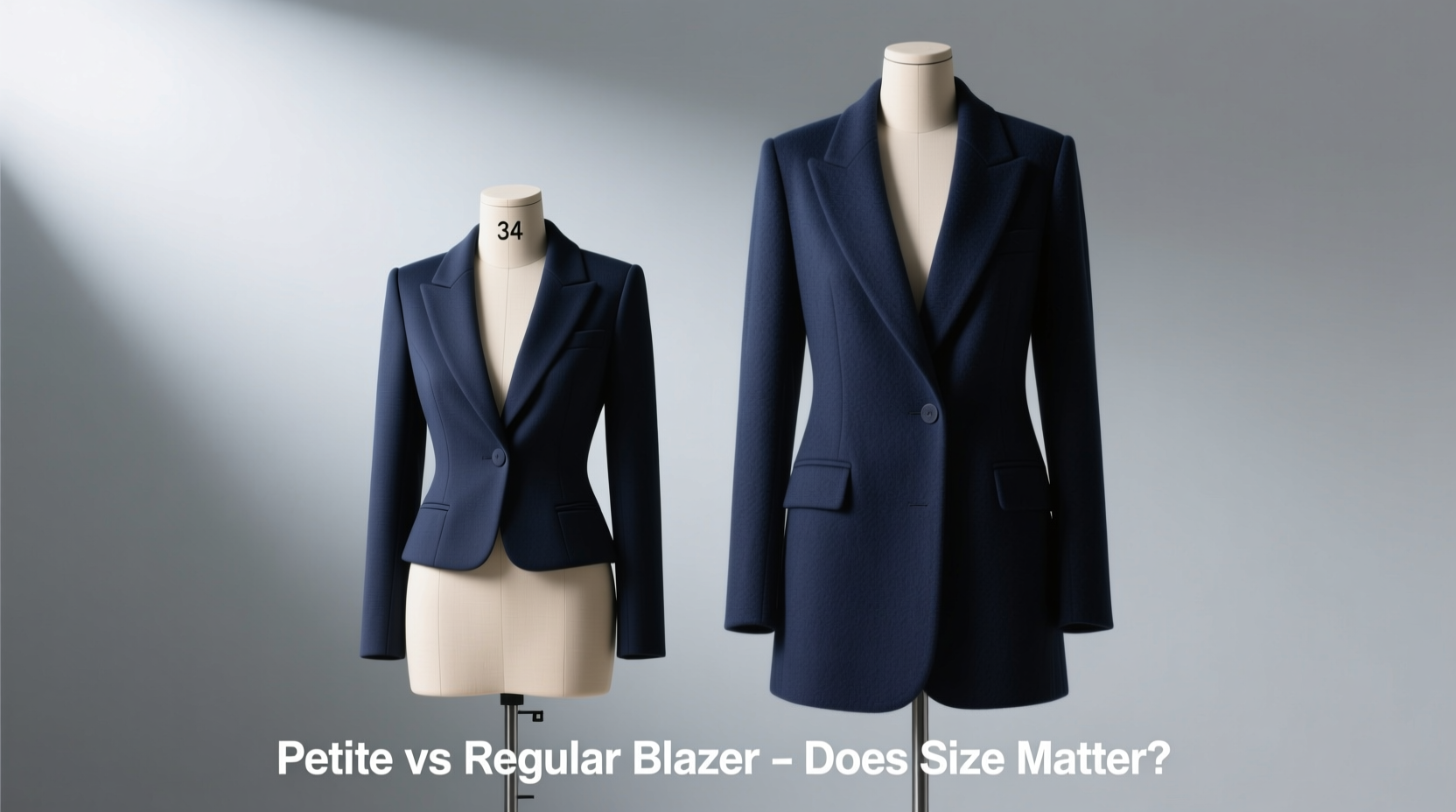
The most common misconception is that petite sizing exists only for shorter individuals. In reality, petite clothing is designed for women who not only have a shorter stature (typically 5’3” and under) but also proportionally shorter torsos, arms, and overall frame. This affects every aspect of the blazer’s design—from shoulder width to sleeve length and jacket length.
A regular blazer assumes an average torso length and arm reach. When worn by someone with a shorter build, it can appear boxy, oversized, or disproportionately long. The shoulders may extend past the natural edge of the arm, the sleeves might cover the knuckles, and the hem could fall below the hip line, visually shortening the legs.
Fit Beyond Height: Proportions Matter Most
Height is a starting point, but proportionality is what truly defines fit. Two women who are both 5’4” may wear different blazer styles based on their individual builds—one might have a longer torso and benefit from a regular cut, while the other has a compact frame better suited to petite.
Petite blazers typically feature:
- Shorter center back length (by 1.5–2 inches)
- Narrower shoulders and adjusted armholes
- Slightly scaled-down lapels and pockets
- Proportionally shorter sleeves
- Tapered waist shaping for smaller frames
These subtle changes ensure the blazer aligns with the wearer’s natural lines rather than overwhelming them. A well-fitted blazer should end at or just below the hip bone, allow free movement without pulling at the buttons, and let you slide two fingers comfortably around the collar.
“Fit is not dictated by height alone—it’s about how the garment interacts with your body’s unique proportions.” — Lena Park, Fashion Stylist & Fit Consultant
Comparison: Petite vs Regular Blazer Specifications
| Feature | Petite Blazer | Regular Blazer |
|---|---|---|
| Center Back Length | 23–24 inches (size 4) | 25–26 inches (size 4) |
| Sleeve Length | 30–31 inches | 32–33 inches |
| Shoulder Width | Narrower, scaled down | Standard width |
| Torso Proportion | Shorter rise, balanced silhouette | Average torso assumption |
| Ideal Wearer Height | 5'0\" – 5'3\" | 5'4\" – 5'9\"+ |
Real-World Example: Sarah’s Office Wardrobe Upgrade
Sarah, 5’2” with a petite build, had always avoided blazers. She’d tried several “small” regular-sized ones, but they felt bulky and unflattering—sleeves hung over her hands, and the length made her look shapeless. After switching to a petite 4 in a tailored wool blend, everything changed. The shoulders aligned perfectly, the sleeves ended at her wrist, and the hem hit mid-hip, elongating her figure. Her colleagues noticed the shift in confidence immediately. It wasn’t just about looking professional—it was about wearing something that finally fit like it was made for her.
This scenario underscores a broader truth: off-the-rack clothing assumes a standard body type. When your proportions fall outside that norm, even small discrepancies compound into poor fit and diminished style impact.
How to Choose the Right Blazer for Your Body
Selecting between petite and regular isn’t a binary decision based solely on height. Consider these factors before making a purchase:
- Measure your torso length: From the base of your neck (C7 vertebra) to your natural waist. If it’s under 14.5 inches, petite lengths will likely suit you better.
- Check sleeve endpoint: The cuff should end where your hand meets your wrist bone—not covering your palm.
- Assess shoulder seam placement: On a properly fitted blazer, the seam should sit directly at the edge of your shoulder.
- Evaluate hip coverage: The blazer should end at or slightly below the hip for balance. Too long, and it overwhelms; too short, and it rides up.
- Consider tailoring potential: Sleeve length and shoulder width are hard to alter. Length and waist can be adjusted—but only so much.
Common Misconceptions About Petite Sizing
There’s a persistent myth that petite means “smaller in all directions,” implying it’s only for women with tiny frames. That’s misleading. Petite refers to scale and proportion, not weight or body size. You can be curvy, athletic, or full-figured and still need a petite cut if your torso and limbs are proportionally shorter.
Another misconception: that petite blazers are less professional or limited in style. Today, major brands like Banana Republic, J.Crew, and Ann Taylor offer petite blazers in the same fabrics, colors, and designs as their regular lines—ensuring style parity across sizes.
When a Regular Blazer Might Still Work
In some cases, a regular blazer can function well—even for shorter women. If you have a longer torso relative to your height, or prefer a slightly oversized, fashion-forward look, a cropped regular blazer or a modern boxy cut might work. Blazers labeled “short” or “petite-friendly” in regular lines can also bridge the gap.
However, avoid forcing a regular blazer if it pulls across the chest, gapes at the buttons, or restricts arm movement. These are signs the proportions don’t match your frame, regardless of numerical size.
FAQ
Can I wear a regular blazer if I’m petite?
You can, but only if the proportions align with your body. Focus on sleeve length, shoulder fit, and overall length. If alterations are minimal (like hemming), it may work. But if the shoulders or torso are off, even tailoring has limits.
Do petite blazers come in plus sizes?
Yes—many brands now offer petite plus sizing (e.g., 14P, 18P). These maintain the shorter proportions while accommodating fuller figures. Look for inclusive brands like ELOQUII, Lane Bryant, or ASOS Curve Petite.
Is a petite blazer just a shorter jacket?
No. While length is a key factor, petite blazers are redesigned holistically—shorter sleeves, narrower shoulders, adjusted armholes, and scaled details—to match the proportions of a smaller frame.
Final Thoughts: Size Matters, But Proportion Matters More
The debate between petite and regular blazers isn’t really about size or height—it’s about alignment. A blazer should enhance your shape, not distort it. Choosing the right cut means respecting your body’s natural proportions, whether you’re 5’1” or 5’7”.
Don’t assume that “small” equals “petite,” or that your height alone dictates your fit. Take measurements, try on both options, and prioritize how the garment moves with you. A well-fitted blazer does more than complete an outfit—it boosts confidence, sharpens your silhouette, and signals attention to detail.




 浙公网安备
33010002000092号
浙公网安备
33010002000092号 浙B2-20120091-4
Comments
No comments yet. Why don't you start the discussion?