
Smartphones are more than communication tools—they’re personal investments. With prices often exceeding $1,000, protecting your device isn’t optional. But how you protect it matters. The debate between phone cases and phone skins has divided users for years. One promises rugged defense; the other, sleek customization. So which is better? And can a thin skin truly safeguard your phone from daily hazards?
The answer depends on your lifestyle, priorities, and expectations. Let’s break down both options in real-world terms—not marketing claims.
Understanding the Basics: What Are Phone Cases and Skins?
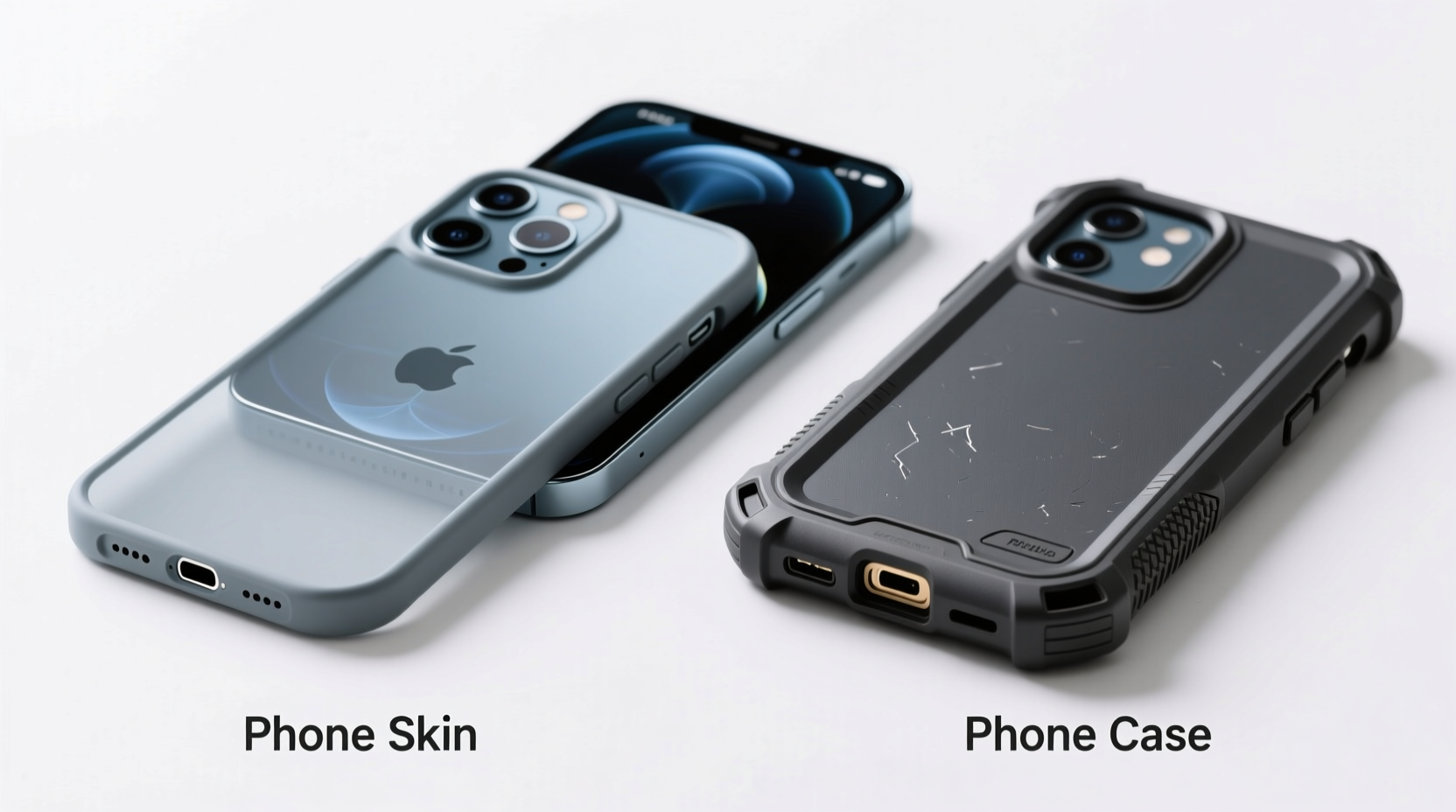
A phone case is a protective shell, typically made of silicone, TPU (thermoplastic polyurethane), polycarbonate, or hybrid materials. It wraps around your phone, offering structural support, shock absorption, and raised edges to shield the screen and camera when placed face-down.
A phone skin, by contrast, is a thin vinyl or polymer decal that adheres directly to the phone’s surface. It adds no bulk and provides minimal physical protection—its main purpose is aesthetic enhancement and light scratch resistance.
Think of a case as armor and a skin as a tattoo. One defends; the other decorates.
Protection Level: Impact Resistance and Drop Performance
When it comes to actual protection, phone cases outperform skins by a wide margin. Independent lab tests show that most standard cases absorb 60–80% of impact energy during drops from waist height (around 3–4 feet). High-end models with air cushion corners or military-grade certification (like MIL-STD-810G) can survive drops from 6 feet or more.
Skins, however, offer no shock absorption. They may prevent minor scuffs from keys or pockets, but they do nothing to stop cracks or internal damage from falls. A study by SquareTrade in 2022 found that phones with only skins had nearly identical breakage rates to completely bare devices after repeated drop tests.
“Skins are great for personalization, but they don’t belong in any serious conversation about device protection.” — Dr. Alan Zhou, Materials Engineer at Mobile Durability Labs
If you value longevity over aesthetics, a case is essential. For those who prioritize design and accept higher risk, skins serve as a trade-off.
Design and Customization: Style vs Substance
This is where skins shine. Available in thousands of patterns—from carbon fiber and matte finishes to anime art and photo prints—skins let you express individuality without altering your phone’s silhouette.
Cases have improved aesthetically, but even slim models add noticeable thickness. Premium leather or designer cases can look elegant, but they rarely match the pixel-perfect customization of a high-resolution skin.
Some users apply both: a clear protective case over a skin. This combo offers moderate impact resistance and full visual customization. However, air bubbles, peeling at the edges, and trapped dust can become issues over time.
Pros and Cons Comparison
| Feature | Phone Case | Phone Skin |
|---|---|---|
| Impact Protection | High – absorbs shock, protects corners | None – purely cosmetic |
| Bulk Added | Moderate to high (depends on model) | Negligible – adds 0.2mm thickness |
| Scratch Resistance | High – shields entire surface | Low – only prevents minor abrasions |
| Customization | Limited – mostly colors and textures | Extensive – full-color designs, personal images |
| Durability | 2–5 years (varies by material) | 1–2 years (may peel or fade) |
| Cost | $10–$60+ | $8–$20 |
Real-World Scenario: Two Users, Two Choices
Meet Sarah and Jordan. Both own the same flagship smartphone.
Sarah is a graphic designer who values aesthetics. She applies a custom skin with her artwork and uses her phone carefully. She keeps it in a padded sleeve inside her bag and avoids using it while walking. After 14 months, her phone has no dents or cracks—just slight wear on the skin’s edges.
Jordan is a construction project manager. He pulls his phone out constantly on job sites, sets it on concrete ledges, and occasionally drops it. He started with a skin but cracked his screen within three weeks. Now he uses a rugged OtterBox case. In 18 months, despite multiple drops, his phone remains fully functional.
Their experiences highlight a crucial truth: your environment dictates your protection needs. A skin might suffice for low-risk lifestyles, but active or unpredictable environments demand a case.
Hybrid Approach: Can You Have Both?
Yes—but with caveats. Some users apply a skin first, then install a clear case over it. This preserves the design while adding impact protection. However, this method risks:
- Air bubbles forming under the skin
- Peeling at the edges due to case pressure
- Dust getting trapped between layers
- Reduced thermal dissipation (especially during gaming or charging)
If attempting this combo, choose a skin designed for your exact model and use a slightly loose-fitting clear case. Avoid cheap knockoffs—precision matters.
Step-by-Step: Choosing the Right Option for Your Lifestyle
- Assess your daily routine: Do you work in an office or a warehouse? Frequent drops increase case necessity.
- Evaluate past damage: Have you broken screens before? If yes, protection should be prioritized.
- Determine aesthetic priorities: Want full customization? Skins win. Prefer subtle elegance? Consider minimalist cases.
- Test grip and feel: Bare phones and skins are slippery. Cases improve grip, reducing accidental drops.
- Budget for long-term cost: A $15 skin replaced yearly costs less than a $50 case lasting four years, but neither beats avoiding a $300 screen repair.
Frequently Asked Questions
Can a phone skin protect against scratches?
Yes, but only minor ones. Skins act like a sacrificial layer against light abrasions from keys or coins in pockets. However, they won’t prevent deep gouges or glass scratches from harder materials like sand or metal.
Do skins affect wireless charging?
No. Most skins are thin enough to allow seamless Qi charging. Just ensure the skin doesn’t have metallic elements, which can interfere with magnetic induction.
Are waterproof cases worth it if I already have a water-resistant phone?
For peace of mind, yes. While modern phones have IP68 ratings, these degrade over time. A waterproof case adds extra security for beach trips, poolside use, or rainy commutes.
Final Verdict: Protection First, Style Second
A thin skin is not enough protection for most users. While it enhances appearance and guards against superficial marks, it fails when your phone hits the pavement. If you’ve ever dropped your phone—or know someone who has—you understand how quickly a momentary lapse leads to hundreds in repair costs.
That said, skins aren’t useless. They’re ideal for secondary devices, kids’ phones (under supervision), or situations where the phone stays in a purse or holster. For primary smartphones used daily, a quality case remains the smartest investment.
You don’t have to sacrifice style entirely. Many brands now offer stylish, slim cases in matte finishes, transparent backs, or eco-friendly materials. Combine one with a well-applied skin underneath, and you achieve both personality and protection—without compromising practicality.




 浙公网安备
33010002000092号
浙公网安备
33010002000092号 浙B2-20120091-4
Comments
No comments yet. Why don't you start the discussion?