
In an era where minimalism and efficiency dominate lifestyle choices, the debate between using a phone case with a built-in wallet versus carrying a separate wallet has become increasingly relevant. With smartphones already serving as digital keys, payment platforms, and ID storage, it’s natural to question whether a standalone wallet still belongs in your pocket. Yet, despite the appeal of consolidation, not all solutions suit every lifestyle. The real answer depends on how you live, what you carry, and what you value most—convenience, security, or longevity.
The Rise of the All-in-One Phone Case Wallet
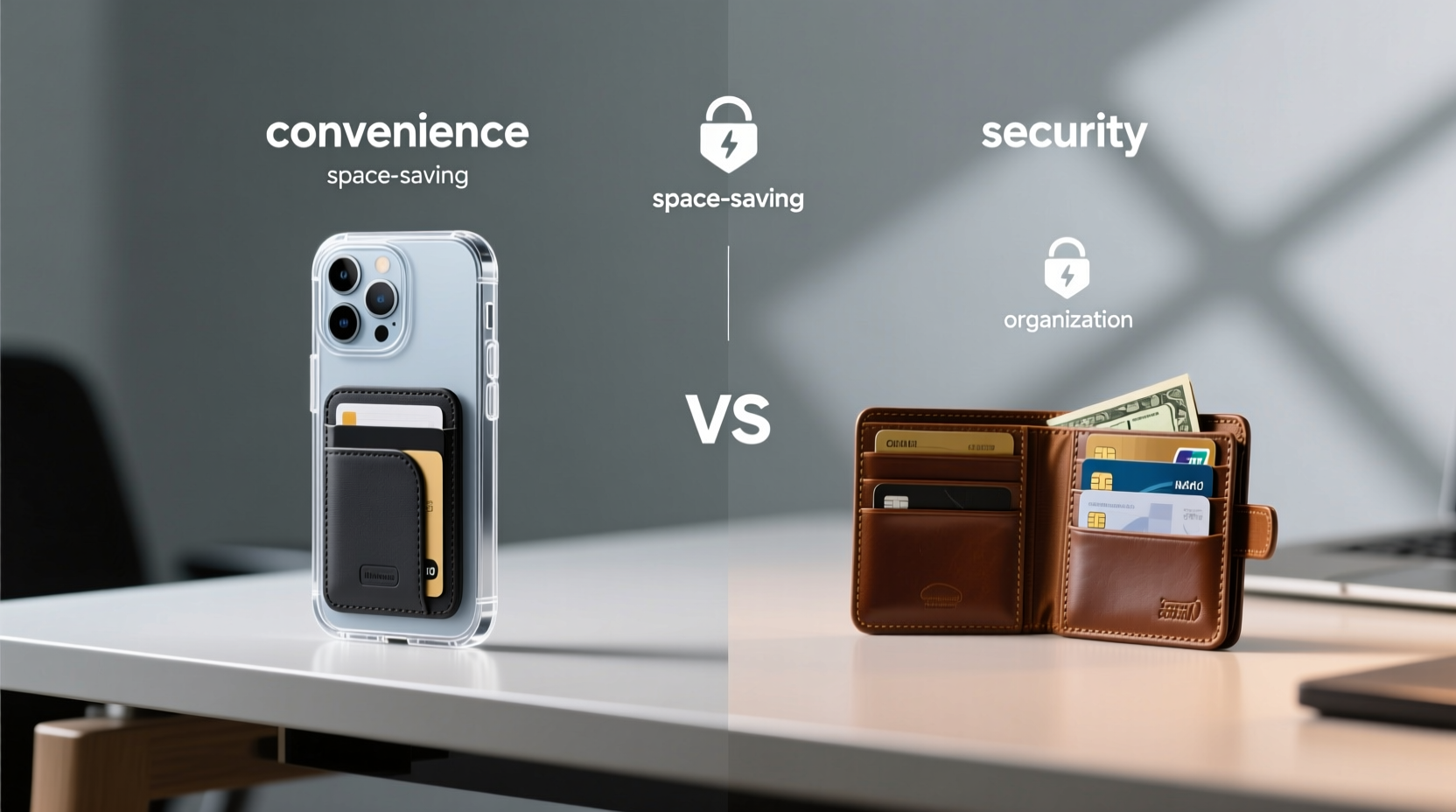
Integrated wallet phone cases gained popularity with the rise of mobile payments and contactless technology. These cases typically feature card slots and sometimes a small cash compartment, allowing users to carry essentials without reaching for a traditional wallet. For many urban professionals, travelers, or minimalist enthusiasts, this setup eliminates bulk and streamlines daily carry.
The logic is simple: if your phone is always in your hand, why not keep your cards within arm's reach too? Many modern designs use slim materials like polycarbonate or TPU with aluminum or carbon fiber accents, balancing protection and elegance. Some even include kickstands or MagSafe compatibility for seamless integration with accessories.
Advantages of the Phone Case Wallet
- Reduced Bulk: Eliminates the need to carry multiple items, especially useful when wearing tight pockets or light clothing.
- Faster Access: Cards are immediately accessible without fumbling through a bag or jacket.
- Less Likely to Forget: Since your phone is rarely left behind, your cards stay with it.
- Sleek Aesthetic: Appeals to those who prioritize clean lines and minimalist design.
For someone who only carries two to three essential cards—driver’s license, credit card, and transit pass—and rarely uses cash, a phone case wallet offers a streamlined alternative that aligns with modern habits.
The Enduring Value of a Separate Wallet
Despite technological advances, the traditional wallet remains a staple for many. Whether it's a slim bifold, a full-grain leather trifold, or a rugged money clip, dedicated wallets offer capacity, organization, and durability that most phone cases can't match.
A separate wallet allows for greater flexibility. You can leave your phone at home (yes, some people still do) while taking just your ID and cash. It also protects your phone from unnecessary wear—constantly sliding cards in and out of a case can scratch the phone’s back or weaken the case over time.
“Wallets aren’t just containers—they’re personal artifacts. They age with you, hold memories, and reflect taste.” — Daniel Reeves, Product Designer & Minimalist Lifestyle Advocate
Key Benefits of a Standalone Wallet
- Better Organization: Multiple compartments for cards, receipts, coins, and folded bills.
- Durability: High-quality leather or synthetic wallets last years, often improving with age.
- Phone Protection: Reduces stress on the phone case and prevents warping from constant card insertion.
- Security: If your phone is lost or stolen, your wallet isn’t automatically compromised.
Moreover, separating your phone from your finances adds a layer of risk mitigation. Losing both simultaneously means losing access to digital payments, identification, and physical cash—all at once. A separate wallet ensures redundancy.
Comparative Breakdown: Phone Case Wallet vs Separate Wallet
| Feature | Phone Case Wallet | Separate Wallet |
|---|---|---|
| Convenience | High – everything in one place | Moderate – requires managing two items |
| Capacity | Limited – usually 2–3 cards, no cash space | High – fits 6+ cards, cash, IDs, coins |
| Durability | Low to moderate – cases degrade faster with card use | High – especially full-grain leather options |
| Security | Lower – loss of phone = loss of cards | Higher – separation reduces total loss risk |
| Style & Customization | Limited by phone model compatibility | Wide range of materials, colors, and designs |
| Cost Over Time | Higher – frequent replacements needed | Lower – long-term investment |
Real-Life Scenario: Commuter vs Office Worker
Consider two individuals: Maya, a city commuter who uses public transit daily, and James, a corporate employee who drives to work and attends formal meetings.
Maya relies on her phone for navigation, ticketing, and contactless payments. She carries only her ID, a transit card, and a credit card. A slim phone case wallet fits perfectly in her pocket and reduces clutter. She values speed and simplicity—pulling out her phone to tap into the subway is seamless.
James, however, carries business cards, multiple credit cards, loyalty memberships, cash for client lunches, and a company badge. His lifestyle demands organization and professionalism. A sleek leather wallet complements his attire and keeps everything categorized. He doesn’t want his phone bulging with cards or risking damage from daily removal.
This contrast illustrates that preference isn’t universal—it’s contextual.
When a Phone Case Wallet Makes Sense
- You lead a minimalist lifestyle and carry fewer than four cards.
- You rely heavily on mobile payments (Apple Pay, Google Pay).
- You frequently move through crowded spaces where pickpocketing is a concern.
- You dislike the feel of a bulky back pocket.
- You travel light—e.g., running errands, going to the gym, or attending casual events.
When a Separate Wallet Is the Better Choice
- You carry cash regularly or need coin access.
- You have more than five cards or collect receipts/tickets.
- You value long-term product investment and craftsmanship.
- You're concerned about phone case degradation from card friction.
- You want to minimize risk—if your phone is stolen, your wallet remains safe.
Frequently Asked Questions
Can a phone case wallet interfere with wireless charging?
Yes, especially if the card slot is directly behind the charging coil. Metal cards or RFID-blocking layers may disrupt the connection. Removing cards before charging is recommended for consistent performance.
Do phone case wallets damage phones over time?
Potentially. Repeatedly inserting and removing cards can wear down the case material and scratch the phone’s back. Cheap cases may crack or loosen grip, increasing drop risk. Opt for reinforced edges and protective lips if choosing this route.
Is it safe to carry credit cards in a phone case?
Generally yes, but exposure to magnets (like those in car mounts or cases) could demagnetize strips. NFC/RFID chips are unaffected. Still, avoid prolonged sun exposure, which can warp cards.
Final Recommendation: Match Your Choice to Your Lifestyle
There’s no universally superior option. The best choice reflects your daily routine, priorities, and personal habits. If you thrive on simplicity and rarely carry more than essentials, a well-designed phone case wallet can enhance your efficiency. But if you value durability, organization, or security, a high-quality separate wallet remains the smarter long-term solution.
Some find balance with a “best of both worlds” strategy: a phone case with one card slot for emergency use, paired with a compact wallet for primary storage. This hybrid model offers flexibility without sacrificing accessibility.
“The right system isn’t the trendiest—it’s the one that disappears into your life.” — Lena Park, Urban Efficiency Consultant
Take Action: Evaluate Your Daily Carry
Start by laying out everything you carry daily. Count your cards, note how often you use cash, and assess how frequently you misplace items. Then ask:
- Do I ever leave my phone behind but take my wallet?
- Have I damaged a phone case by overloading it with cards?
- Do I feel weighed down by my current setup?
Answer honestly. Your ideal solution should reduce friction, not create it.




 浙公网安备
33010002000092号
浙公网安备
33010002000092号 浙B2-20120091-4
Comments
No comments yet. Why don't you start the discussion?