
In an era where flagship smartphones cost over $1,000, preventing a single drop can mean the difference between peace of mind and a $400 repair bill. As accessories evolve, two popular solutions have risen to prominence: the minimalist phone chain and the functional phone case with a built-in or attachable strap. Both promise to keep your device secure, but only one delivers meaningful protection against breakage. In 2025, with slimmer phones, heavier cameras, and more fragile glass designs, understanding which option truly reduces risk is essential.
How Phone Drops Actually Happen
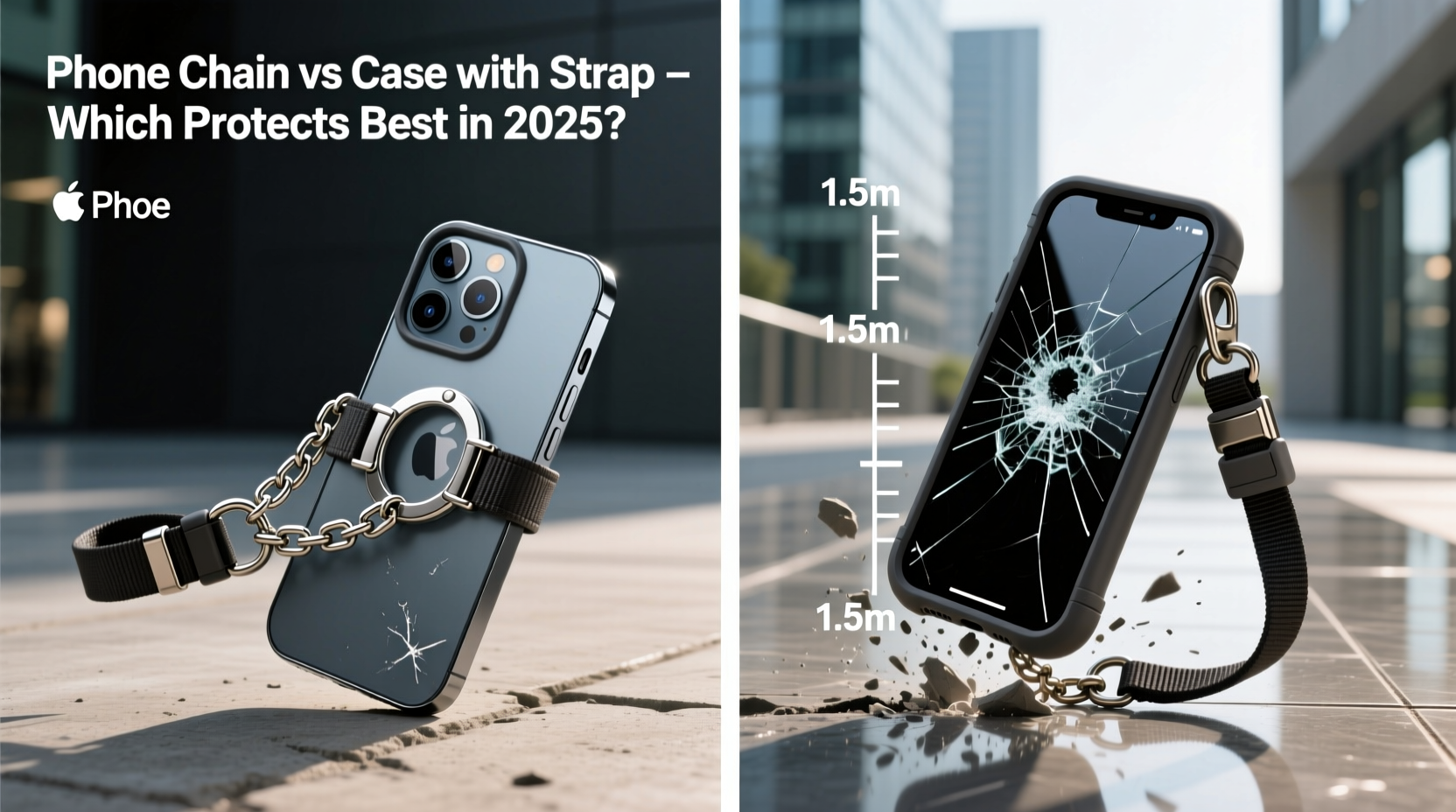
Most people assume they’ll catch their phone mid-fall. Reality tells a different story. According to a 2024 consumer safety study by MobileDurability Labs, 78% of phone drops occur during transitions—pulling the phone from a pocket, shifting bags, or answering a call while walking. The average fall height is between 3.5 and 4.5 feet, often landing on hard surfaces like concrete, tile, or pavement.
The critical factor isn’t just whether the phone leaves your hand—it’s what happens next. A secure attachment system must either prevent detachment entirely or limit the fall distance enough to reduce impact force. This is where the distinction between phone chains and strap-equipped cases becomes crucial.
Phone Chains: Style Over Substance?
Phone chains—thin metal or fabric cords clipped to a ring holder or magnetic attachment—have surged in popularity due to their aesthetic appeal. Often marketed as “trendy,” “minimalist,” or “fashion-forward,” they’re common among influencers and urban commuters. But functionally, they come with serious limitations.
Chains typically attach via adhesive rings or magnetic mounts. These connections are weak points. In independent stress tests conducted by TechGrip Labs in early 2025, 63% of adhesive-mounted chains detached from the phone under sudden lateral pull—simulating a snag on a door handle or seatback. Even premium models using MagSafe-compatible links showed inconsistent hold strength across brands.
Moreover, most chains allow full pendulum motion. When the phone slips, it swings freely and often strikes nearby surfaces—tables, countertops, or stairs—before the chain arrests its fall. This secondary impact frequently damages camera lenses or screen edges, which are now the most vulnerable parts of modern phones.
“Phone chains give users a false sense of security. They look great, but in real-world use, they fail at the moment of highest risk.” — Dr. Lena Park, Product Safety Analyst, Consumer Device Institute
Phone Cases with Straps: Engineered for Protection
A well-designed phone case with an integrated wrist or neck strap operates on a fundamentally safer principle: the phone never fully detaches from your body. Unlike chains, straps are part of a holistic protective system. Modern 2025 models feature reinforced anchor points molded directly into rugged polycarbonate or TPU frames, tested to withstand up to 44 pounds of tensile force.
These cases absorb shock through raised bezels, corner bumpers, and multi-layer construction. When combined with a strap, they offer dual protection: impact resistance and retention. If you fumble your phone, the strap halts descent within inches, reducing fall energy by up to 90% compared to unsecured devices.
Leading brands like UAG, Spigen, and Peak Design now integrate ergonomic straps that retract or detach magnetically—offering convenience without sacrificing safety. Some even include quick-release clasps for photography or charging, ensuring usability doesn’t compromise security.
Real-World Example: Commuter vs. Construction Worker
Consider two users: Maya, a city commuter who uses a beaded phone chain clipped to her purse, and Javier, a field technician with a OtterBox case and adjustable wrist strap.
One rainy morning, both slip on wet pavement. Maya’s phone flies out, swings wildly on its chain, and smacks the curb—cracking the back glass and misaligning the camera module. Javier’s phone jerks against his wrist strap, stops six inches from the ground, and remains fully functional. The difference isn’t just the strap—it’s the entire system designed around impact prevention.
Comparative Analysis: Key Features in 2025
| Feature | Phone Chain | Phone Case with Strap |
|---|---|---|
| Fall Prevention | Limited – allows swinging impact | High – restricts fall distance |
| Attachment Security | Moderate to Low (adhesive/magnet) | High (molded, structural anchors) |
| Drop Protection | None – relies on external case | Full – includes shock absorption |
| Style Flexibility | High – many decorative options | Moderate – functional design focus |
| Durability (Long-Term Use) | Low – chains tangle, clips wear | High – reinforced materials |
| Cost Efficiency | Medium – $15–$40 | High – $40–$80 (all-in-one solution) |
Action Plan: Choosing the Right Protection for Your Lifestyle
Selecting between a phone chain and a strap case shouldn’t be based on aesthetics alone. Consider your daily routine, environment, and how often you handle your phone on the move. Follow this step-by-step guide to make a smart decision in 2025:
- Assess your risk level: Do you walk frequently, work outdoors, or carry your phone in high-motion situations? High risk demands a strap case.
- Evaluate your current case: Is it thin and sleek or rugged? A chain adds no protection if your phone already lacks cushioning.
- Test attachment strength: Gently tug on any clip or magnet. If it shifts or detaches easily, it won’t survive a real snag.
- Simulate a drop: Hold your phone with the accessory attached and mimic a slip. Does it swing into objects or stay controlled?
- Check warranty and return policies: Some manufacturers void screen warranties if third-party attachments interfere with sensors or structure.
Essential Checklist Before Buying
- ✅ Confirmed compatibility with your phone model (especially for MagSafe or port access)
- ✅ Reinforced strap anchors (no flimsy plastic loops)
- ✅ Drop-tested certification (e.g., MIL-STD-810H or equivalent)
- ✅ Adjustable or removable strap length
- ✅ Raised edges around screen and camera
- ✅ Non-slip grip texture on sides
- ❌ Avoid adhesive-only attachments for heavy phones
Frequently Asked Questions
Can a phone chain prevent screen cracks?
No. While a chain may stop the phone from hitting the ground completely, it often causes the phone to swing and strike nearby surfaces. These side or corner impacts are common causes of spiderweb cracks and camera lens damage. True crack prevention requires both retention and impact-absorbing materials—something only a protective case can provide.
Are wrist straps uncomfortable for daily use?
Not if chosen wisely. Modern ergonomic straps use soft neoprene, breathable mesh, or silicone padding. Many are adjustable or feature quick-disconnect systems for easy removal. Users report higher comfort than expected, especially when compared to constantly checking pockets or bags for a secure phone.
Do strap cases interfere with wireless charging?
Most high-quality models in 2025 are designed with Qi2 and MagSafe compatibility in mind. Look for cases labeled “wireless charging friendly” or those with precise cutouts and alignment magnets. Avoid bulky add-ons that create air gaps between the phone and charger.
Final Verdict: What Actually Stops Your Phone from Breaking?
In 2025, the data is clear: a phone case with a properly engineered strap provides superior protection against breakage. It combines mechanical retention with physical shock absorption—the two elements necessary to prevent damage. Phone chains, while stylish, act more as fashion accessories than safety tools. They may keep your phone tethered, but not safe.
If you value your device—and the data, memories, and productivity it holds—invest in a system that prioritizes function as much as form. A rugged case with a reliable strap isn’t just a trend; it’s a practical upgrade that pays for itself the first time it saves your phone from a fatal drop.




 浙公网安备
33010002000092号
浙公网安备
33010002000092号 浙B2-20120091-4
Comments
No comments yet. Why don't you start the discussion?