
In an era where smartphones are extensions of our hands—used for work, navigation, photography, and communication—the need for secure handling has never been greater. Dropping a phone can mean shattered screens, data loss, or costly repairs. That’s why accessories like phone grips and PopSockets have surged in popularity. Both promise better grip and improved usability, but they achieve it in fundamentally different ways. Choosing between them isn’t just about preference—it’s about understanding how each performs in daily use, travel, media consumption, and physical activity.
This comparison dives deep into design, ergonomics, functionality, durability, and user experience to help you decide which accessory truly enhances your phone’s usability and safety.
Understanding the Basics: What Are Phone Grips and PopSockets?
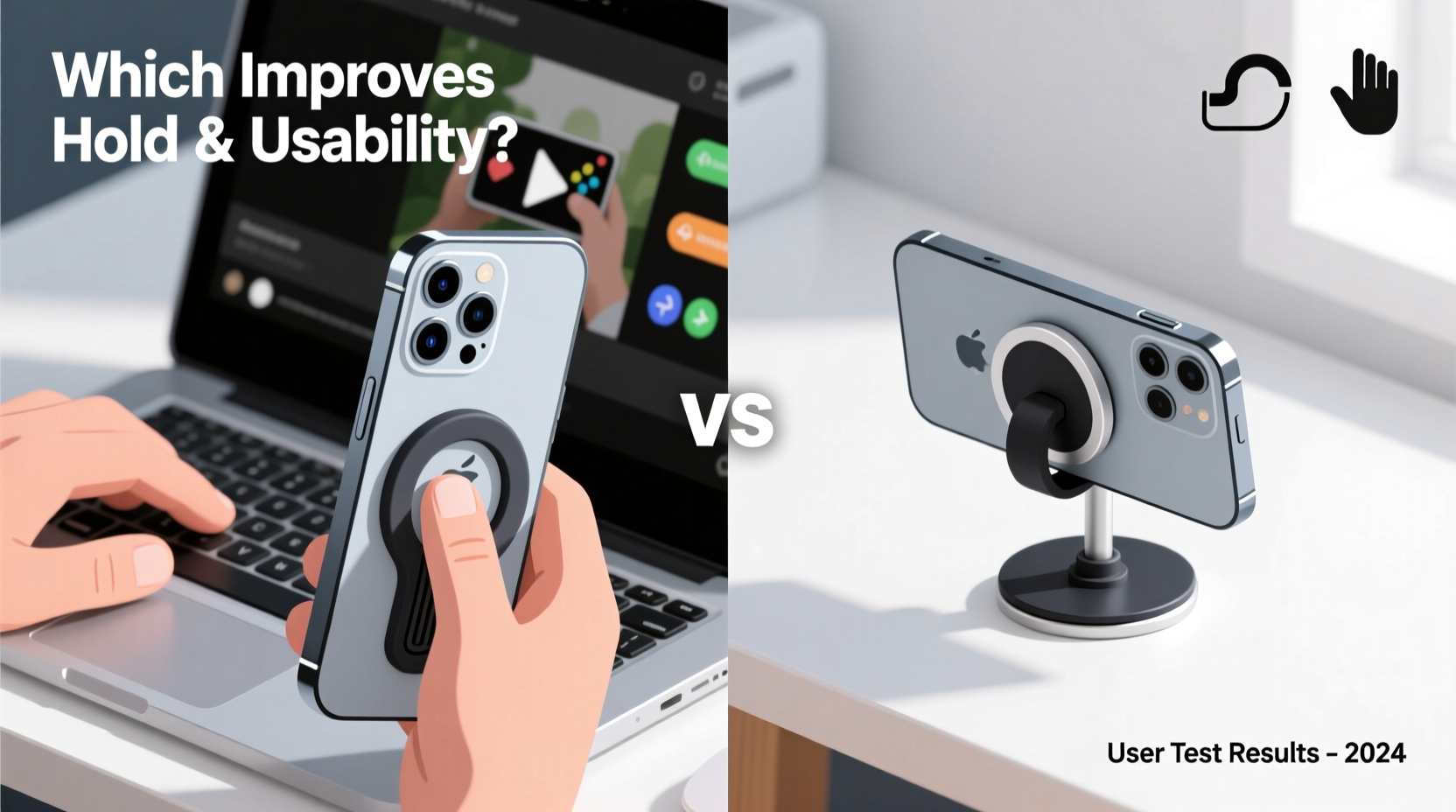
Before evaluating performance, it’s essential to define what each accessory is and how it works.
Phone grips—also known as finger grips or slide grips—are typically slim strips with a metal or plastic slider that extends from the back of the phone or case. The user threads their finger through the loop or rests it behind the sliding bar, creating a secure anchor point. These are often integrated into rugged cases or sold as add-ons that adhere to the device.
PopSockets, on the other hand, are collapsible circular attachments that stick to the back of a phone or case. When expanded, they form a knob-like protrusion that users grip between fingers or wrap around for stability. They collapse flat when not in use and can double as phone stands or cable organizers.
While both aim to prevent drops and improve one-handed control, their mechanics and user interactions differ significantly.
Ergonomics and Comfort: How Each Feels in Hand
Ergonomics play a critical role in long-term usability. A poorly designed grip can cause hand fatigue, reduce dexterity, or even lead to discomfort during extended use.
Phone grips provide a more natural hand position. By allowing the index or middle finger to slide into a secure loop, they distribute weight evenly across the palm and finger. This reduces strain when holding the phone upright for scrolling, typing, or watching videos. Because the grip is low-profile when retracted, it doesn’t interfere with pocket storage or flat placement on surfaces.
PopSockets, while functional, alter the balance of the phone. The protruding disc shifts the center of gravity slightly backward, which can make the device feel top-heavy. Users often report needing to adjust their grip mid-use, especially on larger phones. However, the expandable design allows flexibility—use it when needed, collapse it when not.
Drop Protection and Security: Which Keeps Your Phone Safer?
The primary reason people use these accessories is to avoid dropping their phones. So, which provides better security?
Phone grips win in high-movement scenarios. Because the finger is physically looped through the grip, accidental slips are far less likely—even when multitasking, walking, or riding public transit. The mechanical lock created by the finger-in-loop design means the phone stays attached to the hand unless intentionally released.
PopSockets rely on friction and pinch grip. While effective under normal conditions, they’re vulnerable during sudden movements. If the hand sweats or the phone is jostled, the device can twist free from the fingers wrapped around the PopSocket. There’s no physical tether—just pressure.
“Grip security isn’t just about convenience; it’s about reducing micro-drops and impact stress over time.” — Dr. Lena Torres, Human Factors Engineer at Mobile Ergo Labs
Micro-drops—those near-misses where the phone almost falls—are surprisingly damaging. Repeated impacts weaken internal components and screen adhesion. A true grip minimizes these events by maintaining constant finger contact.
Durability and Longevity: How Well Do They Hold Up?
No accessory is useful if it fails after a few weeks. Durability depends on materials, adhesive quality, and mechanical resilience.
| Feature | Phone Grip | PopSocket |
|---|---|---|
| Adhesive Longevity | High (especially on cases) | Moderate (can degrade with heat/humidity) |
| Mechanical Wear | Low (few moving parts) | High (repeated expansion/contraction) |
| Water/Sweat Resistance | High (solid materials) | Moderate (foam interior may absorb moisture) |
| Lifespan (Average) | 18–24 months | 12–18 months |
| Repairability | Limited (but replaceable) | Replaceable gel discs available |
Phone grips, particularly those built into protective cases, tend to last longer because they lack complex moving parts. Adhesives are usually applied to a stable surface, minimizing peeling.
PopSockets face challenges with their expanding mechanism. Over time, the accordion-style core can lose tension, failing to stay extended or collapsing unexpectedly. The replaceable gel disc helps extend life, but frequent reapplication becomes tedious.
Functionality Beyond Grip: Stands, Mounts, and Accessories
Usability isn’t just about holding the phone—it’s also about versatility. Both accessories offer secondary functions, but PopSockets lead in adaptability.
When expanded, a PopSocket doubles as a stand for viewing videos, video calls, or reading. It props the phone at a comfortable angle on desks or tables. Some models even support magnetic attachments for car mounts or wireless charging alignment.
Phone grips, while primarily focused on security, have evolved. High-end versions include kickstands or integrate with MagSafe-compatible rings for mounting. However, these are exceptions rather than standard features.
If you regularly watch content on your phone or use it for video conferencing, the PopSocket’s dual function adds tangible value. But if your priority is drop prevention during movement, the phone grip remains unmatched.
Real-World Use Case: Commuting and Active Lifestyles
Consider Sarah, a graphic designer who commutes 45 minutes each way via subway. She uses her phone for emails, sketching on a stylus app, and checking project updates. Her previous PopSocket kept detaching during rush hour when the train jerked unexpectedly. After switching to a rugged case with an integrated finger grip, she noticed immediate improvements.
“I don’t have to clutch my phone anymore,” she said. “Even when I’m standing and swiping through mockups, my finger stays locked in. I’ve stopped worrying about dropping it.”
In contrast, Mark, a college student who lives in a dorm and mostly uses his phone for streaming and social media, prefers his PopSocket. “I love that I can prop it up on my desk while watching lectures. It folds flat, so it doesn’t make my phone bulky in my pocket.”
Their experiences highlight a key insight: context determines the best choice. Active users benefit from the security of a grip; stationary or media-focused users gain more from the PopSocket’s flexibility.
Design and Aesthetics: Style Meets Practicality
Aesthetic appeal matters. People want accessories that look good and reflect personal style.
PopSockets dominate in customization. Available in hundreds of colors, patterns, and licensed designs—from abstract art to sports teams—they function as fashion statements. Interchangeable tops allow users to switch looks depending on mood or outfit.
Phone grips are more utilitarian. Most come in neutral tones (black, gray, clear) and prioritize function over flair. However, premium brands now offer color-matched options for popular phone models, and some gaming-focused cases feature RGB lighting integrated with the grip.
If self-expression is important, PopSockets offer broader creative freedom. But if minimalism and subtlety are preferred, the discreet profile of a phone grip blends seamlessly with modern devices.
Portability and Compatibility
Both accessories must coexist with other tech habits—like using wireless charging, carrying in pockets, or attaching to car mounts.
Phone grips, especially slide-style models, maintain a slim profile. They don’t interfere with Qi charging pads and rarely catch on fabric. However, built-in grips require compatible cases, limiting flexibility for users who switch cases often.
PopSockets can hinder wireless charging unless they’re placed off-center. Many users relocate them toward the edge to preserve charging functionality. Their collapsible nature makes them pocket-friendly, though the textured surface can attract lint.
- PopSockets work with nearly any smooth-back phone or case.
- Phone grips often require specific case integration or strong adhesive application.
- MagSafe users should note: metal-based grips may interfere with alignment unless designed for compatibility.
Step-by-Step: Choosing the Right Accessory for Your Needs
Follow this decision-making process to identify the best fit:
- Assess your usage pattern: Do you walk, commute, or exercise with your phone frequently? → Lean toward a phone grip.
- Evaluate media consumption: Do you often watch videos or join video calls? → PopSocket offers better stand functionality.
- Check your phone case: Is it rugged or customizable? Some cases natively support grips; others accommodate PopSockets easily.
- Test hand size and comfort: Smaller hands may struggle with PopSocket leverage but benefit from finger-loop security.
- Consider longevity: If you want a long-term solution with minimal maintenance, a well-built grip lasts longer.
- Prioritize aesthetics: Want to express personality? PopSockets offer unmatched variety.
Frequently Asked Questions
Can I use a PopSocket with a phone grip?
Technically yes, but not simultaneously. Combining both creates bulk and imbalance. Most users find one sufficient. If using both, place the PopSocket near the bottom to avoid interference with the grip mechanism.
Do phone grips damage phone cases or leave residue?
High-quality grips use 3M adhesive or mechanical attachment (via case integration), minimizing residue. Removable grips typically leave little to no mark. Avoid cheap adhesive-only models, which may peel coating or leave sticky remnants.
Are PopSockets removable and reusable?
Yes. PopSockets use a reusable gel disc that can be cleaned with water and reattached multiple times. However, effectiveness diminishes after several removals, especially in dusty environments.
Final Verdict: Which Improves Hold and Usability More?
When the goal is **improving hold**, the phone grip is superior. Its mechanical finger lock provides unmatched security, especially in motion. It reduces the risk of drops, supports better ergonomics, and lasts longer with less maintenance.
When the focus is on **overall usability**—including media viewing, portability, and customization—the PopSocket takes the lead. Its ability to transform into a stand, its compact folded form, and wide design options make it ideal for casual and indoor use.
The best choice depends on lifestyle:
- Choose a phone grip if: You walk often, use your phone on-the-go, have had drop incidents before, or want maximum security.
- Choose a PopSocket if: You consume media frequently, value style, use your phone mostly at home or desk, and appreciate multifunctional tools.
“The right grip isn’t about trends—it’s about matching the tool to your daily behavior.” — Jordan Lee, Tech Lifestyle Consultant
Take Action: Optimize Your Phone Experience Today
Your smartphone is too valuable—financially and personally—to risk slipping through your fingers. Whether you prioritize safety, style, or functionality, making an informed choice between a phone grip and a PopSocket can transform how you interact with your device every day.
Start by reflecting on your routine. Track how often you hold your phone while moving, whether you prop it up for videos, and how much you value a secure hold. Then, apply the checklist above to make a decision grounded in real use—not marketing hype.
Upgrade your phone setup today. Your future self—holding an intact screen and enjoying smoother usability—will thank you.




 浙公网安备
33010002000092号
浙公网安备
33010002000092号 浙B2-20120091-4
Comments
No comments yet. Why don't you start the discussion?