
Carrying a phone and a wallet separately has long been standard practice. But as smartphones have become slimmer and more powerful, accessories like wallet cases have emerged to consolidate essentials into one device. The promise is simple: fewer items in your pocket, quicker access to cards and cash, and less chance of leaving something behind. Yet many users wonder—do people actually use the wallet portion of these cases, or does it just add unnecessary thickness and weight?
This question isn’t just about convenience; it’s about lifestyle alignment, daily habits, and honest self-assessment. Some swear by their phone wallet cases, while others ditch them after a week, frustrated by added bulk and infrequent use. Let’s break down the real-world trade-offs, usage patterns, and factors that determine whether a wallet case earns its place in your routine—or becomes dead weight.
How Phone Wallet Cases Work (And Who They’re Designed For)
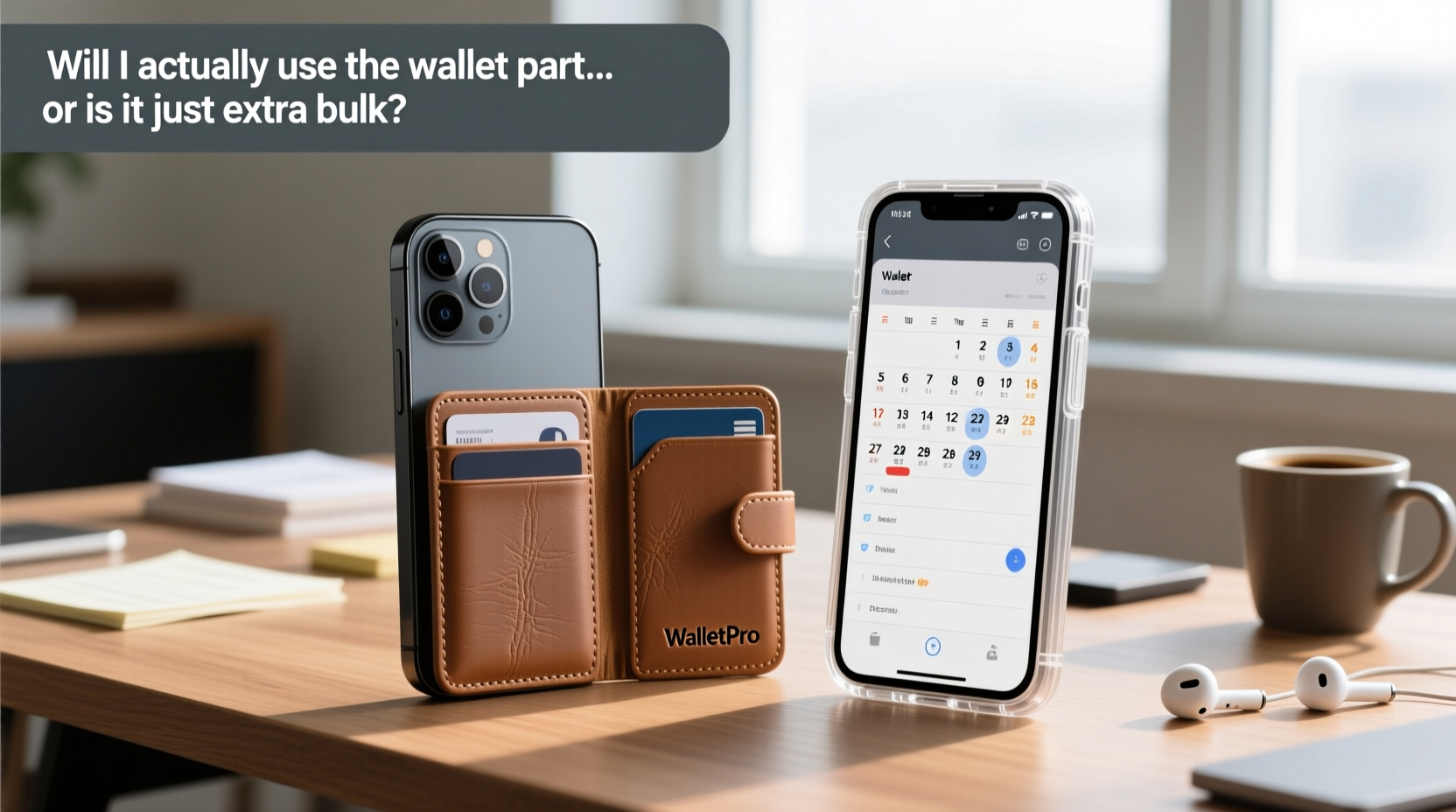
A phone wallet case typically combines a protective shell with one or more card slots—sometimes even space for folded bills. These can be made from materials like leather, silicone, or polycarbonate, and are designed to hold 1–4 cards securely. Some high-end models include RFID blocking to prevent digital theft.
The ideal user is someone who values minimalism and speed. Think of urban commuters, runners, cyclists, or anyone who frequently leaves the house with just keys, phone, and ID. For them, eliminating the need for a full wallet—even if temporarily—can streamline movement and reduce clutter.
“Wallet cases work best when they replace a habit, not create one.” — Jordan Lee, Product Design Consultant at Urban Gear Labs
But this only holds true if the design aligns with how you naturally carry things. If you're used to a thick billfold with receipts, loyalty cards, and photos, a slim wallet case won't solve your needs. It's not a universal upgrade—it's a lifestyle choice.
The Real Usage Gap: Convenience vs. Practicality
Many people buy wallet cases expecting to use them daily, only to find themselves pulling out loose cards or switching back to a traditional case within weeks. Why?
- Overestimation of “minimal” needs: Most assume they only need one card and ID. In reality, emergencies, spontaneous purchases, or banking tasks often require multiple cards.
- Thickness and grip issues: Adding even two cards increases phone thickness significantly, making single-handed use awkward and increasing drop risk.
- Lack of cash accommodation: Few wallet cases support folded bills effectively. When cash is needed, users still reach for a separate wallet.
- Security concerns: Losing your phone means losing your payment methods—doubling the impact of a single loss.
Comparing Features: Wallet Case vs Regular Case
| Feature | Phone Wallet Case | Regular Case |
|---|---|---|
| Card Storage | Yes (1–4 cards typical) | No |
| Bulk/Thickness | High (especially with cards) | Low to moderate |
| Grip & Drop Protection | Moderate (edges less accessible) | High (slimmer, better grip) |
| Cash Storage | Limited or none | N/A |
| Security Risk | Higher (phone + cards lost together) | Lower (wallet separate) |
| Ideal Use Case | Light errands, gym, travel, quick outings | Daily use with full wallet |
When a Wallet Case Makes Sense: A Real Example
Meet Alex, a graphic designer in Portland who bikes to cafes for freelance work. His routine involves grabbing headphones, keys, phone, and water bottle—nothing more. He rarely carries cash and uses Apple Pay for most transactions. After switching to a slim leather wallet case holding his ID and debit card, he found he never missed his full wallet.
For Alex, the wallet case eliminated the need to dig through a backpack or jacket pocket. At coffee shops, he could tap and go without fumbling. During runs, he no longer worried about his wallet slipping out. Over six months, he used his traditional wallet only twice—once for car rental and once for an event requiring physical tickets.
His success wasn’t due to the product alone, but because his lifestyle matched the tool. He didn’t force adoption; he adapted based on actual behavior.
Step-by-Step: How to Test If You’ll Actually Use a Wallet Case
Before committing, run a personal trial. Follow this timeline to assess real-world usability:
- Week 1 – Baseline Tracking: Note every time you use your wallet. What cards do you pull out? Do you carry cash? How often do you leave the house with it?
- Week 2 – Minimal Mode: Carry only your phone, one card, and ID. Leave your wallet at home. Use digital payments whenever possible.
- Day 7 Review: Did you miss anything? Were there situations where you couldn’t pay or verify identity?
- Week 3 – Introduce Wallet Case: Use a basic model with two card slots. Simulate your “minimal mode” but now integrated with your phone.
- Final Assessment: Ask: Did the case feel natural? Was it harder to hold? Did you forget it had cards? Did you ever remove the cards because accessing them was annoying?
Frequently Asked Questions
Can I still use wireless charging with a wallet case?
Yes, most modern wallet cases allow wireless charging with cards inside. However, thicker materials or metal-reinforced cards (like some government IDs) may interfere. Remove cards if charging fails.
Are wallet cases bad for my phone’s longevity?
Not inherently, but they can increase wear on the edges and corners due to added weight and uneven pressure. Also, trapped moisture between cards and phone back may damage finishes over time—wipe surfaces regularly.
What if I lose my phone with a wallet case?
This is a legitimate concern. Immediately freeze credit cards via your bank’s app and report your phone lost. Consider using a case that only holds your ID and a backup card—not your primary spending tools.
Checklist: Is a Phone Wallet Case Right for You?
Answer “yes” to at least four of these to consider adoption:
- Do you regularly go out with just your phone, keys, and one card?
- Do you use mobile payments (Apple Pay, Google Pay) daily?
- Do you dislike carrying a bulky wallet?
- Have you forgotten your wallet at home and realized you didn’t need it?
- Are you comfortable replacing both phone and cards if either is lost?
- Do you value speed and simplicity over maximum security?
Conclusion: Function Follows Behavior
The truth is, most people don’t consistently use the wallet part of their phone wallet case. It starts with good intentions—a sleek design, the promise of simplicity—but ends with unused card slots and complaints about thickness. The difference between success and failure lies not in the product, but in self-awareness.
If your life revolves around mobility, minimal gear, and digital transactions, a wallet case can be a seamless upgrade. But if you rely on multiple cards, cash, or occasional paper documents, it’s likely to become an inconvenient compromise.
Instead of asking whether wallet cases are “good,” ask whether they fit your rhythm. Test honestly. Adapt gradually. And remember: the best accessory isn’t the most feature-rich—it’s the one you actually use.




 浙公网安备
33010002000092号
浙公网安备
33010002000092号 浙B2-20120091-4
Comments
No comments yet. Why don't you start the discussion?