
In an era where digital convenience dominates entertainment, the question of true ownership has never been more relevant—especially in gaming. As physical cartridges give way to instant downloads, players are increasingly disconnected from tangible media. But does clicking “buy” on a digital storefront equate to ownership? Or are we merely licensing access to games that could vanish overnight? This article examines the fundamental differences between physical game cartridges and digital downloads, focusing on control, longevity, and what it truly means to \"own\" a game.
The Illusion of Digital Ownership
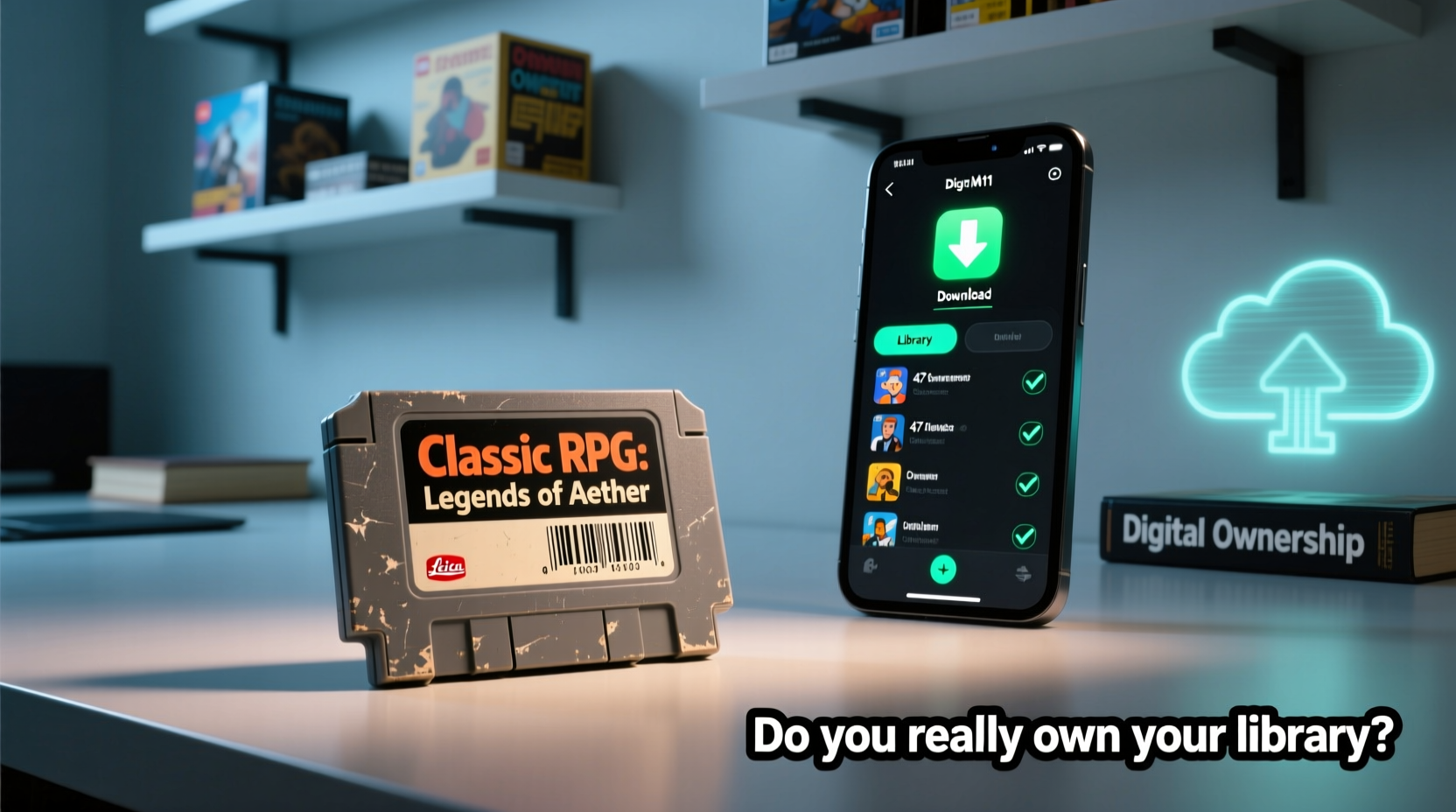
When you purchase a digital game through platforms like PlayStation Store, Xbox Marketplace, or Nintendo eShop, you’re not buying a product in the traditional sense. Instead, you're agreeing to a license that allows you to access and play the software under specific conditions. These terms are governed by End User License Agreements (EULAs), which most users accept without reading.
Unlike a book or a vinyl record, a digital game isn’t something you can resell, lend, or pass down. It’s tied to your account, and if that account is suspended—or the platform shuts down—the game may become inaccessible. In 2023, Microsoft delisted over 100 Xbox 360 titles due to expired music licenses, rendering them unplayable even for those who had purchased them years earlier.
“Digital purchases are essentially rentals with indefinite duration—until the provider decides otherwise.” — Jason Schreier, investigative journalist and author of Press Reset
This lack of permanence challenges the very idea of building a personal game library. A collection built on digital downloads is fragile, dependent on corporate infrastructure and ongoing licensing agreements.
Why Physical Cartridges Still Matter
Physical game cartridges—used primarily by Nintendo Switch but also historically by Game Boy, DS, and others—represent a form of ownership that’s increasingly rare. When you buy a cartridge, you own a durable, self-contained piece of hardware. No internet connection is required to install or authenticate it. You can trade it, sell it, or store it indefinitely.
Cartridges are also remarkably resilient. Unlike optical discs, they have no exposed surfaces vulnerable to scratches. They’re shock-resistant, compact, and immune to laser decay. Many gamers report playing the same Super Nintendo cartridges decades after purchase with no degradation in performance.
Moreover, physical media fosters a sense of collectibility. Limited editions, special packaging, and bonus inserts enhance the emotional and cultural value of a game. For many, holding a game in hand completes the experience.
Comparing Longevity, Access, and Value
The long-term viability of a game library depends on several factors: durability, accessibility, resale potential, and preservation. Below is a comparison of key aspects between physical cartridges and digital downloads.
| Factor | Physical Cartridge | Digital Download |
|---|---|---|
| Ownership | You own the physical object and the right to use it | Licensed access; no transferable ownership |
| Durability | High—resistant to wear, no moving parts | Dependent on servers and device storage |
| Resale/Trade | Yes—can be sold or gifted freely | No—permanently tied to account |
| Offline Access | Full access without internet | Mostly offline, but initial download and authentication require internet |
| Long-Term Preservation | Possible with proper storage | Risk of delisting or server shutdowns |
| Convenience | Requires shelf space; swapping games manually | Instant access; no physical handling |
| Price Over Time | May appreciate (collector’s items) | Always depreciates; no secondary market |
The table illustrates a core truth: physical media offers greater autonomy, while digital provides unmatched convenience. The choice ultimately hinges on whether you prioritize control or ease.
A Real-World Example: The Disappearing Zelda
In 2015, Nintendo released a limited physical edition of The Legend of Zelda: Majora’s Mask 3D for the Nintendo 3DS. Only 50,000 copies were produced, each including a cloth map and art booklet. Initially priced at $39.99, these cartridges now sell for over $300 in mint condition.
Meanwhile, the digital version of the same game remains available on the Nintendo eShop—for the same price. But because it’s digital, there’s no scarcity, no collector’s value, and no ability to resell. If Nintendo ever removes it from sale, owners retain access—but only as long as their accounts exist and the servers support authentication.
This case highlights how physical media can gain cultural and financial value over time, while digital versions remain static and disposable. One is an asset; the other, a service.
Preserving Your Library: A Step-by-Step Guide
Whether you lean toward physical or digital, proactive steps can help safeguard your game collection. Here’s a practical timeline to ensure long-term access:
- Inventory Your Collection (Month 1): List all games you own—both physical and digital. Note platform, purchase date, and format.
- Back Up Digital Purchases (Ongoing): Regularly download and locally store digital games when possible. Some platforms allow full downloads to external drives.
- Protect Physical Media (Immediate): Use anti-static sleeves and hard-shell cases. Store in a cool, dry place away from direct sunlight.
- Monitor Delisting Announcements (Quarterly): Follow news sources like Digital Rights Watch or Nintendo Everything for updates on games being removed from stores.
- Explore Emulation & Archiving (Advanced): For older games no longer commercially available, consider legal archival methods. Ripping your own cartridges for backup may fall under fair use in some jurisdictions, but check local laws.
- Diversify Formats (Long-Term): When possible, own critical titles in both physical and digital forms. This ensures access even if one format becomes obsolete.
This approach doesn’t guarantee immortality for your library, but it significantly reduces risk. Think of it as insurance against technological obsolescence and corporate policy changes.
Expert Insight: The Legal Reality of Digital Licensing
Legal scholar Dr. Rebecca Tushnet, a professor at Harvard Law School specializing in copyright and consumer rights, emphasizes the gap between perception and reality in digital ownership.
“Consumers believe they’re buying a product, but legally, they’re accepting a revocable license. There’s no property right attached. That’s a fundamental shift from centuries of ownership norms.” — Dr. Rebecca Tushnet, Harvard Law School
She notes that current copyright law favors distributors over end users, especially in digital spaces. Unlike physical goods, digital content is often subject to geo-restrictions, regional pricing, and sudden removal—all without compensation to buyers.
Tips for Building a Sustainable Game Library
- Buy physical when possible: Especially for first-party titles and exclusives likely to become classics.
- Check region compatibility: Some cartridges are region-locked; verify before purchasing imports.
- Avoid relying solely on sales: Deep discounts on digital games may tempt bulk buying, but unused titles gather digital dust with no resale option.
- Use cloud saves wisely: While convenient, cloud saves depend on active subscriptions. Periodically export save data if supported.
- Support preservation efforts: Donate to organizations like the Video Game History Foundation, which archive at-risk games.
Frequently Asked Questions
Can I transfer my digital games to another account?
Generally, no. Digital games are permanently linked to the account used to purchase them. Some platforms allow family sharing or console-level authorization, but full transfers are not permitted.
Are game cartridges more expensive than digital versions?
Initially, yes—especially at launch. However, physical prices often drop over time, and secondhand markets offer significant savings. Digital versions rarely decrease in price after release.
Will physical games eventually disappear?
While major publishers are shifting toward digital, physical media persists due to consumer demand and accessibility in regions with poor internet. Nintendo has reaffirmed its commitment to cartridges for the foreseeable future, citing reliability and ownership benefits.
Conclusion: What Does Ownership Really Mean?
The debate between physical cartridges and digital downloads isn’t just about convenience or cost—it’s about autonomy. True ownership means having control over your possessions: the freedom to use, share, repair, and preserve them without asking permission.
Digital downloads offer speed and simplicity, but they come at the cost of permanence and independence. Physical cartridges, though less flashy, represent a tangible link to the games we love—one that can endure beyond corporate timelines and technological shifts.
If you care about preserving your gaming history, supporting a healthy secondary market, or simply holding something real in your hands, then physical media remains essential. Build your library with intention. Choose formats that align with your values. And remember: in a world of temporary access, ownership is a radical act.




 浙公网安备
33010002000092号
浙公网安备
33010002000092号 浙B2-20120091-4
Comments
No comments yet. Why don't you start the discussion?