
When you're shopping for throw pillows, decorative cushions, or even bedding upgrades, you've likely encountered both \"pillow insert\" and \"pillow form\" on product labels. At first glance, they sound like synonyms—both go inside a pillow cover, after all. But dig a little deeper, and subtle yet meaningful distinctions emerge. Understanding these differences isn't just semantics; it affects comfort, durability, appearance, and cost. So, are they truly interchangeable, or is there more beneath the surface?
Defining the Terms: What Exactly Is a Pillow Insert?
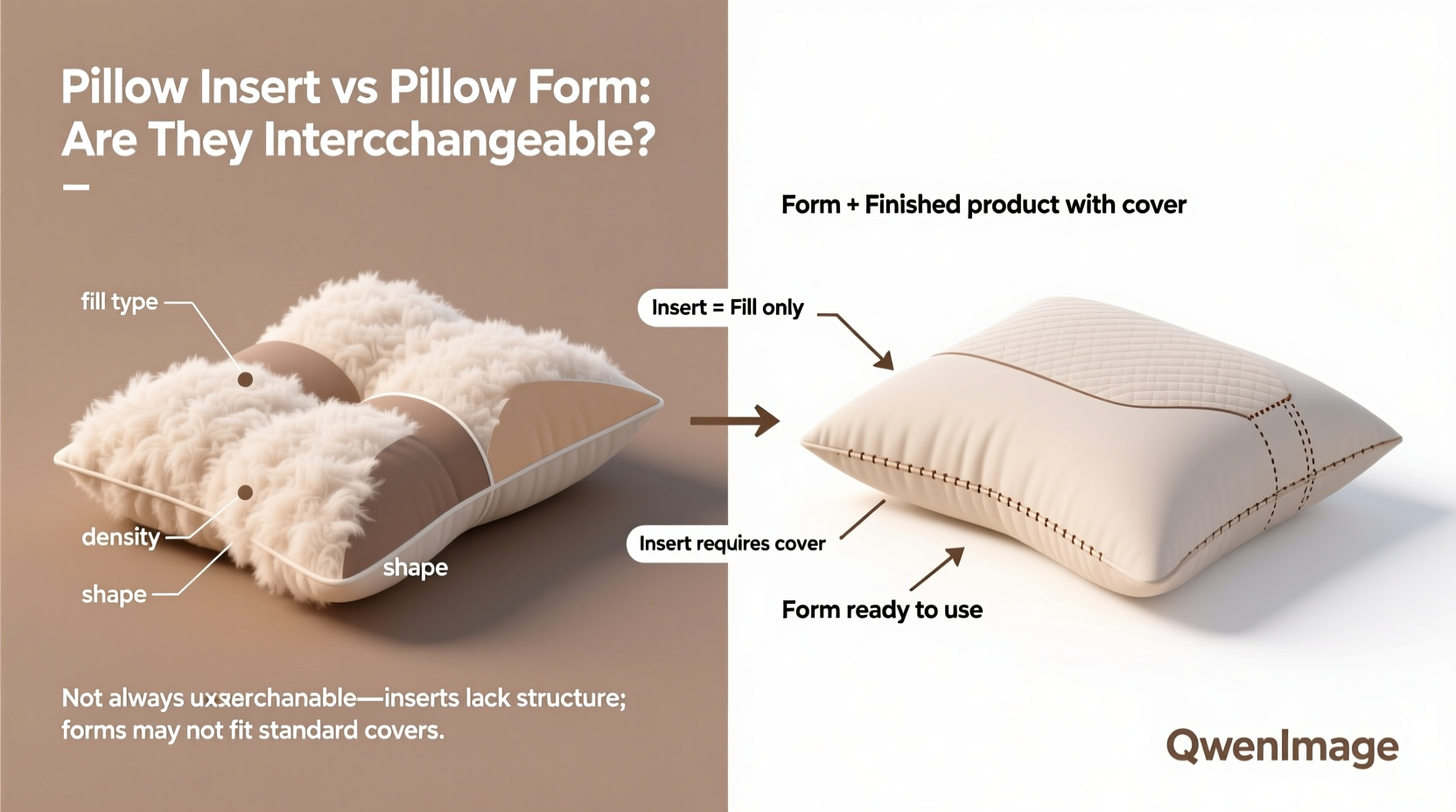
A pillow insert typically refers to a soft, pliable filling designed to be placed inside a removable pillow cover. These inserts are most commonly made from down, feathers, polyester fiberfill, memory foam, or blends of synthetic materials. They're built for comfort and resilience, often used in both functional and decorative pillows.
Key characteristics include:
- Soft, malleable texture that can be fluffed or compressed
- Frequently sold in standard sizes (e.g., 18x18, 20x20 inches)
- Often slightly undersized compared to the cover to allow for fullness
- Washable or spot-cleanable depending on material
Pillow inserts are what you’d find in most home goods stores—plump, fluffy, and ready to give your couch or bed a lived-in look. They’re the workhorses behind cozy lounging and Instagram-worthy styling.
What Is a Pillow Form? A Different Beast Altogether
A pillow form, by contrast, tends to describe a firmer, more structured core. Often made from high-density foam, molded polyurethane, or rigid fiber clusters, pillow forms are engineered to hold their shape under pressure. Unlike traditional inserts, they don’t compress easily and are less about softness and more about maintaining structure.
These are frequently used in:
- Lumbar support pillows
- Decorative accent pieces where silhouette matters
- Outdoor or high-traffic furniture where sagging is unacceptable
- Boutique or designer cushion designs requiring crisp edges
As interior designer Mara Thompson explains:
“Pillow forms are the skeleton of a well-designed cushion. They provide architectural integrity. You wouldn’t drape silk over a bent wire frame—you need the right foundation.” — Mara Thompson, Interior Architect & Textile Consultant
Are They Interchangeable? The Real Answer
The short answer: sometimes—but not always.
In casual conversation or on loosely written product pages, “insert” and “form” may be used interchangeably. However, in practice, substituting one for the other can lead to disappointment. Imagine placing a soft polyester insert into a tailored linen cover meant for a firm foam form—the result will be a saggy, poorly defined pillow that lacks visual impact.
Conversely, forcing a rigid pillow form into a delicate, hand-embroidered cover designed for gentle shaping could strain seams or distort embroidery.
Material Comparison: Soft Inserts vs. Structured Forms
| Feature | Pillow Insert (Soft) | Pillow Form (Structured) |
|---|---|---|
| Common Materials | Polyester fiberfill, down, feather, memory foam (soft grade) | Dense foam, molded polyurethane, bonded fiber clusters |
| Feel | Plush, compressible, moldable | Firm, rigid, shape-retentive |
| Lifespan | 1–3 years (may flatten over time) | 3–7+ years (resists compression) |
| Care | Machine washable (most) | Spot clean only (typically) |
| Best For | Bedding, sofas, lounging, layered decor | Accent pillows, outdoor use, tailored upholstery |
Real-World Example: The Living Room Makeover Gone Wrong
Sarah, a homeowner in Portland, recently ordered custom lumbar pillow covers for her mid-century modern sofa. She selected a crisp, boxy design with tight corners and assumed any 20x12 insert would suffice. She bought budget-friendly polyester inserts online, only to find the finished pillows slumped and rounded at the edges—nothing like the sharp, tailored look in the catalog photo.
After consulting a local upholsterer, she learned her covers were designed for rigid pillow forms. Once she replaced the soft inserts with high-density foam forms, the transformation was immediate: clean lines, consistent shape, and a professional finish. The lesson? Design intent matters as much as aesthetics.
How to Choose the Right One for Your Needs
Selecting between a pillow insert and a pillow form comes down to function, fabric, and aesthetic goals. Follow this checklist before purchasing:
- Assess the cover’s design: Is it loose and bohemian, or tight and structured? Tailored covers usually need forms.
- Consider usage: Will it be sat on regularly? Opt for a firm form.
- Evaluate fill retention: Soft inserts lose loft over time; forms maintain shape longer.
- Check care instructions: Can the insert be washed? Forms rarely can.
- Size wisely: Use an insert/form ½ to 1 inch smaller than the cover for optimal fullness without strain.
Frequently Asked Questions
Can I use a pillow form in place of a regular insert for my throw pillows?
Yes, if the cover can accommodate the firmness and size. However, be aware that a form won’t offer the same sink-in comfort as a soft insert. It’s ideal for decorative pillows you don’t plan to cuddle with.
Do pillow forms come in standard sizes?
Many do, especially for common dimensions like 18x18 or 20x20. However, specialty shapes (lumbar, bolster, round) often require custom or brand-specific forms. Always measure your cover before buying.
Why do some inserts say “oversized”?
Oversized inserts (e.g., a 20x20 insert for an 18x18 cover) are designed to create maximum fullness and eliminate flat spots. This technique works best with soft fiberfill or down blends and durable fabrics like canvas or twill.
Final Thoughts: Precision Over Assumption
The confusion between pillow insert and pillow form stems from inconsistent labeling across retailers. Some brands use the terms synonymously; others draw a clear line. As a consumer, your best defense is attention to detail. Read product descriptions carefully, consider the intended use, and prioritize compatibility between the inner core and outer shell.
Great pillows aren’t just about fabric and color—they’re a balance of structure, comfort, and longevity. Whether you're refreshing your bedroom, styling a reading nook, or furnishing a sunroom, choosing the right filling makes all the difference.




 浙公网安备
33010002000092号
浙公网安备
33010002000092号 浙B2-20120091-4
Comments
No comments yet. Why don't you start the discussion?