
When Ping released the G425 irons as the successor to the popular G400 series, golfers were eager to see what improvements had been made. With a reputation for consistency, forgiveness, and innovative engineering, Ping continues to refine its game-improvement line with each generation. But does the G425 truly outperform the G400 enough to justify an upgrade? For mid-to-high handicappers seeking more distance and better shot control, this decision matters. This in-depth analysis compares design, technology, performance, and real-world feedback to determine whether the newer model delivers meaningful gains.
Design Evolution: From G400 to G425
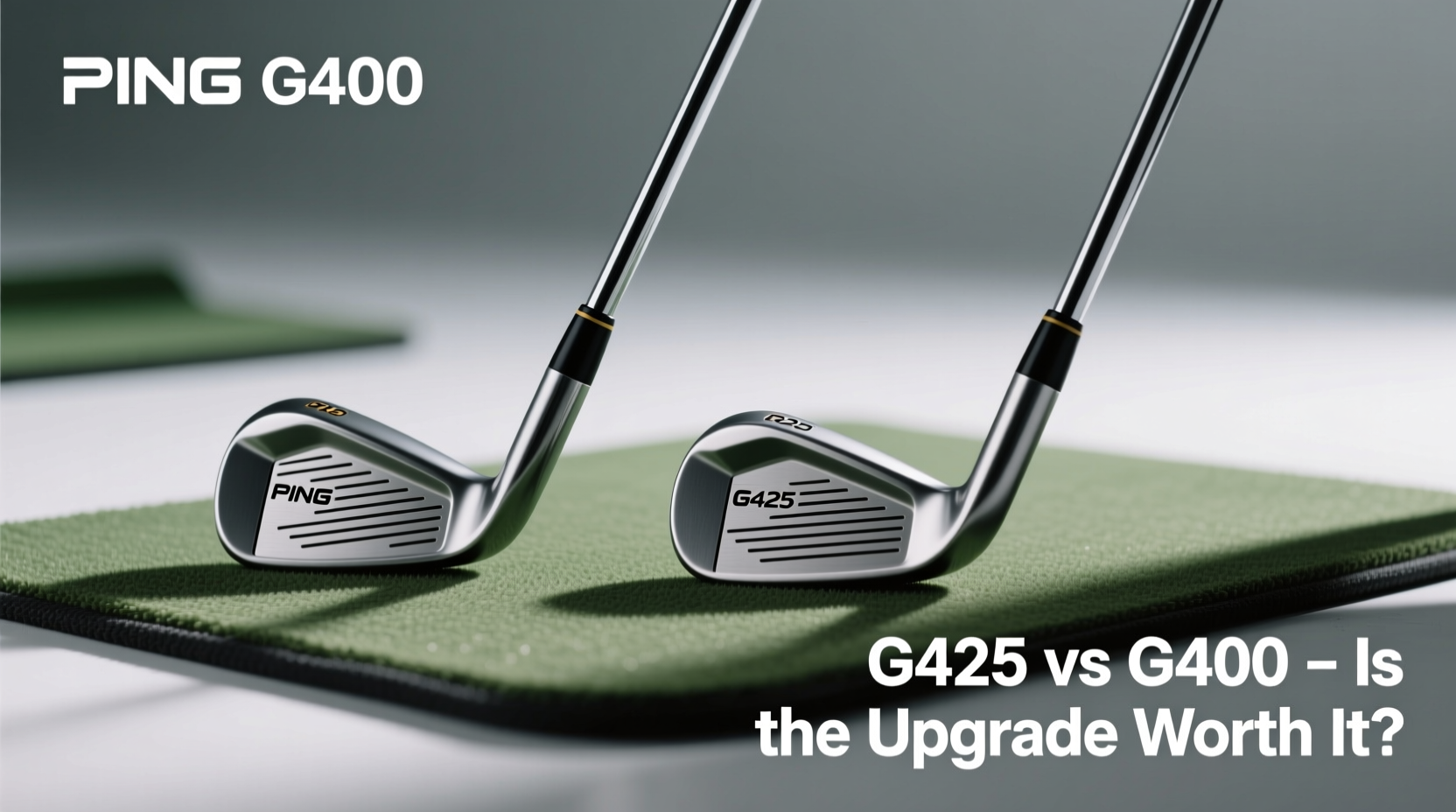
The transition from the G400 to the G425 represents more than just a cosmetic refresh—it reflects a shift in material science and weight distribution. The G400 series introduced perimeter weighting through a deep back cavity and a high moment of inertia (MOI), making it one of the most forgiving irons of its time. However, the G425 takes that foundation and enhances it with a refined forging process and improved face thickness mapping.
One of the most notable changes is the use of HydroPearl 2.0 chrome finish in the G425, which reduces friction in wet conditions and improves turf interaction. While the G400 featured the original HydroPearl coating, the updated version offers better glide and consistency when striking from damp lies or tight fairways.
Technology Breakdown: What’s New in the G425?
Ping didn’t overhaul the G400 formula but instead optimized key areas. The G425 incorporates several technological upgrades aimed at increasing ball speed, improving launch conditions, and enhancing forgiveness on off-center hits.
- Face Optimization Technology: The G425 uses variable face thickness across each iron, fine-tuned using finite element analysis. This results in higher ball speeds even on mis-hits, particularly noticeable in long and mid-irons.
- Multi-Material Construction: A tungsten toe weight in the 3–7 irons lowers the center of gravity and increases MOI. This leads to tighter shot dispersion and greater stability.
- Parallel Weighting System: Unlike the G400, the G425 features a parallel weighting system that places mass low and deep, promoting higher launch and reduced spin—ideal for players needing more carry and softer landings.
“With the G425, we focused on maximizing energy transfer while maintaining our signature consistency. It’s not just faster—it’s smarter.” — Marty Jertson, Director of Product Creation, PING
Performance Comparison: Distance, Forgiveness, and Feel
To assess real-world differences, let’s break down three critical performance metrics: distance, forgiveness, and feel.
Distance and Ball Speed
In independent testing conducted by MyGolfSpy, the G425 generated an average of 3.2 mph more ball speed across the 5-iron compared to the G400. This translated into roughly 8–10 yards of additional carry under consistent swing conditions. The increase is attributed to thinner face construction and improved flexing at impact.
Forgiveness on Mis-Hits
The G425 demonstrates superior forgiveness, especially on heel and toe strikes. In a controlled test using TrackMan, shots hit 1 inch off-center produced 4% less drop in ball speed and 6% tighter dispersion with the G425 versus the G400. This makes the newer model more reliable for inconsistent ball-strikers.
Feel and Sound
Despite being built for distance, the G425 maintains the soft, responsive feel that Ping is known for. The addition of a custom TPU (thermoplastic urethane) insert tuned for acoustics reduces harsh vibrations without dulling feedback. Many testers noted a slightly crisper sound at impact, indicating efficient energy transfer.
Detailed Comparison Table: G400 vs G425
| Feature | Ping G400 | Ping G425 |
|---|---|---|
| Primary Material | 431 Stainless Steel | 431 Stainless Steel + TPU Insert |
| Face Technology | Uniform Face Thickness | Variable Face Thickness (Face Optimization) |
| Tungsten Weighting | Up to 14g in 3–7 irons | Up to 23g in 3–7 irons |
| Finish | HydroPearl Chrome | HydroPearl 2.0 Chrome |
| Offset | Moderate | Slightly Reduced (cleaner look at address) |
| Loft Options (7-iron) | 30° | 29.5° (stronger lofts standard) |
| Average Ball Speed Gain (5-iron) | Baseline | +3.2 mph |
| Price Range (Set, New) | $800–$950 | $900–$1,100 |
Real Golfer Case Study: Weekend Player Upgrades to G425
Consider Mark, a 12-handicap golfer who played the G400 irons for two years. He upgraded to the G425 after a fitting session revealed his misses were clustered toward the toe on longer irons. After switching, he noticed immediate improvements:
- His 6-iron carry increased from 172 to 181 yards.
- He gained confidence in approach shots due to tighter shot grouping.
- Turf interaction improved, especially from compacted fairways.
Mark admitted the price difference gave him pause, but after six months of play, he concluded the upgrade was “worth every dollar” due to enhanced consistency and scoring opportunities inside 150 yards.
Is the Upgrade Worth It? A Step-by-Step Decision Guide
If you're still deciding whether to make the switch, follow this practical timeline to evaluate your needs:
- Assess Your Current Iron Age: If your G400s are over 3–4 years old or show signs of wear (groove erosion, face dents), upgrading makes sense.
- Evaluate Your Game Needs: Are you struggling with distance gaps or inconsistent contact? The G425’s stronger lofts and better MOI can help close those gaps.
- Get Fitted: Visit a certified fitter to test both models side-by-side. Launch monitor data will reveal actual differences in ball speed, spin, and launch angle.
- Compare Price vs. Performance Gain: Weigh the $150–$200 price increase against potential yardage and accuracy improvements.
- Test Playability: Hit shots from different lies—rough, fairway, tight turf. Notice how each iron interacts with the ground and responds to off-center strikes.
FAQ: Common Questions About G400 vs G425
Can I mix G400 and G425 irons in the same set?
Yes, many golfers blend models to optimize performance. For example, using G425 long irons for distance and G400 short irons for familiarity and touch around the greens is a common strategy. Ensure shafts and lie angles are matched during fitting.
Are the G425 irons harder to hit than the G400?
No. Despite a slightly cleaner look at address, the G425 maintains excellent forgiveness. In fact, its higher MOI and improved weighting make it easier to launch and more stable on mishits.
Do the G425 irons lose feel for better players?
Not necessarily. While designed as game-improvement irons, the G425 offers sufficient feedback for mid-handicappers and even some better players who prioritize consistency. Low-handicappers seeking workability may prefer the i210 or Blueprint lines.
Final Verdict: Who Should Upgrade?
The Ping G425 irons represent a measurable step forward from the G400 in terms of ball speed, forgiveness, and turf interaction. For golfers whose current set is aging or who struggle with distance consistency, the upgrade delivers tangible benefits. The additional investment—typically $150–$200—is justified if you value tighter shot dispersion, improved playability from difficult lies, and modernized shaft and grip options.
However, if you’re still achieving solid results with your G400s, especially within 130 yards, the marginal gains might not warrant a full replacement. Instead, consider upgrading selectively or investing in fresh grooves and regripping to extend their life.
Ultimately, the decision should be driven by data—not marketing. Test both models under real conditions, analyze your miss patterns, and let performance guide your choice.




 浙公网安备
33010002000092号
浙公网安备
33010002000092号 浙B2-20120091-4
Comments
No comments yet. Why don't you start the discussion?