
When choosing cushion covers for your sofa, bed, or outdoor seating, the decision often comes down to aesthetics and ease of care. But one subtle detail—whether a cover has piping or a zipper—can quietly influence both function and longevity. At first glance, that narrow strip of fabric along the edge or the discreet closure on the side may seem like minor design choices. In reality, these elements play distinct roles in structure, comfort, and maintenance. Understanding the differences between piped and zippered cushion covers helps you make informed decisions that align with your lifestyle, decor goals, and practical needs.
What Are Piped and Zippered Cushion Covers?
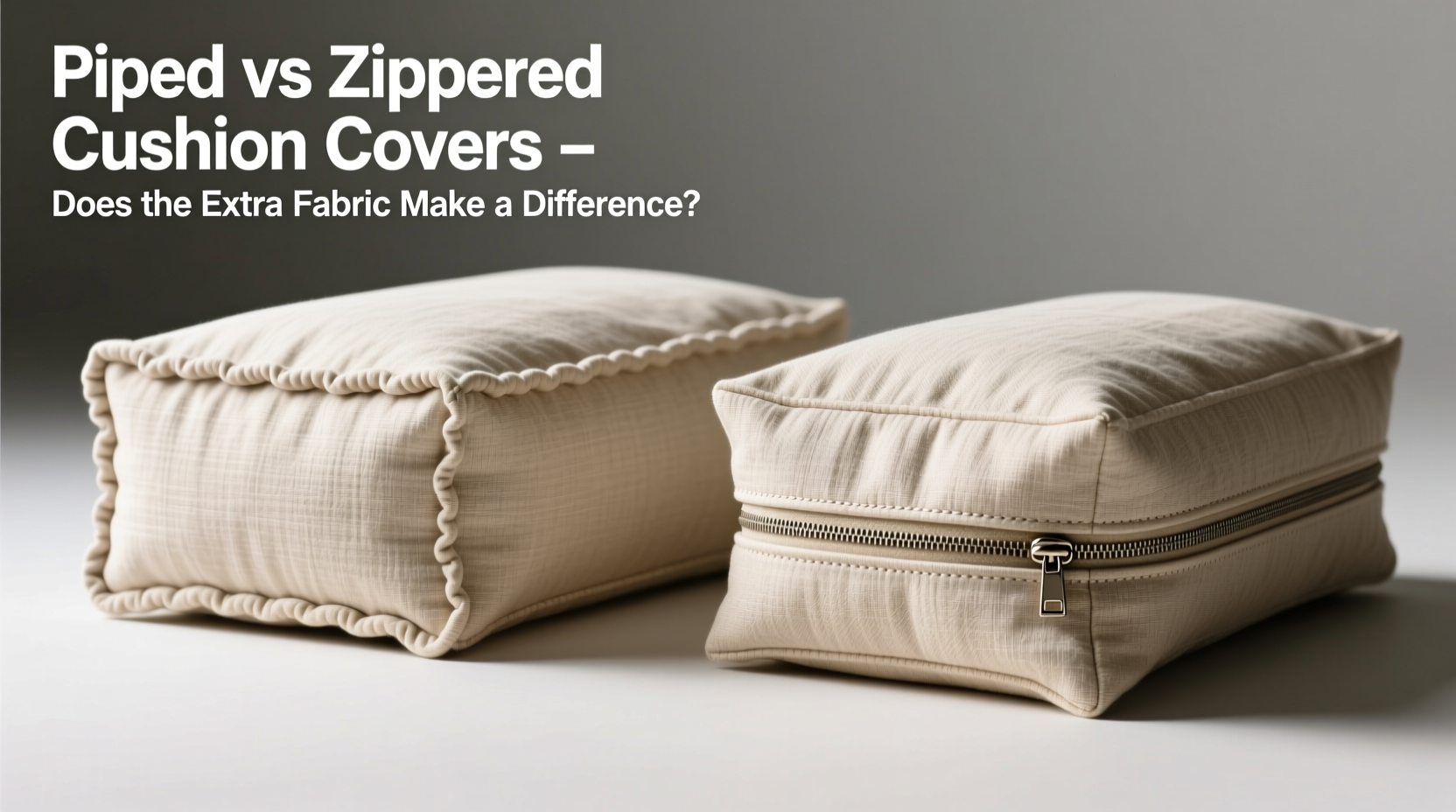
Piped cushion covers feature a thin cord—usually wrapped in fabric—sewn into the seam along the edges. This cord creates a defined border that frames the cushion, adding visual depth and a tailored finish. The piping is typically made from the same or contrasting fabric as the cover, allowing for decorative customization.
Zippered cushion covers, on the other hand, are designed with a concealed or exposed zipper that allows the insert to be removed. This functional element makes cleaning, replacing, or switching inserts significantly easier. While some zippered covers also include piping, the two features serve entirely different purposes: one is structural and aesthetic, the other is utilitarian.
The confusion often arises because both features involve \"extra\" fabric or stitching. However, their impact diverges sharply—one enhances appearance and durability, while the other improves accessibility and maintenance.
The Functional Role of Piping: More Than Just Decoration
Piping isn’t merely ornamental. It reinforces the seams, helping the cushion cover retain its shape over time. When subjected to daily use—sitting, leaning, tossing—the edges of a cushion bear the brunt of stress. Without reinforcement, these corners can stretch, fray, or lose definition. Piping acts as a buffer, distributing tension across the seam and minimizing wear.
In high-end upholstery, piping is standard because it contributes to a crisp, polished look. Interior designers often use contrasting piping to draw attention to furniture lines or to add a pop of color without overwhelming the overall palette. For example, a navy-blue cushion with gold piping subtly elevates a neutral living room scheme.
“Piping adds architectural integrity to soft furnishings. It’s the difference between a cushion that sags and one that holds its form after years of use.” — Lena Patel, Interior Design Consultant
Why Zippered Closures Matter for Practical Living
If piping supports structure, zippers support convenience. A zippered cushion cover allows you to remove the inner insert for washing, drying, or replacement. This is especially valuable in homes with children, pets, or frequent guests, where spills and stains are inevitable.
Non-zippered covers—often sewn shut—are less practical. To clean them, you must either hand-wash gently (risking shrinkage or distortion) or avoid washing altogether. Over time, trapped dust, oils, and allergens accumulate inside, reducing hygiene and freshness. With a zipper, you can unzip, pull out the insert, and machine-wash the cover following care instructions.
Moreover, zippered covers offer flexibility. You can swap inserts seasonally—using feather fills in winter for softness and foam in summer for support—or change covers entirely to refresh your decor without buying new cushions.
Real-Life Scenario: The Busy Family Home
Sarah, a mother of two toddlers, opted for non-zippered linen cushion covers because they looked elegant in her beige-toned living room. Within three months, coffee spills, crayon marks, and muddy handprints turned the set unusable. Dry cleaning was costly, and machine washing caused shrinkage. She replaced them with dark gray zippered covers featuring black piping—durable, washable, and still stylish. Now, she tosses the covers in the wash weekly. The piping keeps the edges sharp despite daily toddler climbing, and the zippers remain smooth after six months of use.
Comparing Piped vs Zippered: Key Differences at a Glance
| Feature | Piped Covers | Zippered Covers |
|---|---|---|
| Primary Purpose | Structural reinforcement, aesthetic enhancement | Easy access, removable inserts |
| Durability Impact | High – reduces seam stress and fraying | Moderate – depends on zipper quality |
| Cleaning Ease | Low to moderate – often not removable | High – cover can be unzipped and washed |
| Design Flexibility | High – allows contrast trims and tailored looks | Moderate – zipper may limit placement options |
| Lifespan Extension | Yes – maintains shape and edge integrity | Yes – enables regular cleaning and insert swaps |
As the table shows, both features contribute to longevity but in different ways. Piping protects against physical degradation, while zippers protect against hygiene-related deterioration.
Can You Have Both? Combining Piping and Zippers
Absolutely—and many high-quality cushion covers do. The ideal cover combines a durable piped edge with a well-placed, hidden zipper (typically on the bottom or side seam). This hybrid approach delivers both aesthetic refinement and practical functionality.
When shopping, check product descriptions carefully. Some brands advertise “piped edges” but omit zippers, while others offer zippered backs without any edge detailing. Look for phrases like “fully lined with contrast piping and concealed YKK zipper” to ensure both features are included.
Step-by-Step: How to Evaluate a Quality Cushion Cover
- Inspect the seam allowance: Piping should be evenly stitched with no puckering.
- Test the zipper: Slide it open and closed multiple times; it should move smoothly without catching.
- Check fabric weight: Heavier fabrics (like cotton canvas or Belgian linen) hold piping better and resist sagging.
- Look for double-stitched seams: Reinforced stitching increases durability, especially at stress points.
- Verify care instructions: Machine-washable zippered covers are more sustainable in the long run.
Frequently Asked Questions
Does piping make cushion covers harder to clean?
Not inherently. Piping itself doesn’t interfere with cleaning, but if the cover lacks a zipper, the entire piece must be cleaned as one unit. A piped cover with a zipper offers the best of both worlds: structural detail and washability.
Are zippered covers less durable because of the closure?
Poorly made zippers can fail, but high-quality nylon or metal zippers (especially those from brands like YKK) are extremely durable. When properly installed and protected with fabric flaps or placed on low-friction sides, they don’t compromise longevity.
Can I add piping or a zipper to an existing cushion cover?
Yes, but it requires intermediate sewing skills. Adding piping involves opening the seam, inserting the cord, and resewing with precision. Installing a zipper is more complex and risks misalignment. For most people, purchasing a well-made cover upfront is more cost-effective than retrofitting.
Final Checklist Before Buying
- ✅ Decide whether you prioritize aesthetics (piping) or convenience (zipper)
- ✅ Look for covers that include both features for optimal performance
- ✅ Check the zipper type and placement—hidden zippers preserve clean lines
- ✅ Choose colorfast, pre-shrunk fabric to prevent warping after washing
- ✅ Consider the environment—outdoor cushions need UV-resistant fabric and rust-proof zippers
Conclusion: That Little Extra Fabric Does Make a Difference
The choice between piped and zippered cushion covers isn’t just about preference—it’s about understanding how small design details influence real-world use. Piping provides lasting structure and elegance, preventing edges from collapsing under daily pressure. Zippers deliver unmatched practicality, enabling easy cleaning and adaptability. When combined, they create a cover that’s both beautiful and resilient.
That little extra fabric in piping isn’t frivolous; it’s functional craftsmanship. And that discreet zipper? It’s a gateway to long-term cleanliness and versatility. Don’t overlook these details—they’re what separate temporary decor from timeless, livable design.




 浙公网安备
33010002000092号
浙公网安备
33010002000092号 浙B2-20120091-4
Comments
No comments yet. Why don't you start the discussion?