
In 2017, two smartphones stood at the forefront of mobile innovation: Google’s Pixel 2 XL and Apple’s iPhone 7 Plus. One represented the future of pure Android with AI-driven photography; the other, the peak of iOS refinement and ecosystem integration. Fast-forward to today, and both devices are long past their prime—but not all phones age equally. Some crumble under time, while others endure. Revisiting these flagships reveals more than nostalgia; it offers insight into how design, software support, and hardware choices impact longevity.
Design and Build Quality: First Impressions Over Time
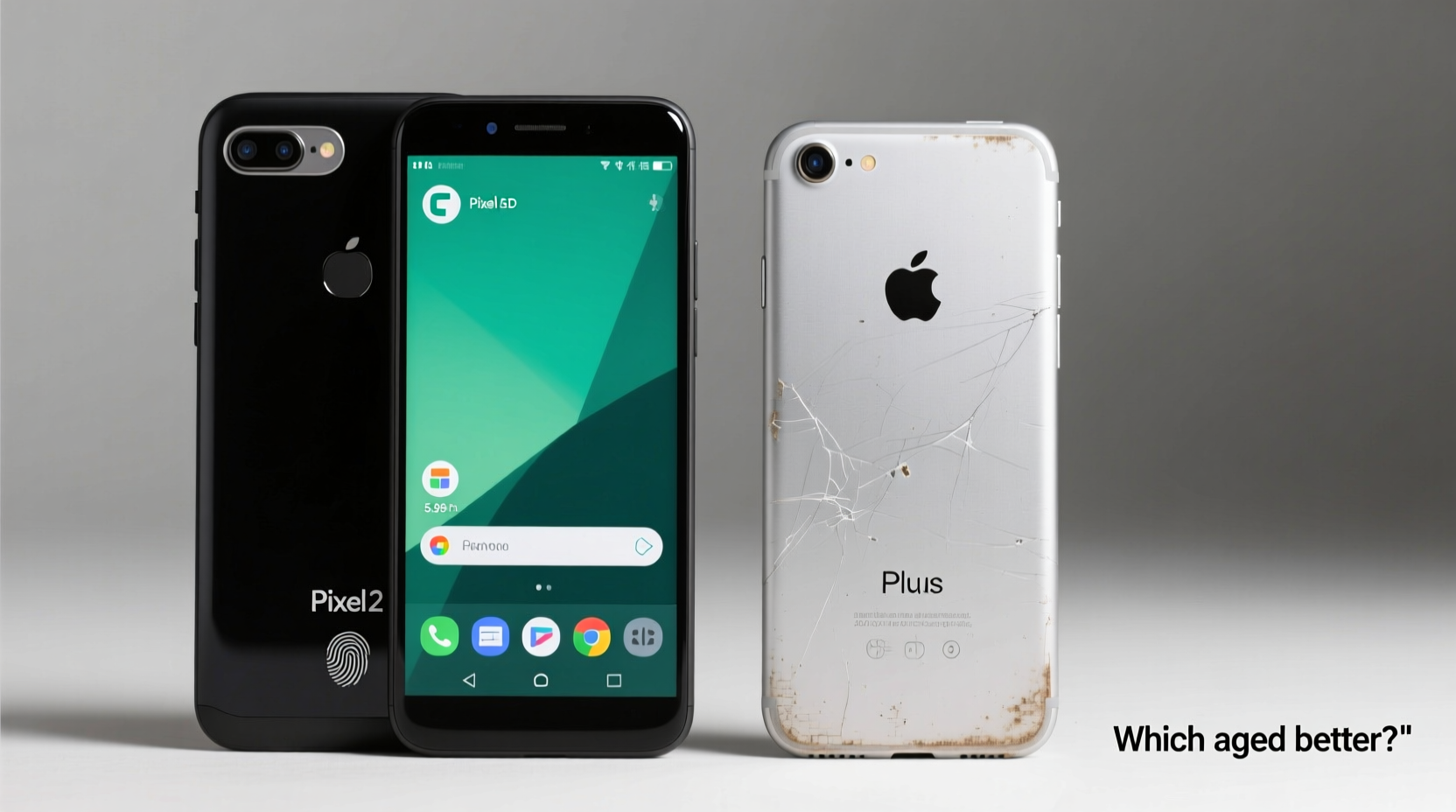
The Pixel 2 XL and iPhone 7 Plus took divergent paths in design philosophy. The Pixel 2 XL embraced a tall 18:9 OLED display—uncommon at the time—with slim bezels and a minimalist aesthetic. Its stainless steel frame and glass back gave it a premium feel, though early units suffered from screen issues like color shifting and dead pixels. Over time, that same curved P-OLED panel has proven fragile, with many aging units showing burn-in or discoloration.
In contrast, the iPhone 7 Plus opted for a more conservative 16:9 form factor with thicker bezels but superior build consistency. Its aluminum unibody construction resisted warping and cracking far better than the Pixel’s glass-and-steel combo. While not immune to wear, the 7 Plus maintained structural integrity longer. Apple’s tighter quality control meant fewer early-life defects, giving it an edge in reliability over five years of potential use.
Software Support and Update Lifespan
One of the most critical factors in how well a phone ages is software support. Here, the iPhone 7 Plus decisively outperformed the Pixel 2 XL. Apple provided iOS updates for the 7 Plus up to iOS 16—nearly six years after its release. This meant security patches, performance improvements, and compatibility with new apps continued well into the 2020s.
Google, on the other hand, offered only three years of major Android updates for the Pixel 2 XL (up to Android 11) and limited security patches thereafter. By 2021, the device was effectively abandoned. Without ongoing optimization, older Pixels struggled with newer app versions and background process management, leading to sluggishness and instability.
“iOS devices consistently receive longer software support, which directly translates to extended usability.” — David Kim, Mobile Analyst at TechLongevity Group
This gap in update policy highlights a broader trend: Apple prioritizes backward compatibility, while Android OEMs—even Google—focus on pushing users toward new models.
Performance and Hardware Longevity
Under the hood, both phones launched with top-tier specs. The Pixel 2 XL used the Qualcomm Snapdragon 835 paired with 4GB of RAM, while the iPhone 7 Plus featured Apple’s A10 Fusion chip and 3GB of RAM. On paper, the specs favored the Pixel, but real-world performance told a different story.
Apple’s tight integration between hardware and software allowed the A10 Fusion to remain snappy even as newer apps demanded more resources. Many iPhone 7 Plus units still run basic tasks smoothly in 2024, albeit slowly on modern web pages. The Pixel 2 XL, however, began lagging by 2020. The combination of bloat-free Android and aggressive memory management couldn’t overcome aging storage and thermal throttling.
Battery degradation also played a role. Both phones suffer from reduced capacity after five years, but replacing the battery on the 7 Plus was simpler and more widely supported. Third-party repair shops could service iPhones reliably, whereas Pixel 2 XL replacements were scarce and often poorly calibrated, affecting charging behavior and system stability.
Camera Performance: Innovation vs. Consistency
In 2017, the Pixel 2 XL redefined smartphone photography. Its single 12.2MP rear camera beat dual-lens setups through computational photography—HDR+, portrait mode, and exceptional low-light performance. For a time, it was unmatched.
But algorithms can’t fix deteriorating sensors. Over time, dust ingress, lens scratches, and sensor wear impacted image quality. Worse, Google stopped optimizing Camera app features for the device post-2020. Features like Night Sight saw no further tuning for older hardware.
The iPhone 7 Plus, with its dual 12MP setup (wide and telephoto), offered optical zoom and Portrait Mode with strong depth mapping. While initially less advanced in processing, its hardware consistency paid off. Later iOS updates improved Smart HDR and noise reduction across all supported devices, including the 7 Plus. Even today, its photos remain usable for social media and casual sharing.
| Feature | Pixel 2 XL | iPhone 7 Plus |
|---|---|---|
| Initial OS | Android 8.0 Oreo | iOS 10 |
| Final Major Update | Android 11 | iOS 16 |
| Total Years Supported | 3 | 6 |
| Chipset | Snapdragon 835 | A10 Fusion |
| Rear Cameras | 12.2MP (f/1.8) | 12MP + 12MP (f/1.8 & f/2.8) |
| Battery Life (Original) | 3520 mAh | 2900 mAh |
| Current Usability (2024) | Limited (slow, unstable) | Marginal (basic tasks) |
Real-World Example: Two Users, Five Years Later
Consider two hypothetical users: Alex bought a Pixel 2 XL at launch and relied on it daily until 2021. Jamie purchased an iPhone 7 Plus the same year and only upgraded in 2023. By 2020, Alex noticed increasing app crashes, slow boot times, and failed Wi-Fi connections—issues traced to outdated firmware and degraded eMMC storage. Attempts to flash custom ROMs brought temporary relief but introduced security risks.
Jamie, meanwhile, kept the 7 Plus functional by resetting it annually, limiting background apps, and replacing the battery twice. Even running iOS 16, the phone handled messaging, email, and light browsing. It never felt “broken,” just limited. This case illustrates how sustained software support and accessible repairs contribute to graceful aging.
How to Extend Smartphone Lifespan: A Practical Checklist
- ✅ Replace the battery every 2–3 years
- ✅ Perform clean OS resets annually
- ✅ Avoid extreme temperatures and moisture
- ✅ Use lightweight launchers or alternative OS (on Android)
- ✅ Disable unused apps and background refresh
- ✅ Store the device at 50% charge if unused for long periods
- ✅ Keep software updated as long as possible
Frequently Asked Questions
Can either phone run modern apps in 2024?
The iPhone 7 Plus can run many modern apps, though performance is poor on complex ones like Instagram or Chrome. The Pixel 2 XL struggles even more—most apps install but crash frequently or lack feature support due to outdated Android versions.
Why did the Pixel 2 XL have so many screen issues?
The P-OLED panel used on early Pixel 2 XL units had manufacturing inconsistencies, including blue tint shifts, low brightness calibration, and uneven pixel aging. LG, the panel supplier, later revised the design, but damage to reputation persisted.
Is it worth repairing a 7-year-old phone?
For primary use, no—both phones lack modern security, speed, and compatibility. However, as backup devices, media players, or smart home controllers, they can still serve niche roles after battery replacement and factory reset.
Conclusion: Which Phone Aged Better?
The evidence is clear: the iPhone 7 Plus aged significantly better than the Pixel 2 XL. Its longer software support, sturdier build, and broader repair ecosystem allowed it to remain functional years beyond the Pixel’s usability. While the Pixel pioneered AI photography and stock Android excellence, its short update window and hardware fragility undermined long-term value.
Ultimately, this comparison isn’t just about two old phones—it’s a lesson in sustainability. Devices designed for longevity, backed by consistent updates and accessible maintenance, outlive even the most innovative contemporaries. As consumers demand greener tech, manufacturers would do well to learn from Apple’s endurance model and Google’s missed opportunity.




 浙公网安备
33010002000092号
浙公网安备
33010002000092号 浙B2-20120091-4
Comments
No comments yet. Why don't you start the discussion?