
The smartphone market moves fast. If you’re still using a Pixel 3—Google’s standout 2018 flagship—you might be wondering whether it’s time to make the leap to a current-generation iPhone, especially the latest iPhone Pro Max. On paper, the newer iPhone offers cutting-edge specs, but does that translate to meaningful improvements in everyday use? More importantly, is the steep price difference justified for someone coming from a device as capable as the Pixel 3?
This isn’t just about megapixels or processor benchmarks. It’s about real usability, longevity, ecosystem fit, and whether upgrading will genuinely enhance your experience—or simply drain your wallet for marginal gains.
Performance and Software Longevity
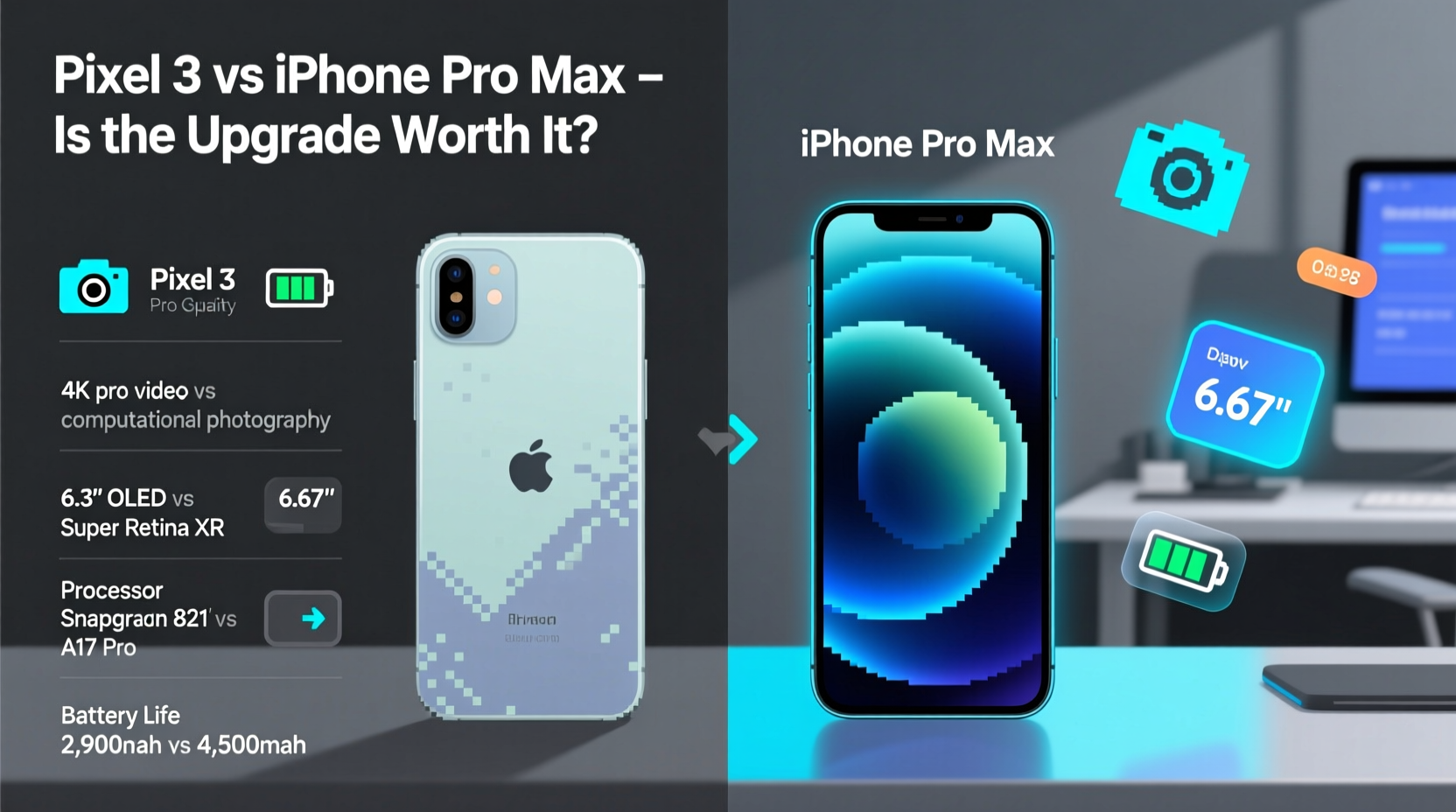
The Pixel 3 launched with the Qualcomm Snapdragon 845, a powerful chip in its day. In 2024, it still handles basic tasks like messaging, browsing, and streaming, but stutters on heavier apps and multitasking. Updates officially ended in 2021, meaning no new Android versions or security patches—a growing concern for privacy and app compatibility.
In contrast, the iPhone Pro Max (current generation) runs Apple’s A17 or A18 chip, depending on release year. These processors outperform even high-end Android chips in sustained workloads and efficiency. More importantly, iPhones typically receive software support for 5–6 years, sometimes up to 7. This means your Pro Max will likely stay updated through 2030, offering long-term reliability.
Apple’s iOS also tends to optimize performance over time better than Android on aging hardware. While the Pixel 3 has slowed noticeably since launch, an iPhone from even three years ago often feels snappy today.
Camera: Evolution vs Revolution
The Pixel 3 was legendary for its camera—especially in low light. With a single 12.2MP rear sensor, Google’s computational photography (HDR+, Night Sight) delivered results that rivaled—and often beat—flagships with multiple lenses. For many photographers, it remains a favorite.
The iPhone Pro Max changes the game with triple-lens systems: ultra-wide, wide, and telephoto. Sensor sizes are larger, optical stabilization is more advanced, and Apple’s Photonic Engine improves detail and color accuracy across lighting conditions. Video recording is where the gap widens: the Pro Max supports 4K Dolby Vision HDR at 60fps, while the Pixel 3 tops out at 4K30 without advanced color grading.
“Even with one lens, the Pixel 3 taught the industry how software can elevate hardware. But modern iPhones combine both at a level Google still hasn’t matched.” — David Lin, Mobile Imaging Analyst at TechScope Weekly
If you shoot mostly photos in daylight or use portrait mode, the difference may feel subtle. But for video creators, night photographers, or those who zoom frequently, the Pro Max offers tangible upgrades.
Battery Life and Charging Realities
The Pixel 3 had a modest 2,915mAh battery. Even with aggressive Doze modes, most users struggled to get through a full day with moderate use. Fast charging helped, but wireless charging was limited to 10W, and reverse charging wasn’t supported.
The iPhone Pro Max, by comparison, packs batteries ranging from 3,969mAh (iPhone 14 Pro Max) to over 4,400mAh in newer models. Apple doesn’t always quote exact figures, but real-world usage shows 1.5 to 2 days of light use or solid all-day endurance under heavy loads. All models support fast charging (up to 27W), MagSafe wireless charging (15W), and limited reverse charging for AirPods.
| Feature | Pixel 3 | iPhone Pro Max (Latest) |
|---|---|---|
| Battery Capacity | 2,915 mAh | ~4,400 mAh |
| Fast Charging | 18W (wired only) | 27W (wired) |
| Wireless Charging | 10W Qi | 15W MagSafe + Qi2 |
| All-Day Battery (Moderate Use) | No | Yes, often exceeds 24 hours |
Battery degradation is another factor. After five years, the Pixel 3’s battery health is likely below 80%, leading to unexpected shutdowns. Replacing it is possible but not user-replaceable. The iPhone Pro Max allows battery health monitoring and official replacements, preserving longevity.
Ecosystem and Daily Integration
Switching from Android to iOS isn’t just about the phone—it’s about ecosystem lock-in. If you use Google services heavily (Gmail, Drive, Photos, YouTube Music), moving to iPhone means adapting workflows. Some apps behave differently, and features like live captions or Now Playing are Android-exclusive.
However, if you own other Apple devices—Mac, iPad, Apple Watch, AirPods—the Pro Max integrates seamlessly. Handoff, Universal Clipboard, AirDrop, and iMessage continuity create a frictionless experience. Notifications sync instantly, calls can be answered from a Mac, and Find My works across all devices.
Mini Case Study: Sarah’s Upgrade Journey
Sarah used her Pixel 3 for nearly four years. She loved the clean Android experience and Google Assistant integration. But by 2023, the phone lagged, the camera struggled in dim cafes, and battery life forced midday charging. She upgraded to an iPhone 15 Pro Max after getting an Apple Watch for fitness tracking.
At first, she missed Google Photos’ unlimited HD backup. But iCloud+ offered optimized storage, and she found shortcuts in Messages and FaceTime useful. The biggest win? Her watch and phone synced sleep data and workouts automatically. “It’s not that the iPhone takes better photos,” she said, “but everything just works together now.”
Is the Upgrade Worth It? A Practical Checklist
Before spending $1,100+ on a new iPhone, ask yourself these questions:
- Do you need all-day battery life without carrying a power bank?
- Are you regularly recording videos or shooting in low light?
- Do you own or plan to buy other Apple devices?
- Have you experienced slowdowns or app crashes on your Pixel 3?
- Is security and long-term software support a priority?
- Can you afford the cost, or would a previous-gen iPhone (like 13 Pro Max) suffice?
If you answered “yes” to three or more, the upgrade makes sense. If not, consider sticking with your Pixel 3 or exploring mid-tier alternatives like the iPhone 14 or Google Pixel 8.
Frequently Asked Questions
Can I keep using my Pixel 3 safely in 2024?
Yes, but with caveats. Without security updates, your device is more vulnerable to exploits, especially if you download apps from outside the Play Store or visit untrusted sites. Use strong passwords, avoid suspicious links, and consider a mobile antivirus app.
Does the iPhone Pro Max have better reception than the Pixel 3?
Generally, yes. Modern iPhones feature improved antenna designs and 5G mmWave support (in select models). The Pixel 3 only supports up to LTE. In areas with weak signal, the Pro Max typically maintains stronger, more stable connections.
Will my Google apps work well on iPhone?
Absolutely. Gmail, Google Drive, Chrome, and YouTube are fully supported. However, some integrations—like default assistant behavior or background permissions—are restricted by iOS. You’ll need to adjust settings manually for optimal performance.
Final Verdict: Value vs. Experience
The Pixel 3 was a remarkable phone in its time, and many users still swear by it. But technology evolves, and so do needs. The iPhone Pro Max isn’t just “newer”—it’s built for a different era of mobile computing: longer lifespans, richer media creation, deeper ecosystem ties, and consistent performance over years.
If you're frustrated with short battery life, slow performance, or camera limitations, the upgrade delivers noticeable improvements. But if you're satisfied with your current setup and don’t want to pay a premium for incremental gains, holding onto your Pixel 3—or opting for a more affordable upgrade—is perfectly reasonable.




 浙公网安备
33010002000092号
浙公网安备
33010002000092号 浙B2-20120091-4
Comments
No comments yet. Why don't you start the discussion?