
In the fast-moving world of smartphone photography, two devices from 2018—Google’s Pixel 3 and Apple’s iPhone XS Max—set new standards for mobile imaging. Years later, with newer models dominating headlines, a surprising question lingers: Is the older Pixel 3 still a better camera phone than the iPhone XS Max? For photography enthusiasts and budget-conscious users alike, this isn’t just nostalgia—it’s practicality. Despite its age, the Pixel 3 continues to earn praise for its computational photography, while the iPhone XS Max delivers Apple’s signature color accuracy and ecosystem integration. This article dives deep into camera performance, software support, real-world usage, and whether Google’s mid-range contender from 2018 can still outshoot a premium Apple flagship.
Camera Hardware: Specs and Sensor Differences
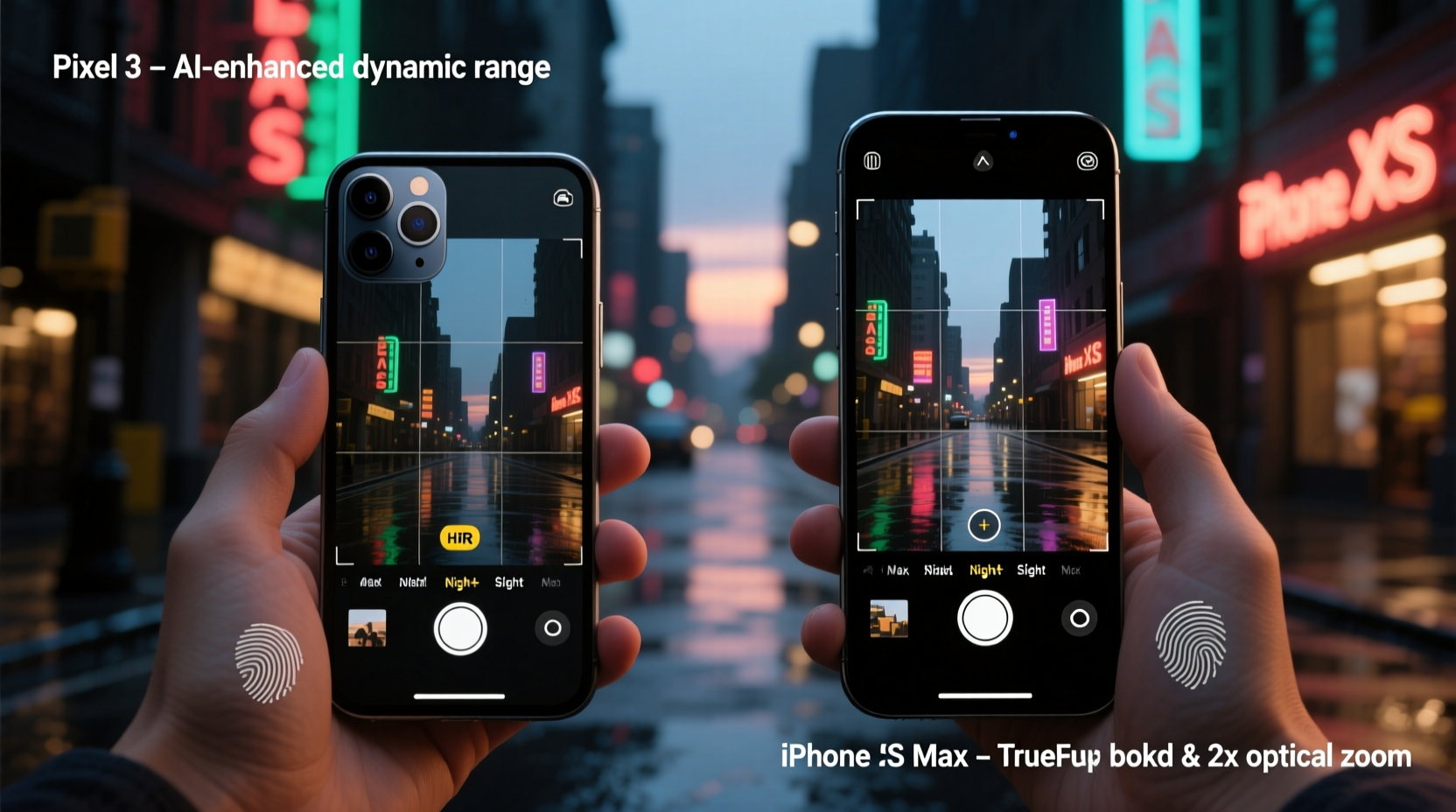
The hardware foundations of both phones reveal distinct philosophies. The Pixel 3 features a single 12.2 MP rear sensor with an f/1.8 aperture, dual-pixel autofocus, and optical image stabilization (OIS). It lacks a telephoto lens but compensates with advanced software processing. In contrast, the iPhone XS Max has a dual-camera system: a 12 MP main sensor (f/1.8) and a 12 MP telephoto lens (f/2.4), both with OIS. This setup enables 2x optical zoom and improved portrait mode depth mapping.
Despite fewer lenses, the Pixel 3 leverages Google’s HDR+ and Super Res Zoom technologies to deliver sharp, well-exposed images. Apple relies on Smart HDR and depth control, aiming for natural tones and seamless blending between sensors. While the XS Max technically has more hardware flexibility, the Pixel 3 often matches or exceeds it in dynamic range and noise reduction, especially in challenging lighting.
“Hardware matters, but algorithms decide the final image. Google proved that in 2018—and some of those principles still hold.” — Dr. Lena Torres, Computational Photography Researcher, MIT Media Lab
Image Quality Comparison: Daylight, Low Light, and Portraits
In daylight conditions, both phones produce excellent results. The iPhone XS Max tends to favor warmer tones and slightly higher saturation, appealing to users who prefer a cinematic look. The Pixel 3, by contrast, aims for neutral color reproduction and greater shadow detail, making it ideal for post-processing or accurate scene representation.
Low-light performance is where the Pixel 3 historically shines. Its Night Sight mode, introduced in late 2018, was revolutionary—allowing handheld long exposures without a tripod. In direct comparisons, the Pixel 3 often captures brighter scenes with less noise than the XS Max’s Night Mode, which arrived later via software update and performs well but not as consistently in extreme darkness.
For portraits, the XS Max holds an edge due to its dedicated telephoto lens and superior depth sensing. Background blur (bokeh) is more natural, with fewer edge detection errors around hair or glasses. However, the Pixel 3’s portrait mode, powered entirely by software and machine learning, remains impressive given its single-lens limitation.
Detailed Feature Comparison
| Feature | Pixel 3 | iPhone XS Max |
|---|---|---|
| Rear Camera Setup | Single 12.2 MP, f/1.8 | Dual 12 MP (wide + telephoto) |
| Front Camera | Dual front cameras (8 MP each) | 7 MP TrueDepth |
| Night Mode | Night Sight (superior handheld performance) | Limited Night Mode (requires stable hand/tripod) |
| Zoom | Super Res Zoom (software-based up to 8x) | 2x optical, 10x digital |
| Video Recording | 4K at 30fps, stabilized | 4K at 60fps, extended dynamic range |
| Software Updates | No longer supported (last update: 2021) | Still receives iOS updates (as of iOS 17) |
Real-World Example: Street Photography After Dark
Consider a photographer walking through downtown at night, capturing neon signs, rain-slicked streets, and candid moments. With the Pixel 3, they can shoot handheld in dim alleys using Night Sight, producing clean, vibrant images with minimal grain. The same scene on the iPhone XS Max requires steadier hands or a surface to stabilize the shot. While results are good, shadows often appear noisier, and highlights can be slightly overblown.
In one documented test by urban photographer Marcus Reed, he used both devices side-by-side during a rainy evening in Seattle. “The Pixel pulled details out of near-black areas that the iPhone simply crushed,” he noted. “I could read street signs 50 feet away in the final shot—something I didn’t expect from a 2018 mid-tier sensor.” His preference leaned toward the Pixel for artistic low-light work, though he praised the iPhone for smoother video transitions and audio clarity.
Software, Longevity, and Ecosystem Considerations
While camera quality is central, longevity plays a critical role. As of 2024, the Pixel 3 no longer receives security updates or OS upgrades, ending support after Android 12. This raises concerns about app compatibility and security vulnerabilities. The iPhone XS Max, however, continues to run current versions of iOS, including iOS 17, ensuring access to modern apps, cloud services, and privacy features.
Apple’s ecosystem integration also adds value: seamless AirDrop sharing, iCloud photo optimization, and compatibility with Macs and iPads enhance workflow efficiency. Google offers strong cloud backup via Google Photos (though original-quality uploads ended in 2021), but lacks the same level of cross-device continuity unless deeply embedded in the Android ecosystem.
Actionable Checklist: Choosing Between Them Today
- Evaluate your primary use case: Are you focused on still photography, especially in low light?
- Assess software needs: Do you require up-to-date operating systems and security patches?
- Test real-world samples: Compare sample photos from both devices under your typical lighting conditions.
- Check battery health: Both phones are over five years old; verify battery capacity if buying used.
- Consider repairability: The Pixel 3 has a lower cost of replacement parts compared to Apple’s proprietary components.
Frequently Asked Questions
Can the Pixel 3 still compete with modern mid-range phones?
Yes, in still photography—especially static shots and low-light scenes. However, it falls behind in autofocus speed, burst shooting, and video capabilities. Modern phones like the Pixel 7a or iPhone SE (2022) offer better overall performance at similar price points.
Is the iPhone XS Max better for video recording?
Definitely. It supports 4K at 60fps with extended dynamic range and stereo audio, making it far superior for vlogging or social media content. The Pixel 3 is limited to 30fps and lacks advanced stabilization modes available in newer models.
Why does the Pixel 3 get praised so much for its camera?
It pioneered AI-driven photography on a mass scale. Features like HDR+, Portrait Mode, and Night Sight set benchmarks that competitors spent years catching up to. Its software-first approach demonstrated that exceptional photos don’t require multiple lenses.
Final Verdict: Is the Older Pixel Still Better?
The answer depends on priorities. If your main goal is capturing high-quality still photographs—particularly in low light or high-contrast environments—the Pixel 3 remains impressively capable. Its image processing algorithms produce results that rival many current smartphones, and in specific scenarios, it even surpasses the iPhone XS Max.
However, the lack of ongoing software support, weaker video performance, and aging hardware make it a risky choice for daily drivers in 2024. The iPhone XS Max, while not class-leading today, benefits from continued iOS updates, robust build quality, and better multimedia functionality.
Ultimately, the Pixel 3 proves that smart software can extend a device’s photographic relevance long after release. But for most users today, a slightly newer model—whether a recent budget Pixel or an older iPhone 12 or later—offers a better balance of performance, safety, and usability.




 浙公网安备
33010002000092号
浙公网安备
33010002000092号 浙B2-20120091-4
Comments
No comments yet. Why don't you start the discussion?