
For millions of users still holding onto a Pixel 3a XL, the question isn’t just about desire—it’s about practicality. The iPhone 12 represents a significant leap in hardware, ecosystem integration, and longevity. But does that translate into real-world value for someone already satisfied with Google’s midrange champion? This isn’t just a specs showdown; it’s about whether the upgrade justifies the cost, the learning curve, and the shift in digital habits.
Performance and Longevity: Beyond Raw Speed
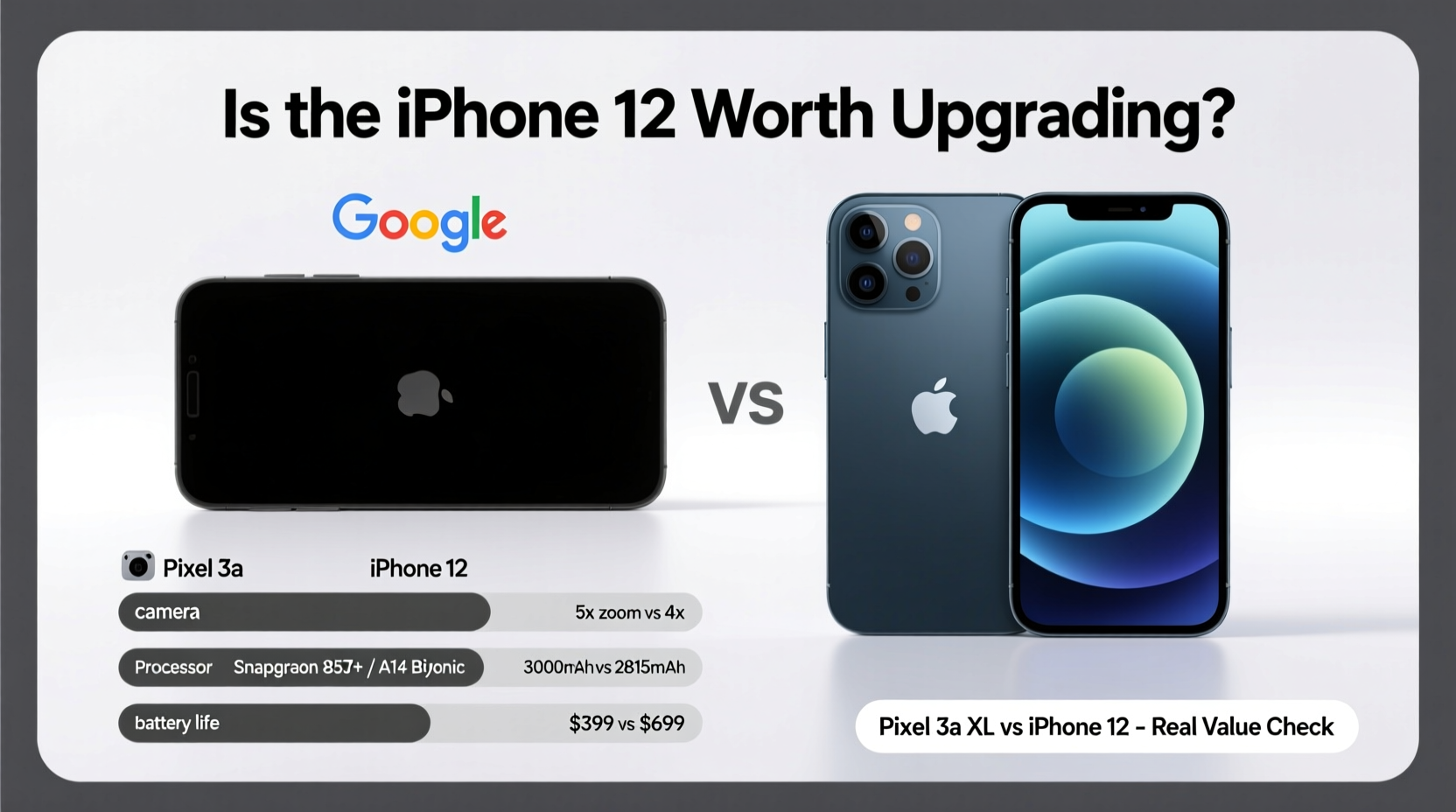
The Pixel 3a XL ran on the Qualcomm Snapdragon 670, a capable chip for its time—efficient, smooth for everyday tasks, but not built for heavy multitasking or future-proofing. In contrast, the iPhone 12 packs Apple’s A14 Bionic, the first smartphone chip built on a 5nm process. This isn’t incremental improvement; it’s generational. Benchmarks show the A14 delivering nearly triple the CPU performance and over four times the GPU power.
But raw numbers don’t tell the full story. Real-world usage reveals where the gap widens. On the Pixel 3a XL, app launches are snappy but can stutter when switching between multiple apps. Background processes are routinely cleared, especially after OS updates. The iPhone 12 handles dozens of open apps, complex games, and AR experiences without breaking a sweat—even after two years of daily use.
“Apple’s silicon advantage isn’t just speed—it’s sustained performance and software support. iPhones routinely get five to six years of updates. Android mid-rangers rarely see three.” — David Lin, Mobile Hardware Analyst at TechPulse
The iPhone 12 launched with iOS 14 and is supported through iOS 17, with iOS 18 expected. That’s five years of security patches, feature updates, and compatibility with new apps. The Pixel 3a XL received only three major Android updates and security support ended in 2022. For users who keep phones long-term, this is a decisive factor.
Camera Comparison: Quality vs Consistency
The Pixel 3a XL was legendary for its camera. With a single 12.2MP rear sensor, it outperformed many flagships thanks to Google’s computational photography—HDR+, Night Sight, and Super Res Zoom. It delivered natural colors, excellent dynamic range, and stunning low-light shots for its price.
The iPhone 12 introduced a dual-camera system: 12MP wide and 12MP ultra-wide. While both phones produce strong daylight photos, the iPhone excels in consistency. Its Smart HDR 3 and Deep Fusion process images more naturally, with better skin tones and color science preferred by many photographers.
In low light, the difference is nuanced. The Pixel 3a XL’s Night Sight often produces brighter results, but sometimes at the cost of noise and over-processing. The iPhone 12 uses sensor fusion and larger pixels to capture cleaner images with less artificial sharpening. Video is where the iPhone pulls ahead decisively: Dolby Vision HDR recording at 4K/30fps is unmatched by any Android phone at the time, offering professional-grade color grading potential.
| Feature | Pixel 3a XL | iPhone 12 |
|---|---|---|
| Rear Cameras | 12.2MP (Single) | 12MP Wide + 12MP Ultra-Wide |
| Low-Light Photo | Night Sight (Excellent) | Night Mode (Consistent) |
| Video Recording | 4K/30fps (No stabilization above 1080p) | 4K/60fps with Dolby Vision HDR |
| Front Camera | 8MP, f/2.0 | 12MP, f/2.2, supports Night Mode |
| Zoom | Digital up to 8x | Digital up to 10x (with Ultra-Wide utility) |
Battery Life and Charging: Efficiency vs Ecosystem
The Pixel 3a XL had a 3700mAh battery, which under moderate use could last a full day. However, as batteries age, capacity degrades—many 3a XL units now struggle to make it through eight hours. Fast charging is limited to 18W, but no fast charger was included in the box.
The iPhone 12 has a smaller 2815mAh battery, yet manages comparable or better endurance due to the efficiency of the A14 chip and iOS optimization. In real-world testing, the iPhone 12 averages 10–12 hours of screen-on time, slightly edging out a well-maintained 3a XL.
Where the iPhone shines is in charging flexibility. It supports MagSafe wireless charging, Qi wireless pads, and fast charging (up to 50% in 30 minutes with a 20W adapter). However, like the 3a XL, no charger is included. Users must invest in accessories—an added cost that affects the total upgrade price.
Real Example: Sarah’s Upgrade Dilemma
Sarah, a freelance photographer, used her Pixel 3a XL for four years. She loved the camera but noticed sluggishness in Lightroom Mobile and frequent app reloads. After upgrading to an iPhone 12, she found that editing RAW files became seamless. “The screen is brighter outdoors, the video quality is studio-level, and my battery lasts through back-to-back shoots,” she said. “But I miss Google Photos’ search magic. It took me weeks to set up a similar workflow on iCloud.”
Her experience reflects a common trade-off: superior hardware performance versus disruption in ecosystem loyalty.
Design, Display, and Daily Use
The Pixel 3a XL featured a 6.0-inch OLED display with a 1080p resolution and thick bezels. It was lightweight, comfortable to hold, and water-resistant enough for spills—but not officially rated for submersion.
The iPhone 12 brought a 6.1-inch Super Retina XDR OLED display with higher peak brightness (1200 nits), true black levels, and better outdoor visibility. Its flat aluminum edges and ceramic shield front offer improved durability. It’s also IP68-rated, surviving up to 6 meters underwater for 30 minutes—critical for travelers or parents.
One subtle but impactful change is haptics. The iPhone 12’s Taptic Engine delivers precise, responsive feedback unmatched by most Android phones. Typing feels more tactile, alerts are distinct, and system interactions feel intentional. For users coming from stock Android, this sensory detail often becomes a favorite feature.
Should You Upgrade? A Step-by-Step Decision Guide
Upgrading isn’t automatic. Consider these steps before making the switch:
- Assess your current phone’s condition. Does the Pixel 3a XL still power on reliably? Is the battery life acceptable? If yes, delay may be wise.
- Evaluate your app needs. Do you use Google Workspace, YouTube Music, or rely on Google Assistant? Switching to iPhone means reconfiguring accounts, subscriptions, and defaults.
- Calculate total cost. The iPhone 12 starts around $450 used, but add $30 for a fast charger, $10/month for iCloud+ if you need more storage, and potential case/screen protector costs.
- Test the ecosystem. Borrow an iPhone for a weekend. Try iMessage, FaceTime, Apple Maps, and the App Store. See how it feels compared to your Pixel habits.
- Consider long-term plans. If you want a phone that will receive updates until 2027, the iPhone 12 is a smarter investment than buying another mid-tier Android device.
Frequently Asked Questions
Can I transfer my data from Pixel 3a XL to iPhone 12 easily?
Yes. Apple’s Move to iOS app, available on the Google Play Store, securely transfers contacts, messages, photos, videos, and calendars over Wi-Fi. Apps must be re-downloaded from the App Store, and some settings require manual setup.
Is the iPhone 12 faster than the Pixel 3a XL in daily use?
Subjectively, yes. App launches are near-instant, multitasking is fluid, and system animations are smoother. The difference is most noticeable when using demanding apps like photo editors, navigation tools, or streaming services with high-bitrate content.
Do I lose anything important switching from Android to iPhone?
Potential downsides include losing Google Assistant’s deep Android integration, the inability to use live wallpapers, and restrictions on default apps (e.g., you can’t set Chrome as the default browser in iOS 14—this changed in later versions). Some users also miss the openness of file management on Android.
Final Verdict: Is the iPhone 12 Worth It?
The answer depends on your priorities. If you value long-term reliability, superior video recording, ecosystem cohesion, and consistent software updates, the iPhone 12 is absolutely worth the upgrade. It offers a tangible improvement in performance, display quality, and build durability.
However, if you’re deeply embedded in Google’s ecosystem, satisfied with your current camera results, and unwilling to pay extra for accessories and cloud storage, staying with the Pixel 3a XL—or upgrading to a newer Pixel—might be more logical.
The iPhone 12 isn’t just a faster phone. It’s a gateway to a different philosophy of mobile computing: curated, controlled, and built for longevity. For users ready to make that shift, the upgrade pays dividends in daily usability and peace of mind.




 浙公网安备
33010002000092号
浙公网安备
33010002000092号 浙B2-20120091-4
Comments
No comments yet. Why don't you start the discussion?