
In 2019, two flagship smartphones stood out for their photographic capabilities: the Google Pixel 4 XL and the Samsung Galaxy S10 Plus. While both devices were positioned at the premium end of the market, they approached mobile photography from very different philosophies. The Pixel 4 XL relied heavily on computational photography and AI-driven enhancements, while the S10 Plus offered a versatile triple-lens system with optical flexibility. Determining which device captured better images requires more than just specs—it demands a close look at real-world performance, software intelligence, lighting conditions, and user priorities.
Camera Hardware: A Tale of Simplicity vs. Versatility
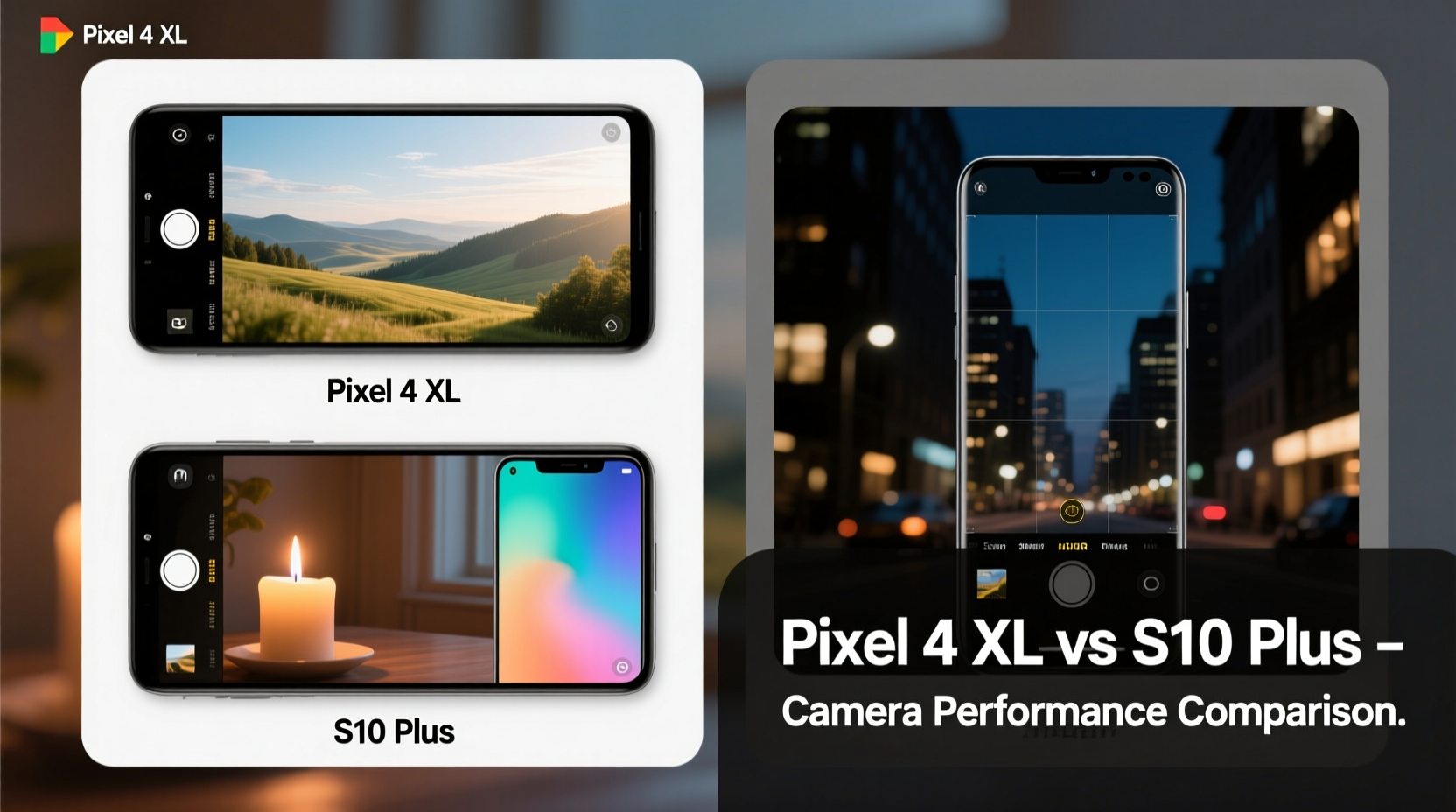
The Pixel 4 XL broke from convention by including only two rear cameras: a 12.2MP primary sensor and a 16MP telephoto lens. Notably absent was an ultra-wide lens, which had become standard on competing flagships. The primary sensor used Sony’s IMX577, known for its large 1.4µm pixels and dual-pixel autofocus, paired with optical image stabilization (OIS). The telephoto lens provided 2x optical zoom and supported up to 8x digital zoom via Super Res Zoom.
In contrast, the S10 Plus featured a triple-camera setup: a 12MP main sensor with variable aperture (f/1.5–f/2.4), a 12MP telephoto lens with 2x optical zoom, and a 16MP ultra-wide lens (f/2.2, 123° field of view). This configuration gave Samsung users more compositional freedom straight out of the box—especially useful for landscapes, group shots, and architectural photography.
“Hardware diversity gives flexibility, but software intelligence can often outperform sheer lens count.” — David Gewirtz, Senior Fellow at the Cyber-Digital Strategy Institute
Image Quality in Daylight: Clarity, Color, and Consistency
Under optimal daylight conditions, both phones produced excellent results, but with distinct stylistic differences.
The Pixel 4 XL delivered images with exceptional dynamic range thanks to HDR+ with dual-exposure controls. Shadows retained detail, highlights stayed controlled, and colors leaned toward natural accuracy with slight vibrancy boosts. Edge detection in portrait mode was remarkably precise, even around complex subjects like hair or glasses.
The S10 Plus, meanwhile, applied a more saturated and contrast-heavy profile by default. While some users preferred this “pop,” others found it less true-to-life. Its variable aperture allowed for strong depth-of-field simulation, though edge detection occasionally faltered near fine textures. The ultra-wide lens was a clear advantage when capturing expansive scenes, offering sharpness across most of the frame with minimal distortion.
Low-Light Performance: Night Sight vs. Night Mode
This is where the Pixel 4 XL truly distinguished itself. Google’s Night Sight had already set industry benchmarks, and the Pixel 4 XL refined it further with astrophotography support and improved motion deblurring. In dim environments—indoors, city streets at night, or poorly lit restaurants—the Pixel consistently captured brighter, cleaner, and more detailed photos than the S10 Plus, even without flash.
Samsung’s Night Mode on the S10 Plus also enhanced low-light output, but required longer exposure times and often resulted in over-sharpened textures or unnatural noise reduction. Colors sometimes shifted toward cooler tones, and bright light sources (like street lamps) could create halos or blooming effects.
In head-to-head tests conducted by DXOMark and independent reviewers, the Pixel 4 XL frequently scored higher in low-light photo categories due to superior luminance retention and finer texture preservation.
Zoom and Portrait Capabilities Compared
For zoomed shots, the Pixel 4 XL leveraged its Super Res Zoom technology—a machine learning-powered method that combined multiple frames to simulate higher resolution. At 2x and 4x, results were impressive, often rivaling optical zoom quality. However, beyond 8x, degradation became noticeable.
The S10 Plus used traditional optical zoom for 2x magnification and digital cropping beyond that. While its telephoto lens performed reliably up to 4x, image clarity dropped faster than the Pixel’s beyond that point. Still, having optical zoom as a base gave Samsung a consistency advantage in mid-range telephoto shots.
Portrait mode comparisons revealed another divergence. The Pixel’s single-depth map (from the telephoto lens and software modeling) created highly realistic bokeh with smooth transitions. The S10 Plus, using data from multiple sensors, sometimes struggled with background segmentation, especially in cluttered scenes.
| Feature | Pixel 4 XL | S10 Plus |
|---|---|---|
| Primary Sensor | 12.2MP, f/1.7, OIS | 12MP, f/1.5–f/2.4, OIS |
| Telephoto Lens | 16MP, 2x optical, f/2.4 | 12MP, 2x optical, f/2.4 |
| Ultra-Wide Lens | No | Yes, 16MP, f/2.2 |
| Night Mode | HDR+ with Night Sight | Dedicated Night Mode |
| Zoom Tech | Super Res Zoom (up to 8x) | Digital zoom after 2x |
| Portrait Accuracy | Excellent edge detection | Good, occasional errors |
Processing Philosophy: Computational Intelligence vs. Optical Flexibility
The core difference between these phones lies not in hardware alone, but in philosophy. Google bet on fewer lenses and smarter software. Every photo taken on the Pixel 4 XL passes through a multi-frame processing pipeline: multiple exposures are captured instantly, aligned, and merged using AI to optimize tone, color, and detail. This approach minimizes noise, enhances shadows, and preserves highlight detail—all before you even see the final image.
Samsung, on the other hand, prioritized hardware variety and manual control. The S10 Plus allowed users to switch seamlessly between lenses, apply pro-mode settings, and capture wider scenes natively. While its processing engine (Single Take mode, Scene Optimizer) added automation, it couldn’t match the Pixel’s consistency in challenging lighting.
As imaging expert Jean-Baptiste Michel noted: “The future of smartphone photography isn’t about how many lenses you have—it’s about how intelligently you use the one you’ve got.”
Real-World Example: Concert Photography
Consider a scenario: a fan attending a live indoor concert with dim, dynamic lighting. The stage lights shift rapidly, and performers move constantly. With the Pixel 4 XL, Night Sight activates automatically, capturing usable shots even in near-darkness. Motion Auto Focus helps freeze action, and HDR+ prevents blown-out spotlights. The resulting image may lack the ultra-wide context, but it retains facial details and stage ambiance.
Using the S10 Plus, the user might capture a broader scene with the ultra-wide lens, but risk underexposed subjects or motion blur unless Night Mode is manually triggered. The variable aperture helps, but without the same level of computational tuning, shadows tend to crush and colors can appear inconsistent across frames.
Frequently Asked Questions
Is the Pixel 4 XL better than the S10 Plus for photography overall?
Yes, in terms of overall image consistency, dynamic range, and low-light performance, the Pixel 4 XL generally produces higher-quality photos. However, the S10 Plus offers greater versatility with its ultra-wide lens and manual controls, making it better suited for creative photographers who want compositional flexibility.
Why doesn’t the Pixel have an ultra-wide lens?
Google chose to prioritize software innovation over hardware expansion. They believed that computational techniques could compensate for missing lenses, focusing instead on perfecting HDR+, Night Sight, and zoom algorithms. This design decision reflected their confidence in AI over additional glass.
Can the S10 Plus beat the Pixel in daylight?
In well-lit conditions with static subjects, the S10 Plus can produce vibrant, detailed images—especially when using the ultra-wide lens. However, the Pixel maintains superior dynamic range and color accuracy, particularly in high-contrast scenes like backlit portraits or sunsets.
Actionable Checklist: Choosing Based on Your Needs
- Choose the Pixel 4 XL if: You prioritize low-light performance, consistent HDR, and natural-looking portraits.
- Choose the S10 Plus if: You frequently shoot landscapes, architecture, or group photos requiring ultra-wide angles.
- Test both in your typical environments (indoor, outdoor, night).
- Evaluate post-processing preferences—do you want automatic optimization or manual control?
- Consider long-term software support; Pixels receive faster updates and longer camera improvements via Google Photos integration.
Final Verdict: Why the Pixel 4 XL Took Better Pictures
The Pixel 4 XL emerged as the superior camera phone not because of megapixels or lens count, but because of its intelligent, cohesive approach to image creation. It excelled where most photos are actually taken: indoors, at night, and in mixed lighting. Its ability to extract detail from darkness, preserve highlight information, and render skin tones naturally made it a favorite among critics and everyday users alike.
The S10 Plus was a powerful contender with undeniable strengths—especially its ultra-wide lens and polished interface—but it couldn’t overcome the gap in computational photography. When judging which phone “took better pictures,” the answer hinges on intent. For professional-grade results with minimal effort, the Pixel 4 XL was the clear winner. For creative exploration and lens variety, the S10 Plus held its ground.




 浙公网安备
33010002000092号
浙公网安备
33010002000092号 浙B2-20120091-4
Comments
No comments yet. Why don't you start the discussion?