
For years, Google’s Pixel series redefined smartphone photography. With minimal hardware and unmatched computational photography, Pixels consistently outperformed rivals in image quality, dynamic range, and natural color reproduction. The Pixel 5a, released in 2021, carried that legacy forward with strong low-light performance and reliable HDR+. But Samsung’s Galaxy A52s, launched the same year, brought serious competition—featuring a higher megapixel count, optical image stabilization (OIS), and a broader lens array. As mid-range devices targeting similar users, the question arises: has Google finally lost its camera crown?
This isn’t just about megapixels or marketing claims. It’s about real-world photo quality, consistency, versatility, and how each phone handles everyday shooting scenarios—from dimly lit restaurants to sun-drenched landscapes.
Camera Hardware: Specs Tell Only Half the Story
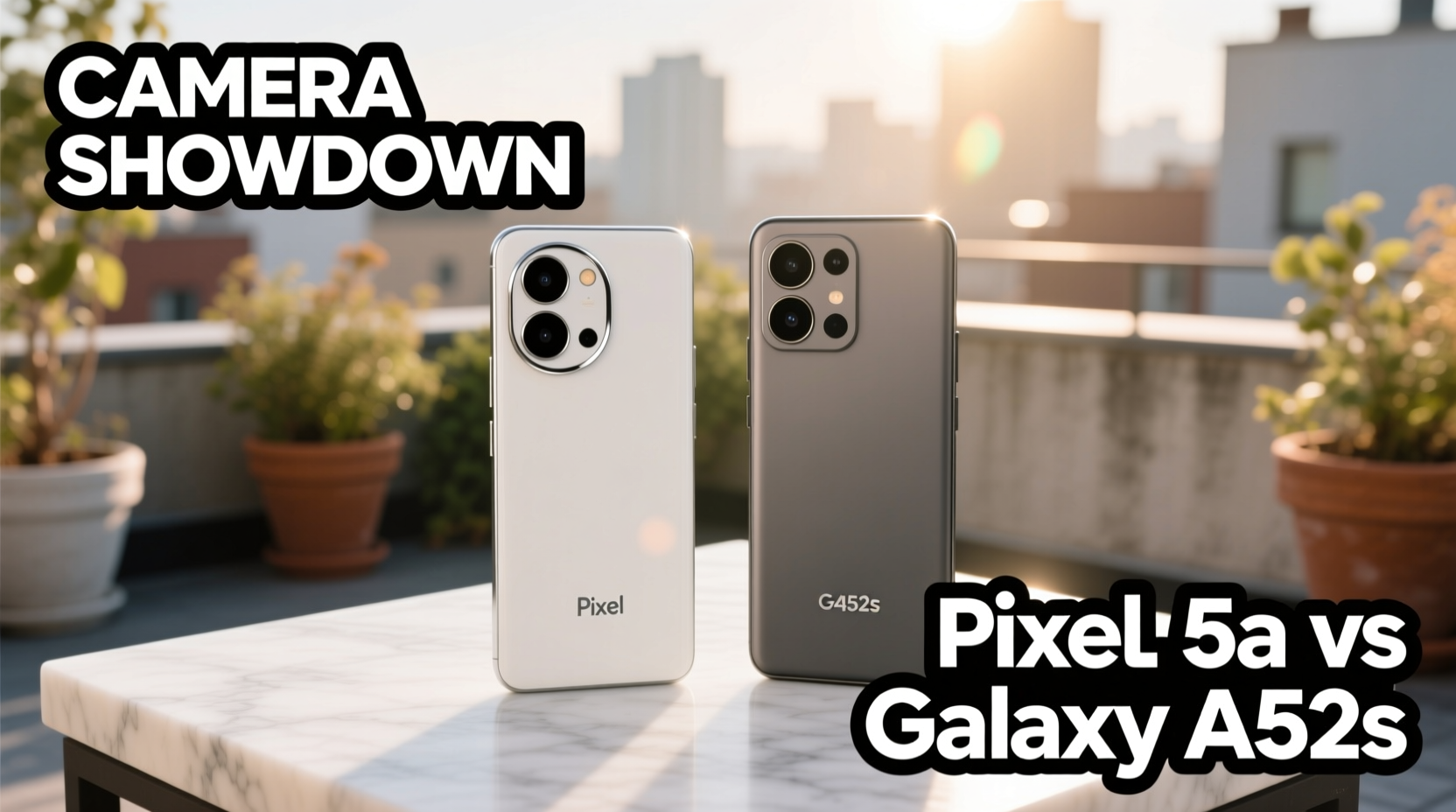
On paper, the Galaxy A52s appears to have the edge. It features a quad-camera setup:
- 64MP main sensor (f/1.8, OIS)
- 12MP ultra-wide (f/2.2)
- 5MP macro
- 5MP depth sensor
The Pixel 5a, by contrast, sticks to Google’s minimalist philosophy with a dual-camera system:
- 12.2MP main sensor (f/1.7, no OIS)
- 16MP ultra-wide (f/2.2)
At first glance, Samsung’s higher resolution and inclusion of OIS suggest superiority. However, Google has long proven that software can trump hardware. The Pixel’s smaller sensor is compensated by advanced HDR+, Night Sight, and machine learning-driven processing. The absence of OIS is notable, but Google’s algorithmic stabilization often mitigates motion blur effectively in most conditions.
Photo Quality: Daylight, Low Light, and Dynamic Range
In daylight, both phones produce sharp, well-saturated images. The Galaxy A52s leverages its 64MP sensor with pixel-binning to deliver detailed 16MP shots. Colors are vibrant—sometimes overly so—with Samsung’s signature punchy profile. This appeals to social media users who prefer instantly eye-catching photos without editing.
The Pixel 5a takes a more natural approach. Skin tones remain accurate, skies avoid oversaturation, and shadows retain detail. Its dynamic range—especially in high-contrast scenes like backlit buildings—is superior. Google’s HDR+ fusion technology blends multiple exposures seamlessly, preserving highlights and lifting shadows without introducing halos or artifacts.
Where the Pixel truly shines is in low light. Night Sight on the 5a produces cleaner, more balanced results than the A52s. While the Galaxy uses multi-frame processing, it often introduces noise in darker areas and struggles with white balance consistency. The Pixel maintains warmer, more natural lighting and suppresses grain better, even without OIS.
“Google’s computational photography still sets the benchmark for realism and exposure control—even against phones with more lenses.” — David Kim, Mobile Imaging Analyst at DXOMARK
Feature Comparison: Beyond the Main Camera
| Feature | Pixel 5a | Galaxy A52s |
|---|---|---|
| Main Sensor | 12.2MP, f/1.7 | 64MP (16MP output), f/1.8, OIS |
| Ultra-Wide | 16MP, f/2.2 | 12MP, f/2.2 |
| Macro & Depth | No dedicated sensors | 5MP macro + 5MP depth |
| Night Mode | Excellent (HDR+ integration) | Good, but inconsistent |
| Video Recording | 4K@30fps, stabilized, great audio | 4K@30fps, OIS+EIS, average audio |
| Software Updates | Guaranteed until 2024 (now extended) | Android 13 upgrade, security patches |
The A52s offers more camera modes—macro, portrait with depth effects, and single-take video—but many feel gimmicky. The macro lens, in particular, requires extremely close proximity and yields soft results. Meanwhile, the Pixel focuses on doing fewer things exceptionally well. Its portrait mode, powered by AI, creates convincing bokeh without needing a depth sensor.
User Experience and Real-World Use Case
Consider Maya, a freelance travel blogger who used a Pixel 4a and upgraded to the A52s for its “better specs.” She loved the brighter display and longer battery life but quickly noticed inconsistencies in her Instagram feed. Indoor café shots had greenish tints, and sunset panoramas lacked the smooth gradients she got with her old Pixel. After three months, she switched back to a used Pixel 5a.
“I thought more cameras meant better photos,” she said. “But I spent more time editing Galaxy shots to look natural. The Pixel just got it right the first time.”
This scenario reflects a broader trend: users prioritizing reliability over variety. The Pixel delivers consistent color science and exposure across environments. The Galaxy, while capable, applies aggressive sharpening and saturation that vary between scenes, requiring manual correction.
Software, Longevity, and Value Proposition
Beyond hardware, software defines the long-term experience. The Pixel 5a runs clean Android with guaranteed updates and exclusive features like Magic Eraser (post-launch) and enhanced photo rescanning. Even today, its camera software feels modern and responsive.
The Galaxy A52s runs One UI, which adds useful tools like Director’s View and Scene Optimizer. However, bloatware and slower update cycles diminish its appeal. Samsung promised three OS upgrades, but rollout delays frustrate users. Google’s faster, more predictable updates give the Pixel an edge in longevity.
Value-wise, both phones launched at similar prices (~$449). The A52s offers IP67 water resistance, a 120Hz display, and slightly better battery life—clear advantages for non-photography use. But if camera quality is the priority, the Pixel remains the smarter investment.
Checklist: Choosing Between Pixel 5a and Galaxy A52s
- Evaluate your photo priorities: Natural tone accuracy (Pixel) vs. vivid, social-ready colors (Galaxy).
- Test low-light samples: Shoot indoors and at night with both devices.
- Check update policy: Pixel offers cleaner, faster updates; Galaxy may lag.
- Assess additional needs: Do you want 120Hz screen, IP rating, or longer battery? Galaxy wins here.
- Consider long-term software support: Pixel’s ML-powered features continue evolving.
Frequently Asked Questions
Is the Pixel 5a camera better than the Galaxy A52s overall?
Yes, in terms of photo consistency, dynamic range, and low-light performance. The Pixel produces more natural, reliably excellent images. However, the A52s excels in video stability and offers more shooting modes.
Can the Galaxy A52s compete with Pixels in computational photography?
Partially. Samsung has improved multi-frame processing and Night mode, but it still lags behind Google’s AI-driven tuning. The lack of fine-grained control over exposure and white balance makes it less precise.
Should I buy a Pixel 5a in 2024?
If you prioritize camera quality and clean software, yes—especially at discounted prices. Just note that official updates ended in 2024, though community ROMs extend usability. For newer hardware, consider the Pixel 6a or later.
Has Google Lost the Crown? Not Yet.
While the Galaxy A52s closes the gap in hardware and offers compelling extras, Google hasn’t lost its camera crown. The Pixel 5a continues to demonstrate that thoughtful software engineering can overcome hardware limitations. It captures moments with authenticity and emotional resonance—qualities that specs alone can’t measure.
Samsung wins on versatility and display quality, making the A52s a well-rounded device. But for photography purists, travelers, and anyone who values “set it and forget it” image quality, the Pixel 5a remains the gold standard in its class.




 浙公网安备
33010002000092号
浙公网安备
33010002000092号 浙B2-20120091-4
Comments
No comments yet. Why don't you start the discussion?