
The smartphone camera has evolved into a primary tool for capturing life’s moments—whether it's a sunset on vacation or a spontaneous family gathering. For users considering an upgrade from the iPhone 12 Pro Max to the Google Pixel 6 Pro, one question looms: is the camera improvement significant enough to justify the switch? This isn’t just about megapixels or lens count; it’s about real-world performance, image consistency, computational photography, and usability across lighting conditions.
Both devices represent flagship-tier imaging systems from their respective brands at launch. The iPhone 12 Pro Max set a high bar in 2020 with Apple’s first sensor-shift stabilization and advanced video capabilities. The Pixel 6 Pro, released in 2021, introduced Google’s custom Tensor chip, enabling smarter processing and AI-driven enhancements. But does raw innovation translate into tangible benefits for everyday photographers?
Image Quality Across Lighting Conditions
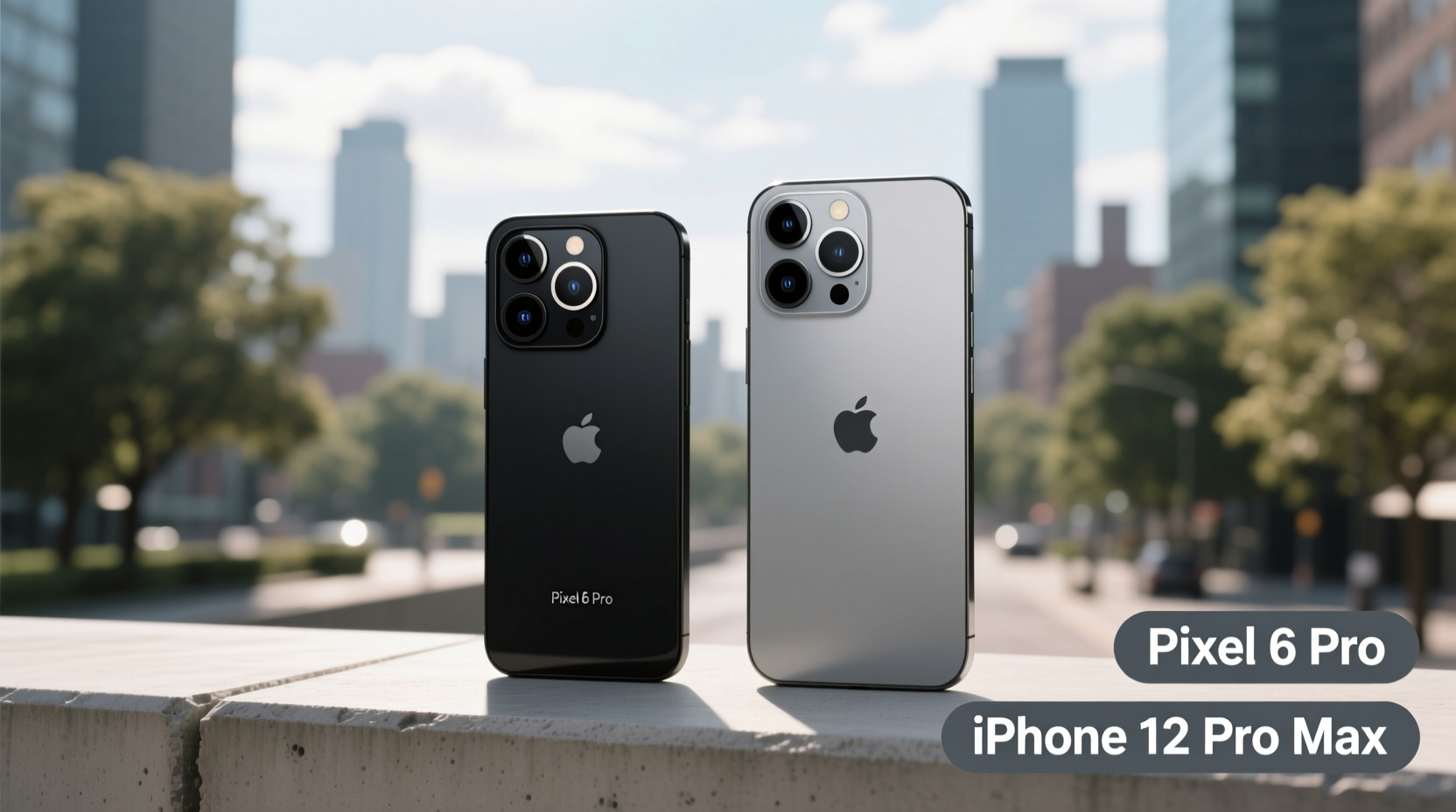
Camera performance varies dramatically depending on ambient light. In daylight, both phones produce richly detailed, color-accurate images. However, subtle differences emerge under scrutiny.
The iPhone 12 Pro Max favors natural tones and dynamic range preservation. Its Smart HDR 3 algorithm avoids oversaturation and maintains skin tones accurately, making it ideal for professional-looking portraits and editorial-style photography. Highlights are carefully managed, preserving cloud detail without blown-out skies.
In contrast, the Pixel 6 Pro leans into Google’s signature HDR+ processing. Colors appear more vibrant out of the box, which some users find appealing for social media sharing. Shadows lift aggressively in high-contrast scenes, often revealing details the iPhone chooses to let fall into darkness for artistic balance.
Low-light performance is where the Pixel pulls ahead. Thanks to its larger sensor (1/1.31” on the main camera vs. 1/1.55” on the iPhone) and multi-frame Super Res Zoom stacking, night shots exhibit better clarity and less noise. The Pixel’s Night Sight mode activates earlier and adapts faster than Apple’s Night mode, producing usable results even in dim indoor settings without flash.
Zoom and Telephoto Capabilities Compared
The telephoto lens is critical for distant subjects. The iPhone 12 Pro Max features a 2.5x optical zoom (52mm equivalent), excellent for portrait compression and moderate reach. It delivers crisp results up to 10x digital zoom thanks to Deep Fusion processing.
The Pixel 6 Pro counters with a 4x optical periscope telephoto lens (105mm equivalent), a significant hardware advantage. At 5x magnification, the Pixel maintains sharpness far beyond what the iPhone can achieve digitally. Beyond that, Google’s Super Res Zoom uses machine learning to enhance up to 20x, though quality degrades noticeably past 15x.
For wildlife, concerts, or sports photography, the Pixel’s longer reach offers real utility. However, the iPhone produces more consistent color matching between wide and telephoto sensors, avoiding the slight green tint sometimes seen in Pixel telephoto shots.
“Optical zoom length matters, but software integration determines how usable that zoom really is.” — David Claudio, Mobile Imaging Analyst at DXOMARK
Video Performance and Stabilization
If you prioritize video, the iPhone remains the leader. The 12 Pro Max supports Dolby Vision HDR recording at 4K/60fps—a feature still unmatched by most Android competitors. Footage retains incredible dynamic range, with smooth tonal transitions and cinematic depth.
The Pixel 6 Pro records up to 4K/60fps but lacks native HDR video support. While stabilization is strong, especially with the inclusion of gyro-EIS and rolling shutter correction, fine movement handling doesn’t quite match Apple’s sensor-shift system. In handheld walking shots, the iPhone shows less wobble and fewer jello effects.
That said, the Pixel introduces unique video features like Face Unblur and Magic Eraser in playback editing (via Google Photos). These tools allow post-capture fixes—removing photobombers or sharpening faces in motion-blurred clips—which can salvage otherwise unusable footage.
Differences in Software Philosophy
Apple emphasizes consistency and fidelity. Photos look polished but not manipulated. There’s minimal post-processing latency, meaning what you see in the viewfinder closely matches the final image.
Google takes a predictive approach. The Tensor chip runs models locally to anticipate scene type, lighting, and subject intent. Features like Real Tone improve representation of darker skin tones, while Motion Mode enables active shots (e.g., light trails, silky water) directly from the camera app.
This divergence affects user experience. Pixel owners may love the “wow” factor of automatically enhanced shots, while iPhone users appreciate reliability and color science trusted by filmmakers.
| Feature | Pixel 6 Pro | iPhone 12 Pro Max |
|---|---|---|
| Main Sensor Size | 1/1.31” | 1/1.55” |
| Telephoto Zoom | 4x optical (up to 20x Super Res) | 2.5x optical (up to 10x digital) |
| Night Mode | HDR+ with optional astrophotography | Standard Night mode |
| Video Recording | 4K/60fps (no native HDR) | 4K/60fps Dolby Vision HDR |
| Processing Engine | Google Tensor (AI-first) | A14 Bionic (balanced efficiency) |
| Unique Features | Magic Eraser, Face Unblur, Photo Unblur | Sensor-shift stabilization, ProRAW, LiDAR autofocus |
Real-World Example: Concert Photography
Consider Sarah, a music enthusiast who regularly attends live shows. Her iPhone 12 Pro Max struggled with stage lighting—bright spotlights would wash out performers, and zoomed shots were too grainy. After switching to the Pixel 6 Pro, she noticed immediate improvements.
During a recent concert, she used the 5x zoom to capture close-ups of the lead singer from the back of the venue. Despite rapid light changes, the Pixel maintained exposure stability through adaptive HDR+. Later, she applied Photo Unblur to a slightly shaky shot, recovering facial details she thought were lost. While the video wasn’t Dolby Vision-grade, the stills alone made the event feel more vividly documented.
This scenario illustrates a key point: if your use case involves challenging lighting and still photography dominance, the Pixel delivers measurable gains. But if you’re filming vlogs or short films, the iPhone’s ecosystem integration and video polish remain superior.
Frequently Asked Questions
Can the Pixel 6 Pro replace a DSLR for travel photography?
For most casual and semi-professional travelers, yes. Its computational photography handles diverse environments well—from deserts to cities to mountain trails. With RAW output and manual controls via Pro mode, it offers flexibility comparable to entry-level mirrorless systems, though sensor physics still limit extreme low-light scenarios.
Does the iPhone 12 Pro Max still hold up in 2024?
Absolutely. Its main camera system remains capable, especially in good light. If you already own it and aren't pushing creative boundaries, upgrading solely for camera gains may not be cost-effective. However, lack of software updates beyond iOS 17 (expected end-of-life) could impact long-term app compatibility and security.
Is computational photography \"cheating\"?
Not inherently. Both Apple and Google use multi-frame processing—it's just implemented differently. The Pixel applies more aggressive AI enhancement, while Apple prioritizes realism. Neither is objectively better; preference depends on whether you value authenticity or dramatic impact.
Action Checklist Before Upgrading
- Evaluate your current phone’s condition and software support lifespan
- Test both cameras side-by-side using sample photos in your typical environments (indoor, outdoor, night)
- Assess ecosystem needs: Do you rely on iMessage, iCloud, or AirDrop?
- Check carrier compatibility and trade-in values
- Determine if new features (e.g., Magic Eraser, longer zoom) solve actual pain points
Final Verdict: Is the Upgrade Worth It?
The answer hinges on your priorities. If you shoot primarily stills, value longer zoom, enjoy experimental AI-powered edits, and want future-proof software support (with guaranteed OS updates until 2025), the Pixel 6 Pro represents a meaningful upgrade in photographic capability.
However, if you create video content, depend on seamless Apple ecosystem integration, or prefer conservative, film-like color grading, sticking with the iPhone 12 Pro Max—or moving to a newer iPhone—is likely the better path.
Technology evolves rapidly, but upgrades should serve purpose, not just novelty. Weigh not just specs, but how each camera fits your lifestyle. A sharper zoom won’t matter if you never use it. Conversely, Night Sight might transform your evening memories.




 浙公网安备
33010002000092号
浙公网安备
33010002000092号 浙B2-20120091-4
Comments
No comments yet. Why don't you start the discussion?