
Switching smartphone brands isn’t a decision most users take lightly—especially when moving from Samsung’s long-established ecosystem to Google’s Pixel line. The Galaxy Note 20, with its S Pen, powerful specs, and polished design, set a high bar for productivity-focused Android users. But the Pixel 6 Pro disrupted the market with its in-house Tensor chip, exceptional camera system, and clean, intuitive software. For Note 20 owners wondering if it's time to make the jump, the real question is: does the Pixel 6 Pro offer enough meaningful improvements to justify leaving behind Samsung’s ecosystem?
The answer depends on what you value most—S Pen functionality and multi-device integration, or pure photography, AI-driven features, and guaranteed long-term software support. Let’s break down the key differences and see where each phone excels.
Performance & Hardware: Different Philosophies
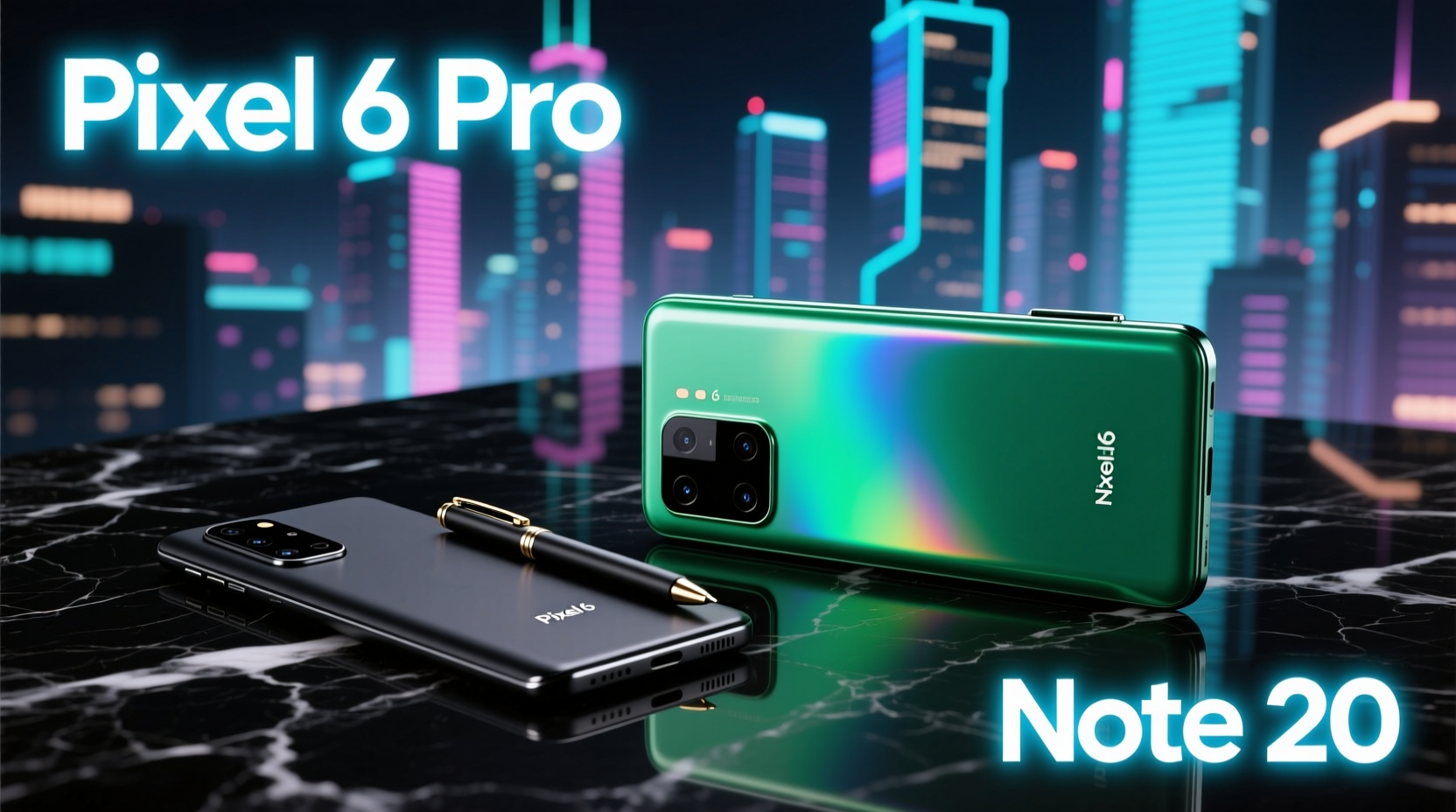
The Galaxy Note 20 runs on Qualcomm’s Snapdragon 865+ (or Exynos 990 outside the U.S.), a proven performer in 2020. By today’s standards, it still handles daily tasks well but shows signs of aging under heavy loads like gaming or multitasking. It supports up to 12GB of RAM and comes with UFS 3.1 storage, offering solid speed for its era.
In contrast, the Pixel 6 Pro debuted with Google’s first self-developed chipset—the Tensor G2. Built specifically for AI and machine learning tasks, it enhances voice transcription, photo processing, and real-time language translation. While not always faster in raw benchmarks than top-tier Snapdragon chips, its optimization with Pixel software delivers smooth, responsive performance across apps and system functions.
One area where the Note 20 holds an edge is expandable storage. With a microSD slot (up to 1TB), users could extend their capacity—a feature absent on the Pixel 6 Pro. However, the Pixel compensates with larger base storage options (128GB/256GB) and seamless Google One cloud integration.
Camera: Where the Pixel Shines
If photography is a priority, the Pixel 6 Pro is a compelling upgrade. Its triple-lens setup includes a 50MP main sensor, 48MP telephoto with 4x optical zoom, and a 12MP ultra-wide. More importantly, Google’s computational photography continues to lead the industry. Features like Magic Eraser, Face Unblur, and enhanced Night Sight deliver results that often surpass hardware-limited rivals.
The Note 20’s 64MP main sensor and 12MP ultra-wide were strong in daylight but struggled in low light compared to Pixel processing. Its 3x hybrid zoom was decent, but digital zoom degraded quickly beyond that. Video stabilization was good, but lacked the cinematic quality now standard on Pixels.
“Google’s focus on software-first imaging has redefined mobile photography. The Pixel 6 Pro proves that great photos aren’t just about megapixels—they’re about intelligence.” — David Kim, Mobile Imaging Analyst at TechLens
| Feature | Pixel 6 Pro | Note 20 |
|---|---|---|
| Main Sensor | 50MP, f/1.85 | 64MP, f/1.8 |
| Telephoto Zoom | 4x optical, up to 20x super-res | 3x hybrid, up to 30x digital |
| Night Mode | Advanced HDR+, AI-enhanced | Basic night mode, less detail |
| Video Recording | 4K@60fps, cinematic pans, Audio Zoom | 8K@24fps, basic stabilization |
| Unique Features | Magic Eraser, Real Tone, Photo Unblur | Single Take, Director’s View |
Software & Updates: A Clear Advantage
One of the strongest arguments for switching to the Pixel 6 Pro is software longevity. Google guarantees **five years** of OS and security updates for the Pixel 6 series—an industry-leading commitment. This means support until 2027, ensuring access to new features, privacy enhancements, and compatibility with future apps.
The Note 20, released in 2020, received three major Android upgrades (up to Android 13) and four years of security patches. As of late 2024, it no longer receives official updates, making it more vulnerable over time and potentially incompatible with newer services.
Additionally, Pixel devices run stock Android with zero bloatware. Features like Now Playing, Call Screen, and Hold for Me are exclusive to Pixels and solve real-world problems. Samsung’s One UI offers more customization and multitasking tools, but some find it cluttered compared to Pixel’s minimalist approach.
Design & Usability: Trade-offs to Consider
The Note 20’s defining feature—the S Pen—is unmatched for note-takers, artists, and professionals who sketch or annotate documents. The stylus integrates seamlessly into the phone body and offers low latency and pressure sensitivity. Losing this tool is a significant downside when switching to the Pixel 6 Pro, which lacks any stylus support.
On the other hand, the Pixel 6 Pro introduces a bold new design with a two-tone rear panel and a distinctive horizontal camera bar. Its curved 6.7-inch LTPO OLED display supports adaptive refresh rates from 10–120Hz, improving battery efficiency. The Note 20 also has a 6.9-inch AMOLED screen with 120Hz, but only in select regions (U.S. model limited to 60Hz).
Battery life is comparable: both phones have around 5,000mAh capacities. However, the Pixel 6 Pro benefits from smarter power management through Tensor’s AI optimizations, often lasting a full day even with heavy use. Charging speeds differ—Note 20 supports 25W fast charging, while Pixel 6 Pro goes up to 23W, slightly slower but includes wireless and reverse charging.
Mini Case Study: Sarah’s Switch from Note to Pixel
Sarah, a freelance designer and long-time Note user, relied heavily on her S Pen for client sketches. When her Note 20 began slowing down and stopped receiving updates, she hesitated to switch. After testing the Pixel 6 Pro, she found herself adapting quickly. While she missed the stylus at first, she began using a Bluetooth pen with her tablet instead. What won her over was the camera—her social media content improved dramatically thanks to better low-light shots and editing tools. She also appreciated the cleaner interface and automatic call screening, which reduced spam interruptions during work hours.
“I didn’t think I’d leave Samsung,” she said. “But the Pixel just feels more thoughtful. It anticipates what I need before I ask.”
Should You Make the Switch? A Practical Checklist
Before trading your Note 20 for a Pixel 6 Pro, consider the following:
- Are you still satisfied with your Note 20’s performance? If yes, there may be no urgent need to upgrade.
- Do you use the S Pen daily? If so, switching will require adjusting your workflow.
- Is camera quality a top priority? The Pixel 6 Pro is a clear winner here.
- Do you value long-term software support? Five years of updates beat Samsung’s four.
- Are you invested in Samsung’s ecosystem? Devices like Galaxy Buds, Watch, or DeX may lose tight integration.
- Do you prefer clean, bloat-free software? Stock Android offers simplicity and speed.
Frequently Asked Questions
Can I transfer my data easily from Note 20 to Pixel 6 Pro?
Yes. Google’s “Switch to Android” app allows seamless transfer of contacts, messages, photos, calendar events, and apps from Samsung devices. Some Samsung-specific settings and app data may not carry over, but core functionality transfers smoothly.
Does the Pixel 6 Pro support Dex-like desktop mode?
No. Unlike Samsung DeX, the Pixel 6 Pro doesn’t offer a desktop interface when connected to a monitor. However, you can cast your screen or use remote desktop apps as alternatives.
Is the Pixel 6 Pro durable enough to replace a Note device?
The Pixel 6 Pro features Gorilla Glass Victus and an aluminum frame, making it resilient. However, early reports noted issues with screen flickering and touch sensitivity. Later units resolved many of these, but buyers should verify unit condition, especially when purchasing used.
Conclusion: Taking the Leap with Confidence
Ditching the Galaxy Note 20 for the Pixel 6 Pro isn’t just about upgrading hardware—it’s about embracing a different philosophy of smartphone use. If you value intelligent software, best-in-class photography, and long-term reliability over stylus functionality and deep ecosystem integration, the Pixel 6 Pro is absolutely worth the switch.
The transition may require some adaptation, especially if you’ve grown accustomed to Samsung’s feature-rich interface. But for users who prioritize innovation, privacy, and a clean Android experience, the Pixel delivers a future-focused package that the aging Note 20 can no longer match.




 浙公网安备
33010002000092号
浙公网安备
33010002000092号 浙B2-20120091-4
Comments
No comments yet. Why don't you start the discussion?