
In 2021, the smartphone market saw a pivotal moment: Samsung’s Galaxy S21 Ultra redefined what flagship Android phones could do with its powerful hardware and S Pen support, while Google’s Pixel 6 Pro introduced a bold new design, a custom Tensor chip, and unmatched AI-powered photography. Fast forward two years—both devices are now considered legacy flagships. But for users considering a second-hand or discounted purchase, the question remains: is the Pixel 6 Pro still worth it when stacked against the once-dominant S21 Ultra?
The answer isn’t just about raw specs. It's about real-world usability, long-term software support, battery longevity, and how well each device has aged in daily use. Let’s break down their performance, features, and value proposition today.
Performance and Hardware Longevity
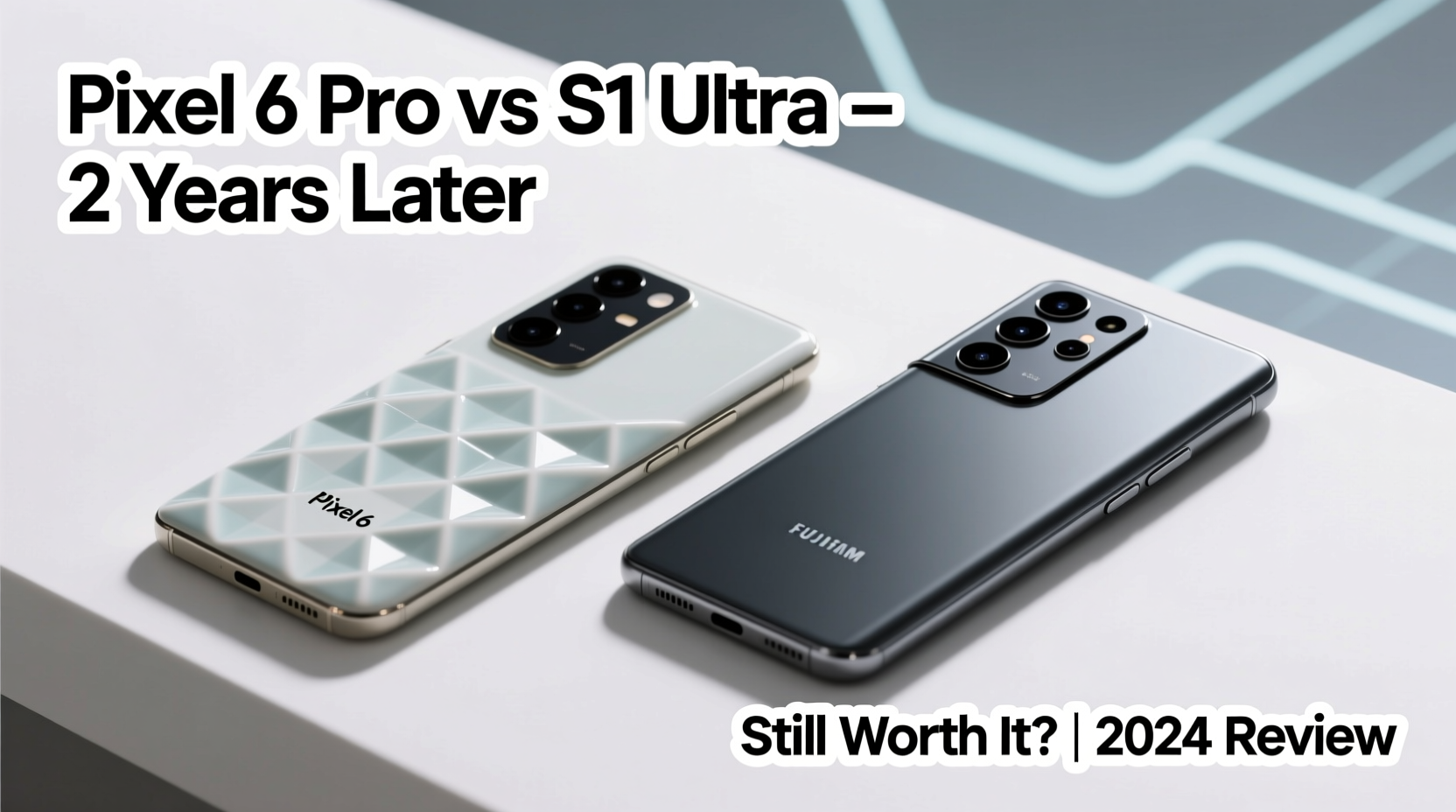
The Galaxy S21 Ultra was powered by the Snapdragon 888 (or Exynos 2100 in some regions), a chip that delivered top-tier speed at launch but came with notable thermal throttling issues under sustained load. Two years later, this manifests as occasional stutters during multitasking or app launches, especially on units that have undergone heavy charging cycles.
In contrast, the Pixel 6 Pro debuted Google’s first in-house processor, the Tensor G1. Built on a 5nm process with a focus on machine learning and AI tasks, it wasn’t designed to win benchmark races. Instead, it prioritized computational photography, voice processing, and on-device intelligence. In practice, the Tensor G1 holds up remarkably well for everyday tasks—messaging, browsing, streaming—but struggles slightly with intensive gaming or prolonged video editing.
After two years, both processors feel adequate but not exceptional. However, the S21 Ultra’s higher RAM (12GB vs. 12GB) and faster UFS 3.1 storage give it a slight edge in multitasking, though real-world differences are minimal for most users.
Software Support and Updates
This is where the Pixel 6 Pro shines. Google promised three years of OS upgrades and five years of security patches for the Pixel 6 series. As of 2024, the Pixel 6 Pro has received updates to Android 13 and 14, with Android 15 expected later this year—putting it ahead of many mid-range devices released in 2022.
Samsung, meanwhile, committed to four years of OS updates for the S21 series. The S21 Ultra launched with Android 11 and has since been updated to Android 13, with Android 14 rolling out in early 2024. While Samsung improved its update delivery over time, delays of several months behind Pixel releases were common.
“Timely software updates aren't just about new features—they’re critical for security and app compatibility,” says Rajiv Gupta, mobile analyst at TechInsight Group. “Pixels consistently lead in update reliability, which extends usable life.”
For users concerned about longevity, the Pixel 6 Pro offers a clearer path to staying current through 2026. The S21 Ultra will likely see its final major update in 2025, followed by security patches until 2026—matching Pixel’s timeline, but starting from a delayed baseline.
Camera Performance Over Time
Cameras age differently than processors. Lenses don’t degrade, but image processing algorithms improve—and here, the Pixel 6 Pro continues to pull ahead.
Google’s computational photography engine leverages the Tensor chip to deliver consistent low-light shots, superior HDR, and advanced features like Magic Eraser and Face Unblur—none of which were available at launch but rolled out via updates. The main 50MP sensor, combined with a 48MP telephoto lens and ultra-wide, produces vibrant, natural-looking photos with excellent dynamic range.
The S21 Ultra, equipped with a 108MP main sensor and dual telephoto lenses (3x and 10x optical zoom), offered unparalleled versatility in 2021. Its 100x Space Zoom was more novelty than utility, but the 10x periscope lens produced sharper long-range shots than most competitors—even today. However, Samsung’s post-processing tends to oversaturate colors, and night mode results often look noisier than Pixel equivalents.
| Feature | Pixel 6 Pro | S21 Ultra |
|---|---|---|
| Main Sensor | 50MP, f/1.85 | 108MP, f/1.8 |
| Telephoto | 48MP, 4x optical | 10MP + 10MP, 3x & 10x optical |
| Night Mode Quality | Excellent, clean output | Good, but grainier |
| Software Enhancements | Magic Eraser, Photo Unblur | Astro Mode, Director’s View |
| Video Recording | 4K 60fps, strong stabilization | 8K 24fps, versatile modes |
While the S21 Ultra wins on hardware flexibility, the Pixel 6 Pro delivers more consistent, user-friendly photo results—especially in challenging lighting. And crucially, Google continues to refine its camera pipeline via software, whereas Samsung’s enhancements have slowed.
Battery Life and Charging After Two Years
Both phones started with robust batteries—5000mAh in the S21 Ultra and 5003mAh in the Pixel 6 Pro. At launch, both lasted a full day under moderate use. Today, that’s less guaranteed.
Users report that the S21 Ultra’s battery degrades faster due to the power-hungry 108MP sensor and high refresh rate defaults. Many second-hand units now require midday charging. The Pixel 6 Pro, while also affected by aging, benefits from more aggressive background app management and adaptive battery features that extend real-world endurance.
Charging speeds differ significantly. The S21 Ultra supports 25W wired and 15W wireless charging. The Pixel 6 Pro matches neither, offering only 23W wired and 23W wireless (with compatible chargers). However, Google’s battery health management helps preserve capacity over time.
Real-World Example: A Two-Year User’s Experience
Consider Mark, a freelance photographer who bought a Pixel 6 Pro at launch primarily for its camera. Over two years, he’s traveled across 12 countries, relying on the phone for work and communication. Despite heavy use, his device still runs smoothly thanks to regular reboots, cloud backups, and avoiding extreme temperatures.
He upgraded to Android 14 early in 2024 and was surprised by the new summarization features in Recorder and enhanced speech-to-text accuracy. “I expected the phone to slow down by now,” he says, “but outside of needing a battery replacement last year, it feels almost as fast as day one.”
In contrast, his colleague Lisa, using an S21 Ultra, noticed increasing lag by late 2023. Apps took longer to open, and the camera app occasionally crashed. She replaced her phone in early 2024, citing declining performance and lack of excitement about future updates.
Is the Pixel 6 Pro Still Worth It Today?
If you’re shopping secondhand or looking for a budget flagship in 2024, the Pixel 6 Pro presents a compelling case. Here’s a checklist to help decide:
- ✅ Prioritize clean, timely software updates
- ✅ Value computational photography over pure zoom capability
- ✅ Prefer stock Android with fewer bloatware apps
- ✅ Plan to keep the phone until at least 2025
- ✅ Can verify good battery health before purchase
The S21 Ultra remains capable, particularly for users invested in the Samsung ecosystem or who want S Pen functionality. But unless you find it significantly cheaper than the Pixel 6 Pro, the Google phone offers better long-term value through continued software innovation and smoother integration with Google services like Photos, Assistant, and Workspace.
Frequently Asked Questions
Can the Pixel 6 Pro still run modern apps smoothly?
Yes. Most mainstream apps—including social media, productivity tools, and streaming services—run without issue. Some graphically intense games may require lowering settings, but everyday performance remains solid.
Does the S21 Ultra support the S Pen in 2024?
Yes, the S21 Ultra is fully compatible with S Pen accessories. This remains a unique advantage for note-takers, artists, or professionals who rely on precise input.
Which phone holds resale value better?
Historically, Samsung flagships depreciate faster than Pixels. However, due to the S21 Ultra’s broader availability and carrier promotions, it often sells cheaper on the used market. The Pixel 6 Pro retains slightly higher value among enthusiasts who trust Google’s software roadmap.
Final Verdict
Two years on, the Pixel 6 Pro emerges as the more future-proof choice. While neither phone matches 2024 flagships in speed or efficiency, the Google device benefits from a cohesive software experience, ongoing AI-driven camera improvements, and a clear update path through 2026. The S21 Ultra was a hardware marvel in 2021, but its advantages have eroded over time.
If you’re choosing between the two today, go with the Pixel 6 Pro—for its software resilience, smarter photography, and cleaner user experience. Just ensure the battery is in good condition, and you’ll have a capable, secure smartphone that still feels relevant in the modern ecosystem.




 浙公网安备
33010002000092号
浙公网安备
33010002000092号 浙B2-20120091-4
Comments
No comments yet. Why don't you start the discussion?