
Choosing between the Google Pixel 6 and the Samsung Galaxy A54 isn’t just about brand loyalty—it’s a decision shaped by priorities. The Pixel 6 offers Google’s acclaimed computational photography and clean Android experience, while the Galaxy A54 counters with longer battery life, better durability, and broader connectivity at a lower price point. But when the spotlight falls on the camera, does Google’s edge justify the compromises elsewhere?
For many, smartphone photography is non-negotiable. Whether capturing memories, creating social media content, or documenting everyday moments, image quality matters. Yet, no phone exists in a vacuum. Real users care about battery longevity, software updates, build quality, and value over time. This comparison cuts through marketing claims to assess whether the Pixel 6’s camera superiority truly outweighs the Galaxy A54’s practical advantages.
Camera Performance: Where the Pixel 6 Shines
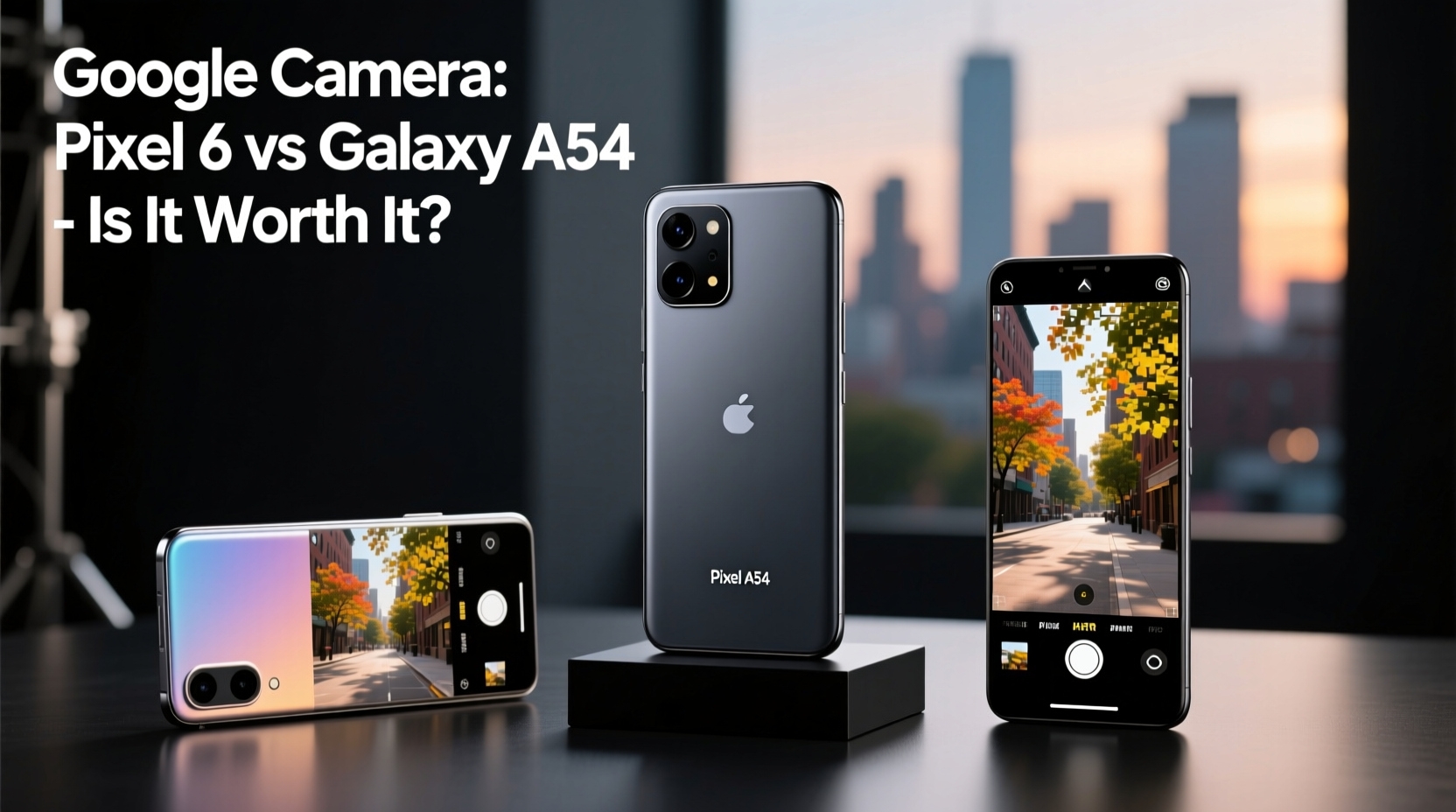
The Pixel 6’s camera system, powered by Google’s Tensor chip and advanced HDR+ algorithms, consistently ranks among the best in its class—even years after release. Its 50MP main sensor, paired with a 12MP ultra-wide lens, delivers exceptional dynamic range, accurate color reproduction, and superior low-light performance.
In real-world conditions, the Pixel 6 excels where most mid-range phones struggle: dimly lit restaurants, backlit portraits, and fast-moving subjects. Google’s Night Sight and Super Res Zoom produce results that feel more “professional” than expected from a smartphone. Face detection locks onto subjects quickly, and the software intelligently balances exposure across complex scenes.
“Google’s machine learning-driven processing turns hardware limitations into strengths. The Pixel doesn’t always have the best sensors, but it often takes the best photos.” — David Imel, Mobile Photography Analyst, TechRadar
In contrast, the Galaxy A54 uses a 50MP main sensor with similar resolution but lacks the dedicated AI tuning and computational depth of the Pixel. While Samsung’s processing has improved, images tend to oversharpen, over-saturate, or lose detail in shadows. The ultra-wide camera on the A54 also shows noticeable distortion and reduced clarity in corners.
Battery and Performance: The A54’s Strong Suit
The Galaxy A54 packs a 5,000mAh battery, significantly outlasting the Pixel 6’s 4,614mAh unit. In typical use—browsing, messaging, streaming music—the A54 reliably lasts a full day and a half, sometimes stretching to two days with light usage. The Pixel 6, especially with 5G enabled, often requires a recharge by evening.
This gap becomes more pronounced under heavy loads. The Exynos 1380 in the A54 isn’t the fastest chip, but it’s efficient. Meanwhile, the Tensor G1 in the Pixel 6, while powerful for AI tasks like photo processing, drains power quickly during multitasking or extended camera use.
On performance, both phones handle daily apps smoothly, but the A54 holds up better over time thanks to Samsung’s optimized One UI and less aggressive background processes. The Pixel 6 can feel sluggish after a year or two, particularly as cache builds up from constant photo analysis and Google Assistant features.
Real-World Example: Weekend Travel Test
Consider a weekend trip involving hiking, city exploration, and evening dining. A user starts Saturday morning with both phones at 100%. By late afternoon, the Pixel 6 drops below 30% due to continuous GPS navigation, camera use, and live translation features. The Galaxy A54 remains above 60%, even after capturing dozens of photos and videos. That remaining charge allows spontaneous video recording at a night market without anxiety.
In this scenario, the A54’s endurance enables more consistent use, while the Pixel’s strength—superior photo output—is undermined by the need to conserve power.
Durability and Build: Practical Differences
The Galaxy A54 supports IP67 water and dust resistance, meaning it can survive submersion in up to 1 meter of water for 30 minutes. The Pixel 6 only has an IP68 rating in certain regions and lacks official waterproofing in others—moreover, its glass back is prone to cracking if dropped.
Samsung also uses Corning Gorilla Glass 5 on both front and back of the A54, whereas the Pixel 6 uses Gorilla Glass Victus only on the front. The frame materials differ too: aluminum on the Pixel versus plastic on the A54. While aluminum feels premium, the A54’s design prioritizes resilience over luxury.
For users in humid climates, near pools, or with active lifestyles, the A54’s ruggedness offers peace of mind the Pixel can’t match—at least not without adding a bulky case that negates its sleek design.
Total Value Over Time
Pricing is a critical factor. The Pixel 6 launched at $599 but is now primarily available used or refurbished. The Galaxy A54 retails around $449 new, making it more accessible. When comparing cost per year of ownership, the A54 wins if you plan to keep your phone for three years or more.
Software support is another consideration. The Pixel 6 receives OS updates until 2025 and security patches until 2027—solid, but limited. The Galaxy A54 promises four major Android upgrades and five years of security updates, extending its usable lifespan into 2028. This means longer access to new features, better app compatibility, and improved security.
Resale value favors the Pixel slightly due to brand perception and camera reputation, but depreciation is steep once it leaves warranty. The A54 retains modest value in emerging markets and among budget-conscious buyers.
Comparison Table: Key Specifications
| Feature | Pixel 6 | Galaxy A54 |
|---|---|---|
| Price (Launch) | $599 | $449 |
| Main Camera | 50MP (Dual Pixel, HDR+) | 50MP (OIS) |
| Ultra-Wide Camera | 12MP | 12MP (noticeable distortion) |
| Battery Capacity | 4,614mAh | 5,000mAh |
| Water Resistance | Limited (IP68 in some models) | IP67 certified |
| OS Update Support | Until 2025 | Until 2028 |
| Security Patches | Until 2027 | Until 2028 |
| Chipset | Google Tensor G1 | Exynos 1380 |
When the Pixel 6 Makes Sense
The Pixel 6 is ideal for users who prioritize photography above all else and are willing to carry a charger. It’s also a strong choice for fans of stock Android, Google Assistant integration, and AI-powered features like Call Screen and Live Translate.
If you frequently post photos online, edit images on-device, or rely on voice transcription, the Pixel’s ecosystem adds tangible value. Its camera consistency across lighting conditions reduces the need for post-processing—a major time-saver.
When the Galaxy A54 Is the Smarter Choice
The Galaxy A54 suits users who want a reliable, long-lasting phone without frequent charging. Its balanced performance, durable build, and extended software support make it a pragmatic pick for students, professionals, or secondary device users.
While its camera won’t win awards, it captures perfectly acceptable photos in daylight and decent ones indoors. With manual mode and Pro Video options, it still offers creative flexibility. And unlike the Pixel 6, it includes a headphone jack and expandable storage via microSD—features increasingly rare in modern smartphones.
Frequently Asked Questions
Is the Pixel 6 camera noticeably better than the A54?
Yes, especially in low light and high-contrast scenes. The Pixel produces more natural skin tones, better shadow detail, and less noise. However, in good lighting, the difference narrows significantly.
Can I extend the Pixel 6’s battery life enough to compete with the A54?
You can optimize settings—lower brightness, disable 5G, limit background apps—but the hardware limitation remains. Even with conservative use, the A54 will last longer. Carrying a power bank may offset this, but adds inconvenience.
Does the A54’s longer software support matter if the camera is worse?
It depends on your usage timeline. If you keep phones for 3+ years, yes. Longer updates mean better security, newer features, and continued app compatibility. A phone that functions well in 2027 is more valuable than one struggling with outdated software.
Final Verdict: Is the Google Camera Worth the Trade-Offs?
The answer hinges on how you define “worth.” If your smartphone is primarily a camera replacement—if you document life extensively, share visually, or dislike editing—then yes, the Pixel 6’s imaging prowess justifies its weaker battery and shorter update window.
But for most users, the trade-offs are substantial. The Galaxy A54 offers a more balanced experience: dependable performance, excellent battery life, proven durability, and future-proof software support. You sacrifice some photographic magic in dim environments, but gain reliability every other hour of the day.
Ultimately, photography is important, but so is having a phone that lasts from sunrise to sunset without panic. The Pixel 6 impresses in bursts; the Galaxy A54 endures steadily. Choose based not on specs, but on how you actually live.




 浙公网安备
33010002000092号
浙公网安备
33010002000092号 浙B2-20120091-4
Comments
No comments yet. Why don't you start the discussion?