
Choosing between a flagship from just a few years ago and a modern mid-range contender isn’t as straightforward as it once was. The Samsung Galaxy S20, released in early 2020, represented the pinnacle of Android innovation at its time—high refresh rate displays, powerful processors, and advanced camera systems. Fast forward to today, and Google’s Pixel 6a offers a compelling alternative with clean software, AI-powered photography, and long-term updates—all at half the original price of the S20.
But is upgrading—or switching—to the Pixel 6a actually worth leaving behind a proven Samsung flagship? For users clinging to their S20s or considering a shift from Samsung to Google, this breakdown dives into real-world usability, longevity, ecosystem fit, and overall value to help you decide whether the newer Google phone truly outshines its older but still capable rival.
Performance and Hardware: Old Power vs. Modern Efficiency
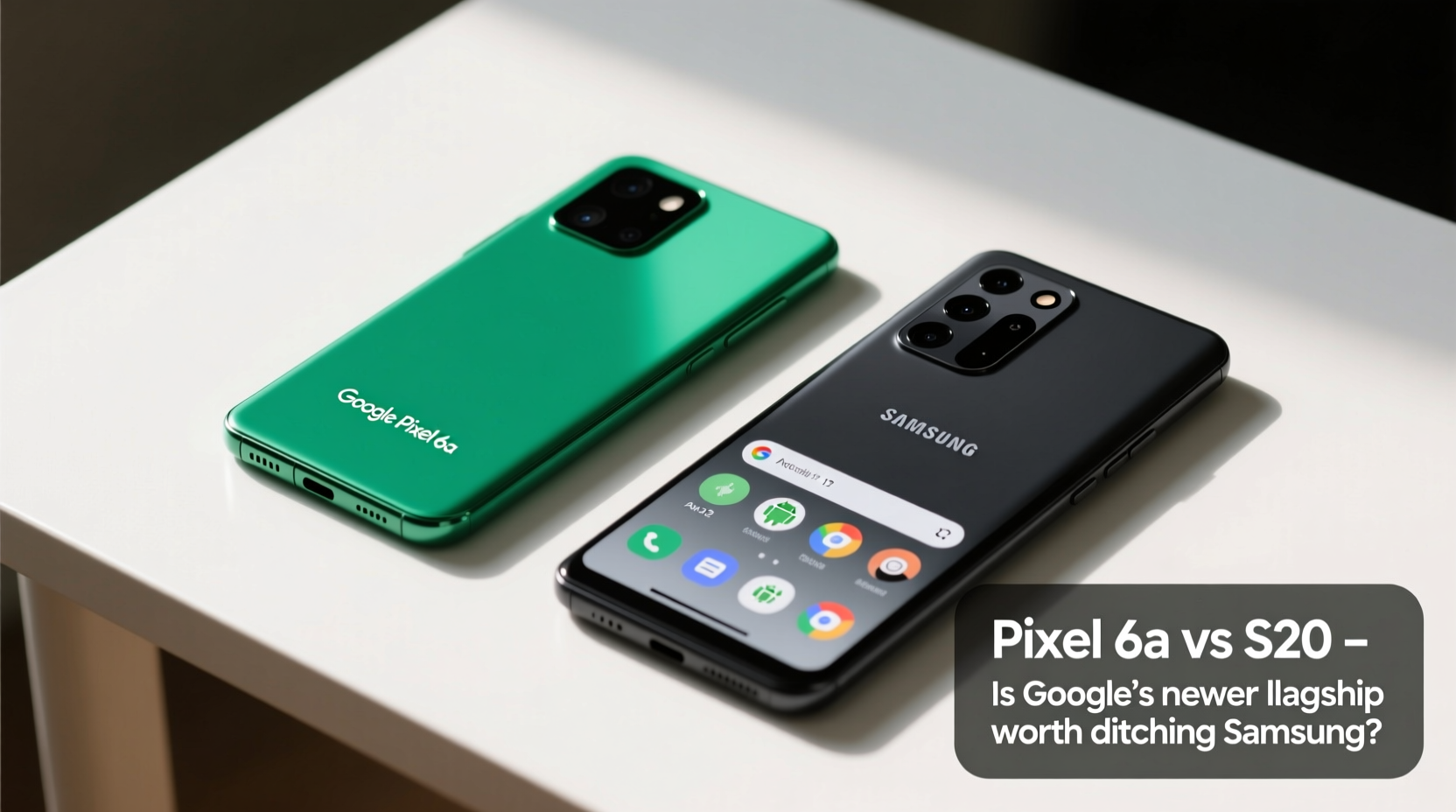
The Galaxy S20 launched with Qualcomm’s Snapdragon 865, a top-tier chipset in 2020 that still holds up well for everyday tasks. Paired with 12GB of RAM and UFS 3.0 storage, it delivered snappy multitasking and smooth gaming even by 2023 standards. However, hardware age brings trade-offs: battery degradation is common after three years, and thermal throttling can affect sustained performance.
In contrast, the Pixel 6a runs on Google’s custom Tensor G2 chip—a design focused on machine learning and AI rather than raw processing power. While not quite matching the peak CPU/GPU performance of the Snapdragon 865, the Tensor G2 excels in efficiency, on-device AI tasks (like speech recognition and photo enhancement), and delivers smoother long-term software integration.
Battery life tells an interesting story. The S20 came with a 4000mAh cell—respectable in 2020—but heavy usage and aging cells often result in sub-par endurance now. The Pixel 6a packs a slightly larger 4410mAh battery and benefits from more efficient software, typically lasting a full day with moderate to heavy use, including Google Assistant and Live Translate features running in the background.
Camera Comparison: Computational Photography vs. Versatility
This is where the battle gets nuanced. The S20 boasts a triple-lens setup: 12MP main, 64MP telephoto with 3x hybrid zoom, and a 12MP ultrawide. It captures sharp images, especially in daylight, and offers flexibility with zoom and wide-angle shots. However, its computational photography—particularly in low light—is outclassed by modern standards.
The Pixel 6a counters with a dual-camera system: a 12.2MP main sensor and a 12MP ultrawide. No telephoto lens means digital zoom only, which limits reach. But Google’s HDR+ with Night Sight, Super Res Zoom, and Real Tone algorithms consistently produce vibrant, balanced photos—even in dim lighting. Portrait mode depth detection and skin tone accuracy are industry-leading.
“Google has redefined what 'good camera' means on mid-range phones. It’s not about megapixels anymore—it’s about intelligence.” — David Imel, Mobile Imaging Analyst at DXOMARK
In side-by-side tests, the Pixel 6a often wins in dynamic range and color fidelity, while the S20 retains better detail when zoomed or under ideal conditions. For social media sharing and casual photography, the Pixel usually delivers more pleasing results straight out of the camera.
Software Experience and Updates: Clean OS vs. Feature-Rich Skins
One of the strongest arguments for switching to the Pixel 6a is the software experience. Stock Android, updated monthly with no bloatware, provides a fluid, distraction-free interface. Features like Call Screen, Hold for Me, and direct Google Assistant integration offer tangible daily benefits.
Samsung’s One UI, based on Android, adds layers of customization, multitasking tools (like DeX and split-screen), and longer hardware support cycles. But it also brings pre-installed apps, occasional lag in update rollouts, and a steeper learning curve. The S20 originally shipped with Android 10 and is eligible up to Android 13, meaning it won’t receive further major OS upgrades.
The Pixel 6a, however, ships with Android 13 and is guaranteed updates through 2027—including five years of security patches. This extended support window is critical for long-term ownership, especially regarding privacy and app compatibility.
Comparison Table: Key Specs at a Glance
| Feature | Pixel 6a | Samsung Galaxy S20 |
|---|---|---|
| Release Year | 2022 | 2020 |
| Processor | Google Tensor G2 | Qualcomm Snapdragon 865 |
| RAM | 6GB | 12GB |
| Storage | 128GB (no expandable) | 128GB (microSD supported) |
| Battery | 4410 mAh | 4000 mAh |
| Display | 6.1” OLED, 90Hz | 6.2” Dynamic AMOLED, 120Hz |
| Rear Cameras | 12.2MP + 12MP ultrawide | 12MP + 64MP tele + 12MP ultra |
| OS Support Until | 2027 | 2023 (ended) |
| Water Resistance | IP67 | IP68 |
| Starting Price (Launch) | $449 | $999 |
Real-World Example: Sarah’s Switch from S20 to Pixel 6a
Sarah had used her Galaxy S20 since launch and loved its speed and display. By late 2023, though, she noticed sluggishness in app launches, rapid battery drain, and frustration with delayed OS updates. She relied heavily on voice assistants and took frequent travel photos but didn’t game or use DeX.
After testing both devices side by side, she switched to the Pixel 6a. Though she missed the 120Hz screen and microSD slot, she gained significantly better call quality via Google’s noise cancellation, improved night photography, and peace of mind knowing her phone would stay secure until 2027. “It feels slower on paper,” she said, “but in practice, it does what I need faster.”
Checklist: Should You Make the Switch?
- ✅ Are you frustrated with slow or missing Android updates on your S20?
- ✅ Do you value clean, bloat-free software over feature-heavy skins?
- ✅ Is camera quality—especially in low light—important to you?
- ✅ Do you want at least four more years of OS and security updates?
- ✅ Can you live without a telephoto lens or microSD expansion?
- ✅ Are you willing to accept slightly lower peak performance for better efficiency?
If you answered yes to most of these, the Pixel 6a is likely a worthwhile upgrade—even if your S20 still powers on.
Frequently Asked Questions
Can the Pixel 6a really last longer than my S20?
Yes, in terms of software support and consistent performance. While the S20’s hardware may still function, lack of updates and degraded battery reduce reliability. The Pixel 6a receives OS updates until 2027 and uses efficient components designed for sustained use.
Does the Pixel 6a support wireless charging?
No, unlike the S20, the Pixel 6a does not have wireless charging. It supports fast charging via USB-C (up to 18W), but you’ll need a compatible charger.
Will my Samsung accessories work with the Pixel 6a?
Most Bluetooth headphones, speakers, and smartwatches will pair fine. However, Samsung-specific features like Smart Switch (for transfers), Dex, or Galaxy Buds spatial audio enhancements may not work fully. Use Google’s Switch app for migrating data.
Final Verdict: When to Stay, When to Go
The Galaxy S20 remains a technically impressive device, particularly if it’s well-maintained and paired with a new battery. Its 120Hz display, telephoto lens, and IP68 rating give it advantages the Pixel 6a doesn’t match. But technology isn’t static. Software relevance, security, and intelligent features now matter as much as hardware specs.
The Pixel 6a represents a shift in smartphone value: less emphasis on raw power, more on sustained usability, AI-driven features, and long-term care from the manufacturer. For users who prioritize simplicity, photo quality, and update longevity over spec sheets, making the switch makes sense—even if it means letting go of a once-flagship device.
Ditching Samsung for Google isn’t about brand loyalty; it’s about aligning your device with how you actually use it. If your phone is a tool for communication, creativity, and convenience—not a spec-hunting trophy—the Pixel 6a proves that newer, smarter, and simpler can indeed be better.




 浙公网安备
33010002000092号
浙公网安备
33010002000092号 浙B2-20120091-4
Comments
No comments yet. Why don't you start the discussion?