
When it comes to smartphone photography, few debates spark as much passion as Android versus iPhone. The Pixel 7 Pro and iPhone 13 represent two distinct philosophies in mobile imaging — Google’s computational photography mastery versus Apple’s hardware-software integration. But beyond brand loyalty and marketing slogans, how do they truly compare? Is the Pixel’s reputation for stunning photos earned, or has Apple’s polished ecosystem convinced users their camera is better than it actually is?
This isn’t about specs on a datasheet. It’s about real-world performance: how each phone handles dynamic lighting, color accuracy, zoom, and everyday shooting conditions. Let’s cut through the noise and examine what these cameras actually deliver.
Sensor Specs and Hardware Differences
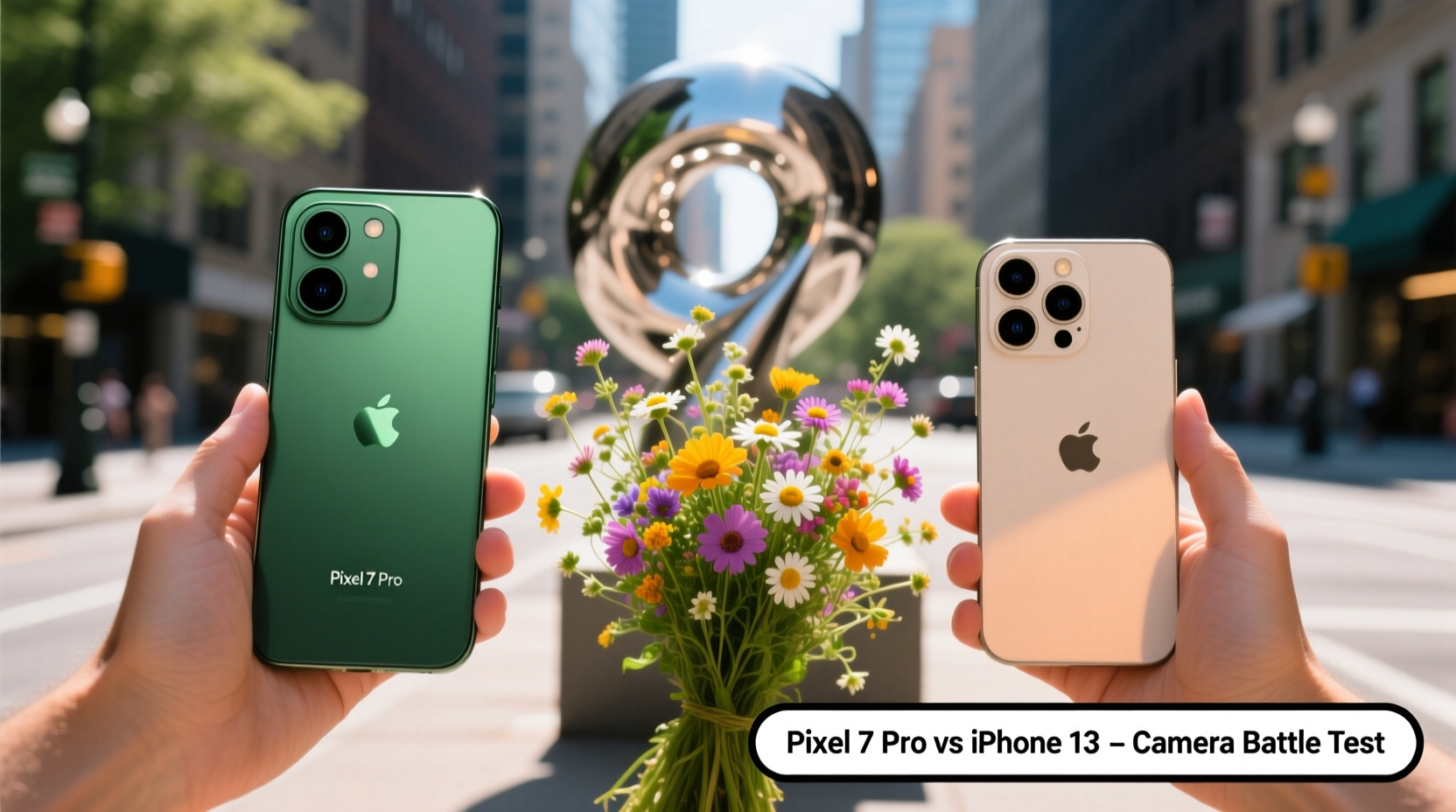
The foundation of any camera system lies in its hardware. While both phones rely heavily on software processing, the physical components set the baseline for what’s possible.
| Feature | Google Pixel 7 Pro | iPhone 13 |
|---|---|---|
| Main Sensor | 50MP, f/1.85, 1/1.31\" | 12MP, f/1.6, 1.7µm pixels |
| Ultra-Wide Sensor | 12MP, f/2.2 | 12MP, f/2.4 |
| Telephoto Lens | 48MP, f/3.5, 5x optical zoom | No telephoto (digital zoom only) |
| Front Camera | 10.8MP, f/2.2 | 12MP, f/2.2, autofocus |
| Video Recording | 4K up to 60fps, HDR | 4K up to 60fps, Dolby Vision HDR |
The Pixel 7 Pro clearly wins on paper with a higher-resolution main sensor and a dedicated 5x telephoto lens — a feature absent in the base iPhone 13. However, megapixels don’t tell the whole story. Apple uses larger individual pixels and a wider aperture (f/1.6), which can improve low-light capture despite the lower resolution.
Daylight and Dynamic Range Performance
In well-lit conditions, both phones produce sharp, vibrant images. However, their approaches differ significantly.
The Pixel 7 Pro leans into Google’s signature HDR+ processing, preserving highlight detail in bright skies while pulling shadow information without excessive noise. Colors tend to be slightly more saturated — not artificially so, but with a perceptible “pop” that makes images stand out on social media.
The iPhone 13, by contrast, aims for naturalism. Skin tones are consistently accurate, and white balance remains stable across scenes. Apple’s Smart HDR 4 balances exposure smoothly, though some users find its output a bit flat compared to the Pixel’s liveliness.
“Apple prioritizes consistency; Google prioritizes impact. One gives you what was there, the other gives you what could be.” — David Kim, Mobile Imaging Analyst at DXOMARK
In high-contrast daylight scenes — such as backlit portraits or sunsets — the Pixel often retains more detail in blown-out skies, while the iPhone may clip highlights slightly earlier. However, the iPhone handles motion better in video, with smoother stabilization and superior tone mapping.
Low-Light and Night Mode Showdown
This is where the Pixel’s computational advantage shines. Night Mode on the Pixel 7 Pro is not just an add-on — it’s integral to nearly every photo taken after dark. Even in dim indoor lighting, the Pixel automatically extends exposure, merges frames, and reduces noise with impressive results.
The iPhone 13 also has Night Mode, but it activates less aggressively and relies more on the larger aperture and sensor efficiency. In practice, this means faster shutter speeds and fewer motion artifacts, but sometimes at the cost of shadow detail.
- Pixel 7 Pro: Brighter night shots, better shadow recovery, occasional over-sharpening.
- iPhone 13: More natural grain structure, better skin tone preservation, less aggressive noise reduction.
If you frequently shoot in restaurants, concerts, or city streets at night, the Pixel delivers more usable images. But if you value authenticity over brightness, the iPhone’s approach may feel more trustworthy.
Zoom and Portrait Capabilities
Here, the Pixel 7 Pro holds a decisive edge. With its 5x optical telephoto lens, it captures distant subjects with clarity unmatched by the iPhone 13, which depends entirely on digital cropping. At 5x, the iPhone must crop into its 12MP sensor, resulting in significant detail loss.
For portrait photography, both phones offer excellent depth estimation and bokeh simulation. The Pixel’s Face Unblur feature — which uses AI to sharpen subject faces in motion — is particularly useful for candid shots. Meanwhile, the iPhone 13 benefits from autofocus on its front camera, making selfies more reliable in varying distances.
Real-World Example: Concert Photography
Lena, a music blogger in Austin, tested both phones at a recent outdoor festival. Lighting was mixed — stage LEDs, sunset backlighting, and crowd darkness.
With the iPhone 13, her shots were consistent but often too dark in shadowed areas. She had to manually adjust exposure, and zoomed shots of distant performers were unusable. The Pixel 7 Pro automatically brightened underexposed regions and captured clear mid-stage shots using 5x zoom. “The Pixel made my Instagram posts look professional,” she said. “The iPhone needed heavy editing to compete.”
However, she noted that videos from the iPhone looked more cinematic, with smoother transitions between light zones and richer audio recording.
Video Quality and Ecosystem Influence
While stills favor the Pixel, video remains Apple’s stronghold. The iPhone 13 records in Dolby Vision HDR natively — a feature still rare among Android phones. This allows for a broader dynamic range, deeper colors, and compatibility with Apple TV and Final Cut Pro workflows.
The Pixel 7 Pro supports HDR video, but lacks Dolby Vision. Its stabilization is strong, but footage can appear slightly oversharpened. Audio capture is good, but not as spatially rich as Apple’s four-mic array.
Crucially, Apple’s ecosystem enhances perceived camera quality. AirDrop sharing, iCloud syncing, and seamless integration with Macs and iPads make the entire experience feel smoother — even if the raw image data isn’t superior.
“The iPhone doesn’t always take the best photo, but it makes taking, editing, and sharing photos feel effortless.” — Sarah Lin, Tech Editor at *Mobile Life Review*
Checklist: Choosing Based on Your Needs
Use this checklist to determine which camera suits your lifestyle:
- Do you shoot often in low light? → Pixel 7 Pro
- Do you need optical zoom for sports, pets, or travel? → Pixel 7 Pro
- Do you prioritize natural skin tones and video quality? → iPhone 13
- Are you deep in the Apple ecosystem (Mac, iPad, iCloud)? → iPhone 13
- Do you edit photos on your phone? → Pixel 7 Pro (superior built-in tools)
- Do you share content primarily via Instagram or TikTok? → Pixel 7 Pro (more vibrant defaults)
Frequently Asked Questions
Is the Pixel 7 Pro camera better than the iPhone 13 overall?
In still photography, especially in low light and zoom scenarios, yes. The Pixel produces brighter, more detailed images with greater flexibility. However, the iPhone excels in video, color accuracy, and ecosystem integration, making “better” subjective based on use case.
Does Apple’s marketing exaggerate iPhone camera performance?
To some extent, yes. Apple showcases ideal conditions in ads — golden-hour lighting, static subjects, and controlled environments. Real-world results are good, but not always as flawless as presented. That said, the iPhone’s consistency across varied conditions is genuinely impressive.
Can software updates change this comparison?
Absolutely. Google continues refining Magic Eraser, Photo Unblur, and Night Sight. Apple improves Smart HDR and Cinematic Mode with each iOS update. Today’s winner might shift in a year — especially as AI-powered enhancements evolve.
Conclusion: Hype vs. Reality
The Pixel 7 Pro’s camera performance is not hype — it’s backed by tangible advantages in sensor technology, zoom capability, and computational photography. For photographers who want the most from their smartphone without carrying extra gear, it’s a compelling choice.
Yet, Apple’s marketing isn’t lying either. The iPhone 13 delivers a balanced, reliable, and deeply integrated camera experience. Its strength lies not in winning technical benchmarks, but in creating a frictionless journey from shot to share.
The truth? Both cameras are excellent. The Pixel impresses with bold, optimized images. The iPhone earns trust with consistency and polish. Your preference depends not on which is objectively better, but on how you use your phone to capture life.




 浙公网安备
33010002000092号
浙公网安备
33010002000092号 浙B2-20120091-4
Comments
No comments yet. Why don't you start the discussion?