
When it comes to smartphone photography, Google’s Pixel series has built a reputation for punching above its weight — especially in low light and computational photography. Apple’s iPhone 12, while not the latest model, remains a solid performer with a balanced approach to image capture. But is the Pixel 7 truly superior in everyday use? Or does the iPhone 12 hold its ground despite being older hardware? Let’s break down the real differences in photo quality, processing philosophy, and practical usability.
Camera Hardware: Specs Tell Only Part of the Story
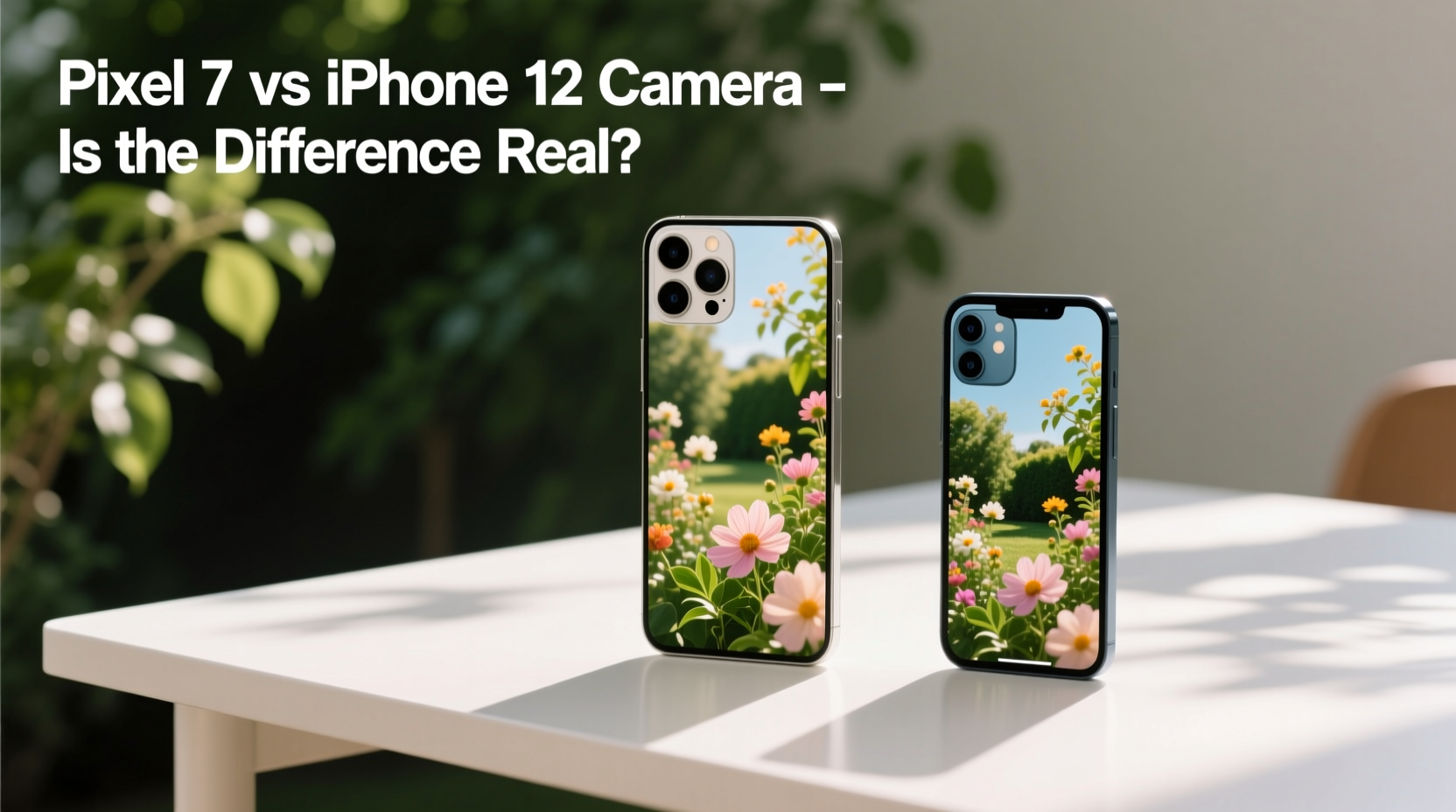
The Pixel 7 features a dual-camera setup: a 50MP main sensor with large 1.2µm pixels and an f/1.85 aperture, paired with a 12MP ultrawide lens (f/2.2). It lacks a telephoto lens but compensates with strong software zoom via Super Res Zoom. The iPhone 12, released in 2020, uses a 12MP main sensor (f/1.6) and a 12MP ultrawide (f/2.4), also without telephoto support on the base model.
On paper, the Pixel 7’s higher-resolution sensor suggests an advantage, but megapixels alone don’t determine image quality. Apple’s sensor-shift stabilization and mature image pipeline have long delivered consistent results. Google, meanwhile, leverages its Tensor G2 chip to process images with AI-driven enhancements like HDR+ and Night Sight.
| Feature | Pixel 7 | iPhone 12 |
|---|---|---|
| Main Sensor | 50MP, f/1.85, OIS | 12MP, f/1.6, sensor-shift OIS |
| Ultrawide | 12MP, f/2.2 | 12MP, f/2.4 |
| Night Mode | Yes, with astrophotography | Yes, automatic in low light |
| Video Recording | 4K @ 60fps, stabilized | 4K @ 60fps, Dolby Vision HDR |
| Computational Features | Photo Unblur, Magic Eraser, Real Tone | Deep Fusion, Smart HDR 3 |
While the Pixel 7 introduces newer computational tools, the iPhone 12’s sensor-shift stabilization gives it an edge in handheld clarity, particularly in motion or dim conditions. However, Google’s aggressive noise reduction and dynamic range management often result in more vivid, contrast-rich stills straight out of the camera.
Image Processing Philosophy: Natural vs. Enhanced
This is where the real divergence happens. Apple prioritizes color accuracy, skin tone fidelity, and a natural look. Its Smart HDR and Deep Fusion technologies aim to preserve detail without oversaturation. In daylight shots, iPhone photos tend to appear more neutral, sometimes even subdued compared to competitors.
Google takes a different path. The Pixel 7 applies bold enhancements — richer blues, punchier greens, and lifted shadows — making images pop immediately. This works well for social media but can occasionally veer into artificial territory, especially in high-contrast scenes where skies may be over-saturated or textures smoothed too aggressively.
“Google’s algorithmic confidence allows them to push brightness and saturation further than most, betting users prefer striking over accurate.” — David Liu, Mobile Imaging Analyst at DXOMARK
In side-by-side tests, the Pixel often wins in perceived quality because it makes photos look “better” at first glance. The iPhone, however, retains more highlight detail and produces more reliable white balance under mixed lighting. For photographers who plan to edit later, the iPhone’s flatter output offers more flexibility.
Low-Light and Night Photography: Where the Pixel Shines
If you frequently shoot after dark, the Pixel 7 holds a noticeable advantage. Its Night Sight mode captures brighter, cleaner images with less grain than the iPhone 12. Even in pitch-black environments, the Pixel can produce usable shots thanks to longer exposures and advanced noise modeling powered by machine learning.
The iPhone 12’s night mode is competent but more conservative. It brightens shadows without pushing exposure extremes, which preserves realism but often leaves images darker than desired. On occasion, it struggles with color cast in artificial lighting — producing greenish or orange tints — whereas the Pixel generally corrects these more effectively.
Real-World Example: Concert Snapshot
A user attending a small indoor gig tried capturing a band on stage using both phones. The iPhone 12 produced a dark image with visible noise and poor facial detail. The Pixel 7 automatically triggered Night Sight, resulting in a much brighter shot with recognizable faces and clearer instrument details. While the colors were slightly exaggerated, the overall usability of the Pixel image was far greater — especially for sharing instantly on Instagram.
Portrait Mode and Subject Detection
Both phones offer portrait mode with depth sensing, but their approaches differ. The Pixel 7 uses AI to detect edges, including fine details like hair strands and glasses, often outperforming the iPhone 12 in complex scenarios. Google’s Real Tone technology also improves skin rendering across diverse complexions, addressing historical biases in facial recognition algorithms.
The iPhone 12 relies on stereo disparity from its two rear cameras for depth mapping. It performs well in ideal lighting but can struggle with busy backgrounds or when subjects wear hats or have curly hair. Edge detection tends to be smoother but less precise than the Pixel’s segmentation.
- Pixel 7 strengths: Better hair detail, faster focus locking, enhanced skin tone accuracy
- iPhone 12 strengths: More natural bokeh simulation, consistent performance in mid-light
Video and Usability Considerations
For video, the iPhone 12 maintains a clear lead. It supports Dolby Vision HDR recording — a feature still unmatched by Android rivals — delivering cinematic dynamic range and professional-grade color grading options. Footage looks polished, stable, and ready for editing.
The Pixel 7 records excellent 4K video with solid stabilization and clean audio, but lacks HDR video encoding in widely supported formats. While its cinematic pan and audio boost features are useful, they don’t match Apple’s ecosystem integration for creators.
Beyond specs, usability matters. The Pixel camera app is minimal and fast, launching instantly and focusing quickly. The iPhone 12’s camera interface is equally responsive, though buried settings require digging through menus. Both allow manual control via third-party apps, but neither offers full pro-mode access natively.
Checklist: Choosing Based on Your Needs
Use this checklist to decide which phone suits your photography priorities:
- Do you shoot mostly in low light? → Choose Pixel 7
- Do you value natural skin tones and accurate colors? → Choose iPhone 12
- Are you active on social media and want vibrant, share-ready photos? → Choose Pixel 7
- Do you record videos regularly, especially in HDR? → Choose iPhone 12
- Do you edit photos professionally or prefer RAW flexibility? → Choose iPhone 12
- Do you want AI-powered editing tools like object removal or unblurring? → Choose Pixel 7
Frequently Asked Questions
Is the Pixel 7 camera better than iPhone 12 in daylight?
It depends on preference. The Pixel 7 delivers more vibrant, contrasty images that stand out immediately. The iPhone 12 offers truer-to-life colors and better dynamic range in harsh sunlight. For social sharing, the Pixel may seem “better”; for editing and realism, the iPhone wins.
Can the iPhone 12 keep up with newer Pixels?
Yes — especially in good lighting and video. While the Pixel 7 excels in computational photography, the iPhone 12 still produces high-quality stills and exceptional video. With iOS updates continuing to refine image processing, it remains relevant years after release.
Does the Pixel’s AI editing replace good photography?
No. Tools like Magic Eraser and Photo Unblur are impressive, but they can’t fix poor composition or extreme motion blur. They enhance convenience, not skill. Strong fundamentals — lighting, framing, stability — still matter most.
Final Verdict: Are Pixel Photos Really That Much Better?
Yes — but only in specific contexts. The Pixel 7 consistently produces more visually striking still photos, especially in low light and challenging conditions. Its AI-driven enhancements make average shots look impressive with zero effort. However, the iPhone 12 counters with superior video, more natural color science, and proven reliability over time.
The gap isn’t as wide as marketing might suggest. If you prioritize immediacy, social sharing, and cutting-edge photo tools, the Pixel 7 justifies its acclaim. But if you value consistency, video quality, and a more authentic representation of scenes, the iPhone 12 remains a compelling choice — even years later.




 浙公网安备
33010002000092号
浙公网安备
33010002000092号 浙B2-20120091-4
Comments
No comments yet. Why don't you start the discussion?