
Choosing between the Google Pixel 8 Pro and the iPhone 15 Pro often comes down to one critical factor: photography. Both devices are marketed as premium smartphones with flagship-level cameras, but they approach image capture in fundamentally different ways. The Pixel relies heavily on computational photography and AI-driven enhancements, while the iPhone emphasizes natural color accuracy, dynamic range, and seamless integration with Apple’s ecosystem. But when you're standing in front of a sunset or trying to capture a fast-moving child at a birthday party, does the camera really make a noticeable difference?
The short answer is yes—but not always in the way you might expect. It’s less about megapixels and more about philosophy, processing, and personal preference.
Camera Hardware: Specs vs. Real-World Performance
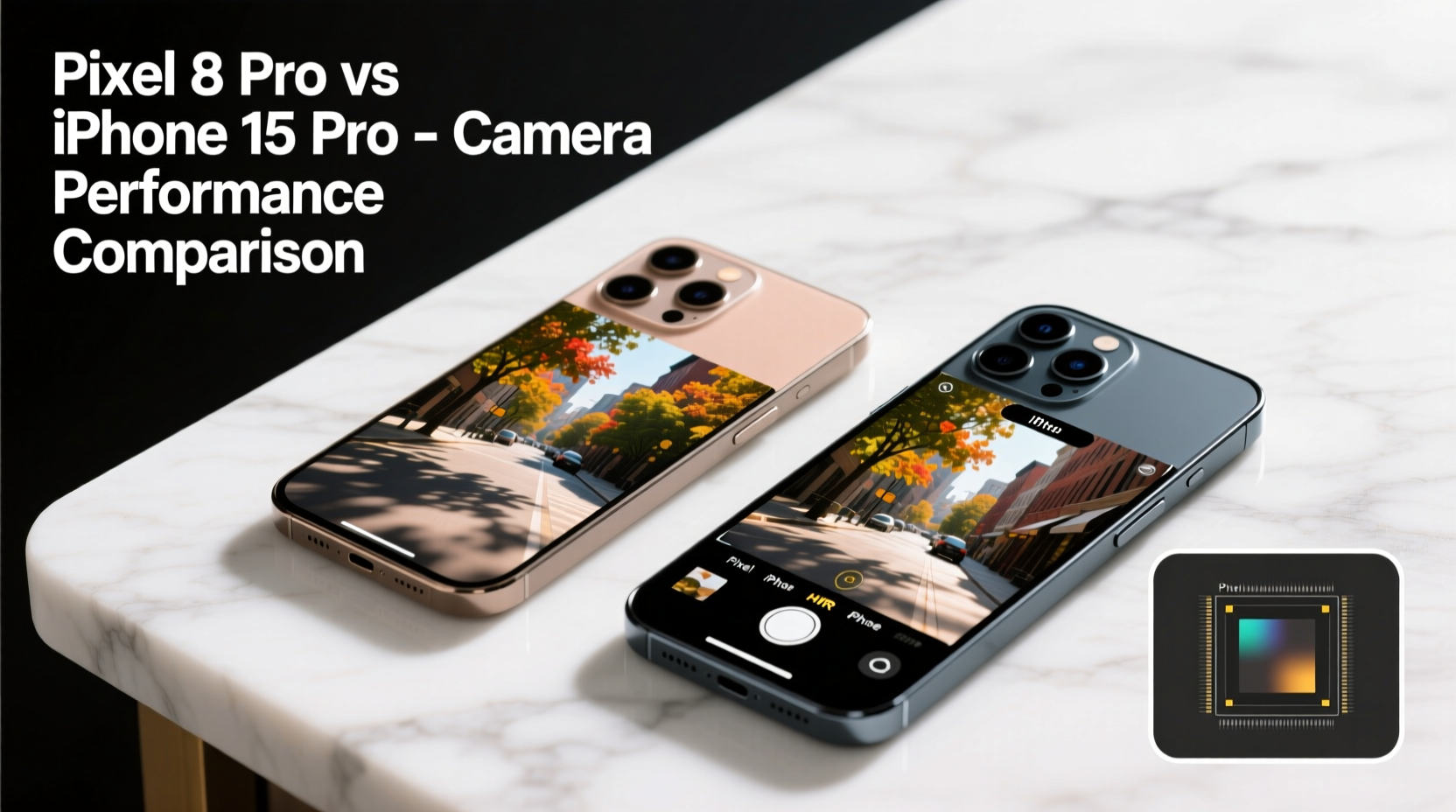
On paper, both phones boast impressive hardware. The Pixel 8 Pro features a 50MP main sensor, a 48MP telephoto lens with 5x optical zoom, and a 12MP ultra-wide. Google pairs this with its custom Tensor G3 chip, optimized specifically for machine learning tasks like HDR+ and Night Sight.
The iPhone 15 Pro, meanwhile, uses a 48MP main sensor (with pixel binning to 24MP by default), a 12MP telephoto with 3x optical zoom, and a 12MP ultra-wide. Apple's A17 Pro chip excels at real-time processing and video encoding, supporting ProRAW and Log video recording for professional workflows.
Despite the higher zoom capability on the Pixel, many users find the iPhone’s 3x telephoto produces more consistent, stable images—especially in mixed lighting. Why? Because Apple prioritizes optical quality and sensor stabilization over extreme reach. Google compensates with Super Res Zoom, an AI-powered enhancement that can produce sharp results up to 10x, but only under ideal conditions.
“Hardware sets the foundation, but it’s the software stack that defines the final image.” — David Pogue, Tech Journalist & Photographer
Image Processing Philosophy: Natural vs. Enhanced
This is where the real divergence happens. The iPhone aims for photographic realism. Colors stay true to life, highlights are preserved, and skin tones remain neutral—even in challenging light. This makes the iPhone a favorite among photographers who want a clean base for editing or those who value consistency across shots.
The Pixel, in contrast, enhances aggressively. Google’s HDR+ with Fusion brightens shadows, saturates skies, and sharpens edges. In daylight, this often results in more “wow” factor straight out of the camera. Social media-ready images require little to no editing. However, some critics argue that Pixel photos can look oversharpened or overly contrasty, especially in complex scenes with mixed lighting.
In low light, the Pixel’s Night Sight continues to impress, pulling detail from near darkness with minimal noise. The iPhone has closed the gap significantly with its Photonic Engine and Smart HDR 5, but it tends to preserve mood over brightness—sometimes leaving shadows darker than users expect.
Video Capabilities: Who Wins for Cinematic Quality?
For videographers, the iPhone 15 Pro holds a clear edge. It supports 4K Dolby Vision HDR recording at up to 60fps across all lenses, along with Log encoding for color grading in post-production. The cinematic mode works reliably, and audio zoom syncs well with optical zoom.
The Pixel 8 Pro records 4K at 30fps with excellent stabilization and improved HDR, but lacks support for high-bitrate formats or professional video profiles. Its video portrait mode is fun but less refined than Apple’s implementation.
If you regularly edit video or share content professionally, the iPhone’s ecosystem—from iMovie to Final Cut Pro compatibility—adds tangible value. The Pixel is perfectly capable for casual use, but doesn’t cater to creators in the same way.
Real-World Example: Family Trip to the Grand Canyon
Consider Sarah, a travel blogger who recently visited the Grand Canyon with both phones in her pocket. During midday hikes, she preferred the Pixel 8 Pro. The sky popped with deep blues, and HDR+ balanced the harsh desert sunlight across the canyon walls. Her Instagram posts received immediate engagement, with followers praising the “vivid clarity.”
But at sunrise, when the rim glowed in soft golden light, she switched to the iPhone. The dynamic range preserved both the fiery orange cliffs and the shadowed depths below without artificial sharpening. When she later edited the shot in Lightroom, the ProRAW file retained details in highlights and shadows that the Pixel’s JPEG output had already baked in and lost.
Sarah concluded: “The Pixel gives me instant gratification. The iPhone gives me creative control.”
Comparison Table: Key Camera Features at a Glance
| Feature | Pixel 8 Pro | iPhone 15 Pro |
|---|---|---|
| Main Sensor | 50MP, f/1.68 | 48MP, f/1.78 (24MP default) |
| Telephoto Zoom | 5x periscope (optical), up to 40x AI zoom | 3x (optical), up to 15x digital |
| Ultra-Wide | 12MP, f/2.2 | 12MP, f/2.2 |
| Night Mode | Night Sight (all lenses) | Night mode with Smart HDR |
| Video Recording | 4K @ 30fps, HDR | 4K @ 24/30/60fps, Dolby Vision HDR |
| Pro Editing Support | ProRAW (limited apps) | ProRAW + ProRes video |
| Best For | Social media, point-and-shoot, zoom | Photographic accuracy, video creators, editing |
Actionable Checklist: Choosing Based on Your Needs
- ✅ Need strong zoom for wildlife or distant subjects? → Pixel 8 Pro
- ✅ Prioritize natural colors and editing flexibility? → iPhone 15 Pro
- ✅ Shoot lots of video or plan to edit professionally? → iPhone 15 Pro
- ✅ Want stunning photos with zero editing? → Pixel 8 Pro
- ✅ Use Android-exclusive apps or Google Photos? → Pixel 8 Pro
- ✅ Already in the Apple ecosystem (Mac, iPad, iCloud)? → iPhone 15 Pro
Frequently Asked Questions
Is the Pixel 8 Pro better than the iPhone 15 Pro for portraits?
The Pixel excels in portrait mode with accurate edge detection and artistic background blur powered by AI. However, the iPhone produces more natural skin tones and better depth mapping in backlit scenarios. For flattering selfies, the iPhone is often preferred. For dramatic bokeh effects, the Pixel stands out.
Do computational photos age well?
This is a growing debate. Heavily processed images from the Pixel—while impressive today—can appear dated in a few years due to over-sharpening or exaggerated colors. iPhone photos, with their neutral tone curves, tend to look more timeless. Archival photographers often favor subtlety over instant impact.
Can I tell the difference without side-by-side comparison?
In most everyday situations, no. Both phones produce excellent images suitable for social media, printing, and sharing. The differences become apparent only upon close inspection, during editing, or in challenging lighting. For casual users, either phone is more than sufficient.
Final Verdict: Does the Camera Really Make a Difference?
Yes—but the significance depends on your priorities. For most people, both the Pixel 8 Pro and iPhone 15 Pro will capture memories beautifully. The differences lie not in technical superiority alone, but in intent. The Pixel delivers emotionally engaging, polished photos instantly. The iPhone provides a reliable, versatile tool for creators who value control and consistency.
If you’re drawn to bold, vibrant imagery and love sharing directly from your phone, the Pixel 8 Pro likely aligns with your style. If you shoot in varied conditions, edit your photos, or value long-term usability, the iPhone 15 Pro offers unmatched balance and ecosystem integration.




 浙公网安备
33010002000092号
浙公网安备
33010002000092号 浙B2-20120091-4
Comments
No comments yet. Why don't you start the discussion?