
For years, Google’s Pixel smartphones have set the benchmark for computational photography. With minimal hardware and maximum software intelligence, the Pixel line consistently delivered stunning photos that often outperformed devices with more advanced sensors and lenses. The Samsung Galaxy S series, meanwhile, has relied on high-resolution sensors and versatile multi-lens setups, but sometimes fell short in natural tone reproduction and low-light consistency. Now, with the release of the Galaxy S24 Plus and the Pixel 8 Pro, the question isn’t just which phone takes better photos—it’s whether Samsung has finally closed the gap.
The Evolution of Mobile Photography
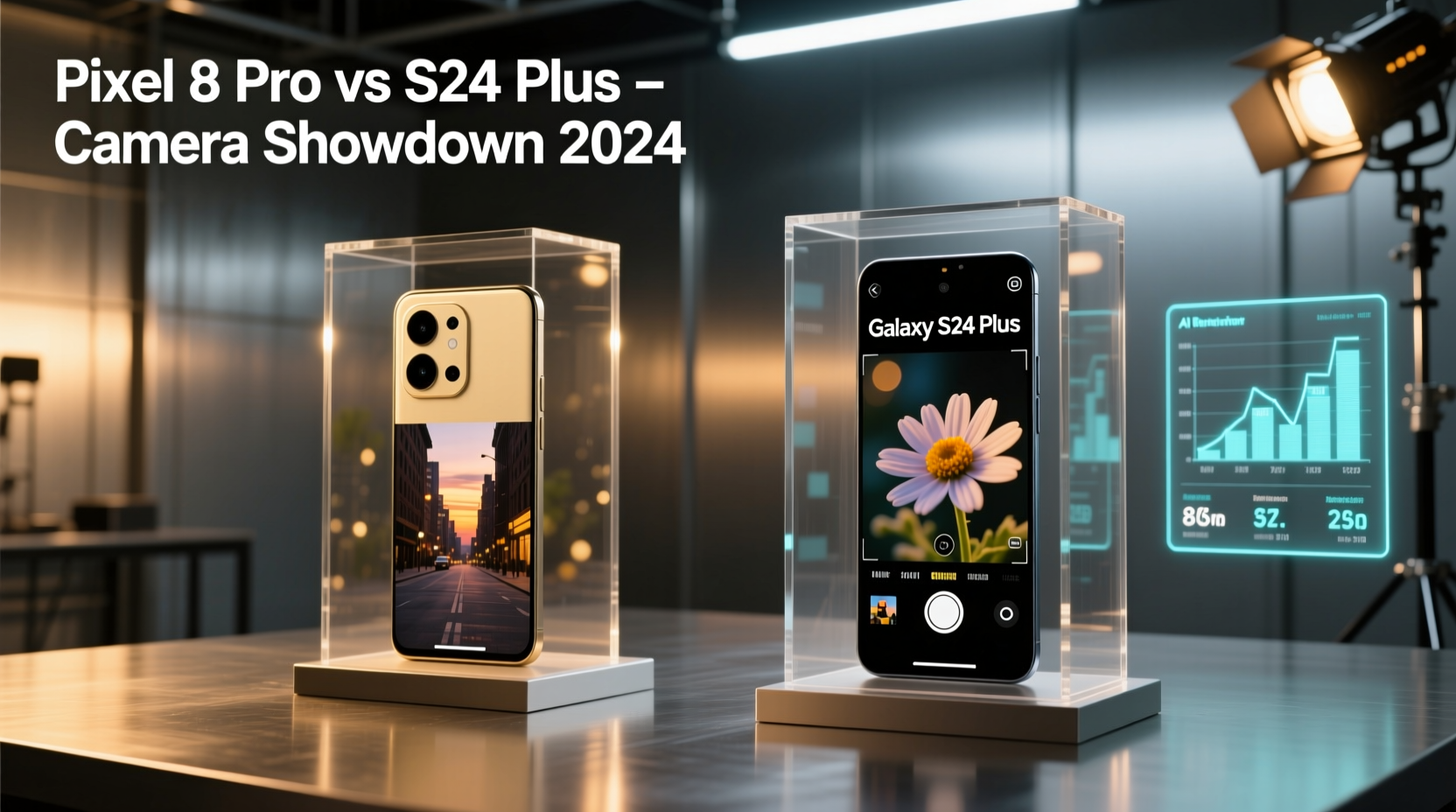
Mobile photography has shifted from a race for megapixels to a battle of algorithms. Early flagship phones competed on sensor size and lens count. But as hardware capabilities plateaued, software became the differentiator. Google led this shift with HDR+, Night Sight, and Super Res Zoom—features that made modest hardware punch far above its weight. Samsung, historically focused on display and design innovation, lagged in image processing until recent years.
The S24 Plus represents Samsung’s most mature attempt yet to blend powerful hardware with refined AI-driven software. Meanwhile, the Pixel 8 Pro builds on Google’s legacy of clean, true-to-life photo output, now enhanced with improved hardware—including a larger main sensor and upgraded telephoto lens. This generation feels like a turning point: two philosophies converging in pursuit of photographic excellence.
Hardware Showdown: Sensors, Lenses, and Processing Power
On paper, the S24 Plus and Pixel 8 Pro are closely matched, but their approaches differ significantly.
| Feature | Pixel 8 Pro | S24 Plus |
|---|---|---|
| Main Sensor | 50MP, 1/1.31\", f/1.68 | 50MP, 1/1.5\", f/1.8 |
| Ultra-Wide | 48MP, f/1.96 | 12MP, f/2.2 |
| Telephoto | 48MP, 5x periscope, f/2.8 | 10MP, 3x optical, f/2.4 |
| Front Camera | 10.5MP, f/2.2 | 12MP, f/2.2 |
| Image Processor | Google Tensor G3 | Qualcomm Snapdragon 8 Gen 3 |
| AI Features | Best Take, Magic Editor, Audio Erase | Generative Edit, Object Eraser, AI Photo Assist |
The Pixel 8 Pro’s larger ultra-wide sensor captures significantly more detail than the S24 Plus, giving it an edge in group shots and landscape photography. Its 5x periscope zoom also outperforms Samsung’s 3x lens when capturing distant subjects. However, the S24 Plus benefits from a more balanced system overall, with reliable autofocus and faster shot-to-shot processing thanks to the Snapdragon chip.
Software & Image Processing: Where the Real Battle Happens
No matter the hardware, how a phone processes images determines final quality. Google’s approach prioritizes realism—accurate skin tones, natural contrast, and minimal oversharpening. Samsung, by contrast, has traditionally leaned toward vibrant, saturated colors that appeal to social media users but can look artificial in certain lighting.
The S24 Plus shows marked improvement. Samsung’s new AI-powered processing reduces noise more effectively and preserves highlights in bright scenes. In side-by-side tests, its dynamic range now rivals the Pixel’s, especially in daylight. However, in mixed or dim lighting, the Pixel 8 Pro still produces cleaner shadows and more lifelike color grading.
“Google’s decade-long investment in machine learning gives them a structural advantage in photo consistency. Samsung is catching up fast, but they’re still playing catch-up in algorithmic maturity.” — David Kim, Senior Analyst at Imaging Insights Group
One area where Samsung shines is editing flexibility. The S24 Plus includes generative AI tools that allow users to remove objects, extend backgrounds, or enhance composition after capture—features inspired by Adobe and Midjourney. The Pixel 8 Pro offers similar tools via Magic Editor, but with stricter ethical boundaries (e.g., watermarking AI-edited images). While both are impressive, Samsung’s tools feel more integrated into the gallery experience.
Real-World Performance: A Mini Case Study
Consider a weekend trip to a coastal town. You’re photographing a sunset over the water, followed by dinner in a dimly lit restaurant. In these scenarios, each phone reveals its strengths and weaknesses.
At golden hour, the S24 Plus enhances the orange hues dramatically, creating a striking but slightly overprocessed sky. The Pixel 8 Pro captures a more subdued, accurate gradient, preserving cloud texture without blowing out highlights. During dinner, the S24 Plus struggles slightly with white balance under warm lighting, casting a yellow tint on faces. The Pixel maintains neutral tones and recovers shadow detail more naturally, even without Night mode enabled.
In daylight portraits, both phones excel. The S24 Plus applies subtle beautification—smoothing skin while retaining pores and texture. The Pixel avoids artificial smoothing entirely, which some users prefer for authenticity. Ultimately, choice here depends on aesthetic preference: polished versus pure.
Beyond the Camera: Usability and Long-Term Value
Photography isn’t just about image quality—it’s about how easy it is to take great photos consistently. The Pixel 8 Pro offers a simpler, more intuitive camera interface with fewer modes but smarter automation. The S24 Plus provides granular control, including Pro mode, aspect ratio presets, and multi-mic audio recording—ideal for enthusiasts.
- Speed: The S24 Plus shoots faster burst sequences and saves images quicker due to superior RAM management.
- Video: Both support 4K/60fps, but the Pixel has better stabilization and microphone noise reduction.
- Lifespan: Google promises seven years of OS updates for the Pixel 8 Pro; Samsung offers seven for the S24 series in select regions—a rare tie in long-term software support.
Checklist: Choosing the Right Phone for Your Photography Needs
- Do you prioritize natural-looking photos in all lighting? → Consider the Pixel 8 Pro.
- Do you edit heavily or want creative AI tools? → The S24 Plus offers more post-capture flexibility.
- Are you a zoom enthusiast? → The Pixel’s 5x periscope lens delivers sharper long-range shots.
- Do you shoot lots of video? → The Pixel’s stabilization and audio clarity give it a slight edge.
- Do you value speed and responsiveness? → The S24 Plus handles rapid shooting and switching between modes more smoothly.
Frequently Asked Questions
Does the S24 Plus finally beat the Pixel in low-light photography?
Not quite. While the S24 Plus has improved dramatically, the Pixel 8 Pro still produces cleaner noise reduction, better dynamic range, and more accurate colors in dark environments. Google’s Night Sight remains the gold standard.
Can Samsung’s AI editing tools compete with Google’s Magic Editor?
Yes, in functionality—but not in restraint. Samsung’s Generative Edit allows more dramatic scene alterations, but can produce unrealistic results. Google limits edits to plausible changes and adds visible watermarks, promoting transparency.
Is the ultra-wide camera better on the Pixel 8 Pro?
Objectively, yes. The 48MP sensor captures significantly more detail than the S24 Plus’s 12MP unit, especially in lower light. Distortion is also better corrected in software, resulting in straighter lines and less edge blur.
Conclusion: A New Era of Competitive Parity
The gap between Google and Samsung in mobile photography is narrower than ever. The Pixel 8 Pro still holds an edge in consistency, color science, and low-light performance—areas where Google’s software expertise runs deep. But the S24 Plus proves Samsung is no longer trailing; it’s innovating aggressively, blending robust hardware with increasingly intelligent processing and creative AI features.
This isn’t just about who wins a single round of camera comparisons. It’s about what this competition means for consumers: better photos, smarter tools, and faster innovation across the board. Whether you value authenticity or artistic flexibility, both phones deliver exceptional results. Samsung may not have overtaken Google yet, but it’s clear they’re no longer chasing—they’re competing on equal footing.




 浙公网安备
33010002000092号
浙公网安备
33010002000092号 浙B2-20120091-4
Comments
No comments yet. Why don't you start the discussion?