
When it comes to flagship smartphones, camera performance is often the deciding factor for buyers. The Google Pixel 9 Pro and the anticipated iPhone 16 represent the cutting edge of mobile photography from two very different philosophies: computational imaging dominance versus refined hardware-software integration. But in everyday use, are the differences between their cameras actually noticeable? For most users, subtle distinctions in processing, dynamic range, and color science may not translate into meaningful real-world advantages—unless you're shooting in challenging conditions or editing photos professionally.
This article dissects the core camera technologies behind both devices, compares their performance across key scenarios, and evaluates whether the gap matters outside controlled lab tests. Whether you're a casual shooter or an enthusiast, understanding where each phone excels—and where they converge—can guide your next upgrade decision.
Camera Hardware: Specs Tell Only Part of the Story
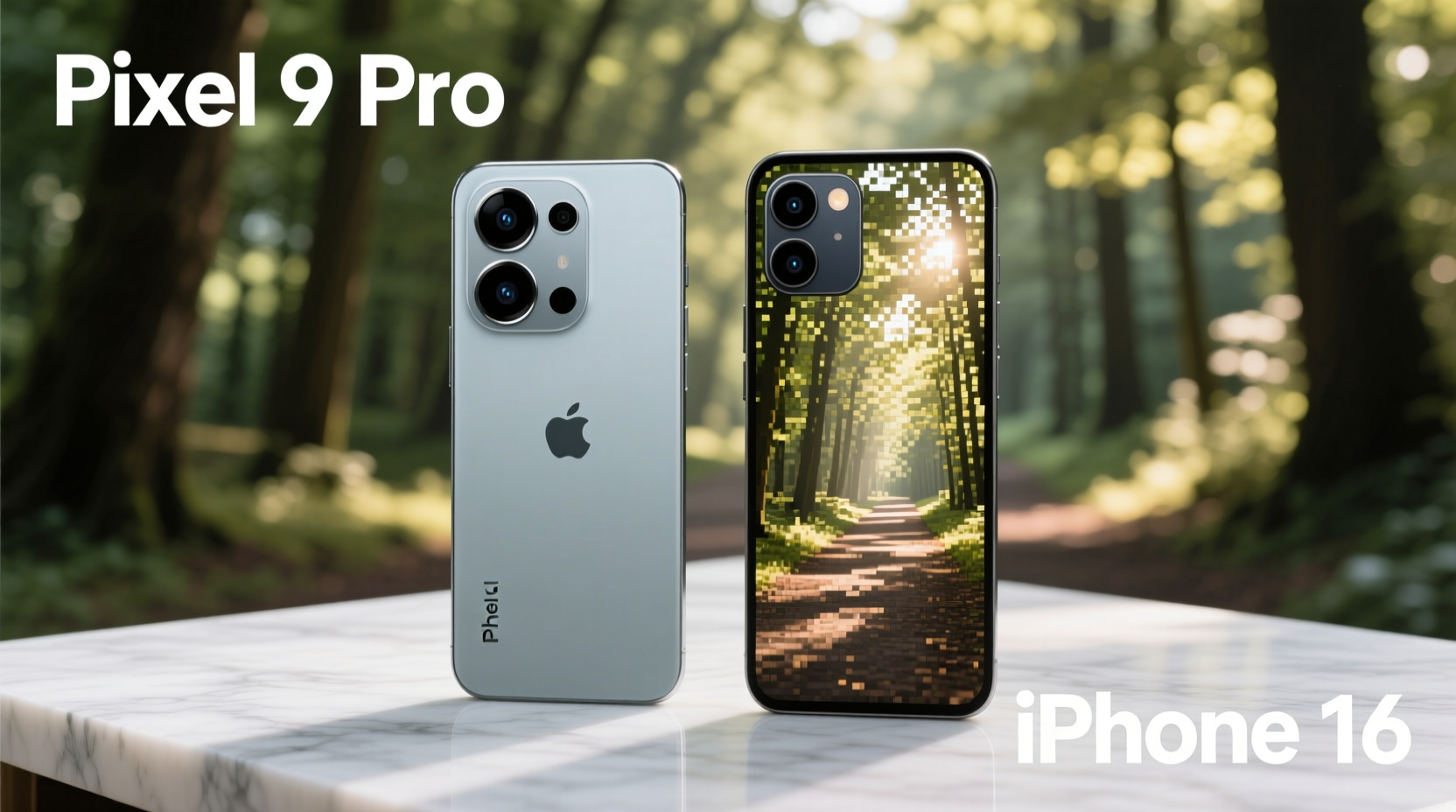
The Pixel 9 Pro continues Google’s tradition of relying on fewer lenses but maximizing software intelligence. It features a primary 50MP sensor with larger pixel size (1.8µm), a 48MP telephoto lens with 5x optical zoom, and a 12MP ultra-wide. All lenses benefit from improved low-light sensitivity and faster autofocus systems. Google has also upgraded its Tensor G4 chip to enhance real-time HDR+ processing and motion tracking.
In contrast, the iPhone 16 is expected to retain Apple’s conservative approach with a triple-lens setup: a 48MP main sensor, a 12MP periscope telephoto (up to 5x optical zoom), and a 12MP ultra-wide. Apple emphasizes sensor-shift stabilization, consistent color science, and tighter integration between the A18 Bionic chip and iOS camera pipeline. Notably, the iPhone 16 introduces enhanced fusion algorithms that blend multiple exposures more seamlessly than before.
“Hardware sets the foundation, but modern smartphone photography is won in the milliseconds after the shutter clicks.” — Dr. Lena Park, Computational Imaging Researcher at MIT Media Lab
While spec sheets suggest parity, especially in megapixel counts and zoom capabilities, the real divergence lies in how each brand processes the captured data. Google leans heavily on AI-driven enhancements like Magic Eraser, Best Take, and Real Tone accuracy, while Apple prioritizes naturalism, skin tone fidelity, and minimal post-processing artifacts.
Image Quality in Real-World Conditions
Under daylight, both phones produce excellent results. The Pixel 9 Pro tends to boost contrast and saturation slightly, delivering punchier images that stand out on social media. The iPhone 16, by comparison, preserves more highlight detail and produces flatter JPEGs that retain flexibility for editing. This difference becomes apparent when photographing sunlit scenes: the Pixel may clip bright skies slightly, while the iPhone holds onto cloud texture longer.
In low light, the advantage shifts toward the Pixel 9 Pro. Its Night Sight mode now activates earlier and converges faster, producing brighter images with less noise. However, some users report a cooler white balance bias in artificial lighting. The iPhone 16 improves dramatically over previous models with longer exposure stacking and smarter noise reduction, though it sometimes underexposes shadows to protect highlights.
Portrait Mode and Depth Accuracy
Portrait photography reveals nuanced differences. The Pixel 9 Pro uses machine learning to detect edges—even around fine hair or glasses—with high precision. Its bokeh simulation mimics a wide-aperture look aggressively, which some find cinematic, others overly processed. The iPhone 16 takes a subtler approach, applying softer blur gradients and preserving more ambient lighting cues. Face detection is nearly flawless on both, but Apple’s system better maintains natural skin tones without oversmoothing.
Video Performance: Stability vs. Intelligence
For video, the iPhone 16 remains the benchmark. Cinematic Mode now supports 4K at 60fps with automatic focus transitions and depth mapping in real time. Optical stabilization combined with gyro-based corrections delivers buttery-smooth footage, even while walking. Audio zoom syncs directional microphones with focal changes, enhancing vlogging utility.
The Pixel 9 Pro counters with advanced wind noise suppression and AI-powered audio separation, allowing users to isolate voices in noisy environments. Its video HDR is more aggressive, recovering shadow detail in backlit scenes. However, stabilization during rapid movement still lags slightly behind Apple’s implementation. That said, Google introduces a new “Director’s View” mode that overlays thumbnail previews of all lenses during recording—a boon for creative control.
| Feature | Pixel 9 Pro | iPhone 16 |
|---|---|---|
| Main Sensor | 50MP, f/1.7, 1.8µm pixels | 48MP, f/1.6, sensor-shift OIS |
| Telephoto Zoom | 5x optical, 20x super-res zoom | 5x optical, 25x digital (periscope) |
| Night Mode Speed | Faster capture (~1s) | Slightly slower (~1.5s) |
| Portrait Edge Detection | Excellent (AI-based) | Very good (depth map + ML) |
| Video Stabilization | Strong EIS + moderate OIS | Best-in-class sensor + optical |
| Processing Style | Vibrant, AI-enhanced | Natural, minimally altered |
When the Differences Actually Matter
For the average user snapping family photos, documenting meals, or sharing moments on Instagram, the distinction between these two cameras is unlikely to be decisive. Both deliver sharp, well-exposed images with reliable autofocus. The choice often comes down to personal preference in color rendering: warm and vivid (Pixel) versus neutral and balanced (iPhone).
However, certain scenarios highlight tangible gaps:
- Low-light photography: The Pixel 9 Pro consistently captures brighter scenes with usable detail in near-darkness.
- Zoomed shots beyond 5x: While both use computational upscaling, the Pixel’s Super Res Zoom produces finer textures, whereas the iPhone favors noise suppression over detail retention.
- Editing flexibility: iPhone photos, being less processed, offer more latitude in post-production. Pixel images, while stunning out-of-camera, can show artifacts if heavily adjusted.
- Consistency across lenses: The iPhone maintains uniform color and exposure between wide, ultra-wide, and telephoto—ideal for photo series. The Pixel requires minor tuning between lenses.
Mini Case Study: Travel Photography in Marrakech
Sophia, a travel blogger, tested both phones during a week in Morocco. In the bustling souks, the Pixel 9 Pro excelled at capturing vibrant textiles with rich saturation and quick autofocus on moving vendors. She appreciated Night Sight for alleyway shots after sunset. However, when reviewing her images later, she noticed slight halos around lantern lights—a known artifact of aggressive HDR merging.
Switching to the iPhone 16, she found the colors more subdued but truer to what she remembered seeing. The video stabilization made handheld walking tours smooth, and the audio zoom helped isolate vendor interviews from background noise. Though she needed to manually adjust exposure in shaded riads, the RAW files gave her greater control in Lightroom.
Her verdict? “The Pixel wows instantly. The iPhone grows on you.”
Frequently Asked Questions
Do the camera differences justify switching ecosystems?
Only if photography is your top priority and you value one brand’s processing style. Moving from iOS to Android—or vice versa—involves trade-offs in app continuity, ecosystem integration, and long-term support. Camera quality alone rarely outweighs these factors for most users.
Is computational photography making hardware irrelevant?
Not entirely. Better sensors and optics still matter—they provide cleaner input for software to work with. However, the gap between similarly sized sensors is increasingly closed by AI processing. Google proves that smart algorithms can rival Apple’s hardware edge in many situations.
Which phone is better for social media?
The Pixel 9 Pro. Its out-of-the-box vibrancy, portrait effects, and instant sharing to Google Photos make it ideal for users who want great-looking posts without editing. The iPhone 16 requires more curation but offers higher fidelity for professional creators.
Actionable Checklist Before You Choose
- Evaluate your most common shooting environment (low light, outdoors, portraits).
- Compare sample photos in those conditions from trusted reviewers.
- Determine whether you prefer vibrant, ready-to-share images or natural, editable ones.
- Consider ecosystem loyalty—switching means losing seamless integration with existing devices.
- Test both phones in person if possible, focusing on autofocus speed and viewfinder responsiveness.
Conclusion: Subtle Differences, Personal Impact
The camera differences between the Pixel 9 Pro and iPhone 16 are technically measurable but practically subtle for everyday use. Both represent the pinnacle of mobile imaging, albeit through divergent paths. Google pushes the envelope with AI-driven enhancements and responsive computational tricks. Apple refines a proven formula with meticulous attention to realism and consistency.
If you prioritize immediacy, fun features, and low-light brilliance, the Pixel 9 Pro delivers a compelling edge. If you value natural color reproduction, video excellence, and long-term software refinement, the iPhone 16 remains unmatched.




 浙公网安备
33010002000092号
浙公网安备
33010002000092号 浙B2-20120091-4
Comments
No comments yet. Why don't you start the discussion?