
In 2025, the battle for Android supremacy has never been tighter. For over a decade, Samsung’s Galaxy S series has set the standard for premium smartphones—powerful hardware, polished design, and unmatched display technology. But Google’s Pixel line, once seen as a niche player for photography enthusiasts, has evolved into a full-fledged contender. With the launch of the Pixel 9 Pro and continued refinement of the Galaxy S24, consumers are asking: is Samsung finally losing its competitive edge?
This isn’t just about megapixels or processor benchmarks. The real competition now lies in artificial intelligence, long-term software support, ecosystem integration, and user experience. As both companies pivot toward AI-driven features and seamless cross-device functionality, the landscape is shifting—and Google may be gaining ground where it matters most.
Camera Performance: From Hardware to Computational Mastery
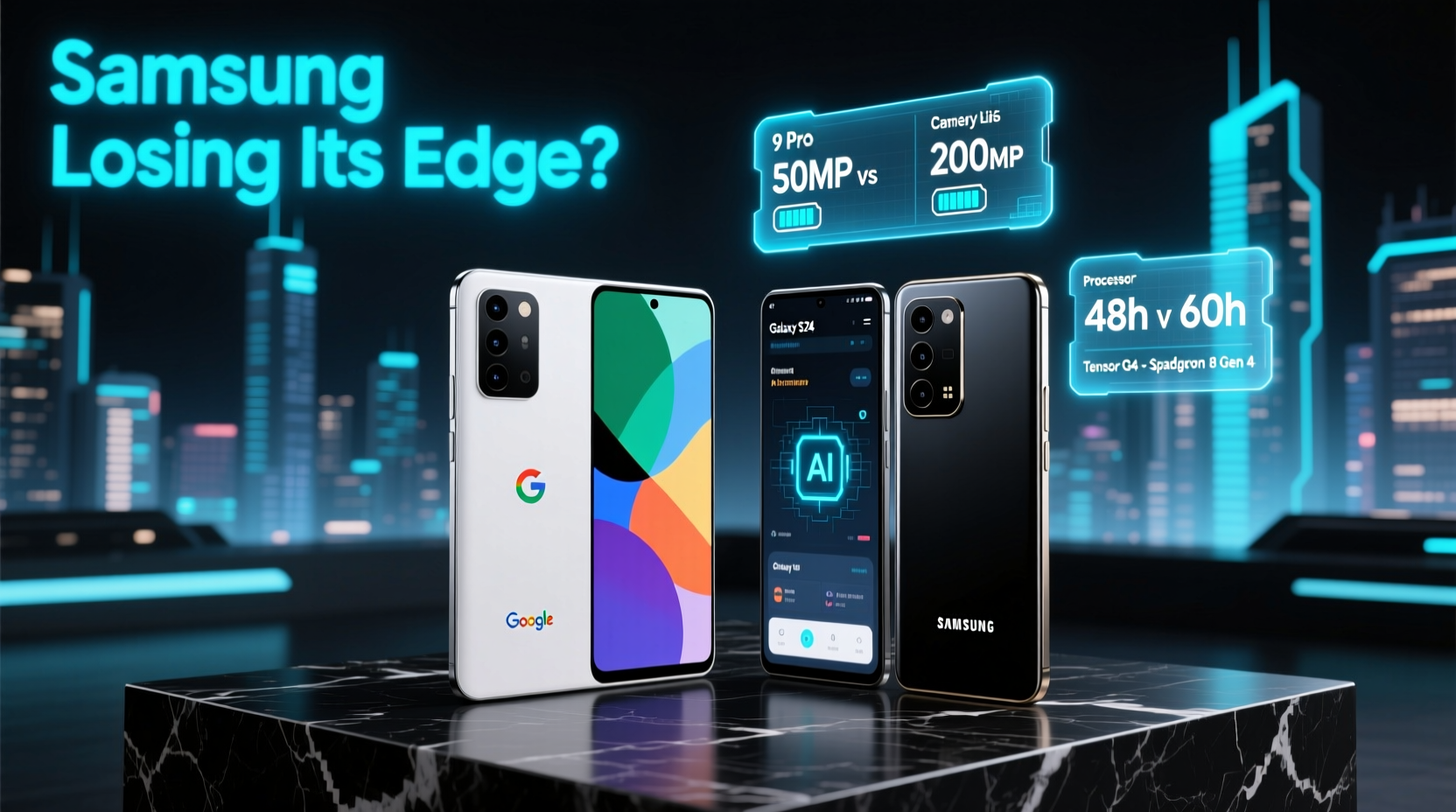
Samsung has long relied on advanced multi-lens setups with high-resolution sensors and versatile zoom capabilities. The Galaxy S24 Ultra, for instance, packs a 200MP main sensor, 10x optical zoom, and laser autofocus—hardware that still impresses engineers and reviewers alike.
Yet, in real-world conditions, the Pixel 9 Pro consistently matches or exceeds Samsung’s output through superior computational photography. Google’s HDR+ algorithms, Night Sight, and Real Tone enhancements deliver more natural skin tones, balanced exposures, and sharper detail in low light—all without relying on bulky periscope lenses.
While Samsung has improved its processing with the Galaxy AI suite, it still struggles with oversharpening and inconsistent color grading across lenses. Meanwhile, Google’s unified camera tuning ensures a consistent look across all focal lengths, making the Pixel feel more cohesive despite fewer physical lenses.
AI Integration: Who’s Leading the Intelligence Race?
If 2023 was the year of AI hype, 2025 is when it became practical. Both phones feature on-device large language models (LLMs), voice transcription, photo editing tools, and predictive actions—but their implementation differs significantly.
The Pixel 9 Pro runs on Google’s Tensor G4 chip, purpose-built for AI workloads. Features like Circle to Search, Audio Magic Eraser, and Best Take are deeply embedded into the OS, requiring no cloud dependency. These tools function instantly and intuitively, often anticipating user needs before a tap is made.
Samsung’s Galaxy AI, powered by Qualcomm’s Snapdragon 8 Gen 3 (with some Exynos variants), offers similar functions—Live Translate, Note Assist, Generative Edit—but many require internet connectivity or lag behind in responsiveness. While impressive on paper, Galaxy AI feels more like an add-on than a core experience.
“Google doesn’t just use AI—it rethinks the interface around it. Samsung adapts AI to fit legacy workflows.” — Dr. Lena Park, Mobile UX Researcher at MIT Media Lab
Software Experience and Longevity
One area where Google has decisively pulled ahead is software longevity. The Pixel 9 Pro promises seven years of OS and security updates—a commitment unmatched in the industry. This means users can expect support until 2032, covering major Android versions and critical patches.
In contrast, the Galaxy S24 series also offers seven years of updates, marking a significant shift for Samsung. Previously limited to four, this extension appears to be a direct response to Google’s lead. However, early data suggests Pixel devices receive updates faster and with fewer carrier delays.
Android 15, running on both devices, highlights these differences. On the Pixel 9 Pro, new privacy controls, AI-powered summaries, and adaptive battery learning roll out immediately. On the S24, the same features arrive months later under Samsung’s One UI 7.0 skin, often buried beneath layers of customization.
| Feature | Pixel 9 Pro | Galaxy S24 |
|---|---|---|
| OS Update Frequency | Monthly, direct from Google | Quarterly, via carrier approval |
| Total Support Period | 7 years (until 2032) | 7 years (until 2031) |
| Stock Android? | Yes | No (One UI overlay) |
| AI Feature Rollout Speed | Immediate | Delayed by 2–6 weeks |
Ecosystem Synergy: Beyond the Phone
The true test of modern smartphone leadership isn’t the device itself—it’s how well it connects to everything else. Google has aggressively expanded its ecosystem in 2025, integrating the Pixel 9 Pro with Wear OS 5 smartwatches, Pixel Buds Pro, Chromebooks, and even third-party smart home devices via Matter.
New features like Fast Pair for Cars, Seamless Call Handoff, and Cross-Device Copy & Paste make switching between devices effortless. When you receive a call on your Pixel, it automatically routes to your laptop if nearby. When you snap a photo, it appears instantly in your Docs or Gmail drafts.
Samsung counters with its own ecosystem—Galaxy Watch, Buds, Tab, and SmartThings—but integration remains fragmented. While improvements have been made, switching between devices often requires manual confirmation or app launches. Google’s ecosystem “just works” in ways Samsung’s still strives to achieve.
Mini Case Study: Remote Work Efficiency
Consider Maria, a freelance designer based in Lisbon. She uses a Pixel 9 Pro, Pixel Tablet, and Chromebook daily. During client calls, her phone transcribes audio in real time using Live Caption. After the meeting, she uses Note Assist to generate action items and shares them directly to Google Drive—all without touching her keyboard.
Her colleague James, using a Galaxy S24 and Galaxy Tab S9, performs similar tasks but must open multiple apps, wait for sync delays, and manually export files. Over a week, Maria gains nearly two hours in productivity due to smoother transitions and faster AI tools.
Battery Life and Performance: A Closer Look
Under the hood, the Galaxy S24 holds an advantage in raw performance. The Snapdragon 8 Gen 3 delivers top-tier CPU and GPU speeds, ideal for gaming and multitasking. Its 5,000mAh battery typically lasts a full day under heavy use.
The Pixel 9 Pro, powered by Tensor G4, trades peak power for efficiency and AI optimization. While Geekbench scores are lower, real-world performance is smooth, thanks to aggressive background management and machine learning-based resource allocation. Battery life averages 10–12 hours of screen-on time—slightly behind Samsung but sufficient for most users.
Where the Pixel shines is thermal management. Unlike the S24, which can throttle during extended video recording or gaming sessions, the Pixel maintains consistent performance with minimal heat buildup. This reliability makes it a better choice for content creators and travelers.
Checklist: Choosing Between Pixel 9 Pro and Galaxy S24
- Choose the Pixel 9 Pro if:
- You prioritize AI-powered features and instant software updates.
- You value clean, stock Android with minimal bloatware.
- You’re invested in Google services (Gmail, Drive, YouTube, etc.).
- You want the best point-and-shoot camera experience.
- Long-term update support is non-negotiable.
- Choose the Galaxy S24 if:
- You need superior zoom and video capabilities (especially S24 Ultra).
- You prefer customizable interfaces and deeper hardware control.
- You already own Samsung wearables or tablets.
- You play mobile games or run demanding productivity apps.
- You want the brightest, highest-resolution display available.
Frequently Asked Questions
Is the Pixel 9 Pro better than the S24 for photography?
In most everyday scenarios—portrait shots, night photos, dynamic lighting—the Pixel 9 Pro delivers more consistent and natural results. However, the S24 Ultra excels in 10x+ zoom and 8K video recording, making it better suited for professional content creation.
Can Samsung catch up to Google in AI?
Samsung is investing heavily in AI, particularly with partnerships in Korea and Europe. However, Google’s decade-long head start in machine learning and on-device inference gives it a structural advantage. Samsung may close the gap in specific areas, but overall AI integration remains stronger on Pixel.
Will Samsung lose market share in 2025?
Not entirely. Samsung still dominates in regions like Southeast Asia, Latin America, and parts of Europe due to strong carrier relationships and brand loyalty. But in North America and among tech-savvy users, Pixel’s momentum is undeniable—and growing.
Conclusion: A Shifting Balance of Power
Samsung hasn’t lost its edge overnight. The Galaxy S24 remains one of the most capable Android phones ever made—beautifully designed, powerful, and packed with features. But Google’s strategic focus on AI, software cohesion, and ecosystem depth has fundamentally changed the game.
In 2025, the question isn’t just about specs or cameras. It’s about intelligence, longevity, and seamless experience. And in those areas, the Pixel 9 Pro isn’t just competing—it’s leading.
For consumers, this shift means better choices and faster innovation. Whether you side with Samsung’s hardware mastery or Google’s software vision, one thing is clear: the era of unquestioned Samsung dominance is over. The future of Android is now a true rivalry.




 浙公网安备
33010002000092号
浙公网安备
33010002000092号 浙B2-20120091-4
Comments
No comments yet. Why don't you start the discussion?