
For years, switching from iPhone to Android meant sacrificing ecosystem cohesion, long-term software support, or camera consistency. But with the Pixel 9 Pro XL, Google has closed the gap in ways that make even loyal Apple users pause. The iPhone 14 Pro remains a benchmark for reliability and build quality, but the Pixel 9 Pro XL brings AI-driven innovation, aggressive pricing, and pure Android flexibility. For the first time, the question isn’t just about preference—it’s about whether Apple still holds a meaningful edge.
Performance and Hardware: Power vs Polish
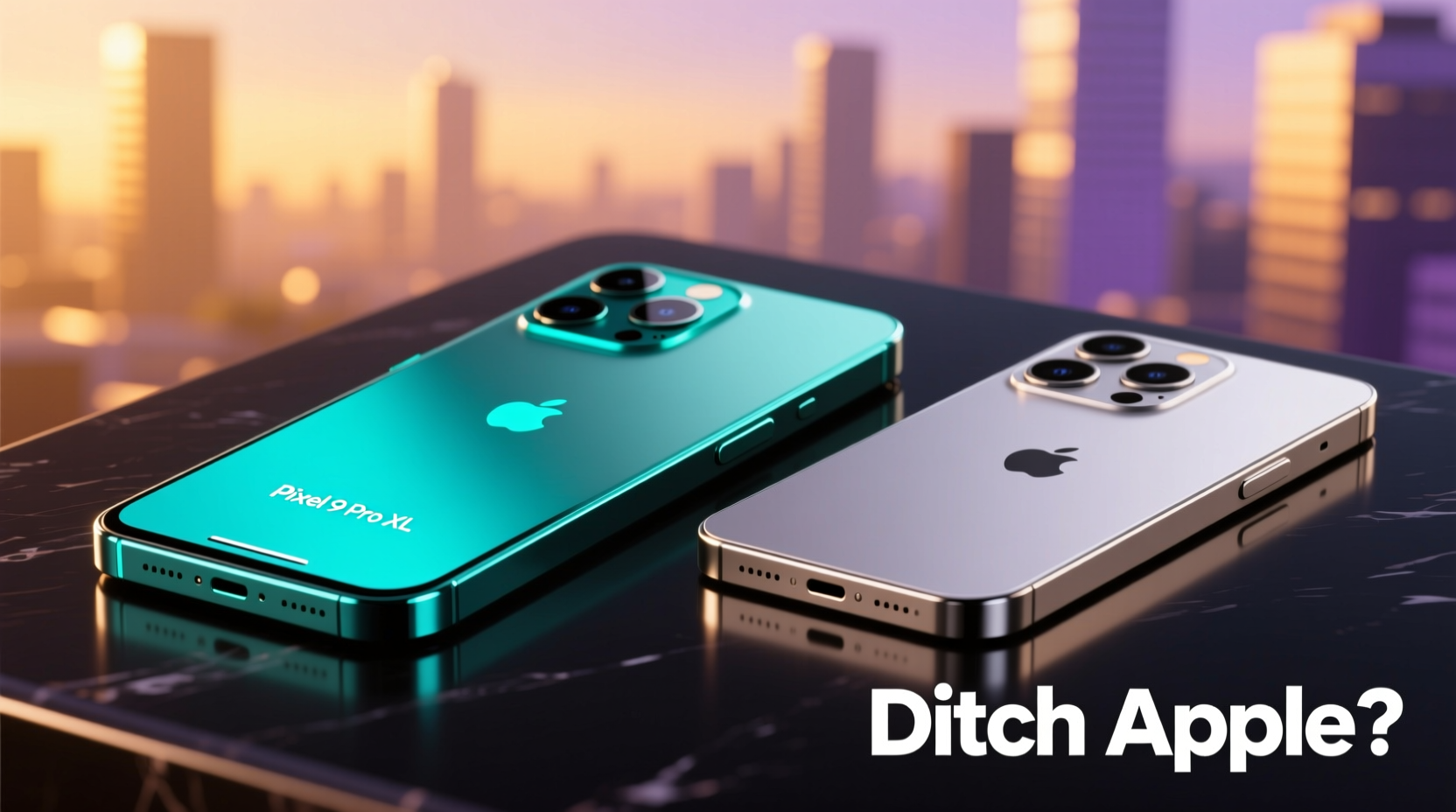
The iPhone 14 Pro runs on Apple’s A16 Bionic chip, a powerhouse built on a 4nm process. It delivers lightning-fast app launches, seamless multitasking, and unmatched efficiency in iOS. Even two years after release, it handles demanding games and professional workflows without breaking a sweat. Its 6-core CPU and 5-core GPU remain competitive against most Android flagships.
In contrast, the Pixel 9 Pro XL introduces Google’s next-generation Tensor G4 chip, optimized specifically for machine learning and AI tasks. While raw benchmarks may still favor Apple’s silicon, the G4 excels in real-world intelligence—real-time call screening, voice-to-text translation, and photo enhancement happen locally, without cloud dependency. Paired with 12GB of RAM and faster UFS 4.0 storage, the Pixel delivers a fluid experience, especially when leveraging Google’s AI suite.
Build-wise, both phones feel premium. The iPhone 14 Pro uses surgical-grade stainless steel and Ceramic Shield glass, offering durability and a familiar heft. The Pixel 9 Pro XL opts for recycled aluminum and Gorilla Glass Victus 2, striking a balance between sustainability and resilience. The Pixel is slightly lighter and more ergonomic, though Apple’s design language continues to inspire minimalism and longevity.
“Google’s hardware used to play catch-up. Now, they’re defining what an intelligent phone should do.” — David Liu, Senior Mobile Analyst at TechPulse Insights
Camera Comparison: Computational Photography vs Consistency
The iPhone 14 Pro’s triple-camera system (48MP main, 12MP ultra-wide, 12MP telephoto) is known for accurate color science, excellent dynamic range, and reliable low-light performance. Apple’s Photonic Engine and Smart HDR 4 produce natural-looking photos ideal for print or social media without editing. The 2x optical zoom via sensor cropping is clever, offering lossless portrait framing.
The Pixel 9 Pro XL counters with a refined triple setup: a 50MP main sensor, 48MP ultra-wide, and a new 48MP telephoto with 5x optical zoom. Google’s Magic Eraser, Photo Unblur, and Real Tone have become industry standards. With the latest AI models running directly on-device, the Pixel now reconstructs underexposed shadows or removes motion blur after the shot is taken—a feature no iPhone can match.
In head-to-head daylight shots, both deliver stunning results. The iPhone leans toward realism; the Pixel enhances vibrancy and sharpness by default. In low light, the Pixel’s Night Sight mode often pulls ahead, capturing more detail in near-dark environments. Video remains Apple’s stronghold—Cinematic Mode, ProRes recording, and superior stabilization give it an edge for creators.
Software Experience: Stock Android vs iOS Ecosystem Lock-In
iOS offers stability, security, and uniformity. Updates arrive simultaneously across devices, and Apple promises five years of OS support. Features like Face ID, iMessage encryption, and Handoff create a seamless loop between iPhone, iPad, and Mac. However, customization is limited. You can’t change default apps deeply, modify the home screen layout beyond widgets, or sideload apps without workarounds.
Android 15 on the Pixel 9 Pro XL is clean, fast, and highly customizable. With Material You, you can theme the entire interface based on your wallpaper. Google Assistant integrates deeper than Siri ever has, supporting multi-step voice commands and contextual awareness. The Pixel also supports satellite SOS, Wi-Fi calling enhancements, and Gemini integration for AI-powered summarization and image generation.
Crucially, Google now guarantees seven years of OS and security updates for Pixel 9 series devices—surpassing Apple’s commitment. This longevity reduces e-waste and increases resale value, making the Pixel not just smarter today, but more future-proof.
Detailed Feature Comparison
| Feature | Pixel 9 Pro XL | iPhone 14 Pro |
|---|---|---|
| Processor | Google Tensor G4 | Apple A16 Bionic |
| RAM | 12GB | 6GB |
| Storage Options | 128GB, 256GB, 512GB | 128GB, 256GB, 512GB, 1TB |
| Rear Cameras | 50MP main, 48MP ultra-wide, 48MP telephoto (5x) | 48MP main, 12MP ultra-wide, 12MP telephoto (3x) |
| Software Update Guarantee | 7 years (OS + security) | ~5 years (estimated) |
| Battery Capacity | 5000mAh | 3200mAh |
| Charging | 30W wired, 23W wireless | 20W wired, 15W MagSafe |
| Starting Price | $999 | $999 |
Real-World Switch: A Designer’s Journey
Jamal Reed, a freelance UI/UX designer in Portland, used iPhones exclusively for over a decade. His switch to the Pixel 9 Pro XL wasn’t planned—it began when his iPhone 14 Pro battery degraded past 78%, and Apple quoted $89 for a replacement. Curious about Android’s evolution, he bought the Pixel using a carrier trade-in deal.
Within days, he was hooked. “I didn’t realize how much I missed having folders inside folders, or double-tap-to-sleep,” he said. “But the game-changer was Call Assist. I run client calls all day. Having Google automatically take notes and summarize action items saved me three hours a week.” He migrated his iCloud contacts and photos via Google’s Move to Android tool and now uses Gmail with IMAP sync. “It took a weekend to adjust. Now I can’t imagine going back.”
Checklist: Making the Switch from iPhone to Pixel
- Back up your iPhone to iCloud and ensure Find My iPhone is off
- Download the “Move to Android” app on your iPhone before transferring
- Transfer messages, contacts, photos, and calendars via direct Wi-Fi connection
- Set up two-factor authentication for Google Account and enable Titan Security Key
- Install essential apps: Signal, Adobe Creative Cloud, Procreate Pocket (if applicable)
- Customize your Pixel: Apply Material You themes, set up Always-On Display, and enable Direct My Calls
- Explore Gemini Advanced for productivity automation
Frequently Asked Questions
Can I use AirPods with the Pixel 9 Pro XL?
Yes, but without full feature parity. AirPods will connect via Bluetooth and play audio, but spatial audio, automatic switching, and battery pop-ups won’t work. For best results, consider Pixel Buds Pro or other high-end Bluetooth earbuds with LDAC support.
Is iMessage a dealbreaker?
It can be. If your circle relies heavily on iMessage effects, read receipts, and payment features, switching may feel isolating. However, Google Messages with RCS now supports typing indicators, high-res media, and end-to-end encryption across Android devices—bridging much of the gap.
Does the Pixel 9 Pro XL support USB-C accessories like monitors?
Yes. The Pixel 9 Pro XL supports USB-PD charging and DisplayPort Alt Mode. You can connect to external monitors, Ethernet adapters, and DACs using compatible USB-C hubs—something the iPhone 14 Pro lacks despite its USB-C port.
Conclusion: Time to Reconsider Loyalty?
The iPhone 14 Pro is still an exceptional device—refined, dependable, and deeply integrated. But the Pixel 9 Pro XL isn’t just competitive; it redefines what a smartphone can do through AI, openness, and long-term support. For users tired of paying premiums for incremental upgrades, or those craving control over their digital experience, the answer is clear: yes, it might finally be time to ditch Apple.
Switching ecosystems isn’t trivial, but it’s no longer daunting. With seamless data migration, robust privacy controls, and features that anticipate your needs, the Pixel 9 Pro XL doesn’t just match the iPhone—it challenges its philosophy. If innovation matters more than inertia, the future is on Android.




 浙公网安备
33010002000092号
浙公网安备
33010002000092号 浙B2-20120091-4
Comments
No comments yet. Why don't you start the discussion?