
The battle for supremacy in the Android flagship space has long been dominated by Samsung’s Galaxy S series. For years, the Galaxy S Ultra models have set the benchmark—powerful hardware, premium build, and a versatile S Pen. But with Google’s Pixel 9 Pro XL arriving as a bold evolution of its AI-first philosophy, the landscape may be shifting. This isn’t just another spec sheet showdown; it’s a clash of philosophies. One rooted in refinement and versatility, the other in intelligence and simplicity. So, is Samsung finally losing its edge?
Design and Build: Premium vs Purposeful
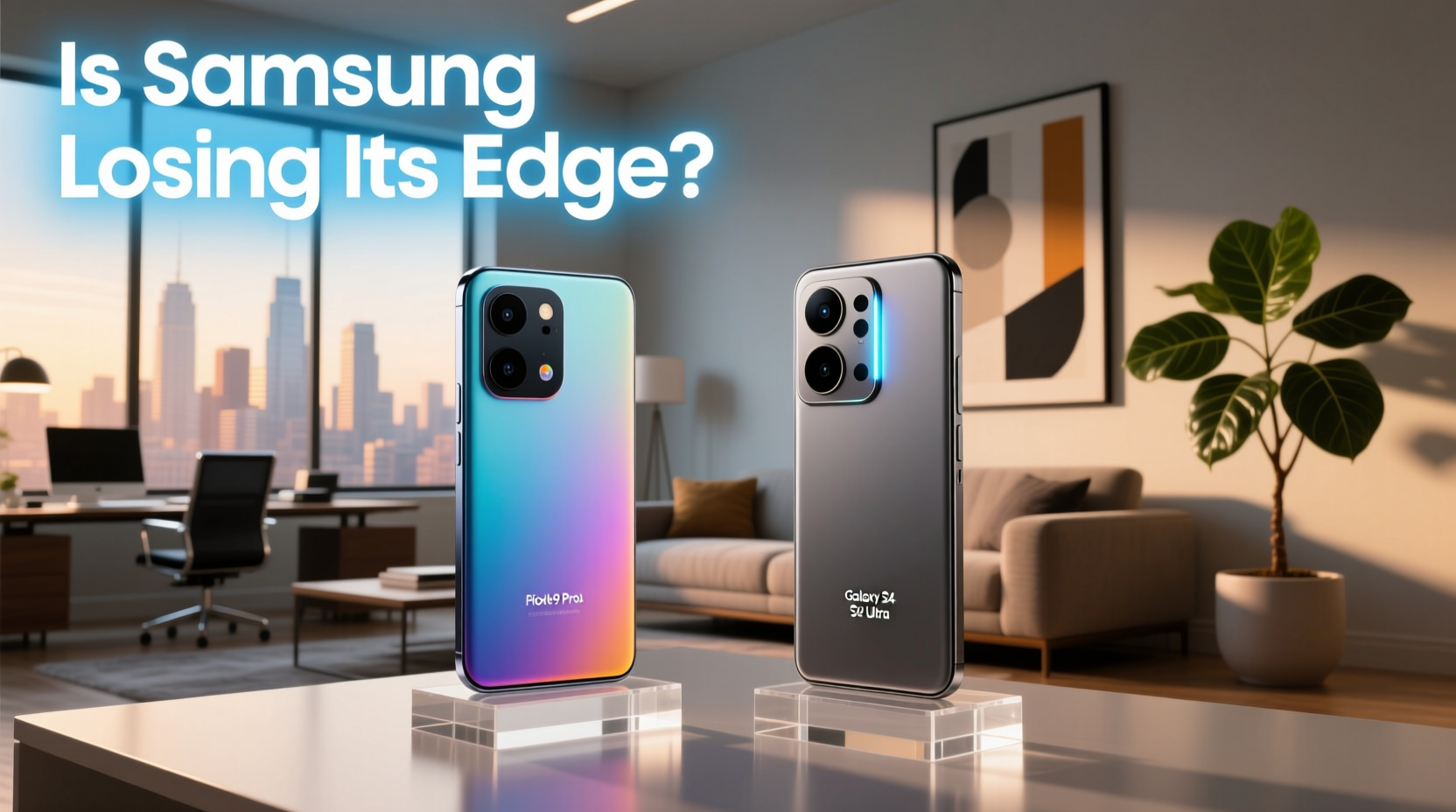
Samsung has always led with design flair. The Galaxy S24 Ultra continues this tradition with its titanium frame, flat display, and seamless integration of the S Pen. It feels like a tool built for power users—engineers, creatives, executives—who want both elegance and utility. At 232 grams, it's not light, but the weight is justified by its dense feature set.
In contrast, the Pixel 9 Pro XL opts for a more understated approach. Its aluminum frame and matte glass back emphasize durability without shouting luxury. While it lacks the S Pen, Google focused on ergonomics—slightly smaller footprint despite a similar screen size, making one-handed use more comfortable. The dual-tone finish also gives it a distinct identity in a sea of monochrome flagships.
Display and Performance: Brightness vs Intelligence
The S24 Ultra boasts a 6.8-inch QHD+ Dynamic AMOLED 2X display with a peak brightness of 2,600 nits—the brightest on any smartphone today. Whether under direct sunlight or in HDR video playback, it delivers stunning clarity and color accuracy. Paired with the Snapdragon 8 Gen 3 (or Exynos in some regions), it’s a performance beast capable of handling anything from 4K video editing to high-frame-rate gaming.
The Pixel 9 Pro XL uses a slightly smaller 6.7-inch LTPO OLED at FHD+ resolution, peaking at 2,400 nits. While technically behind on paper, the difference is negligible in real-world use. What sets it apart is Google’s Tensor G4 chip, optimized not for raw speed but for AI-driven tasks. On-device speech recognition, real-time translation, and generative photo editing run seamlessly because the hardware and software are designed in tandem.
“Performance isn’t just about gigahertz anymore. It’s about what the phone *understands* and how quickly it acts.” — Dr. Lena Park, Senior Analyst at Mobile Futures Lab
Samsung still leads in pure processing muscle, but Google is redefining what performance means in an AI-centric world.
Camera Comparison: Versatility vs Computational Mastery
The S24 Ultra comes equipped with a quad-camera array: 200MP main sensor, 12MP ultrawide, and dual telephoto lenses (3x and 5x optical zoom). With up to 100x Space Zoom, it dominates in long-range photography. Samsung’s improved color science and low-light processing make it a reliable all-rounder, especially for action shots and landscapes.
The Pixel 9 Pro XL takes a different path. It sticks with a triple-lens setup: 50MP main, 48MP ultrawide, and 48MP telephoto (5x optical). No 200MP sensor, no 10x periscope—but Google’s computational photography closes the gap. Features like Magic Editor, Best Take, and Audio Erase are now mature, allowing users to edit photos post-capture with astonishing precision. Night Sight and Portrait Mode remain class-leading, producing natural skin tones and depth effects that feel less processed than Samsung’s AI-enhanced shots.
| Feature | Pixel 9 Pro XL | S24 Ultra |
|---|---|---|
| Main Sensor | 50MP, f/1.68 | 200MP, f/1.7 |
| Telephoto Zoom | 5x optical, up to 30x super-res | 3x & 5x optical, up to 100x digital |
| AI Photo Editing | On-device Magic Editor, Best Take | Generative Edit (cloud-based) |
| Video Recording | 4K/60fps, stabilized, enhanced audio | 8K/30fps, Super HDR, Director’s View |
| Low-Light Performance | Best-in-class Night Sight | Improved but still slightly noisy |
If you're a mobile photographer who values creative control and natural-looking results, the Pixel wins. If you need extreme zoom or shoot high-resolution video frequently, the S24 Ultra holds its ground.
Software and AI: Stock Simplicity vs Feature-Rich Customization
One area where Google clearly pulls ahead is software experience. The Pixel 9 Pro XL runs near-stock Android with seven years of OS and security updates—a first for any Android device. It introduces new AI features like “Hold for Me” (automatically waits on customer service calls) and “Summarize in Recorder,” which transcribes and summarizes voice memos instantly. These tools solve real problems without requiring user input.
Samsung’s One UI 6.1, while powerful, can feel bloated. It offers extensive customization, DeX support, and multi-window workflows, appealing to power users. However, many AI features, such as Generative Edit in Gallery, rely on cloud processing, raising privacy concerns and limiting offline usability. Samsung promises seven years of updates too, but historically, Pixel devices receive faster rollouts and cleaner update paths.
Real-World Example: The Travel Photographer’s Dilemma
Consider Maria, a freelance travel photographer who recently switched from the S23 Ultra to the Pixel 9 Pro XL. She initially worried about losing the 10x zoom and S Pen sketching capabilities. But after three months in Southeast Asia, she found herself relying less on zoom and more on quick edits. Using Magic Editor, she removed photobombers from temple shots, adjusted lighting across entire panoramas, and summarized interview recordings in seconds—all on the device, without Wi-Fi.
“I used to carry a small laptop for basic edits,” she said. “Now my phone does 80% of that work. The S24 Ultra might take sharper distant shots, but the Pixel helps me publish faster and smarter.”
Battery Life and Charging: Efficiency Over Speed
The S24 Ultra packs a 5,000mAh battery with 45W wired charging and 15W wireless. In heavy use—GPS navigation, 5G streaming, multitasking—it lasts a full day, sometimes stretching into a second with adaptive battery modes.
The Pixel 9 Pro XL has a slightly smaller 5,050mAh battery but benefits from Tensor G4’s efficiency improvements. Despite only 30W charging, it often matches or exceeds the S24 Ultra in endurance due to aggressive background app management and display optimization. Google claims up to 72 hours of battery saver mode, which includes AI-powered call screening and reduced sync frequency.
While Samsung charges faster, Google maximizes longevity through smarter resource allocation.
Frequently Asked Questions
Is the S Pen still a game-changer?
Absolutely—for specific users. If you annotate documents, draw, or take handwritten notes regularly, the S24 Ultra’s S Pen offers unmatched functionality. But for casual users, it adds bulk without daily utility.
Does the Pixel 9 Pro XL overheat during AI tasks?
Minimal thermal throttling has been reported. Thanks to Google’s focus on efficient neural processing, even intensive tasks like real-time transcription or photo generation don’t cause sustained heat buildup, unlike earlier Tensor chips.
Which phone will last longer?
Both promise seven years of updates, but Pixels historically maintain smoother long-term performance due to lighter software and tighter hardware-software integration. Real-world data suggests Pixel users experience fewer slowdowns after two years compared to Samsung flagships.
Final Verdict: Is Samsung Losing Its Edge?
Samsung hasn’t lost its technical prowess. The S24 Ultra remains a marvel of engineering—brighter screen, faster charging, superior zoom, and unmatched productivity tools. But “edge” isn’t just about specs. It’s about direction, innovation, and relevance.
Google, once the underdog, is now shaping the future of smartphones around AI that works quietly and effectively. The Pixel 9 Pro XL doesn’t try to do everything—it does fewer things better, with intelligence woven into the fabric of the experience. For the average user, that’s more valuable than a 200MP sensor or 100x zoom they’ll rarely use.
Samsung is still winning on paper. But in practice, Google is winning the user experience race. And in tech, perception—and usability—often matters more than benchmarks.




 浙公网安备
33010002000092号
浙公网安备
33010002000092号 浙B2-20120091-4
Comments
No comments yet. Why don't you start the discussion?