
The smartphone landscape is shifting. For years, Samsung has dominated the high-end Android market with its Galaxy S series—powerful, polished, and reliable. But Google’s entry into the foldable space with the Pixel Fold has disrupted the status quo. Suddenly, consumers face a new question: should they stick with the proven excellence of the Samsung Galaxy S23 Ultra, or embrace what might be the future of mobile computing—the Pixel Fold?
This isn’t just about specs or camera quality. It’s about philosophy: evolution versus revolution. The S23 Ultra represents the pinnacle of traditional flagship design, while the Pixel Fold signals a bold leap toward adaptive, multi-tasking form factors. So which path makes more sense in 2024 and beyond?
Design and Build: Traditional Power vs. Futuristic Flexibility
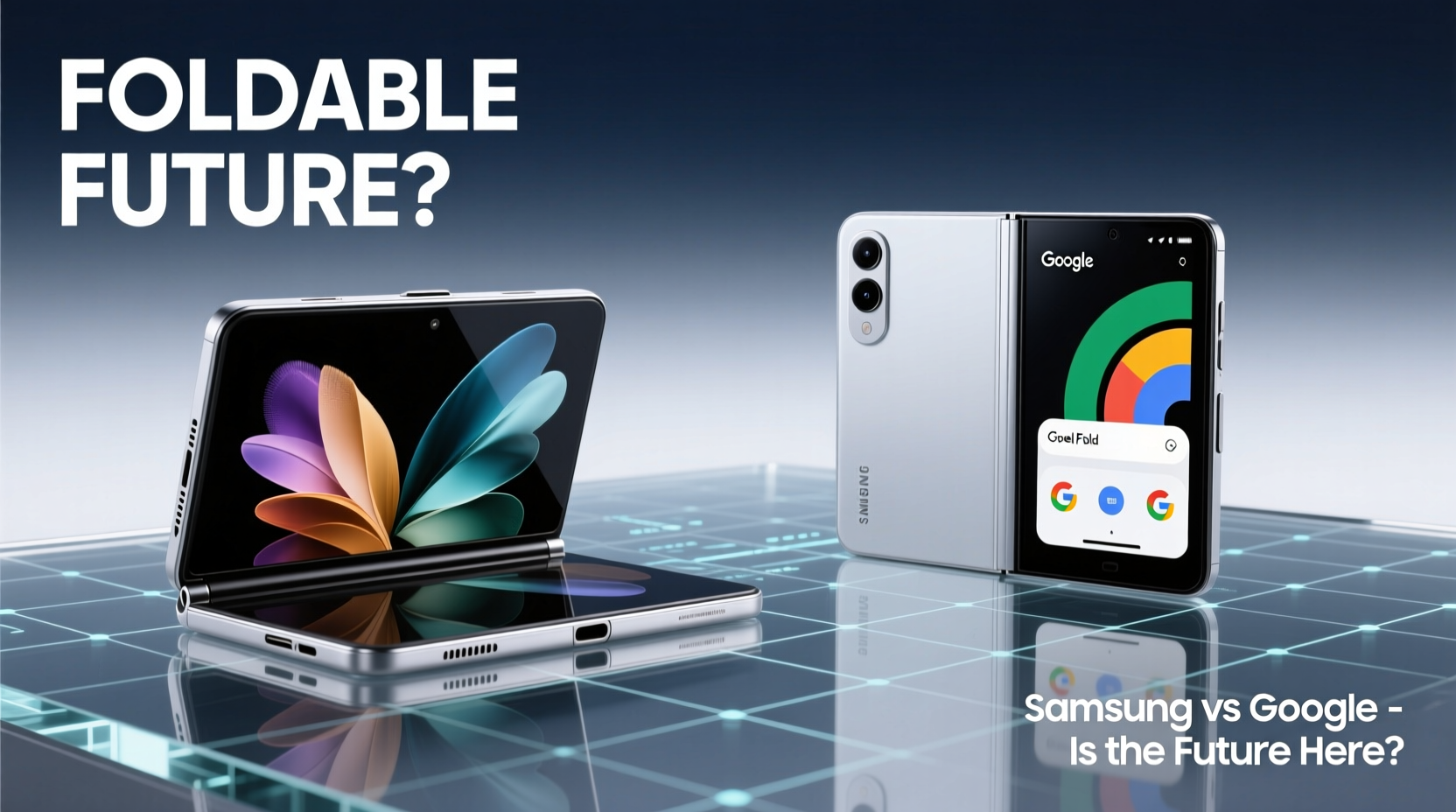
The Galaxy S23 Ultra exudes confidence in its familiar silhouette. With its flat edges, premium glass-and-metal construction, and IP68 rating, it feels like a device built for longevity. At 234g, it’s heavy but substantial—a phone that commands attention on a desk or in hand. Its 6.8-inch Dynamic AMOLED display delivers vibrant colors and excellent outdoor visibility, making it ideal for media consumption and productivity.
In contrast, the Pixel Fold folds shut to a compact 5.8-inch cover screen and opens to a spacious 7.6-inch inner display. When closed, it’s pocketable; when open, it transforms into a mini tablet. The hinge mechanism is refined, and Google has made strides in durability, but it still can’t match Samsung’s IP68 rating. The folded thickness (12.7mm) and weight (285g) make it less convenient than the S23 Ultra for one-handed use.
Performance and Software: Stock Android vs. Feature-Rich Customization
Under the hood, both devices are powered by the Snapdragon 8 Gen 2, ensuring top-tier performance. Apps launch instantly, multitasking is smooth, and gaming is flawless on both. However, real-world experience diverges due to software.
Samsung’s One UI 6, based on Android 14, offers a wealth of features: DeX for desktop-like productivity, split-screen multitasking, advanced camera controls, and robust customization. It’s mature, feature-complete, and optimized for large screens. The S Pen integration further sets the S23 Ultra apart for note-takers and creatives.
The Pixel Fold runs near-stock Android with Google’s Material You design language. It’s clean, fast, and receives updates directly from Google—guaranteed for three OS upgrades and five years of security patches. The foldable-specific optimizations, like taskbar support and app continuity between outer and inner screens, show promise. But third-party app support remains inconsistent. Some apps still don’t adapt well when unfolded, creating awkward scaling issues.
“Foldables aren’t just bigger phones—they’re a new category. Success depends not just on hardware, but on how well software reimagines interaction.” — Dr. Lena Torres, Mobile UX Researcher at Stanford HCI Group
Camera Comparison: Versatility vs. Computational Excellence
The S23 Ultra’s quad-camera system includes a 200MP main sensor, dual telephoto lenses (3x and 10x), and a 12MP ultra-wide. This setup excels in zoom photography, low-light capture, and dynamic range. Samsung’s AI-powered processing enhances detail without over-sharpening, making it a favorite among enthusiasts.
The Pixel Fold takes a different approach. Instead of chasing megapixels, it leverages Google’s computational photography: HDR+, Night Sight, Magic Eraser, and Real Tone. The results are consistently balanced, with accurate skin tones and natural lighting. The triple rear system (48MP main, 10.8MP ultrawide, 10.8MP telephoto) produces excellent photos, especially in challenging light. However, the lack of a periscope lens limits long-range zoom compared to the S23 Ultra.
For videographers, the S23 Ultra supports 8K recording and advanced stabilization. The Pixel Fold matches it in 4K but lacks some pro-grade tools. Still, Google’s audio focusing and cinematic pans add creative flair.
Durability and Long-Term Value: Can Foldables Compete?
This is where the debate gets real. The S23 Ultra is built to last. Gorilla Glass Victus 2, aluminum frame, water resistance—all signal a device meant to endure daily wear for years. Many users report their S-series phones lasting four years or more with minimal degradation.
Foldables, including the Pixel Fold, remain fragile by comparison. Despite improvements, the crease in the inner display is visible and tactile. Dust ingress remains a risk. Google uses Corning’s latest foldable glass, but it’s not as scratch-resistant as traditional hardened glass. Most experts recommend treating foldables with extra care—and replacing them sooner.
Yet, Google offers a compelling trade-in program and longer update commitment than Samsung (which provides four OS upgrades). Over time, this could offset the higher initial cost ($1,799 vs. $1,199).
- Who Should Choose the S23 Ultra?
- Professionals who rely on consistent performance, photographers needing optical zoom, and users who prefer a durable, no-compromise flagship.
- Who Should Go for the Pixel Fold?
- Early adopters, multitaskers, digital note-takers, and those excited by new interfaces. Ideal for users who spend hours on email, docs, or media and want a hybrid phone-tablet experience.
Real-World Example: How Two Users Chose Differently
Consider Mark and Priya, both tech-savvy professionals in their mid-30s.
Mark, a field engineer, travels weekly. He needs a rugged phone with long battery life and reliable connectivity. He chose the S23 Ultra for its durability, S Pen for sketching diagrams, and 5,000mAh battery that lasts two days. “I drop my phone constantly,” he says. “The Pixel Fold felt too delicate.”
Priya, a content strategist, works remotely and juggles multiple apps. She switched to the Pixel Fold after testing both. “I run Slack, Docs, and YouTube side-by-side. Folding it shut feels like closing a laptop—it gives me closure.” She accepts the shorter lifespan in exchange for productivity gains.
Comparison Table: Key Specs at a Glance
| Feature | Pixel Fold | S23 Ultra |
|---|---|---|
| Display (Main) | 7.6\" Foldable OLED | 6.8\" Dynamic AMOLED |
| Cover Screen | 5.8\" | N/A |
| Cameras | 48MP + 10.8MP + 10.8MP | 200MP + 12MP + 10MP + 10MP |
| Battery | 4,821mAh | 5,000mAh |
| Water Resistance | IPX8 (no dust rating) | IP68 |
| OS Updates | 3 major versions | 4 major versions |
| Price (Launch) | $1,799 | $1,199 |
| S Pen Support | No | Yes |
Frequently Asked Questions
Is the Pixel Fold worth the extra cost over the S23 Ultra?
Only if you value the foldable form factor and multitasking benefits. For most users, the S23 Ultra offers better value. But if you see yourself using the unfolded screen daily—for reading, editing, or drawing—the Pixel Fold’s utility may justify the price.
Do foldables last as long as regular phones?
Currently, no. While hinge mechanisms have improved, foldable displays remain more prone to wear. Most manufacturers expect a 3-year lifespan under careful use, compared to 4–5 years for traditional flagships.
Can the Pixel Fold replace a tablet?
In many cases, yes. With its 7.6-inch screen and multitasking features, it handles web browsing, video calls, and document work efficiently. However, it lacks the full app optimization of iPads or Samsung’s larger tablets.
Final Verdict: Evolution or Revolution?
The S23 Ultra is the safer choice. It’s powerful, durable, and packed with features refined over generations. If you want a phone that just works—without compromises—you’ll be satisfied for years.
The Pixel Fold is riskier but more visionary. It doesn’t always work perfectly, but when it does, it feels like the future. Google is investing heavily in foldable software, and each update improves the experience. Choosing it isn’t just buying a phone—it’s voting for a new direction in mobile design.




 浙公网安备
33010002000092号
浙公网安备
33010002000092号 浙B2-20120091-4
Comments
No comments yet. Why don't you start the discussion?