
The smartphone market has reached a fascinating crossroads. Flagships are more powerful than ever, but innovation has plateaued—until foldables entered the scene. Google’s Pixel Fold and Samsung’s Galaxy S23 Ultra represent two very different philosophies in high-end mobile design. One embraces cutting-edge form with foldable flexibility; the other doubles down on proven power and premium build. The question isn’t just about specs—it’s whether the novelty of folding justifies the steep price gap.
At nearly $1,800 for the Pixel Fold and around $1,200 for the S23 Ultra, the decision becomes even more critical. Is the Pixel Fold’s transformative screen experience worth an extra $600? Or does the S23 Ultra’s reliability, superior camera, and longer battery life make it the smarter long-term investment?
Design and Build: Innovation vs Refinement
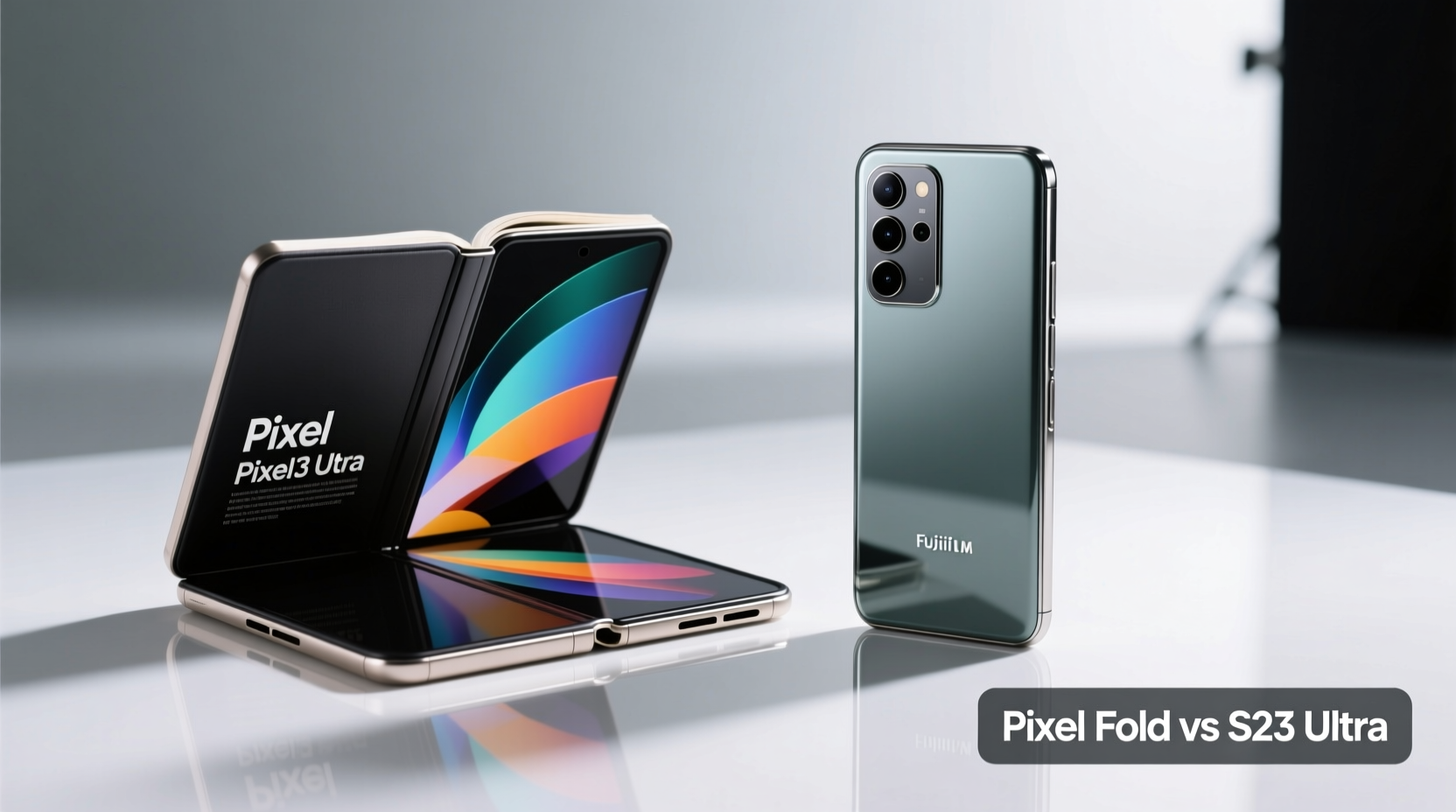
The most immediate difference lies in design language. The Pixel Fold flips the script with a 7.6-inch internal foldable OLED display and a 5.8-inch external cover screen, both boasting 120Hz refresh rates. When unfolded, it delivers a near-tablet experience, ideal for multitasking, media consumption, or document editing. The hinge mechanism feels tight, and the device closes flush—a significant improvement over earlier generations of foldables.
In contrast, the S23 Ultra opts for a traditional slab design with a 6.8-inch Dynamic AMOLED display. It’s larger than most non-foldable phones but nowhere near as expansive when opened. However, its Gorilla Glass Victus 2 and aluminum frame offer better drop resistance and a more durable daily carry experience.
Performance and Software Experience
Both devices are powered by the Snapdragon 8 Gen 2, ensuring top-tier processing speed and smooth multitasking. Benchmarks show nearly identical CPU and GPU performance. Where they diverge is in software optimization.
The Pixel Fold runs stock Android with exclusive foldable features like app continuity (apps seamlessly transition from outer to inner screen) and split-screen defaults. Google has worked hard to ensure major apps like Gmail, YouTube, and Google Maps take full advantage of the larger display.
The S23 Ultra runs Samsung’s One UI 5.1 (upgradable to newer versions), which offers deeper customization, DeX desktop mode, and robust multi-window support—even without a foldable screen. While not as visually transformative, Samsung’s ecosystem integration with Galaxy Buds, Watches, and tablets adds tangible value for existing users.
“Foldables aren’t just about bigger screens—they’re about rethinking how we interact with our devices. But that shift only works if the software keeps up.” — David Kim, Mobile UX Analyst at TechInsight Group
Camera Comparison: Versatility vs Consistency
This is where the S23 Ultra pulls decisively ahead. Its quad-camera system includes a 200MP main sensor, dual telephoto lenses (3x and 10x optical zoom), and a 12MP ultrawide. The result is industry-leading zoom clarity and exceptional dynamic range, especially in low light.
The Pixel Fold, while leveraging Google’s computational photography magic, uses a triple rear setup: 48MP main, 10.8MP ultrawide, and 10.8MP telephoto (5x optical zoom). Photos in daylight are excellent—sharp, vibrant, and well-balanced. Night Sight and HDR+ still outperform many competitors. But the lack of ultra-telephoto reach limits its versatility compared to the S23 Ultra.
For casual photographers, the Pixel Fold is more than capable. But professionals or enthusiasts who rely on zoom or astrophotography will miss the S23 Ultra’s capabilities.
Camera Feature Comparison
| Feature | Pixel Fold | S23 Ultra |
|---|---|---|
| Main Sensor | 48MP (f/1.7) | 200MP (f/1.7) |
| Telephoto Zoom | 5x optical | 3x & 10x optical |
| Digital Zoom | Up to 20x | Up to 100x (Space Zoom) |
| Low-Light Performance | Excellent (Night Sight) | Outstanding (Adaptive Pixel) |
| Video Recording | 4K @ 60fps | 8K @ 30fps, Super Steady mode |
Battery Life and Durability: Real-World Tradeoffs
Battery capacity tells part of the story: 4,821mAh in the Pixel Fold versus 5,000mAh in the S23 Ultra. But usage patterns matter more. The S23 Ultra consistently lasts a full day and a half under moderate use. The Pixel Fold, despite aggressive Doze modes and adaptive brightness, struggles to clear 14 hours—even with its smaller outer screen prioritized.
Durability is another concern. The Pixel Fold’s crease is less visible than previous models, but it’s still there. More importantly, the inner screen lacks the same level of scratch resistance as the S23 Ultra. Google claims improved protection with a new composite layer, but real-world reports suggest caution with fingernails or pens near the center.
Neither phone is officially rated for water resistance (IPX8 for S23 Ultra, none listed for Pixel Fold), though Samsung’s device has passed independent submersion tests. Given the complexity of foldable hinges, exposing the Pixel Fold to moisture is strongly discouraged.
Multitasking and Productivity Use Case
Consider Sarah, a freelance journalist who uses her phone for research, writing, and video calls. With the Pixel Fold, she can have Chrome open on one side, a draft in Docs on the other, and Slack running in a floating window. During interviews, she records audio via a third-party app while taking notes—all simultaneously.
On the S23 Ultra, this level of multitasking is possible but clunkier. Samsung’s “Flex Mode” and split-screen work, but the smaller screen real estate forces constant app switching. For users whose workflows benefit from side-by-side apps, the Pixel Fold offers a tangible advantage.
Price and Long-Term Value
The Pixel Fold starts at $1,799. The S23 Ultra, at $1,199, is $600 cheaper. That gap could buy a tablet, wireless earbuds, or cover two years of phone insurance.
Resale value also differs significantly. Foldables depreciate faster due to perceived fragility and rapid iteration. After 18 months, the Pixel Fold may retain only 40–45% of its value, compared to 55–60% for the S23 Ultra.
Additionally, repair costs tilt the scale further. Replacing the Pixel Fold’s inner display exceeds $600, while the S23 Ultra’s screen replacement runs around $300 through authorized providers.
Checklist: Which Phone Fits Your Needs?
- ✅ Need maximum multitasking? → Consider Pixel Fold
- ✅ Prioritize camera quality and zoom? → Choose S23 Ultra
- ✅ Want longer battery life? → S23 Ultra wins
- ✅ Interested in future-proof design? → Pixel Fold offers innovation
- ✅ Concerned about durability and repairs? → S23 Ultra is more resilient
- ✅ On a tight budget or reselling later? → S23 Ultra retains value better
Frequently Asked Questions
Can the Pixel Fold replace a tablet?
Yes, for lightweight tasks like reading, note-taking, or watching videos. However, app optimization varies, and prolonged typing may be uncomfortable due to screen flex. It’s a capable secondary device but not a full iPad replacement.
Is the S Pen worth it on the S23 Ultra?
Absolutely, especially for note-takers, artists, or professionals annotating PDFs. The built-in slot makes it convenient, and latency is nearly imperceptible. No equivalent exists on the Pixel Fold.
Does the Pixel Fold feel fragile in daily use?
It requires more mindfulness. Users report avoiding pockets with keys and using cases religiously. While sturdier than early foldables, it’s not as carefree as the S23 Ultra. Treat it like a precision instrument, not a tool phone.
Final Verdict: Is the Fold Worth the Extra?
The Pixel Fold is a technological marvel—an ambitious step toward the future of mobile computing. Its seamless multitasking, crisp displays, and clean software integration showcase what foldables can become. But it comes at a cost: higher price, shorter battery life, greater fragility, and weaker resale value.
The S23 Ultra, meanwhile, represents peak refinement of the traditional flagship. It excels in every category—camera, battery, durability, and accessories—without betting on unproven form factors. It’s not revolutionary, but it’s relentlessly competent.
So, is the fold worth the extra? Only if you genuinely need the expanded screen for productivity and are willing to accept tradeoffs in longevity and value. For most users, the S23 Ultra remains the wiser choice. But for those eager to embrace the next generation of smartphones—and can afford the risks—the Pixel Fold offers a glimpse of what’s coming.




 浙公网安备
33010002000092号
浙公网安备
33010002000092号 浙B2-20120091-4
Comments
No comments yet. Why don't you start the discussion?