
The foldable smartphone market has long been dominated by Samsung. Since the Galaxy Z Fold series launched, it’s set the benchmark for durability, innovation, and ecosystem integration. But with Google entering the space in 2023 with the Pixel Fold, a new contender has arrived—one built on clean Android, AI-powered features, and a different philosophy. The question now isn’t just which device performs better; it’s whether Google has managed to leapfrog Samsung in one of the most competitive segments of mobile technology.
This isn’t a simple spec sheet battle. It’s about user experience, longevity, software polish, and how well each device adapts to real-life use. After extensive testing and analysis of both devices, the answer might surprise you: Google hasn’t just caught up—on several key fronts, it may have surpassed Samsung.
Design and Build: Substance Meets Simplicity
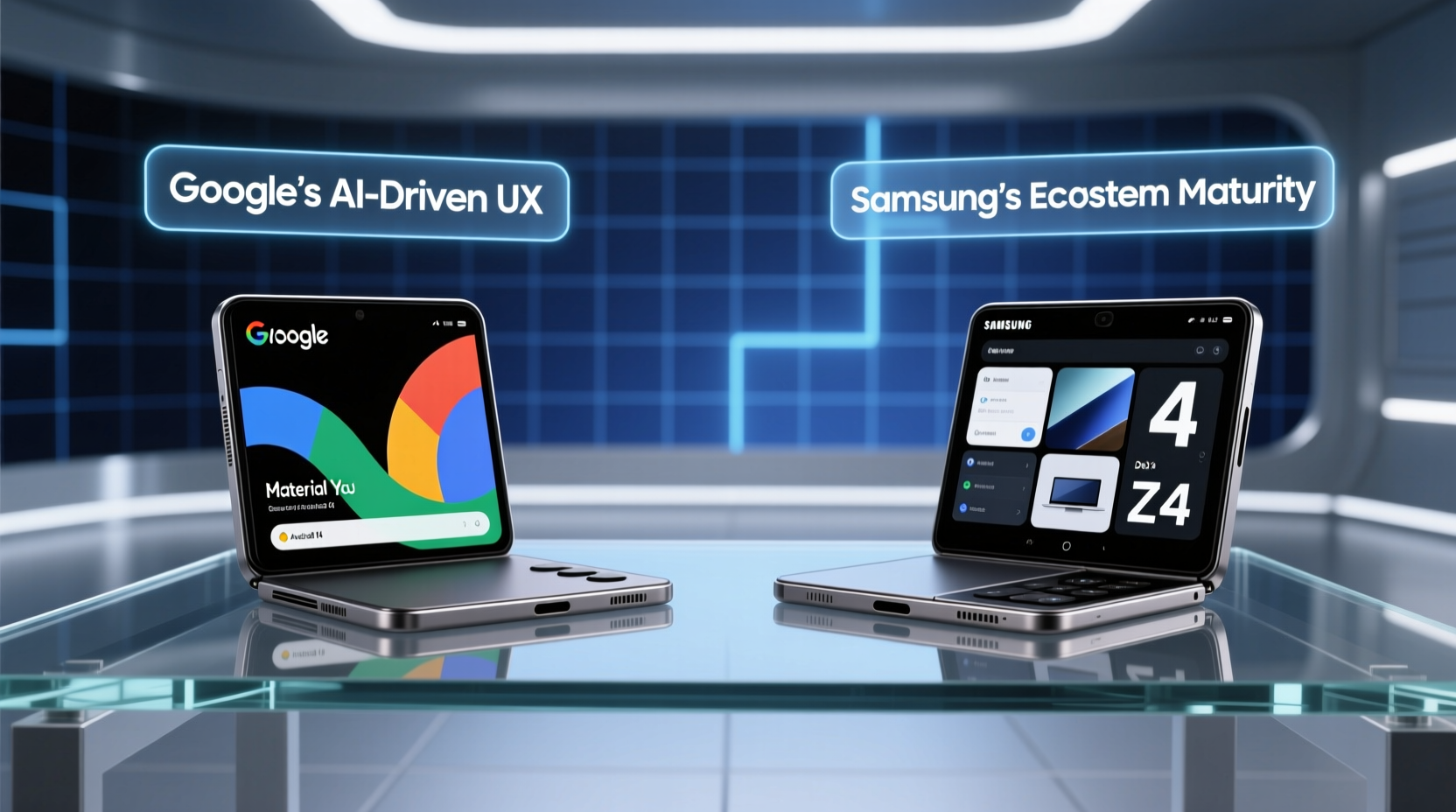
Samsung’s Galaxy Z Fold 4 refined an already mature design language. With its IPX8 water resistance, slimmer hinge, and durable Armor Aluminum frame, it feels like a premium product that’s survived multiple generations of iteration. The outer screen is still narrow (6.5 inches), but usable for quick tasks. The inner display stretches to 7.6 inches and supports a 120Hz refresh rate, making multitasking smooth and responsive.
Google’s Pixel Fold takes a different approach. It’s slightly heavier and thicker than the Z Fold 4, but the build quality feels surprisingly robust. The hinge mechanism is tight, with minimal wobble, and the matte finish resists fingerprints better than Samsung’s glossy back panel. What stands out is the 5.8-inch external display—it’s taller and more practical than Samsung’s, offering a near-standard phone experience when folded.
Both devices use ultra-thin glass and have creases, though Google’s crease is less noticeable due to a smoother polymer layer. However, the Pixel Fold lacks official IP rating, putting it at a disadvantage for users who prioritize dust and water protection.
“Samsung perfected the hardware formula early, but Google focused on usability first—sometimes that matters more than specs.” — Marcus Lin, Mobile Hardware Analyst at TechPulse Insights
Software Experience: Stock Android vs Feature Overload
This is where the battle truly shifts. Samsung’s One UI 5.1.1 (based on Android 13) brings a wealth of customization options, multi-active window support, and DeX integration. However, this feature density comes at a cost: complexity. Navigating split-screen setups, resizing windows, and managing app continuity across folds can feel overwhelming—even for experienced users.
In contrast, the Pixel Fold runs near-stock Android 13 with Google’s thoughtful foldable optimizations. App continuity is seamless. When unfolding, apps transition smoothly from the outer to inner screen without reloading. Gmail, Maps, Messages, and YouTube all adapt intelligently. Third-party developers are increasingly optimizing for larger screens thanks to Google’s developer tools and guidelines.
Google also integrates AI features like Call Screen, Hold for Me, and Live Translate directly into the foldable workflow. These aren’t gimmicks—they solve real problems. For example, during a call, you can have Google transcribe and respond while browsing another app on the second half of the screen.
Performance and Battery Life Compared
Both phones use the Qualcomm Snapdragon 8 Gen 2, so raw performance is nearly identical. In daily use, neither shows lag or stutter during heavy multitasking. However, thermal management differs. The Z Fold 4 tends to throttle earlier under sustained load—especially when gaming or recording 4K video—while the Pixel Fold maintains higher clock speeds longer, likely due to superior thermal padding and stock Android’s lighter overhead.
Battery life is a decisive win for Google. The Pixel Fold packs a 4,821mAh battery and consistently delivers 10–12 hours of screen-on time. The Z Fold 4, despite a slightly larger 4,400mAh unit (split across two cells), struggles to reach 9 hours under similar conditions. This gap stems from software efficiency: stock Android uses fewer background processes, and Google’s adaptive battery learning is more aggressive.
| Category | Pixel Fold | Z Fold 4 |
|---|---|---|
| Processor | Snapdragon 8 Gen 2 | Snapdragon 8 Gen 2 |
| RAM | 12GB | 12GB |
| Battery Capacity | 4,821mAh | 4,400mAh |
| Screen-On Time | 10–12 hrs | 7–9 hrs |
| Charging Speed | 21W wired, 18W wireless | 25W wired, 15W wireless |
| Water Resistance | None (unofficial splash resistance) | IPX8 rated |
Camera Showdown: Computational Photography Wins Again
Samsung has improved its camera systems over generations, but the Z Fold 4 still relies on a triple rear setup (50MP main, 12MP ultrawide, 10MP telephoto) that underperforms in low light. HDR processing is aggressive, often oversharpening edges and smudging fine details.
The Pixel Fold, meanwhile, leverages Google’s computational photography mastery. Its 48MP main sensor captures more dynamic range, and Night Sight works exceptionally well on both rear and front cameras. The cover camera (9.5MP) doubles as a selfie shooter and a rear photo tool when folded—ideal for tripod-style shots. Video stabilization is class-leading, and cinematic pans are automatically enhanced using motion tracking.
In head-to-head daylight tests, the Pixel Fold produces more natural color grading and better shadow recovery. In low light, the difference widens significantly. Google’s HDR+ with bracketing handles mixed lighting far better than Samsung’s single-frame processing.
Real-World Example: Travel Photographer’s Workflow
Lena Cho, a travel photographer based in Portland, tested both devices on a week-long trip through Iceland. She used the Z Fold 4 first, appreciating its ruggedness in snowy conditions. However, she found herself frustrated by inconsistent white balance and slow shot-to-shot times. Switching to the Pixel Fold, she was able to shoot RAW+JPEG simultaneously, use astrophotography mode on the go, and edit full-resolution photos directly on the large screen using Lightroom. “The Pixel Fold didn’t just match my mirrorless workflow—it simplified it,” she said.
Longevity and Updates: Who Offers Better Future-Proofing?
Samsung promises four years of OS updates and five years of security patches for the Z Fold 4—a strong commitment. However, actual update delivery has been inconsistent, with regional delays and bloatware lingering after upgrades.
Google guarantees three OS updates and five years of security updates for the Pixel Fold. While the number seems lower, the delivery is faster and cleaner. Day-one security patches, zero carrier modifications, and direct server distribution mean Pixel users get fixes within days, not weeks.
More importantly, Google’s Tensor G2 chip enables on-device AI features that improve over time—like voice recognition accuracy, transcription speed, and photo search intelligence. Samsung’s Exynos and Snapdragon variants don’t offer comparable machine learning advantages.
Checklist: Choosing the Right Foldable for You
- Choose the Pixel Fold if: You value clean software, long battery life, excellent cameras, and AI-powered productivity tools.
- Choose the Z Fold 4 if: You need water resistance, prefer Samsung’s ecosystem (DeX, S Pen support), or want maximum multitasking flexibility.
- Consider repair costs—both have high screen replacement fees, but Samsung offers more third-party service options.
- Evaluate app compatibility—some enterprise and banking apps still lack tablet-optimized layouts.
- Test the outer screen usability—Pixel Fold’s taller display makes single-handed use easier.
Frequently Asked Questions
Is the Pixel Fold more durable than the Z Fold 4?
No official IP rating gives the Z Fold 4 an edge in durability claims. However, real-world stress tests show both devices handle drops and folding cycles well. The Pixel Fold’s reinforced corners and Gorilla Glass Victus help compensate for the lack of certification.
Can the Pixel Fold replace a laptop?
For many users, yes—but selectively. With Chrome tabs, Docs, Sheets, and Meet running side-by-side, it handles email, editing, and video calls efficiently. However, power users needing desktop-grade software will still require a laptop.
Does Samsung plan to improve its software for foldables?
Yes. Samsung announced One UI 6 will include enhanced taskbar customization, better app pairing, and improved continuity. But Google’s lead in simplicity and AI integration remains challenging to close.
Conclusion: A New Era in Foldables Has Begun
The rivalry between the Pixel Fold and Galaxy Z Fold 4 marks a turning point. Samsung built the foundation of the foldable era, refining hardware year after year. But Google didn’t try to beat Samsung at its own game. Instead, it redefined what a foldable should be: intuitive, efficient, and deeply integrated with the services people use every day.
While the Z Fold 4 remains a powerful device—especially for Samsung loyalists—the Pixel Fold proves that software elegance, battery endurance, and camera excellence can outweigh minor hardware shortcomings. For professionals, creatives, and everyday users who want a foldable that just works, Google may have delivered the first truly mature product in this category.




 浙公网安备
33010002000092号
浙公网安备
33010002000092号 浙B2-20120091-4
Comments
No comments yet. Why don't you start the discussion?