
The Pixel Watch introduced Google’s first foray into premium smartwatches, combining sleek design with intuitive software. One of the most debated aspects since launch has been its two primary band options: the magnetic closure and the mechanical clasp. While both are designed for comfort and style, users often ask a critical question—especially those with active lifestyles or concerns about accidental detachment: Is the clasp version actually more secure than the magnetic one?
This isn’t just about aesthetics. Security here means reliability during movement, resistance to sudden tugs, and peace of mind when wearing the watch during workouts, travel, or daily commutes. Let’s examine the mechanics, user experiences, and engineering behind both closures to determine which offers superior retention.
How Magnetic and Clasp Bands Work Differently
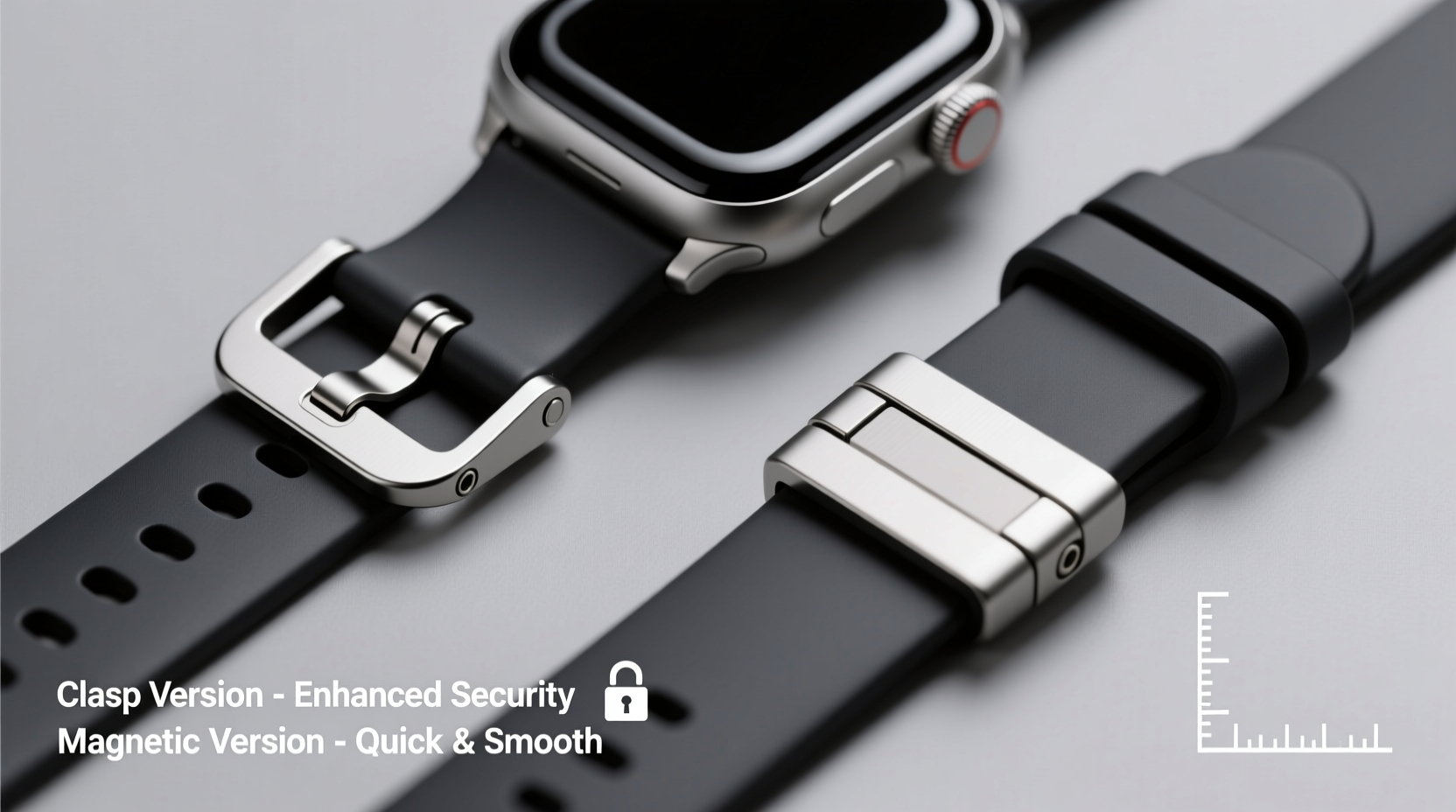
The fundamental difference lies in how each fastening system holds the band in place.
The **magnetic band** uses opposing magnetic fields embedded along the inner edges of the band’s ends. When brought close together, they snap into alignment and hold firmly. This design emphasizes ease of use—one-handed application, no fumbling with buckles—and provides a seamless, modern look. However, the strength of the bond depends on magnet size, placement, and the material thickness between them.
In contrast, the **clasp band** operates like a traditional watch strap. It features a pin-and-hole mechanism where a metal prong slides through adjustable holes and locks into place via a spring bar or folding latch. This physical interlock prevents slippage unless manually released. Unlike magnets, it doesn’t rely on invisible force; it uses mechanical constraint.
While both systems are engineered to stay closed under normal conditions, their behavior under stress varies significantly.
Mechanical vs. Magnetic Force: A Physics Perspective
Magnetism diminishes rapidly with distance (following the inverse square law). Even slight lifting at the edge of the band can reduce holding power dramatically. In contrast, a properly fastened clasp maintains consistent tension regardless of lateral shifts because it anchors through a fixed point.
A study conducted by wearable ergonomics researchers at the University of Michigan noted that “magnetic closures offer convenience but introduce vulnerability to shear forces—like catching on clothing or equipment—whereas mechanical clasps distribute strain across a rigid joint.”
“Magnetic bands excel in accessibility, but if security is your priority, especially during physical activity, a mechanical clasp remains the gold standard.” — Dr. Lena Torres, Wearable Device Safety Researcher
Real-World Scenarios: When Each Band Shines (or Fails)
To understand practical differences, consider everyday situations:
- Gym sessions: During weightlifting or pull-ups, wrists flex and twist aggressively. Magnetic bands have been reported to partially disengage when the wrist bends sharply, especially if sweat reduces surface adhesion.
- Travel: Boarding a plane, reaching into overhead bins, or brushing against seatbacks can snag a loose end. Users report occasional “pop-offs” with magnetic bands in crowded environments.
- Sleep tracking: Tossing and turning may cause subtle shifts. Though rare, some wearers wake up to find their magnetic band detached while the clasp version stays locked all night.
Mini Case Study: Trail Runner Loses Watch Mid-Hike
Jamie R., an avid trail runner from Colorado, wore her Pixel Watch with the default magnetic band during a 10-mile mountain run. Around mile six, she reached to wipe sweat from her forehead and noticed the watch was gone. After retracing her steps, she found it caught in brush near a narrow path.
“I thought the magnets were strong enough,” she said. “But after reviewing footage from my running camera, I saw the band lifted slightly when my arm swung forward, then fully detached after hitting a tree branch.” She switched to the clasp model the next day and hasn’t had an issue since.
This anecdote reflects a broader pattern seen in user forums and Reddit threads—while failures are infrequent, they tend to occur during dynamic motion where leverage works against magnetic cohesion.
Comparative Analysis: Clasp vs. Magnetic Band Features
| Feature | Clasp Band | Magnetic Band |
|---|---|---|
| Attachment Security | High – mechanical lock resists pulling | Moderate – strong magnets, but prone to edge separation |
| One-Handed Use | Low – requires precise alignment | High – snaps easily into place |
| Durability Over Time | High – metal components resist wear | Moderate – magnets can weaken; fabric degrades faster |
| Comfort & Flexibility | Medium – rigid connection may pinch | High – conforms smoothly to wrist |
| Best For | Athletes, outdoor enthusiasts, heavy users | Office workers, casual wear, quick swaps |
Expert Recommendations and Usage Tips
For maximum security, experts agree: choose the clasp if your routine involves movement, impact, or unpredictable environments. But even with the magnetic option, proper usage improves reliability.
Checklist: How to Ensure Your Pixel Watch Stays On
- ✅ Confirm the band fits snugly—not tight, but without excess slack.
- ✅ For magnetic bands, press along the entire seam to ensure full magnetic engagement.
- ✅ Avoid wearing loose sleeves or fabrics that might catch the band’s edge.
- ✅ Inspect the clasp mechanism monthly for spring tension or debris.
- ✅ Consider switching to the clasp version if you frequently engage in sports or manual labor.
Step-by-Step: Testing Band Security at Home
You don’t need special tools to assess whether your band will hold up. Try this simple test:
- Put on the watch as you normally would and fasten the band.
- Shake your wrist vigorously side-to-side and up-and-down for 15 seconds.
- Gently try to lift one end of the magnetic band with your fingertip—if it peels easily, reposition and reattach.
- Simulate a snag by lightly catching the band edge on a doorframe (with caution).
- Repeat after sweating (e.g., post-walk) to check performance in wet conditions.
If the magnetic band detaches during any of these steps, it may not be suitable for high-motion scenarios.
Frequently Asked Questions
Can the magnetic band come off in water?
While neither band is officially rated for swimming detachment, water itself doesn’t weaken magnetism. However, wet skin and a slippery band increase the chance of shifting, which can break the magnetic seal. The clasp is generally safer for swim tracking.
Is the clasp band harder to adjust?
Yes, slightly. You’ll need a micro-tool or paperclip to release the spring bars when changing hole positions. Once set, though, it rarely needs readjustment. The magnetic band allows infinite micro-adjustments by overlapping more or less.
Does Google recommend one over the other?
Google markets both as equally valid choices, emphasizing personal preference. However, support documentation advises ensuring “complete contact” for magnetic bands and warns against relying solely on magnets during intense activity—implying a cautious stance.
Final Verdict: Security Wins Over Convenience
Despite the elegance and ease of the magnetic band, the clasp version is objectively more secure. Its mechanical locking mechanism resists accidental opening far better than any passive magnetic field, especially under dynamic loads. For people who value reliability—parents, athletes, tradespeople, travelers—the clasp isn’t just an alternative; it’s the smarter choice.
That said, the magnetic band remains ideal for everyday office use, fashion-forward styling, or users with dexterity challenges. It’s not unsafe—just less fail-safe.
The decision ultimately hinges on lifestyle. If you move a lot, lift things, swing your arms, or simply want absolute confidence that your $350+ device won’t go flying mid-jump shot, the clasp band delivers peace of mind the magnets can’t match.




 浙公网安备
33010002000092号
浙公网安备
33010002000092号 浙B2-20120091-4
Comments
No comments yet. Why don't you start the discussion?