
In 2024, comparing the Google Pixel XL and Samsung Galaxy S8 might seem like a relic of tech history. Both devices launched over seven years ago—yet online forums, Reddit threads, and YouTube comment sections still buzz with passionate debates. Why? It’s not just about outdated specs. The conversation persists because these two flagships represent pivotal moments in Android’s evolution: one symbolizing software purity and AI innovation, the other showcasing hardware ambition and design risk-taking.
The staying power of this debate reveals more than fan loyalty—it reflects how early decisions shaped today’s smartphone landscape. Understanding why people still care offers insight into user values, technological legacy, and even emotional attachment to devices that once defined premium mobile experiences.
The Legacy That Keeps the Debate Alive
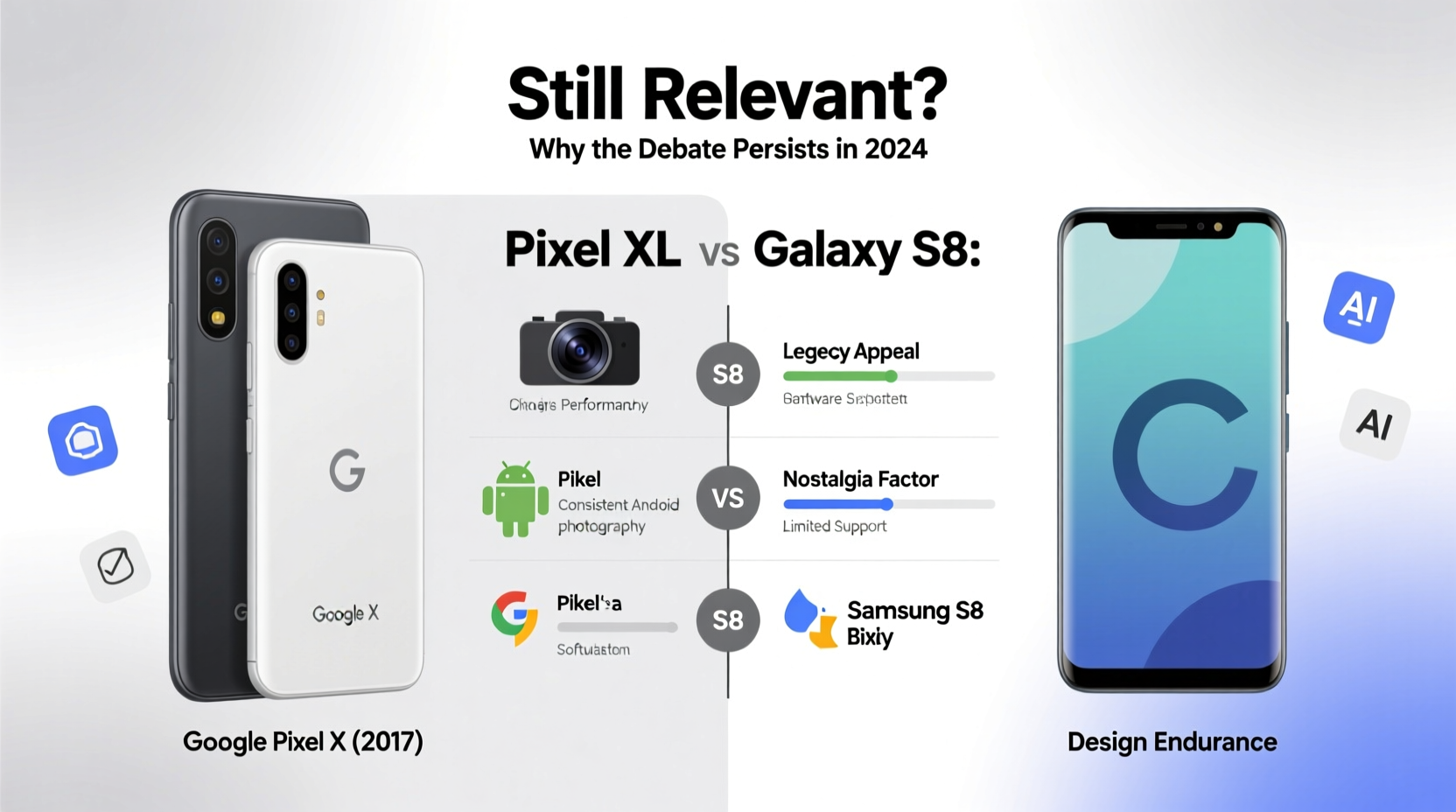
The Pixel XL (2016) was Google’s first true flagship phone, designed to showcase what Android could be when hardware and software were unified under one roof. Meanwhile, the Galaxy S8 (2017) redefined industrial design with its edge-to-edge “Infinity Display,” slim bezels, and futuristic aesthetics that influenced competitors for years.
These weren’t just phones—they were statements. The Pixel XL promised a cleaner, smarter Android experience powered by Google Assistant at launch. The Galaxy S8 offered immersion through screen design and Samsung’s ecosystem reach. Their differences weren’t merely technical; they represented divergent philosophies in mobile computing.
“Phones from this era were turning points. The S8 made us rethink form, while the Pixel made us believe in computational photography.” — David Lin, Mobile Industry Analyst at TechTrend Insights
This philosophical contrast continues to resonate. Enthusiasts aren’t just arguing about camera quality or battery life—they’re defending visions of what a smartphone should prioritize.
Performance Comparison: How They Stack Up Today
By modern standards, both devices fall short. But evaluating them historically—and in terms of longevity—reveals surprising resilience. Below is a direct comparison based on original specs and real-world usability as of 2024:
| Feature | Google Pixel XL | Samsung Galaxy S8 |
|---|---|---|
| Release Year | 2016 | 2017 |
| Processor | Qualcomm Snapdragon 821 | Exynos 8895 / Snapdragon 835 |
| RAM | 4GB | 4GB |
| Storage | 32GB / 128GB (non-expandable) | 64GB (expandable via microSD) |
| Display | 5.5” AMOLED, 1440x2560 | 5.8” Quad HD+ Super AMOLED, curved edges |
| Rear Camera | 12.3 MP, f/2.0, EIS + OIS | 12 MP, f/1.7, Dual Pixel AF |
| Front Camera | 8 MP | 8 MP |
| Battery | 3,450 mAh | 3,000 mAh |
| Software Updates | Ended in 2019 | Ended in 2020 |
| Current Usability (2024) | Limited; struggles with modern apps | Marginal; usable for calls/texts/light browsing |
While the S8 had superior hardware flexibility (like expandable storage), the Pixel XL outperformed it in areas that mattered long-term: software updates, photo processing, and integration with Google services.
The Emotional Factor: Nostalgia and Brand Loyalty
Nostalgia plays a major role in keeping this debate active. For many users, the Pixel XL was their first exposure to Google’s vision of an AI-first phone. Its camera, despite having only a single lens, consistently beat multi-camera setups through computational photography magic. Features like Active Edge (squeezing the phone to launch Assistant) felt innovative and personal.
Conversely, the Galaxy S8 captured imaginations with its sleek curves, iris scanner, and immersive display. Owning one in 2017 felt like holding the future. Even now, some users praise its ergonomics and build quality over bulkier modern flagships.
These emotional connections turn objective comparisons into subjective preferences. People aren’t just defending specs—they’re defending memories.
A Real Example: The Forum Thread That Won’t Die
In 2021, a thread titled “Still using my Pixel XL daily in 2021 – here’s why” appeared on XDA Developers. What started as a curiosity piece sparked over 1,200 replies spanning three years. Users shared stories of relying on their aging Pixels for photography, citing unmatched HDR+ processing even compared to newer models.
One contributor wrote: *“I dropped my S23 and used my old Pixel XL as a backup. Took a night shot of the city skyline. Sent it to my friend without saying which phone. He assumed it was the new one. That says everything.”*
This anecdote isn’t rare. Across platforms, users report preferring the simplicity, size, and camera consistency of these older devices—especially in contrast to bloated UIs and inconsistent app optimization on newer phones.
Why This Debate Matters Beyond Specs
The persistence of the Pixel XL vs Galaxy S8 discussion signals deeper concerns among smartphone users:
- Diminishing innovation returns: Modern phones offer incremental upgrades. Comparing past flagships highlights how much more noticeable improvements used to be.
- Update policy scrutiny: Google promised two years of OS updates—a standard now seen as inadequate. Fans point to the Pixel’s clean update delivery as a high-water mark.
- Ecosystem lock-in awareness: The S8 introduced Samsung DeX and Bixby, early attempts at continuity. These experiments inform today’s cross-device strategies.
Moreover, both phones achieved cult status due to reliability. Unlike later models plagued by overheating or bloatware complaints, these devices delivered consistent experiences during their prime.
Checklist: Could You Still Use a Pixel XL or S8 in 2024?
- ✅ Can you accept slow app loading times?
- ✅ Is security less critical (e.g., not storing banking info)?
- ✅ Do you need only basic functions (calls, texts, light web use)?
- ✅ Are you comfortable sideloading apps or using APKs?
- ✅ Do you value compact size and physical buttons (S8) or stock Android (Pixel)?
If you answered yes to most, limited daily use is possible—but not recommended for primary devices.
Frequently Asked Questions
Is the Pixel XL camera better than the Galaxy S8?
In daylight, both perform similarly. In low light, the Pixel XL’s HDR+ algorithm produces noticeably brighter, more detailed images with less noise. The S8 has faster autofocus and better dynamic range in high-contrast scenes, but lacks the Pixel’s post-processing intelligence.
Which phone lasted longer with updates?
The Pixel XL received three major Android version updates (Nougat to Pie), ending in late 2019. The Galaxy S8 also reached Android 10, supported until early 2020. Samsung edged ahead slightly in total support duration, though Google delivered updates faster and more uniformly.
Can either phone run modern apps safely?
Some apps will install, but performance varies widely. Banking apps, social media platforms, and streaming services may crash or refuse to run due to security policies. Chrome becomes sluggish after multiple tabs. Security risks increase significantly without patch updates since 2020.
Conclusion: More Than Just a Throwback Fight
The ongoing debate between the Pixel XL and Galaxy S8 isn’t about declaring a winner in 2024—it’s about remembering a time when smartphones felt transformative. Each device pushed boundaries in different ways: Google through software intelligence, Samsung through bold design.
Today’s stagnation makes us look back fondly. But rather than romanticize the past, we should use these discussions to demand better: longer support, meaningful innovation, and respect for user choice. The passion behind this debate proves there’s still appetite for phones that inspire, not just iterate.




 浙公网安备
33010002000092号
浙公网安备
33010002000092号 浙B2-20120091-4
Comments
No comments yet. Why don't you start the discussion?