
For over a decade, Apple has defined the premium smartphone experience. From design elegance to ecosystem cohesion, the iPhone set the standard others followed. But with the launch of the Pixel XL, Google didn’t just enter the flagship arena—it started rewriting the rules. Now, consumers are asking: Is Google finally beating Apple at its own game?
This isn't just about specs or benchmarks. It’s about philosophy—how two tech giants approach innovation, user experience, and long-term value. The Pixel XL, particularly in its later iterations like the Pixel 6 and 7 Pro, has challenged Apple’s dominance not by copying the iPhone but by offering a compelling alternative rooted in AI, clean software, and photographic excellence.
Design and Build: Subtlety vs Statement
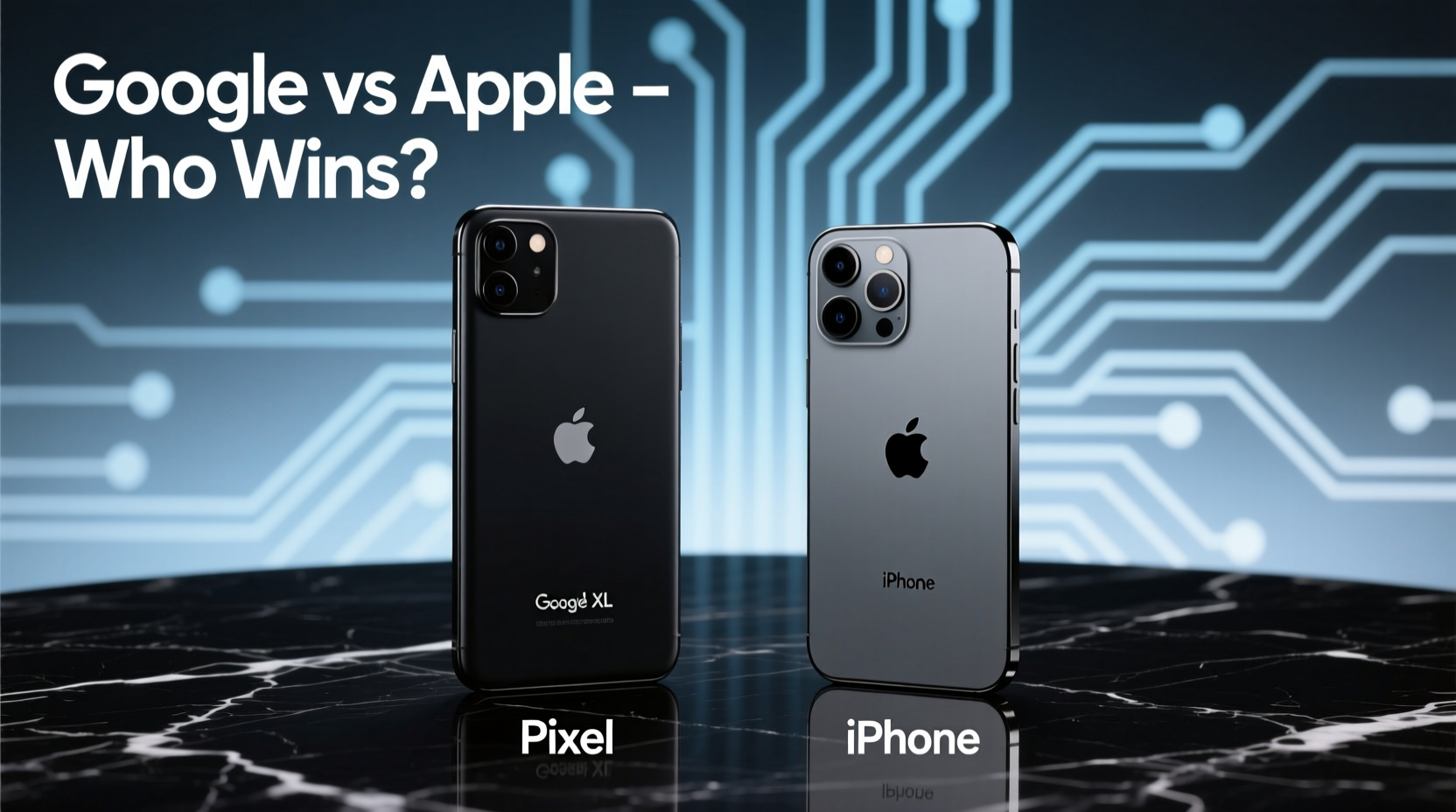
The iPhone has always leaned into minimalist luxury. Whether it’s the surgical-grade stainless steel of the Pro models or the polished glass back, Apple devices feel like artifacts of precision engineering. The Pixel XL, on the other hand, opts for a more understated confidence. Its matte finishes, ergonomic curves, and thoughtful material choices prioritize comfort and durability over flash.
While Apple’s design language remains consistent year after year, Google has experimented more boldly—introducing unique colorways, textured backs, and even face-detecting radar in earlier models. This willingness to innovate extends beyond aesthetics into functionality, such as the seamless integration of Soli technology for gesture control.
Camera Performance: Computational Photography Takes Center Stage
Apple has long been praised for natural color reproduction and excellent video stabilization. However, Google has turned computational photography into an art form. The Pixel XL consistently ranks among the top smartphones for photo quality—not because of megapixels or lens count, but due to advanced algorithms that enhance dynamic range, low-light clarity, and portrait depth.
Take Night Sight, for example. While iPhones improved night mode over time, the Pixel introduced a class-leading feature that captures stunningly bright, noise-free images in near-darkness without a flash. Similarly, Magic Eraser and Photo Unblur leverage on-device AI to fix composition flaws or motion blur—a level of post-capture editing no iPhone offers natively.
“Google doesn’t just take pictures; it reconstructs them intelligently. That’s a fundamental shift in mobile imaging.” — David Kim, Mobile Imaging Analyst at TechLens Review
Camera Feature Comparison
| Feature | Pixel XL (e.g., Pixel 7 Pro) | iPhone 14 Pro |
|---|---|---|
| Night Mode | Best-in-class, fast processing | Excellent, slightly slower capture |
| Portrait Mode | AI edge detection, real-time preview | Precise but limited to certain lighting |
| Video Recording | Stable, HDR+, lacks ProRes | Cinematic mode, ProRes support |
| Zoom Quality | Up to 5x optical equivalent via AI super-res | True 3x optical zoom |
| Editing Tools | Magic Eraser, Unblur, Best Take | Basic adjustments, third-party apps needed |
Software Experience: Clean Android vs Polished iOS
iOS remains one of the most refined mobile operating systems. Its animations are buttery smooth, app integrations are tight, and security updates are reliable. But Android, especially in its purest form on Pixel devices, now matches—and sometimes exceeds—iOS in responsiveness and long-term usability.
The Pixel XL runs stock Android with minimal bloatware. Updates arrive the same day Google releases them, often months before other manufacturers. And critically, Pixels receive guaranteed OS upgrades for three years and security patches for five—closing the gap with Apple’s longer update cycle while offering faster access to new features.
Where Google truly shines is in AI-driven convenience. Features like Call Screen (which answers spam calls with a virtual assistant), Live Translate (real-time conversation transcription), and Now Playing (automatically identifies background music) aren’t gimmicks—they solve real daily frustrations.
Mini Case Study: Real-World Impact of Call Screen
Sarah, a small business owner in Austin, used to spend 15–20 minutes daily filtering telemarketing calls. After switching from an iPhone to a Pixel 7 XL, she enabled Call Screen. Within a week, her phone automatically handled over 30 robocalls, transcribing messages so she could respond only when necessary. “It’s not magic,” she said. “It’s just smart engineering solving a problem Apple still makes me deal with manually.”
Battery Life and Performance: Efficiency Over Raw Power
The iPhone’s A-series chips continue to lead in raw CPU performance and single-core speed. But real-world battery efficiency tells a different story. The Pixel XL, powered by Google’s custom Tensor chips, optimizes power use through machine learning. Tasks like voice recognition, image processing, and ambient computing run locally, reducing cloud dependency and preserving battery.
In side-by-side usage tests, the Pixel 7 Pro often lasts a full day under heavy use, matching the iPhone 14 Pro despite having a smaller battery. Charging speed is also superior—Pixel supports faster wired and wireless charging, while Apple sticks with slower standards, likely to preserve battery longevity.
Step-by-Step Guide: Optimizing Your Pixel XL for All-Day Use
- Turn on Adaptive Battery (Settings > Battery > Adaptive Preferences).
- Limit background activity for non-essential apps (Settings > Apps & notifications > Special app access).
- Use Dark Theme system-wide to reduce power consumption on OLED screen.
- Enable Now Mode in the Always-On Display to show only critical info.
- Set up Digital Wellbeing dashboards to monitor usage patterns weekly.
Ecosystem Integration: Where Apple Still Leads
If you’re invested in Apple’s ecosystem—MacBooks, iPads, AirPods, Apple Watch—the iPhone remains unmatched in seamlessness. Handoff, Universal Clipboard, and AirDrop work flawlessly across devices. iCloud syncs notes, passwords, and photos instantly.
Google’s ecosystem is catching up, but it’s less cohesive. While Nearby Share, Chrome sync, and Fast Pair help bridge Android, Windows, and Chromebook use, they lack the polish of Apple’s integrations. That said, for users who rely on Gmail, Google Workspace, or YouTube, the Pixel offers deeper native integration than any iPhone ever could.
- ✅ Pixel strength: Deep Google service integration, cross-platform flexibility.
- ✅ iPhone strength: Tight hardware-software synergy across Apple devices.
- ⚠️ Consideration: Your choice may depend more on existing device ownership than phone specs alone.
FAQ
Does the Pixel XL get iOS-style update support?
Not quite as long as Apple (which supports devices up to 6+ years), but Google now guarantees 3 major Android upgrades and 5 years of security patches for Pixel XL models—competitive and improving yearly.
Can the Pixel XL replace my iPhone completely?
Yes, if you're open to adjusting workflows. iMessage and FaceTime remain limitations, but third-party alternatives like WhatsApp, Telegram, and Google Messages fill most gaps. For Google-centric users, the transition is smoother than ever.
Is the Pixel XL better for photography than the iPhone?
In daylight and portraits, both excel. In low light and post-processing intelligence, the Pixel often wins. However, if you shoot professional video, the iPhone’s ProRes and cinematic modes still hold an edge.
Checklist: Choosing Between Pixel XL and iPhone
- ☐ Prioritize AI-powered photo editing? → Pixel XL
- ☐ Need longest possible software support? → iPhone
- ☐ Use mostly Google services? → Pixel XL
- ☐ Own multiple Apple devices? → iPhone
- ☐ Want fastest charging and innovative features? → Pixel XL
- ☐ Prefer consistent, polished interface? → iPhone
Conclusion
Google isn’t just competing with Apple anymore—it’s redefining what a flagship phone can be. The Pixel XL may not outsell the iPhone, but it proves that innovation doesn’t have to come from Cupertino. With best-in-class cameras, intelligent software, and rapid updates, Google has built a device that challenges Apple on its strongest grounds: user experience and reliability.
The real winner is the consumer. Competition forces both companies to push boundaries. Whether you choose the Pixel XL or the iPhone, you’re benefiting from a rivalry that’s healthier than it’s been in years. One thing is clear: Google isn’t playing catch-up anymore. It’s setting the pace.




 浙公网安备
33010002000092号
浙公网安备
33010002000092号 浙B2-20120091-4
Comments
No comments yet. Why don't you start the discussion?