
Choosing the right comforter isn’t just about warmth—it’s a design decision that shapes the entire mood of your bedroom. Among the most debated options are plaid and solid comforters. One brings patterned energy and rustic charm; the other offers minimalist elegance and timeless versatility. But which one truly elevates your bed’s appearance? The answer depends on your space, style preferences, and long-term vision for your bedroom.
While both styles have loyal followings, understanding their visual impact, maintenance needs, and compatibility with different decor schemes helps you make an informed choice—not just a trendy one.
The Visual Psychology of Pattern vs Simplicity
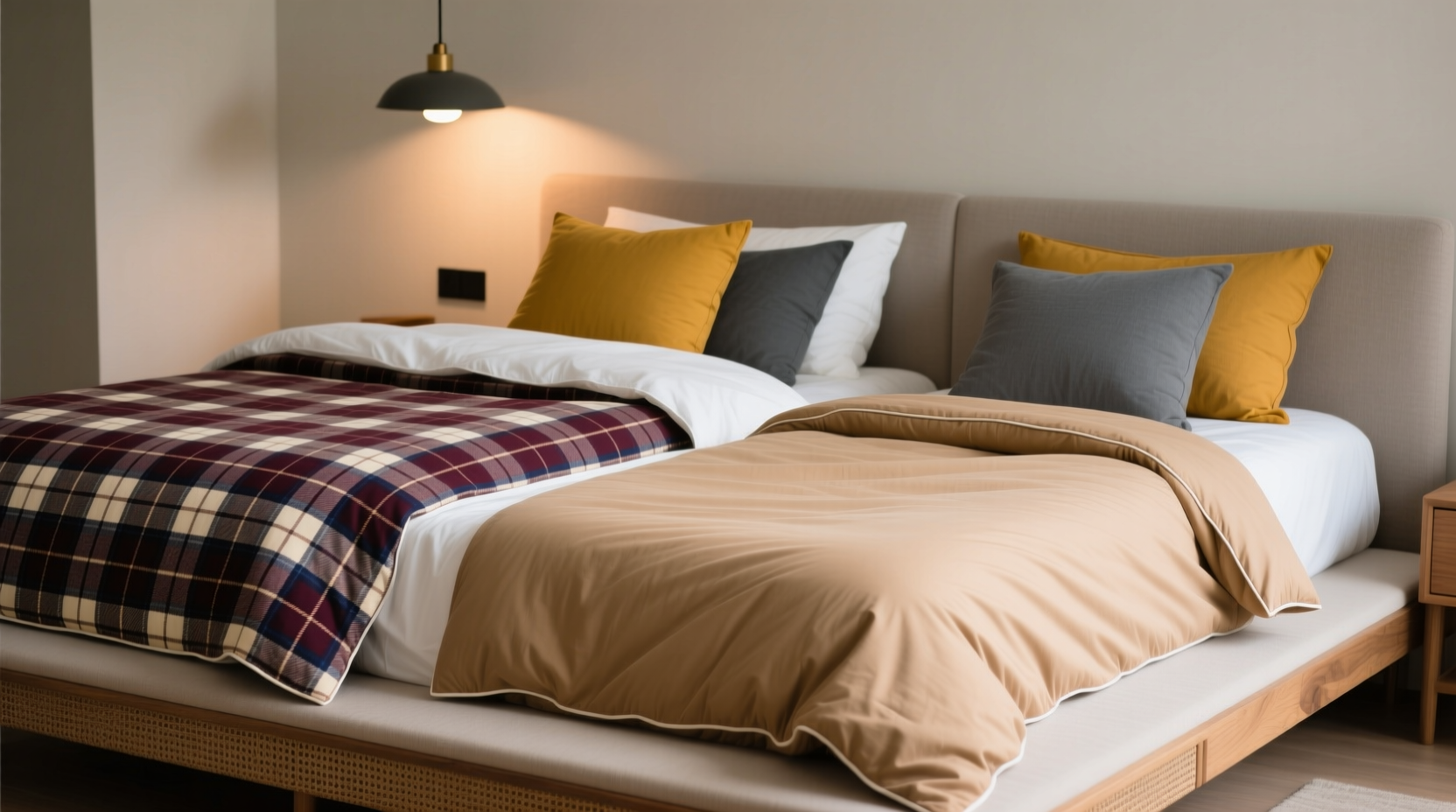
Patterns like plaid command attention. They introduce rhythm, movement, and texture into a room. A plaid comforter can act as the focal point of your bedding, drawing the eye and anchoring the color palette. This makes it ideal for rooms where character and coziness take precedence over minimalism.
In contrast, solid comforters rely on subtlety. Their strength lies in flexibility—they don’t compete with other elements in the room. A well-chosen solid shade can create a serene, hotel-like atmosphere or serve as a blank canvas for layered textures through throw pillows, blankets, and rugs.
“Pattern adds personality, but only if it aligns with the overall harmony of the space. A plaid comforter shouldn’t clash with your walls or flooring—it should complement them.” — Lena Torres, Interior Stylist & Home Design Consultant
Consider this: a bold red-and-black buffalo plaid might feel inviting in a mountain cabin but overwhelming in a small city apartment with limited natural light. On the other hand, a deep navy solid comforter could feel calming in a modern bedroom but dull in a sun-drenched bohemian loft without proper accent layers.
Style Compatibility: Matching Comforters to Bedroom Themes
Your existing decor plays a major role in determining whether plaid or solid is the better fit. Here's how each performs across common interior styles:
| Bedroom Style | Best Comforter Choice | Why It Works |
|---|---|---|
| Modern Minimalist | Solid | Clean lines and neutral tones benefit from unbroken surfaces. A solid comforter enhances calmness. |
| Rustic Farmhouse | Plaid | Plaid complements wood beams, shiplap walls, and vintage furniture. Adds warmth and authenticity. |
| Coastal Cottage | Either (light plaid or soft solid) | A pale blue gingham or striped plaid works; so does a crisp white solid. Both evoke breeziness. |
| Scandinavian | Solid (with texture) | Light grays, whites, or beiges in wool or quilted cotton maintain simplicity and function. |
| Traditional/Eclectic | Plaid or Solid (depending on layering) | Plaid adds heritage flair; solids allow rich embroidery or tapestry pillows to shine. |
When Plaid Enhances, Not Overwhelms
Not all plaids are created equal. Subtle windowpane checks or tonal tartans in muted earth tones integrate seamlessly into sophisticated spaces. The key is scale and contrast. Large, high-contrast plaids dominate; smaller, low-contrast ones blend.
Durability and Maintenance: The Hidden Factor
Beyond aesthetics, practicality matters. Plaid comforters often show wear differently than solids. Fading may appear uneven across colored stripes, making discoloration more noticeable. Solids, especially darker ones, tend to age more gracefully—though lighter shades may reveal stains more easily.
Cleaning frequency also varies by use. If you eat in bed or share it with pets, a solid comforter in a machine-washable fabric (like microfiber or cotton) may be easier to refresh consistently. Plaids in natural fibers like cotton or wool blends offer breathability but may require gentle cycles or professional cleaning.
Real-Life Example: Two Bedrooms, Two Choices
Case Study 1 – Urban Studio Apartment
Sarah, a graphic designer living in a 500-square-foot loft, wanted her bed to feel like a retreat. She initially chose a charcoal gray plaid comforter for its “cozy cabin” vibe. However, the pattern made the already compact space feel busier. After restyling with a soft oatmeal-colored solid comforter, she added a textured knit throw and linen pillow covers. The room instantly felt larger and calmer.
Case Study 2 – Family Mountain Home
The Miller family uses their cabin primarily on weekends. They opted for a classic red-and-black buffalo plaid comforter in heavyweight cotton. Despite heavy use by kids and dogs, the pattern hides minor spills and scuffs. The plaid reinforces the rustic theme and makes the space feel lived-in and welcoming.
These examples show that context determines success. There’s no universal “better”—only what works best for your lifestyle and environment.
How to Choose: A Step-by-Step Decision Guide
Follow this sequence to determine which comforter style suits your bedroom:
- Evaluate your current decor. Take photos of your room at different times of day. Does it feel cluttered or sparse?
- Identify your dominant style. Is it modern, traditional, farmhouse, or eclectic? Refer to the table above.
- Assess natural light. Rooms with little sunlight benefit from lighter solids or subtle plaids to avoid heaviness.
- Consider usage. High-traffic beds (kids, pets) may favor durable solids or dark-toned plaids that hide wear.
- Test with swatches. Drape sample fabrics over your bed. Observe how they interact with walls, floors, and lighting.
- Layer thoughtfully. If choosing solid, plan texture layers (knits, wovens, faux fur). If choosing plaid, keep other patterns minimal.
Frequently Asked Questions
Can I mix plaid and solid bedding?
Yes—strategically. Use a solid duvet cover with plaid shams, or layer a plaid blanket at the foot of a solid comforter. The key is hierarchy: let one element lead while the other supports.
Do plaid comforters go out of style?
Classic plaids like buffalo check, tartan, and gingham are cyclical but enduring. They resurface in fashion every few years. Choosing timeless color combinations (navy/cream, black/white, forest green/taupe) ensures longevity.
Which is easier to match with pillows and throws?
Solids offer more flexibility. You can pull accent colors from artwork, rugs, or walls. Plaids lock you into their existing palette, so coordinating requires precise color matching.
Final Checklist Before You Buy
- ✅ Measure your bed and choose the correct comforter size (twin, queen, king).
- ✅ Confirm care instructions (machine washable? dry clean only?)
- ✅ Hold a fabric swatch under your room’s lighting—colors shift in artificial vs. natural light.
- ✅ Check thread count and material (cotton, microfiber, down alternative) for breathability and softness.
- ✅ Decide on seasonal use—do you want a lightweight summer option and a heavier winter one?
Making the Final Call
Ultimately, the question isn’t which looks better in isolation—but which looks better *on your bed*. A plaid comforter can transform a bland room into a cozy sanctuary. A solid comforter can elevate a chaotic space into a peaceful haven. Your choice should reflect not just current trends, but your daily experience of the room.
If you value flexibility, ease of styling, and a clean aesthetic, go solid. If you crave character, nostalgia, and visual interest, embrace the plaid. And remember: you’re not locked in forever. Seasonal swaps allow you to enjoy both—just make sure each choice serves a purpose beyond mere decoration.




 浙公网安备
33010002000092号
浙公网安备
33010002000092号 浙B2-20120091-4
Comments
No comments yet. Why don't you start the discussion?