
When choosing a jacket, fabric, fit, and function often dominate the decision-making process. Yet one subtle but powerful element—pattern—can quietly redefine your entire aesthetic: plaid versus solid. While both styles serve essential roles in a well-rounded wardrobe, the choice between them isn't just about visual preference. It's about intention, context, and identity. The pattern on a jacket doesn't merely decorate—it communicates.
Plaid jackets evoke heritage, rebellion, or rustic charm depending on their cut and color. Solid jackets project minimalism, professionalism, or understated confidence. But does that difference translate into real-world style impact? The answer is yes—but not always in the ways people assume.
The Psychology of Pattern: Why Plaid Commands Attention
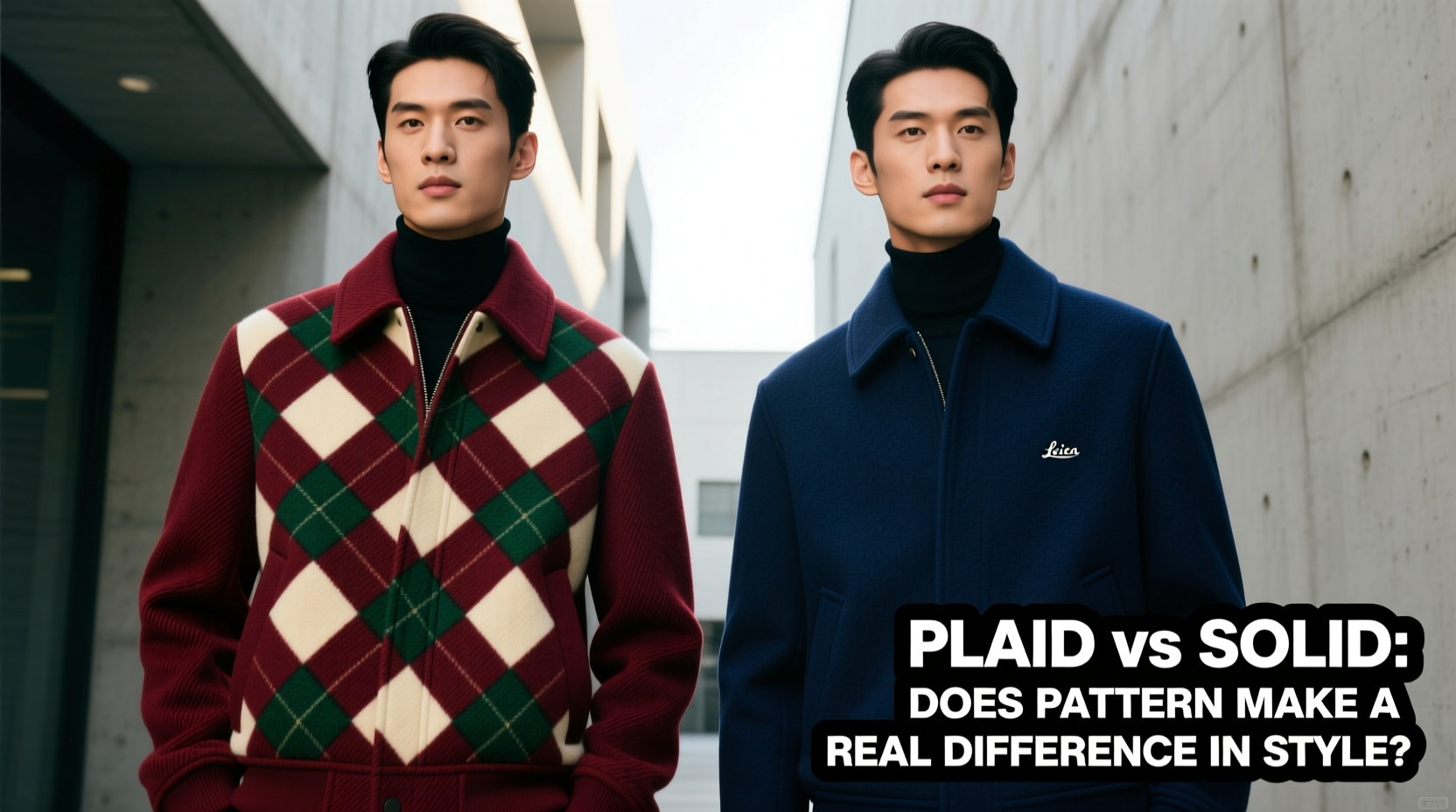
Patterned clothing inherently draws the eye. A plaid jacket, with its intersecting lines and contrasting colors, creates visual movement. This makes it a natural focal point in any outfit. According to Dr. Laura Chen, behavioral stylist and author of Clothing & Cognition, “Patterns trigger faster recognition and emotional response than solids. Plaid, in particular, carries cultural weight—think lumberjack, preppy academia, or punk rock defiance.”
This means wearing a plaid jacket isn’t a neutral act. It signals an intentional choice to stand out, embrace tradition, or align with a subculture. In contrast, solid jackets allow the wearer’s presence, accessories, or layering choices to take center stage.
“Pattern isn’t decoration—it’s language. A plaid blazer says something different than a navy wool one, even if they’re the same cut.” — Marcus Reed, Menswear Editor at *Style Chronicle*
Versatility Compared: When Each Jacket Shines
One common argument in favor of solid jackets is their versatility. A black, navy, or beige jacket can be paired with nearly anything, from jeans to tailored trousers. Plaid, by contrast, limits coordination options due to its multiple colors and dominant presence.
But this limitation can also be a strength. A well-chosen plaid jacket becomes a signature piece—an anchor around which entire seasonal rotations are built. For example, a green-and-black tartan field jacket pairs effortlessly with earth-toned chinos, olive sweaters, and brown boots, creating a cohesive outdoor-inspired wardrobe.
Solid jackets excel in formal or transitional settings where blending in is advantageous—job interviews, business meetings, or minimalist streetwear looks. Plaid dominates in casual, creative, or thematic environments: music festivals, weekend outings, or fashion-forward layering.
Do’s and Don’ts: Pattern Use in Outerwear
| Action | Plaid Jacket | Solid Jacket |
|---|---|---|
| Pair with patterned shirts | ❌ Avoid (clashes) | ✅ Yes (controlled contrast) |
| Wear under overcoats | ✅ Yes (adds texture) | ✅ Yes (clean base) |
| Dress up for semi-formal events | ⚠️ Only subtle plaids | ✅ Ideal |
| Mix with other patterns | ❌ Risky | ✅ Possible with care |
| Use as a year-round staple | ⚠️ Season-dependent | ✅ Highly adaptable |
Occasion-Based Decision Making
The real test of a jacket’s style impact lies in how it performs across different situations. Consider these scenarios:
- Business Casual Office: A solid navy bomber or wool-blend jacket maintains professionalism. A loud plaid could undermine authority unless carefully styled with monochrome layers.
- Weekend Brunch: Here, plaid shines. A flannel-lined chore jacket in rust-and-navy adds character without seeming overdressed.
- Cold Weather Layering: Under a dark overcoat, both styles work, but a solid jacket provides a cleaner transition between layers, while a plaid one can peek through for intentional texture.
- Date Night: A sleek black leather or deep burgundy cotton jacket (solid) reads as confident and intentional. A plaid piece might feel too busy unless it’s part of a curated, ruggedly romantic look.
Mini Case Study: Alex’s Wardrobe Shift
Alex, a 32-year-old graphic designer, relied solely on solid denim and utility jackets for years, believing plaids were “too loud” or “dated.” After attending a branding workshop focused on personal image, he invested in a modern herringbone-plaid wool blend jacket in slate gray and cream.
He wore it to client meetings paired with dark jeans and a charcoal turtleneck. Colleagues began commenting on his “refined yet approachable” look. Within three months, he was invited to lead a creative pitch team—partly, he suspects, because his updated style projected more confidence and attention to detail.
The plaid didn’t change his skills, but it changed perception. As he put it: “I didn’t realize my jacket was blending into the background until I wore one that stood out—in the right way.”
Building a Balanced Outerwear Collection
Relying exclusively on one pattern type limits self-expression. A mature wardrobe balances both plaid and solid jackets to match shifting needs. The key is strategic selection based on frequency of use, climate, and lifestyle.
Step-by-Step Guide: Curating Your Jacket Rotation
- Assess your weekly activities: How many days require professional, casual, or hybrid dressing?
- Identify gaps: Do you lack a go-to jacket for cool evenings or creative events?
- Start with two core solids: One dark (navy, black), one neutral (beige, gray).
- Add one statement plaid: Choose a versatile scale—medium check in wearable colors.
- Evaluate seasonally: Rotate heavier plaids (flannel, tweed) in fall/winter; lighter solids in spring.
- Test combinations: Wear each jacket with three existing outfits to assess integration.
Expert Insight: Beyond Fashion Trends
While trends come and go—oversized plaids in the '90s, minimalist neats in the 2010s—the underlying principles of pattern psychology remain stable. Designers like Hiroko Nakamura of MM6 Maison Margiela emphasize intentional contrast: “We use plaid not for nostalgia, but for disruption. A single patterned piece can reset the balance of an entire silhouette.”
This philosophy applies beyond high fashion. In everyday wear, a plaid jacket disrupts routine, signaling creativity or individuality. A solid jacket reinforces consistency and control. Neither is superior—each serves a purpose.
“The best-dressed men aren’t those with the most expensive clothes, but those who know when to be seen and when to observe.” — Rafael Singh, Stylist & Author of *The Quiet Statement*
Frequently Asked Questions
Can I wear a plaid jacket to a job interview?
It depends on the industry. In creative fields (design, media, startups), a refined plaid jacket in a tailored cut can demonstrate personality and taste. In conservative sectors (law, finance), stick to solid neutrals to avoid distracting from your qualifications.
How do I stop a plaid jacket from looking outdated?
Avoid overly large checks or neon accents unless intentionally vintage-styled. Pair with modern silhouettes—slim chinos, minimalist sneakers, or clean turtlenecks. Keep accompanying pieces simple to let the jacket breathe without overwhelming the look.
Are solid jackets boring?
Only if treated as afterthoughts. A solid jacket in an interesting fabric—textured wool, brushed cotton, or matte leather—can be more impactful than a noisy plaid. Depth comes from material and fit, not just pattern.
Final Thoughts: Pattern as Intention
The debate between plaid and solid jackets isn’t about which is better—it’s about understanding what you want to communicate. A solid jacket offers reliability, adaptability, and quiet confidence. A plaid jacket brings energy, narrative, and distinction.
The pattern does make a real difference in style—not because one is inherently superior, but because each shapes perception differently. In a world where first impressions form in seconds, that difference matters.
Your jacket is more than protection from the cold. It’s a silent ambassador for your identity. Choose not just based on trend or comfort, but on what you want to say before you speak a word.




 浙公网安备
33010002000092号
浙公网安备
33010002000092号 浙B2-20120091-4
Comments
No comments yet. Why don't you start the discussion?